


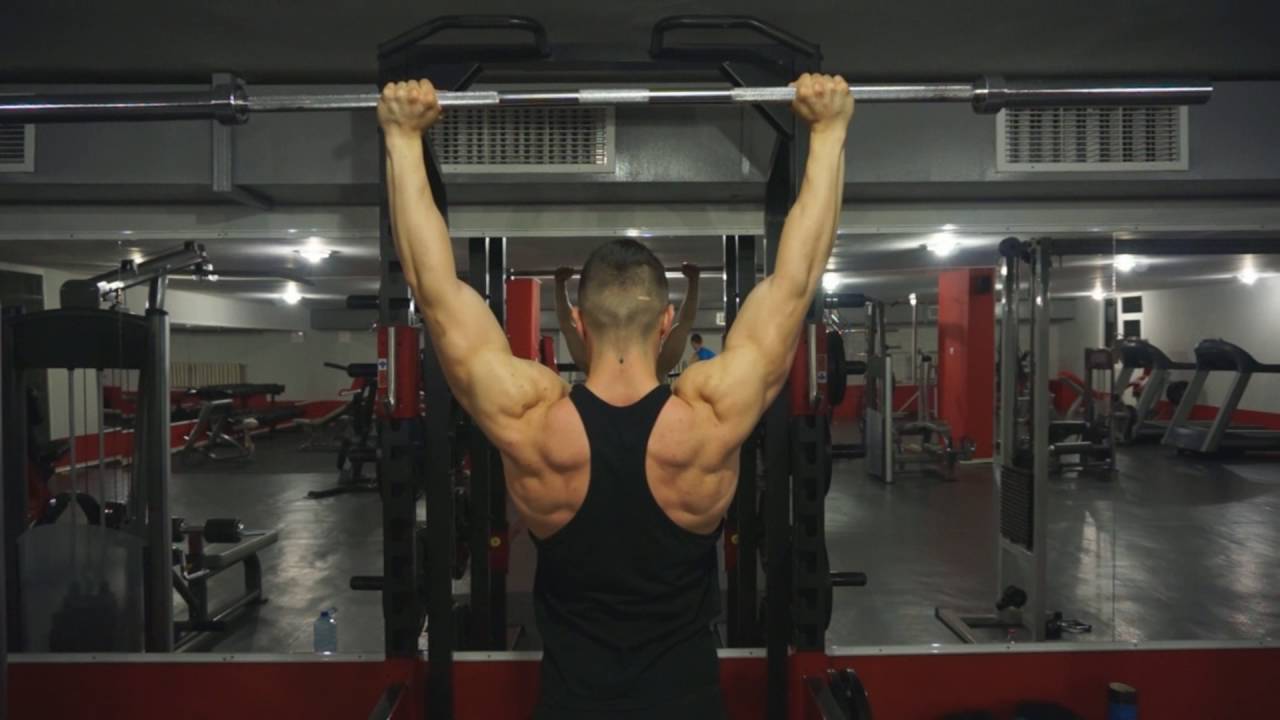
If you’re looking to sculpt a strong and powerful set of traps, you may want to consider incorporating the overhead barbell shrugs into your training regimen. This exercise, while not as commonly employed as its regular shrug counterpart, offers a unique range of benefits and variations that can significantly enhance your workout routine. From improving posture to developing prominent trapezius muscles and allowing you to step up your weight-lifting game, the overhead barbell shrug is a game changer. This guide will walk you through the correct execution of the overhead barbell shrug, highlighting common mistakes, exploring variations, and offering alternatives for those challenging gym days.
Overhead barbell shrug vs. regular barbell shrug
How does an overhead barbell shrug differ from a regular shrug? The overhead barbell shrug and the regular shrug primarily differ in terms of the position of the barbell. In a regular shrug, the barbell is held in front of the body, typically at waist level. The shoulders are then raised and lowered in a shrugging motion. This primarily targets the upper trapezius muscle, which spans the back of the neck and shoulders.
In contrast, the overhead barbell shrug involves holding the barbell above the head, with arms fully extended. The shrugging motion is then performed from this overhead position. This variation not only targets the upper trapezius but also engages the middle and lower trapezius to a greater extent. The overhead position also requires greater shoulder stability and mobility, making it a more challenging exercise.
Furthermore, the overhead barbell shrug places a greater emphasis on the scapular muscles, which are responsible for shoulder blade movement. This can lead to improved shoulder health and function. On the other hand, the regular shrug primarily focuses on the trapezius and may not provide the same level of shoulder engagement.
Lastly, the overhead barbell shrug can be more demanding on the core muscles. The overhead position requires the exerciser to maintain a tight core to stabilize the body and prevent leaning or swaying. This is less of a factor in regular shrugs, where the weight is closer to the body’s center of gravity.
Step-by-step instructions for performing an overhead barbell shrug
Understanding and mastering the correct technique is crucial when it comes to performing overhead barbell shrugs. Correct form not only optimizes muscle engagement for better results but also minimizes the risk of injury, helping you maintain a healthy and productive workout routine.
STARTING POSITION (SETUP):
- Pick up the barbell with an overhand grip, placing your hands shoulder-width apart.
- Lift the barbell overhead, extending your arms fully. Be mindful to keep your elbows unlocked but stable. This is your starting position.
- Engage your core muscles for stability. Ensure your feet are shoulder-width apart and your knees are slightly bent.

MOVEMENT (ACTION):
- Keeping the arms extended, shrug your shoulders upward as high as you can toward your ears. Make sure to initiate this movement from your traps, rather than relying on arm strength.
- Hold this top position for a moment, focusing on the contraction in your trapezius muscles.
- Gently lower the barbell back to the starting position in a controlled movement, not letting gravity do the work.
- Repeat the movement for your targeted number of reps.
Additional tips (performance pointers) and common errors
To ensure an effective workout while minimizing risk, consider these additional coaching pointers for the overhead barbell shrug.
Coach’s Tips
- Select an appropriate weight barbell. Ensure it’s a weight you can comfortably lift over your head, but still provides enough resistance for a challenging workout.
- Ensure your back is straight and your core is engaged.
- Shrug your shoulders towards your ears, lifting the barbell as high as you can. Remember, the movement should be vertical – avoid rolling your shoulders forward or backward.
- Ensure you maintain a steady rhythm, avoiding any jerky movements or momentum use.
- Throughout the exercise, keep your arms extended and your elbows slightly bent to avoid strain. Your focus should be on moving your shoulders, not your arms.
- Focusing on the contraction and release of your trapezius muscles during each shrug can enhance your mind-muscle connection, thus, potentially increasing the efficacy of your workout.
Common mistakes for overhead barbell shrug
Watch out for these common mistakes while performing overhead barbell shrugs:
- Overloading the bar: It’s a common mistake to use a weight that’s too heavy. This can compromise your form and lead to injury. Choose a weight where you can complete 8-10 reps with good form.
- Neglecting posture: Keep your back straight and avoid rounding it. Poor posture not only decreases the efficiency of the exercise but can also increase the risk of injury.
- Rushing the movement: It’s not a race. Slow, controlled movements allow for better muscle engagement and less risk of injury.
- Straining the neck: Excessive forward movement of the head can lead to a strained neck. Keep your head in a neutral position throughout the exercise.
Muscles engaged
When you perform an overhead barbell shrug, you are primarily engaging your upper trapezius muscles.
Aside from the trapezius, secondary muscles involved in the exercise include those of the shoulders and upper back.
The main benefits of the overhead barbell shrug
- Targets all portions of the trapezius muscle. This exercise has a great ability to target and develop the trapezius muscle (upper, lower, and middle fibers).
- Improves shoulder stability. As you lift the barbell overhead, your shoulders and the surrounding muscles have to work harder to maintain balance and control. This can lead to increased shoulder strength and stability, which is beneficial for a variety of sports and daily activities.
- Promotes better posture. By strengthening the trapezius and other upper back muscles, this exercise can help counteract the forward-head posture that many people develop from sitting at a desk or looking down at a smartphone. Improved posture can lead to reduced back and neck pain, as well as a more confident appearance.
- Offers the advantage of working multiple muscle groups simultaneously. In addition to the trapezius, overhead barbell shrugs engage the deltoids, rhomboids, and other upper back and shoulder muscles.
- Improves functional strength. The movement mimics the natural motion of lifting something overhead, making it a practical exercise that can help improve performance in everyday tasks and various sports.
Exercise variations
There are various ways to perform the overhead barbell shrug, allowing you to introduce diversity into your workout regime and work your muscles from different angles. Some of these include:
- Dumbbell Overhead Shrug. This version is quite similar to the barbell overhead shrug. Instead of a barbell, you’d be using a pair of dumbbells. Stand with your feet hip-width apart and lift the dumbbells overhead. Ensure your arms are straight, then perform the shrug. This can add a degree of instability which makes your muscles work a bit harder to maintain balance.
- Single-arm Overhead Shrug. In this variation, you’ll only shrug one shoulder at a time while your opposite hand holds the weight. This unilateral training assists in identifying and correcting any asymmetrical strength imbalances you may have.
- Kettlebell Overhead Shrug. Instead of using a barbell or dumbbell, you’ll lift the kettlebell overhead. Similar to the dumbbell overhead shrug, this variant provides an extra challenge to your balance and core stability.
Whenever you try a new exercise variation, it’s crucial to begin with a lightweight. This allows you to master the form before gradually progressing to heavier loads.
Replacement exercises
While the overhead barbell shrug is an excellent way to target your trapezius muscles, there are several other exercises you might want to consider to diversify your workout routine and effectively engage this important muscle group. A few of the most prominent trapezius exercises include the Dumbbell Shrug, Upright Row, Face Pulls, Deadlifts, and Farmer’s Carry.
- Dumbbell Shrug: Just like barbell shrugs, this exercise specifically targets the traps but uses dumbbells for an increased range of motion.
- Regular Barbell Shrug: With a humble aesthetic and ubiquitous presence in any gym, the regular barbell shrug might not seem as exciting or engaging as some other exercises, but its simplicity hides a deep effectiveness.
- Upright Row: This exercise involves pulling a barbell upwards while keeping it close to your body, firing up those trap muscles in a way that’s both effective and safe.
- Face Pulls: As the name suggests, this exercise requires you to pull a cable towards your face, helping to strengthen and sculpt your trapezius.
- Deadlifts: Although a full-body movement, deadlifts can still effectively work your traps.
- Farmer’s Carry: This functional exercise, where you carry heavy weights as you walk, can be great for building overall strength, including your traps.
For a comprehensive list with a multitude of exercises for your trapezius, you can check our Ultimate Guide to Trapezius Muscle Exercises. Not only does it provide step-by-step instructions on how to safely perform each exercise, but it also includes video demonstrations to ensure you’ve got the form right. By incorporating these alternates into your routine, you can keep your traps guessing, promoting growth and development in a balanced manner.
Conclusion: Overhead Barbell Shrugs
In conclusion, the overhead barbell shrug is an effective exercise for targeting the trapezius muscle, contributing to increased muscle mass, enhanced shoulder stability, and improved posture. The mechanics of this exercise allow you to isolate and work your upper back muscles effectively. While it’s an intermediate-level exercise, it’s crucial to start with light weights until you master the form. Once you are comfortable, adding more weight responsibly can lead to greater strength gains. From variations to replacements, there are many ways to ensure your workout stays diverse and engaging. Happy lifting!
