


Introduction
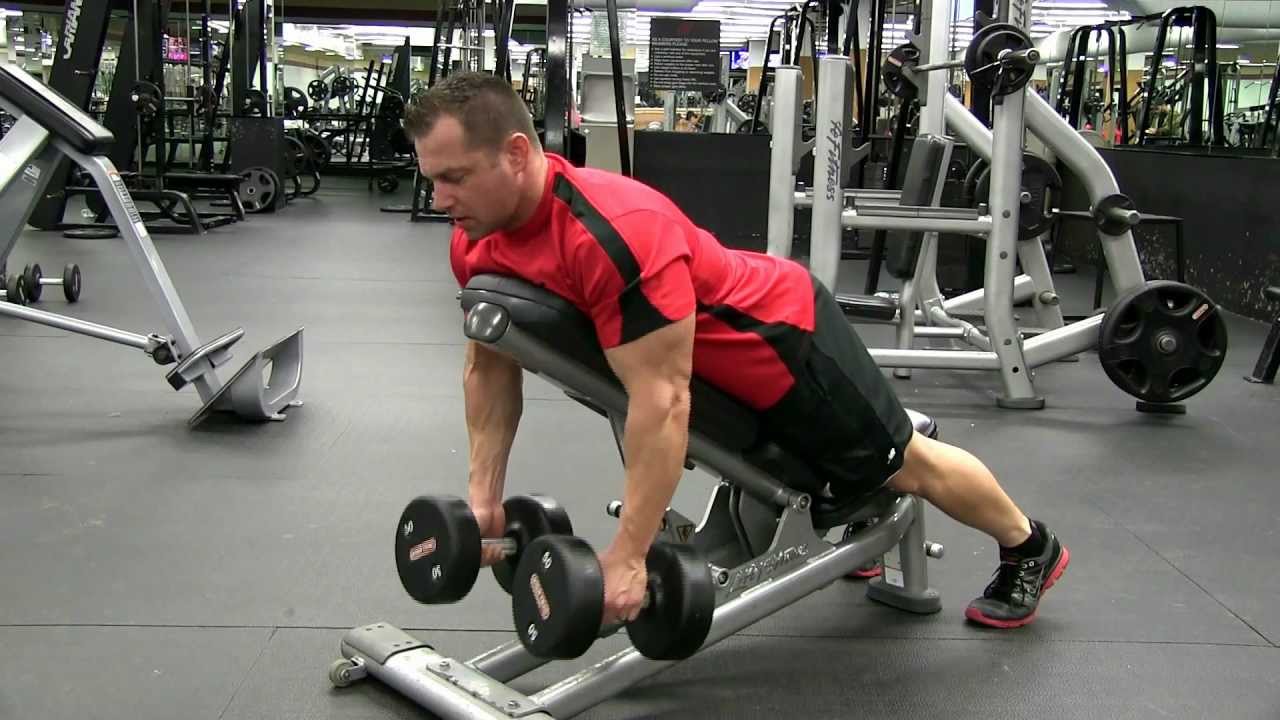
The incline prone dumbbell shrug is a highly controlled variation of the traditional shrug that shifts the emphasis slightly toward the mid-to-upper trapezius while minimizing body momentum. By performing the movement chest-supported on an incline bench, lifters eliminate lower-body involvement and dramatically improve isolation.
Unlike standing shrug variations that allow subtle torso sway, the incline prone setup forces strict scapular elevation. This makes it one of the best options for developing upper-back density with precise muscular control.
Other Names for Incline Prone Dumbbell Shrugs
Although the standard name is incline prone dumbbell shrug, the exercise also appears under several variations depending on coaching terminology.
- Chest-supported dumbbell shrug
- Incline bench shrug
- Prone trap shrug
- Chest-supported trap raise (shrug variation)
Required Equipment
This variation requires minimal equipment but a precise setup. The bench angle and body position determine muscle emphasis.
- Adjustable incline bench (30–45°)
- Pair of dumbbells
- Optional lifting straps
How to Perform Incline Prone Dumbbell Shrugs
Correct execution is essential because this variation relies heavily on strict form rather than heavy momentum. The chest-supported position changes stability demands compared to standing shrugs.
Starting Position
Proper setup eliminates momentum and maximizes trap isolation.
- Set the bench to 30–45° incline
- Lie chest-down on the bench
- Let arms hang straight toward the floor
- Hold dumbbells neutral grip
- Keep neck neutral and chest supported
Your body should remain fully supported throughout the movement.
Execution (Action Phase)
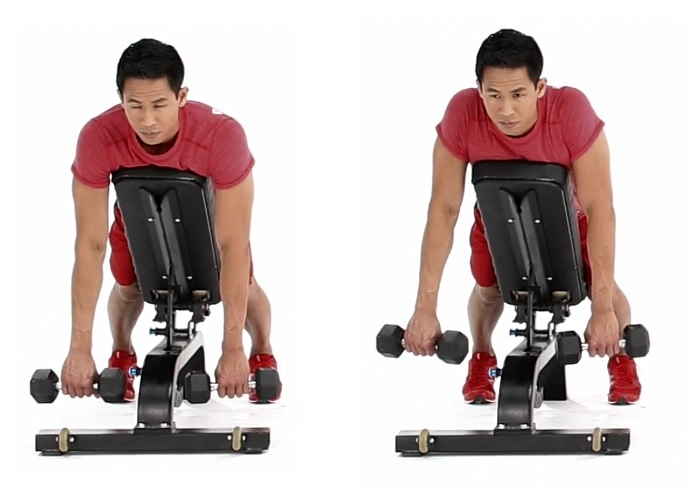
The movement remains strictly vertical despite the forward torso angle.
- Elevate shoulders toward ears
- Avoid elbow bending
- Pause briefly at the top
- Lower under control
- Allow full stretch at the bottom
The chest support prevents body swing, forcing strict trap contraction.
Video Demonstration
Watching the exercise performed correctly can significantly improve your execution and mind-muscle connection. A proper visual demonstration helps you understand scapular elevation mechanics, tempo control, and body positioning on the incline bench.
In the video below, you can observe strict chest-supported positioning, controlled vertical shoulder movement, and a clear pause at peak contraction. Pay close attention to the fact that the arms remain extended and the shoulders move straight up and down without any rolling.
Technique Optimization Tips
Small refinements greatly increase mid-trap involvement. Since cheating is harder in this variation, tempo control becomes the primary driver of hypertrophy.
- Focus on slow eccentric (3 seconds)
- Hold peak contraction 1–2 seconds
- Avoid head lifting
- Keep scapular motion vertical
- Maintain tension throughout
Quick Form Checklist
Before each working set, reviewing a few key cues ensures consistency and reduces technical breakdown. Strict mechanics are what make this variation effective.
- Chest glued to the bench
- Arms fully extended
- Vertical shoulder path
- Controlled tempo
- No neck extension
- No shoulder rolling
Technical Emphasis & Targeting Adjustments
Subtle adjustments in bench angle and tempo can shift muscular emphasis within the trapezius complex. These changes should remain controlled rather than exaggerated.
- Higher bench angle → greater upper trap emphasis
- Lower bench angle → slightly more mid-trap involvement
- Slower eccentric → enhanced hypertrophy stimulus
- Longer pauses → stronger peak contraction
- Lightweight + strict tempo → isolation focus
Common Mistakes
Even though the movement appears simple, technical errors can reduce trap activation and increase neck strain. Most mistakes occur when lifters prioritize weight over control.
- Lifting the chest off the bench
- Using momentum
- Bending elbows
- Hyperextending neck
- Too much weight
Mechanical Considerations
Unlike standing shrugs, the incline prone setup removes lower-body stabilization and reduces spinal loading. This increases isolation and reduces the ability to cheat.
The forward torso angle slightly alters scapular mechanics, often increasing mid-trapezius recruitment compared to upright shrugs.
Muscles Involved
Although the upper trapezius is the dominant muscle, several stabilizers contribute to scapular control. Recognizing this improves mind-muscle connection and execution quality.
- MAIN MUSCLES: Upper trapezius, middle trapezius
- SECONDARY MUSCLES: Levator scapulae, rhomboids
- ANTAGONISTS: Lower trapezius, latissimus dorsi
Incline Prone Dumbbell Shrug Pros and Cons
Every shrug variation has specific advantages and limitations depending on your goal. Evaluating these factors helps determine when to prioritize incline prone shrugs in your program.
Advantages
- Superior isolation. Chest support eliminates body sway and forces strict trap contraction.
- Reduced spinal loading. Minimal lower-back involvement compared to standing shrugs.
- Improved mind-muscle connection. The fixed torso enhances scapular awareness.
- Better mid-trap emphasis. The forward angle slightly increases activation of the mid-trapezius.
Potential Drawbacks
- Limited maximal loading. Harder to use extremely heavy weight compared to trap bar or barbell shrugs.
- Bench setup required. Not as quick to set up as standing variations.
- Less total overload potential. Primarily hypertrophy-focused rather than strength-oriented.
Incline Prone Dumbbell Shrug Variations
- Higher Incline Version – Increases upper trap emphasis due to a more upright torso angle. Allows slightly heavier loading.
- Lower Incline Version – Shifts slight emphasis toward mid-traps. Encourages greater scapular control.
- Paused Repetition Version – Adds 2–3 second holds at peak contraction, dramatically increasing time under tension and hypertrophy stimulus.
Replacement Exercises (Substitutes)
If incline benches or dumbbells are unavailable, several exercises replicate the same scapular elevation pattern. The choice of substitute depends on whether you prioritize isolation or overload.
- Barbell shrug
- Dumbbell shrug (standing)
- Trap bar shrug
- Cable shrug
- Machine shrug
- Farmer’s carry
- Smith machine shrugs
- Overhead barbell shrugs
- Chest-supported barbell shrug
Where This Exercise Fits in a Workout
Perform 3–4 sets of 10–15 reps.
Best programmed:
- After heavy pulling
- During hypertrophy phases
- As a strict isolation finisher
- For posture-focused upper-back training
Incline Prone Dumbbell Shrug vs. Standing Dumbbell Shrug (Comparison Table)
Both exercises target the trapezius through scapular elevation, but their mechanics, loading potential, and stabilization demands differ significantly. The incline prone version emphasizes isolation and control, while the standing version allows greater overload.
| Criteria | Incline Prone Dumbbell Shrug | Standing Dumbbell Shrug |
|---|---|---|
| Primary Target | Upper + mid trapezius | Primarily the upper trapezius |
| Body Position | Chest-supported (incline bench) | Upright standing |
| Stability Demand | Very low | Moderate |
| Lower-Back Involvement | Minimal | Moderate stabilization required |
| Maximum Load Potential | Moderate | Higher |
| Cheat Potential | Very low | Higher (body sway possible) |
| Mind-Muscle Connection | Excellent | Good |
| Mid-Trap Activation | Slightly increased | Less emphasized |
| Setup Complexity | Moderate (bench required) | Very simple |
| Best Rep Range | 10–15 reps | 8–15 reps |
| Best For | Strict hypertrophy & posture | Overload & trap mass building |
The table clearly shows that the incline prone dumbbell shrug excels at strict isolation, reduces spinal stress, and improves mid-trapezius engagement. It is ideal for hypertrophy-focused training blocks where precision and contraction quality matter most.
On the other hand, the standing dumbbell shrug allows greater total loading and progressive overload, making it better suited for strength development and overall trap mass accumulation.
From a programming perspective, alternating between the two variations provides the best balance between structural longevity and maximal trapezius growth.
Final Thoughts
From a coaching standpoint, the incline prone dumbbell shrug is one of the best exercises for developing dense, detailed upper traps without unnecessary spinal strain. It forces control, precision, and quality contraction.
If heavy standing shrugs build mass, incline prone shrugs refine it.
What muscles does the incline prone dumbbell shrug work?
The incline prone dumbbell shrug primarily targets the upper and middle trapezius through strict scapular elevation. Because the movement is chest-supported, it reduces body momentum and increases trap isolation. Secondary muscles include the levator scapulae and rhomboids for scapular stability.
Is the incline prone dumbbell shrug better than the standing dumbbell shrug?
The incline prone dumbbell shrug is better for isolation and strict hypertrophy work, while the standing dumbbell shrug allows heavier loading. The chest-supported position reduces lower-back involvement and cheating. For maximum trap development, both variations can be programmed strategically.
Why perform shrugs on an incline bench?
Performing shrugs on an incline bench eliminates lower-body assistance and reduces spinal loading. This forces the trapezius to perform pure scapular elevation without compensation. The result is improved mind-muscle connection and more controlled hypertrophy stimulus.
Should you roll your shoulders during incline shrugs?
No, you should not roll your shoulders during incline shrugs. The trapezius functions primarily in scapular elevation, not circular rotation. Vertical movement maximizes trap activation and minimizes shoulder joint stress.
What bench angle is best for incline prone dumbbell shrugs?
A bench angle between 30° and 45° is ideal for incline prone dumbbell shrugs. Lower angles may increase mid-trapezius emphasis, while slightly higher angles shift more focus toward the upper trapezius. The key is maintaining chest support and strict mechanics.
How heavy should incline prone dumbbell shrugs be?
Incline prone dumbbell shrugs should be performed with moderate weight that allows full range of motion and a brief pause at the top. Most lifters benefit from 10–15 controlled repetitions. Excessively heavy weight reduces contraction quality and increases neck strain.
Are incline prone dumbbell shrugs safe for the lower back?
Yes, incline prone dumbbell shrugs are generally very safe for the lower back. The chest-supported setup minimizes spinal loading and reduces shear forces. Maintaining a neutral neck position further enhances safety.
Do incline prone dumbbell shrugs build bigger traps?
Yes, incline prone dumbbell shrugs effectively build upper trapezius density when performed with progressive overload and controlled tempo. While they may not allow maximal loading, they enhance contraction quality and time under tension. They are especially effective for refining upper-back detail.
When should incline prone dumbbell shrugs be programmed in a workout?
Incline prone dumbbell shrugs are best programmed after heavy pulling exercises such as rows or deadlifts. Compound lifts stimulate overall posterior chain strength, while incline shrugs isolate and fatigue the traps. This sequencing improves both strength and hypertrophy outcomes.
Are incline prone dumbbell shrugs good for posture?
Incline prone dumbbell shrugs can contribute to improved upper-back strength and scapular control. Strengthening the trapezius and surrounding stabilizers supports better shoulder positioning. When combined with balanced back training, they may help counteract forward-rounded posture.
