Close Menu
Bodybuilding Wizard

    Subscribe to Updates

    Join our mailing list to receive the latest updates from our team.

    Facebook X (Twitter) Instagram
    Trending
    • Does Soy Lower Testosterone or Increase Estrogen in Men? What the Science Says
    • Does Training Legs Really Boost Testosterone? What the Science Says
    • Does Sauna Really Boost Growth Hormone 16x? Myth vs. Science
    • Does Power Posing Really Boost Testosterone? Myth, Science & the Retraction
    • Does Ashwagandha Really Boost Testosterone and Lower Cortisol? Myth vs. Science
    • Progesterone and Exercise: How It Affects Training, Metabolism & the Menstrual Cycle
    • Estrogen and Exercise: How Estradiol Affects Muscle, Fat, Bone Health & Performance
    • Thyroid Hormones and Metabolism: T3, T4, Muscle Growth & Fat Loss Explained
    RSS Facebook X (Twitter) LinkedIn YouTube Pinterest Instagram
    Bodybuilding Wizard
    Subscribe Login
    • Home
    • Tools
      • Interactive Muscle Anatomy
      • Interactive Human Skeleton
      • Bodybuilding & Fitness Calculators
      • Dietary & Nutrition Calculators
      • Body Measurement Calculators
      • Fitness Tests
      • Bodybuilding Glossary
      • DIY Projects
    • Training
      • Weight training basics
      • Advanced bodybuilding
      • Strength training for women
      • Workout programs
      • Home weight training programs
      • Cardio workout
      • Exercise equipment
      • Weight training accessories
      • Weight lifting injuries
      • Weight training for sports
    • Exercises
      • Chest exercises
        • Middle chest exercises
        • Upper chest exercises
        • Lower chest exercises
      • Back exercises
        • Middle back (latissimus dorsi)
        • Upper back (trapezius)
        • Lower back (erector spinae)
      • Arm exercises
        • Bicep exercises
        • Tricep exercises
        • Forearm exercises
        • Grip-strengthening exercises
      • Shoulder exercises
        • Front deltoid
        • Side deltoid
        • Rear deltoid
        • Rotator Cuff
        • Scapular & Shoulder Stability
        • Neck strengthening exercises
      • Leg and glute exercises
        • Quadricep exercises
        • Hamstring exercises
        • Calf exercises
        • Glute & Hip exercises
        • Shin exercises
      • Abdominal exercises
        • Upper abdominal exercises
        • Lower abdominal exercise
        • Oblique exercises
      • Core exercises
      • Kettlebell exercises
      • Foam rolling & Stretching
      • Explosive (dynamic) lifts
    • Motivation
      • Greatest physiques
      • Motivation techniques & tips
      • Events and competitions
      • Latest fitness news
      • Videos
        • Funny gym reels
        • Motivational videos
        • Funny workout videos
      • Pictures
      • Quotes
      • Funny Fitness
      • Transformations
    • Diet
      • Nutrition Fundamentals
      • Diet Types & Strategies
      • Foods & Superfoods for Athletes
      • Muscle Building & Performance Nutrition
      • Weight Loss & Fat Management
      • Food Psychology & Myths
      • Recipes & Meal Ideas
    • Supplements
      • Supplements Review
      • Muscle Building Supplements
      • Anabolic Steroids
      • Fat Burners & Weight Loss
      • Pre-Workout & Energy Boosters
      • Recovery & Sleep Aids
      • Cognitive & Nootropic Support
      • General Supplement Advice
      • Health Supplements
        • Joint & Bone Support
        • Gut Health & Digestion
        • Vitamins & Minerals
        • Superfoods & Greens
      • Steroid Alternatives
    • Anatomy
      • Upper-Body Muscles
      • Lower-Body Muscles
      • Bones & Skeletal Anatomy
      • Muscle Growth & Genetics
      • Joints, Tendons & Connective Tissue
      • Hormones & Endocrine System
      • Physiology & Body Systems
      • Body Composition & Fat
      • General Anatomy & Basics
    • Health
    Bodybuilding Wizard
    You are at:Home»Training»Advanced bodybuilding»Eccentric Weight Training: Definition, Pros & Cons
    eccentric weight training: definition, benefits, examples

    Eccentric Weight Training: Definition, Pros & Cons

    0
    By krunoslav on December 31, 2018 Advanced bodybuilding
    Share
    Facebook Twitter Pinterest LinkedIn Email Tumblr WhatsApp Telegram

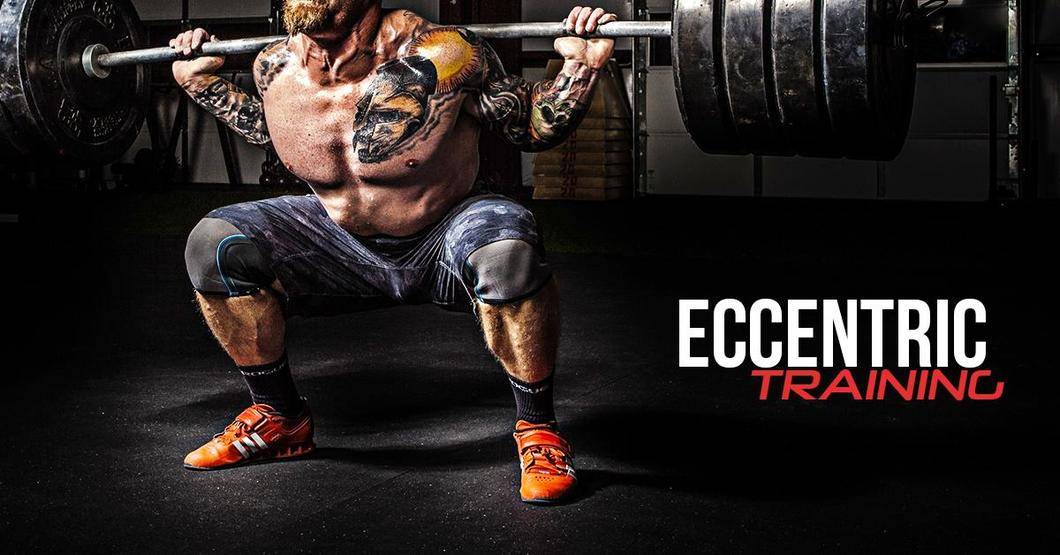
    The Power of Eccentric Weight Training

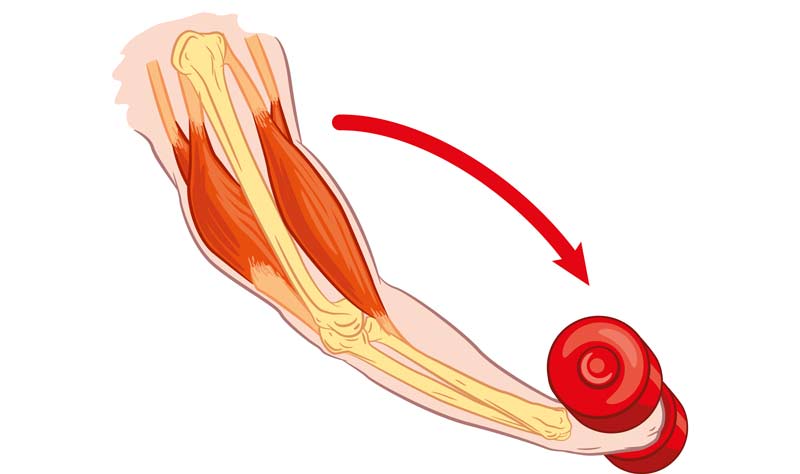
    In eccentric weight training, a spotter assists you in lifting the bar (the concentric phase), and then you control the weight on the eccentric (lowering) phase. This means load the bar – or in a case of the chinups, yourself – with 10 do 20 percent more weight than you used in your heaviest set. Take more time (at least 5 seconds) to lower the bar or your body. Then have spotters raise the bar off your chest or the floor (or climb back up to the chinup bar), and repeat for few more reps.

    Eccentric weight training in a nutshell

    To be able to do your maximum in the eccentric weight training, the concentric phase of an exercise is eliminated. The movement consists of just struggling against gravity with as heavy a weight as possible. This technique is particularly appropriate when you do not have enough strength to do pull-ups, for example. In this case, you always have enough strength to slow down the descent. The goal is to slow down the descent for as long as possible and as many times as possible. The magic of pure eccentric weight training is that it allows you to quickly gain enough strength to be able to lift your body alone. In general, two weeks of pure eccentric weight training at the pull-up bar will allow a person who was not capable of doing a pull-up to do a pull-up once or twice all by himself.

    Another technique is to lift the weight with two arms but to lower it with only one arm. For example, when doing push-ups, lift yourself up normally with two arms. Once you are up, transfer your weight to one arm and do a pure negative. Be sure that you are at an adequate level of fitness before attempting this variation. If you cannot stop yourself, especially at the end, you can do a partial negative. This means descending part of the way and then going back up using both arms. Your strength will quickly increase and you will be able to go down all the way without any problems.

    Numerous movements (but not all of them) lend themselves to pure negatives. Use this strategy at least once a month.
    eccentric workout

    Examples of eccentric contractions in different exercises

    • Lowering your body during a pull-up (or chin-up);
    • Downward motion of a bench press;
    • Lowering a weight down during the biceps curl;
    • Downward motion of a push-up;
    • Upward movement of the lat pull-down;
    • Lowering yourself when performing a barbell squat;
    • Lowering your body when doing crunches or sit-ups etc;

    You can also easily perform the eccentric training on ordinary strength training machines for leg extension, leg curl, bench press or shoulder press etc. One can for example lower weights in the eccentric phase with one leg or arm, and use both legs or arms in the concentric phase.

    Possible benefits of the eccentric weight training

    Why perform eccentric weight training?

    • This advanced weight training technique allows you to use a heavier weight (110–160 per cent 1RM), causing the body to adapt to the increase in weight.
    • During an eccentric contraction there is more mechanical load per motor unit. As a result, eccentric
      training can generate up to two-thirds more tension in the muscle than concentric training.
    • Increased tension provides a greater stimulus to the muscle fibres which, in turn, means greater strength and muscle growth.

    Disadvantages

    • This training method increases the risk of injury.
    • It requires a spotter. Eccentric weight training requires one or more partners to help raise the weight to the starting position. This is because you must train with weights that are heavier than those you can handle alone.
    • Adolescent athletes should refrain from doing only eccentric weight training because it places a great deal of stress on the muscles, tendons and ligaments. We are especially afraid of injuries of the tendons and ligaments since these structures do not adapt to strength training as fast as muscles.

    Additional tips (performance pointers)

    • Focus on lowering the weight very slowly.
    • Eccentric weight training is a very intense training method. Therefore, limit eccentric training to one exercise per muscle group in any one workout, performing it at the end of only one or two sets.
    • Allow longer rest intervals between sets.
    • Recovery may take up to 10 days, so you should allow at least 10–14 days between muscle group workouts employing this technique. For example, if you perform eccentric training on the chest on Monday, do not use it for the chest again for two weeks.

    Two ways of performing eccentric weight training

    In the first way, the lifter does a normal set until fatigued, then finishes with negative sets. To do this, you would have your spotter help with the positive, or concentric, portion of the lift, then you would lower the weight (the negative portion of the lift) slowly under control. This method works well because a person is as much as 20 to 40 percent stronger in the eccentric phase. The concentric movement will cause fatigue before the eccentric movement. Therefore, to achieve a good eccentrically fatigued state, the eccentric portion can be worked for additional reps while the spotter helps the lifter during the concentric portion of the exercise. Exercises such as bench presses and shoulder presses, leg extensions and leg curls, and most pulls work well with this type of routine.

    The second way to train is called “eccentric emphasis”. As the name implies, the rep is normal except that the negative portion is exaggerated by increasing the time the lifter takes to lower the weight. Emphasized negatives are the most popular, safest, and most productive exercises of the two because they are controlled by the lifter. In a negative rep, it should take at least five seconds to lower the weight. Any faster and the lifter is not truly working against the weight to slow it down.

    Closing thoughts

    In this type of weight training you are concentrating on the eccentric (lowering) phase of the exercise by, for example, controlling the weight as it is lowered to the chest during the bench press. Certain studies point to the advantages of “eccentric only” training, but this research is still at a very early stage. Unfortunately, this technique is difficult in practice using free weights (as a lot of help is required), and existing machines are not usually designed for training in this way. More research is needed in this area, given the numerous questions that remain. We do not recommend athletes starting eccentric training too early. A minimum requirement is that you are well familiar with traditional strength training. The moral is that “one should learn to crawl before walking”.

    References
    (1) Hackney KJ, Engels HJ, Gretebeck RJ. 2008. Resting energy expenditure and delayed-onset
    muscle soreness after full-body resistance training with an eccentric concentration. Strength
    and Conditioning Research 22(5):1602-1609.

    (2) Colliander, E.B., and P.A. Tesch. 1990. Effects of eccentric and concentric muscle actions in resistance training. Acta Physiologica Scandinavica 140: 31-39.

    Share. Facebook Twitter Pinterest LinkedIn Tumblr Email WhatsApp
    krunoslav
    • X (Twitter)

    Hey! My name is Kruno, and I'm the owner and author of Bodybuilding Wizard. I am a licensed fitness trainer with a Ph.D. in kinesiology. Throughout my career, I have dedicated myself to helping individuals achieve their health and fitness goals through personalized training programs. In addition to my academic qualifications, I have completed various specialized courses, including certifications in nutrition and strength training, which have further enhanced my ability to provide comprehensive fitness guidance. I started this website back in late 2014, and it has been my pet project ever since. My goal is to help you learn proper weight training and nutrition principles so that you can get strong and build the physique of your dreams!

    Related Posts

    Why Do My Knees Cave In During Squats? 8 Causes (And How to Fix It)

    Why Is My Grip So Weak? 10 Reasons You’re Losing Strength (And How to Fix It)

    Lower Back Pain After Deadlifts? 10 Common Causes and How to Fix Them

    Leave A Reply Cancel Reply

    You must be logged in to post a comment.

    WE ARE SOCIAL
    • Facebook 3.6K
    • Twitter
    • YouTube 133
    • Instagram
    RECENT POSTS
    August 27, 2026

    Does Soy Lower Testosterone or Increase Estrogen in Men? What the Science Says

    August 26, 2026

    Does Training Legs Really Boost Testosterone? What the Science Says

    August 24, 2026

    Does Sauna Really Boost Growth Hormone 16x? Myth vs. Science

    August 24, 2026

    Does Power Posing Really Boost Testosterone? Myth, Science & the Retraction

    August 23, 2026

    Does Ashwagandha Really Boost Testosterone and Lower Cortisol? Myth vs. Science

    RECENT COMMENTS
    • Justin Dew on Designing your own home gym
    • krunoslav on Meet Your Muscles: How muscles are named?
    • Christina on Meet Your Muscles: How muscles are named?
    • igtropin on Stiff-Leg Deadlift: Proper Form, Muscles Worked & Hamstring Growth Guide
    • teragon labs on Barbell Back Squat: Proper Form, Benefits, Muscles Worked & Expert Tips
    LATEST GALLERIES

    Subscribe to Updates

    Join our mailing list to receive the latest updates from our team.

    ABOUT
    ABOUT

    We are a group of bodybuilding enthusiasts and this is our effort to have all the details about bodybuilding on a single website. We strive to educate and inform our visitors so that they can make the correct training, nutrition, and supplement decisions on their own. Bodybuilding Wizard will make your dream body your reality and take you to a whole new level!

    POPULAR POSTS
    April 2, 2014

    Lying Leg Curl: Complete Guide to Hamstring Isolation, Strength & Muscle Growth

    February 18, 2019

    Meet Your Muscles: How muscles are named?

    March 28, 2014

    Free weights: The main tool for building muscles

    BODYBUILDING WIZARD
    Bodybuilding Wizard Footer Logo
    Facebook X (Twitter) Instagram Pinterest YouTube
    • About
    • Authors
    • Editorial Policy
    • Write for us
    • Privacy
    • Contact
    • Terms of Use
    • Advertising
    • FAQ
    Copyright © 2014-2026 BodybuildingWizard. All rights reserved. Powered by WordPress. Made with love and lots of caffeine.

    Type above and press Enter to search. Press Esc to cancel.

    Sign In or Register

    Welcome Back!

    Login to your account below.

    Lost password?