



Introduction
The decline bench dumbbell fly is a lower-chest isolation exercise that emphasizes the sternal fibers of the pectoralis major through a wide arc of motion. Unlike pressing movements, which combine shoulder flexion and elbow extension, the fly motion focuses primarily on horizontal adduction of the shoulder. This allows for more direct tension on the chest while minimizing triceps involvement.
By performing the movement on a decline bench—typically set between 15 and 30 degrees—you shift mechanical emphasis toward the lower portion of the chest. The result is enhanced lower-pec stretch, increased time under tension, and improved chest definition. While fly exercises are sometimes underestimated in strength-focused training, they remain extremely valuable for hypertrophy, symmetry, and aesthetic chest development when used strategically.
Required Equipment
The decline dumbbell fly requires minimal setup but demands careful control.
- Decline bench (15–30° recommended)
- Pair of light-to-moderate dumbbells
- Secure foot support
Because this is an isolation movement, significantly lighter loads are required compared to pressing exercises.
How to Perform the Decline Bench Dumbbell Fly
Initial Setup
Correct positioning determines both safety and effectiveness.
- Set the bench at a moderate decline (15–30 degrees).
- Secure your feet under the pads.
- Hold dumbbells on your thighs before lying back.
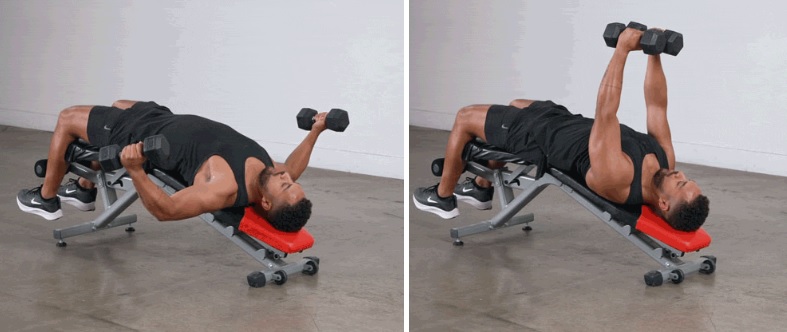
- Carefully lie back and bring the dumbbells above your lower chest.
- Keep arms nearly straight with a slight bend in the elbows.
- Palms face each other (neutral grip).
- Retract your shoulder blades and brace your core.
Key cue: Think “hugging a barrel” rather than pressing the weight.

Execution Phase
The fly is performed in a controlled arc motion.
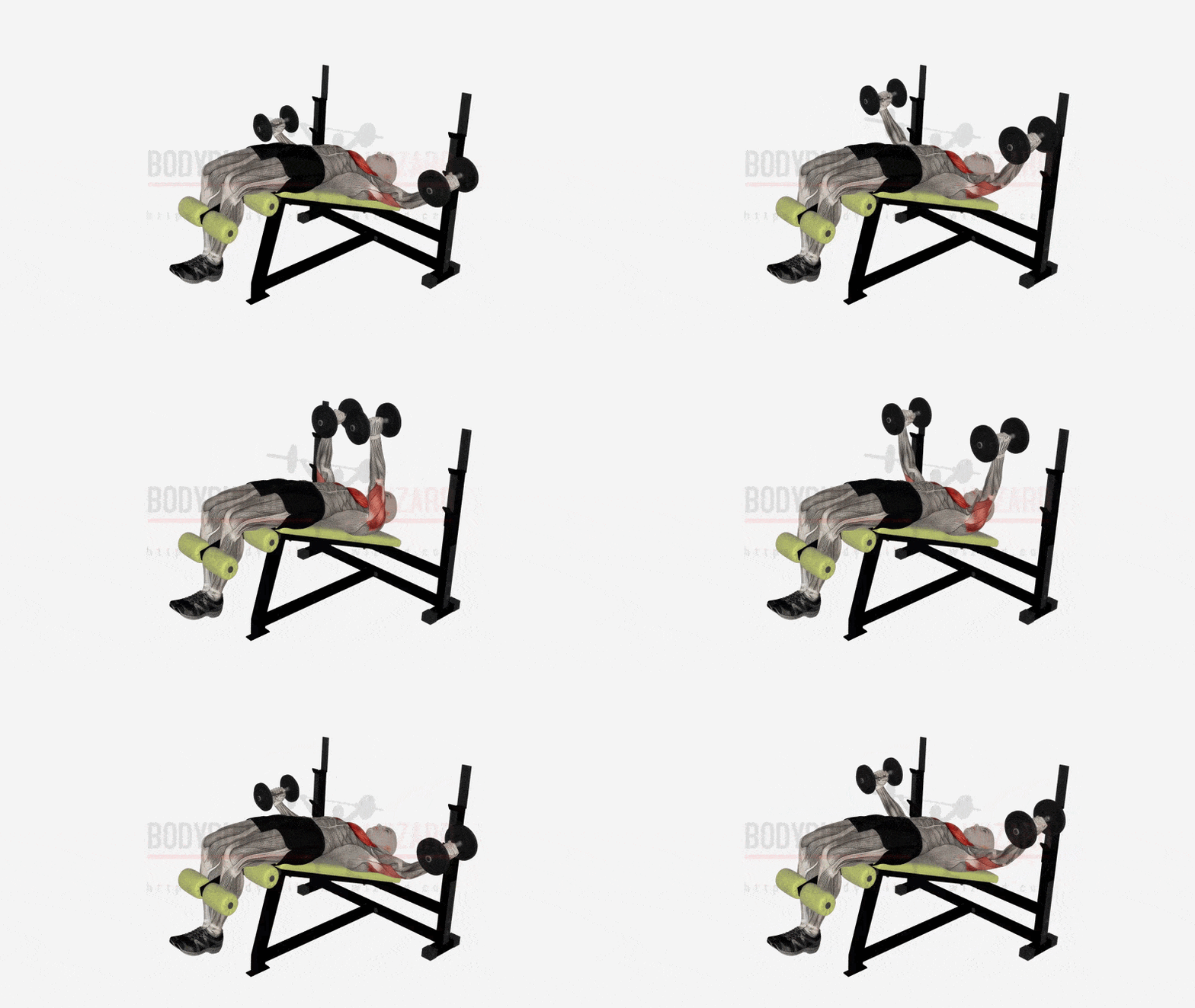
- Inhale and slowly lower the dumbbells outward in a wide arc.
- Maintain a slight elbow bend throughout.
- Lower until your upper arms are roughly parallel with the floor.
- Feel a controlled stretch across the lower chest.
- Exhale and bring the dumbbells back together in the same arc.
- Squeeze the chest at the top without bouncing the weights.
Movement path: The dumbbells travel in a semicircular arc around the shoulder joint.
Technique Optimization Tips
Here are some important tips to maximize lower-chest stretch, maintain shoulder safety, and optimize hypertrophy stimulus.
- Avoid excessive weight — this is not a pressing movement.
- If you prefer to use a significantly heavier weight (not recommended), bend your elbows more than normal as you lower the dumbbells. The resulting motion is a cross between a press and a fly.
- Keep a consistent elbow angle throughout the rep.
- Do not allow the dumbbells to drop too low. The lower the dumbbells descend, the greater the pectoral stretch, but also the greater the chance of injury.
- Maintain scapular retraction to protect the shoulders.
- Move slowly during the eccentric phase.
- Focus on squeezing the chest, not the hands.
- Stop slightly short of full lockout to keep tension constant.
- The fly exercise works best when the dumbbells are held with a neutral grip (palms facing together), but a pronated grip (palms facing forward) can also be used as a variation.
Mechanical Resistance Analysis
The decline dumbbell fly places peak tension on the lower chest during the stretched position. Because the movement is gravity-dependent, resistance is greatest when the arms are wide and near parallel to the floor. This makes the exercise particularly effective for stretch-mediated hypertrophy. Unlike presses, which distribute tension across multiple joints, the fly isolates horizontal shoulder adduction, allowing concentrated chest overload. However, because elbow extension is minimal, the load must remain moderate to avoid shoulder strain.
Common Mistakes
Even though the decline dumbbell fly appears simple, technical errors can significantly reduce chest activation and increase shoulder strain.
- Turning the fly into a press by bending the elbows excessively
- Using weights that are too heavy
- Lowering beyond safe shoulder range
- Bouncing at the bottom
- Allowing the shoulder blades to protract
- Colliding dumbbells at the top
Muscles Involved in Decline Bench Dumbbell Fly
Understanding which muscles are primarily responsible for the movement helps improve mind–muscle connection and exercise execution.
- MAIN MUSCLES: Lower pectoralis major (sternal head)
- SECONDARY MUSCLES: Anterior deltoid (stabilizing), serratus anterior
- ANTAGONISTS: Posterior deltoid, latissimus dorsi
Many lifters are drawn to fly movements because they “feel” the chest working more intensely. That sensation comes from the isolation nature of the exercise — horizontal adduction with minimal triceps involvement creates a strong stretch and peak contraction in the pecs.
While flyes can enhance lower-chest definition and improve muscular detail — particularly along the outer chest line — they should not replace heavy pressing. Isolation work creates targeted tension, but compound presses drive the majority of overall anabolic stimulus and long-term mass development.
Used strategically, decline flyes refine and shape the chest. Presses build it.
Decline Bench Dumbbell Fly Pros and Cons
Advantages
- Excellent lower-chest isolation: Because elbow extension is minimal and the movement focuses on horizontal shoulder adduction, the lower fibers of the pectoralis major take on the majority of the workload without significant assistance from the triceps.
- Strong stretch stimulus: The wide arc motion places the lower chest under tension during stretch, which is particularly effective for hypertrophy because it increases mechanical stress at longer muscle lengths.
- Improves mind–muscle connection: The slower, controlled nature of the fly encourages lifters to consciously contract the chest muscles rather than relying on momentum, improving neuromuscular coordination over time.
- Enhances chest definition: Because it isolates the lower chest, this exercise helps refine the visual separation between the chest and upper torso, contributing to a more sculpted appearance.
- Complements heavy pressing: When performed after compound movements such as decline presses or dips, flyes add targeted volume without overloading the triceps or the central nervous system.
Potential Drawbacks
- Limited strength carryover: Since this is not a compound pressing movement, improvements in fly performance do not directly translate into large increases in bench press strength.
- Higher shoulder stress if overloaded: Excessive weight or poor control in the stretched position can place significant strain on the anterior shoulder capsule and pectoral tendon.
- Not ideal for maximal loading: The fly pattern is biomechanically weaker than pressing movements, making it unsuitable for very heavy loads or low-rep strength training.
- Requires strict control: Proper technique is essential. Using momentum, bending the elbows excessively, or lowering too deeply can quickly make the exercise unsafe or ineffective.
The decline dumbbell fly is one of the most misunderstood chest exercises. The dumbbell fly is not an ego lift. It is not designed for heavy loading but for controlled stretch and peak contraction. When programmed after compound pressing, it dramatically improves lower-chest detail.
I often use this movement in moderate-to-high rep ranges at the end of chest workouts to maximize metabolic stress and enhance chest separation.

Decline Bench Dumbbell Fly Variations
Small adjustments to grip orientation, tempo, or execution style can subtly alter muscle emphasis, joint comfort, and overall hypertrophy stimulus while preserving the core fly movement pattern.
- Pronated Grip Fly – Palms face forward at the bottom to slightly alter shoulder rotation and modify the stretch pattern across the chest and anterior deltoids.
- Rotational Fly – Rotate wrists from pronated at the bottom to neutral at the top, increasing peak contraction and improving neuromuscular coordination.
- Paused Fly – Hold the stretched position briefly at the bottom to increase time under tension and reinforce control in the most mechanically demanding range.
- Tempo Fly – Use a slow 3–4 second eccentric phase to increase mechanical tension without increasing load, making it ideal for hypertrophy-focused blocks.
Alternative Exercises for the Decline Bench Dumbbell Fly
If decline dumbbell flyes are unavailable or if you want to vary your lower-chest training stimulus, several alternative movements can replicate similar horizontal adduction mechanics.
All of the exercises above are covered in our comprehensive Bodybuilding Wizard exercise database.
Decline Fly vs. Decline Press
| Criteria | Decline Fly | Decline Press |
|---|---|---|
| Load potential | Low | High |
| Isolation | High | Moderate |
| Triceps involvement | Minimal | Significant |
| Hypertrophy stimulus | Stretch-based | Mechanical tension |
Conclusion: The fly isolates and stretches the lower chest, while the press builds overall strength. Together, they create complete development.
Where This Exercise Fits in a Workout
Perform 3–4 sets of 10–15 repetitions. Best placed after compound pressing movements as a finishing isolation exercise.
Final Thoughts
The decline bench dumbbell fly is an excellent isolation movement for targeting the lower fibers of the pectoralis major. While it should not replace heavy pressing exercises, it plays a crucial role in enhancing chest symmetry, stretch-mediated hypertrophy, and muscular definition. When combined strategically with presses and cable movements, it contributes to complete lower-chest development and refined aesthetics.
What does the decline bench dumbbell fly target?
The decline bench dumbbell fly primarily targets the lower (sternal) fibers of the pectoralis major. The decline angle shifts emphasis downward, increasing activation of the lower chest while minimizing triceps involvement compared to pressing movements.
Is the decline dumbbell fly better than flat dumbbell fly?
The decline version places more emphasis on the lower chest, while the flat fly distributes tension more evenly across the mid-portion of the pecs. If your goal is lower chest development and improved chest separation, the decline variation is typically more effective.
How heavy should you go on decline dumbbell flyes?
This exercise should be performed with moderate weight that allows strict control. Because it is an isolation movement and places stress on the shoulder joint in the stretched position, heavy loading is not recommended. Controlled tempo and proper range of motion are more important than weight.
Is the decline bench dumbbell fly safe for the shoulders?
It can be safe when performed with proper technique and moderate weight. Keeping a slight bend in the elbows, maintaining scapular retraction, and avoiding excessive depth reduces strain on the anterior shoulder capsule.
What is the ideal rep range for decline dumbbell fly?
For hypertrophy, 10–15 repetitions per set is optimal. Higher reps help maintain control and reduce joint stress while increasing time under tension for the lower chest fibers.
Should you lock your elbows during a dumbbell fly?
No. The elbows should remain slightly bent throughout the entire movement. Locking them shifts tension away from the chest and increases stress on the elbow joint.
How is a decline fly different from a decline press?
A decline fly isolates horizontal shoulder adduction with minimal elbow extension, while a decline press involves both shoulder and elbow movement. The fly emphasizes stretch and contraction, whereas the press allows heavier loading and greater overall strength development.
Can decline dumbbell fly replace pressing exercises?
No. Never. While decline flyes are excellent for isolation and muscle definition, compound pressing movements produce greater mechanical tension and overall anabolic stimulus. Flyes should complement, not replace, presses.
Does the decline angle increase chest stretch?
Yes. The decline angle can increase stretch tension on the lower pec fibers by altering the direction of resistance relative to the torso. However, excessive depth should be avoided to prevent shoulder strain.
Who should avoid decline dumbbell flyes?
Individuals with shoulder instability, recent pec strains, uncontrolled high blood pressure, or dizziness in inverted positions should approach decline flyes cautiously. Consulting a medical professional is advised for those with cardiovascular or eye pressure conditions.
