


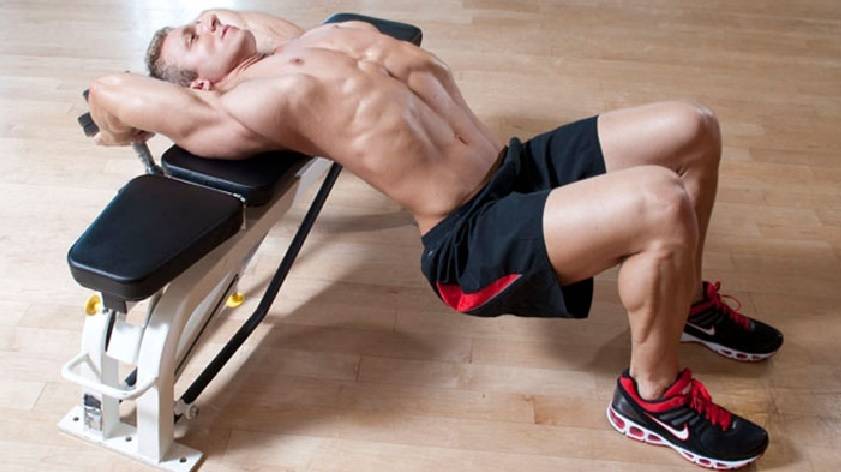
Overview (Why This Exercise Exists)
The Dumbbell Pullover is one of those “old-school” exercises that refuses to die—because when it’s done correctly, it creates a unique combination of deep stretch tension and upper-body expansion mechanics that pressing and fly variations don’t replicate.
In chest-focused training, the dumbbell pullover is often used as a middle-chest accessory/finisher because it loads the pecs through a long arc while the ribcage and shoulder girdle stay relatively stable on the bench. That said, it’s important to be honest: the dumbbell pullover can also be trained as a latissimus dorsi movement (and many lifters feel it more in the lats than the chest). Your execution—elbow position, range, and intent—largely determines whether it becomes a “chest stretch finisher” or a “lat-biased pullover.”
Equipment Needed
- Flat bench
- One dumbbell
- Optional: small towel for dumbbell handle comfort (if needed)
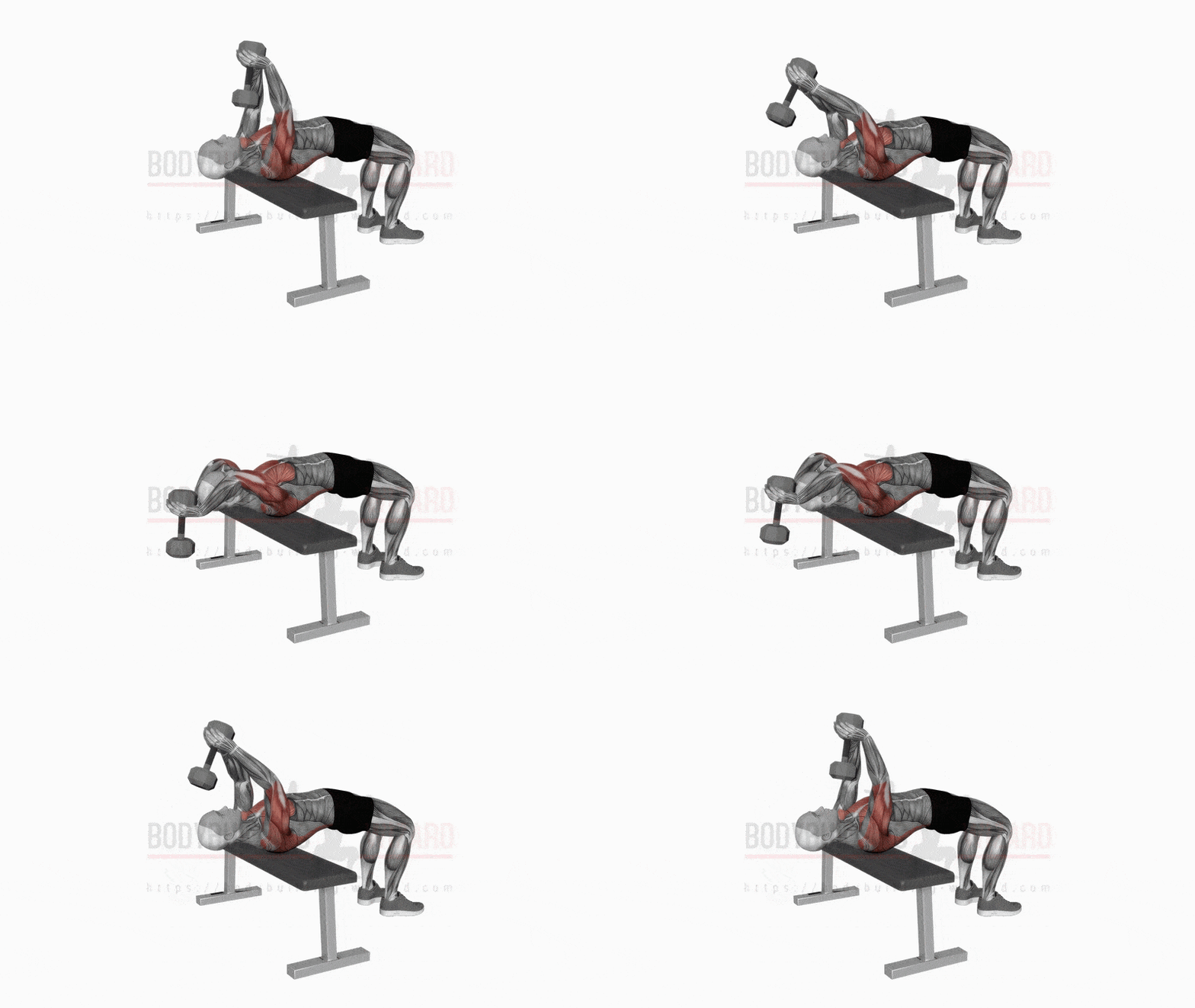
Step-by-Step Instructions for the Dumbbell Pullover
Executing the dumbbell pullover with the right setup and controlled range of motion is the difference between a beautiful chest/lat stretch… and an uncomfortable shoulder crank. Follow the steps below to maximize tension where you want it and keep the movement joint-friendly.
A. Starting Position (Setup)
- Lie across the flat bench with your shoulder blades resting on the flat bench and your body extended out perpendicular to the bench.
- Plant your feet firmly on the floor to stabilize your torso.
- Drop your hips (pelvis) below the level of the bench (lower than the shoulder girdle) to achieve a greater stretch.
- Hold one dumbbell with both hands (palms supporting the inner plate/handle area).
- Start with the dumbbell above your chest, arms angled slightly back toward your forehead.
- Keep a slight bend in the elbows and “lock” that elbow angle in place.
Key cue: Set your shoulder blades down and back, and keep your ribs controlled (don’t flare them).

B. Movement (Execution)
- Inhale and brace your core lightly.
- Lower the dumbbell in a smooth arc behind your head until you feel a deep but controlled stretch through the chest/lats.
- Keep the elbow bend consistent—don’t turn it into a triceps extension.
- Pause briefly at the bottom without relaxing your shoulders.
- Exhale and bring the dumbbell back over the chest using a controlled “pull back” motion.
- Stop when the dumbbell is above the chest again—don’t drift too far forward.
Tempo recommendation: 2–3 seconds down, controlled return up.
Performance Tips (Coach’s Cues)
These cues make the dumbbell pullover feel smoother, safer, and far more effective for hypertrophy.
- Keep the elbows softly bent and maintain the same elbow angle the entire set.
- Think “pull the dumbbell back over the chest” rather than “press it up.”
- Keep ribs down and abs lightly braced to avoid low-back arching.
- Stop the range where the shoulders still feel strong and controlled—more depth is not always better.
- Control the bottom stretch and don’t rebound out of it.
Quick Form Checklist
- Elbows slightly bent and fixed throughout
- Ribs down, core lightly braced
- Shoulders stable (no rolling forward)
- Controlled arc—no bouncing out of the bottom
- Stop depth at the strongest comfortable stretch
Common Mistakes in the Dumbbell Pullover
Even though the dumbbell pullover looks simple, a few common errors can shift tension away from the chest and onto the shoulders (or turn it into a completely different exercise).
- Going too deep and forcing the range of motion past shoulder comfort
- Letting the elbows bend too much (turns into a triceps-style movement)
- Flaring the ribs and hyperextending the lower back
- Losing shoulder blade control (shoulders “roll forward” at the bottom)
- Moving too fast and bouncing out of the stretch
Resistance Curve Insight
The dumbbell pullover typically produces its greatest tension when the dumbbell is behind the head (in the stretched/overhead range). As the dumbbell returns toward the top position above the chest, the resistance demand often decreases. This is why pullovers shine as a stretch-focused hypertrophy tool—they overload the exact range many lifters under-train.
Video Demonstration — Proper Dumbbell Pullover Technique
Watching the dumbbell pullover performed correctly can help you nail the arc, manage rib position, and choose a safe depth. In the video, pay close attention to controlled lowering, consistent elbow angle, and stable shoulder positioning at the bottom of the movement.
Muscles Worked
Understanding which muscles contribute to the dumbbell pullover helps you “steer” the exercise toward the chest or the lats, depending on your intent and setup.
Primary Muscles
- Pectoralis major (sternal/middle fibers)
- Latissimus dorsi (often dominant depending on technique)
Secondary Muscles
Stabilizers
Exercise Variations
1) Lengthwise Dumbbell Pullover (Full Bench Support)

This is the modern, more stable, and safer variation — performed lying fully along the length of the bench.
How to perform:
- Lie on your back with your entire back supported on a flat bench.
- Keep your head, shoulder blades, and hips in contact with the bench.
- Plant your feet firmly on the floor for stability.
- Lower the dumbbell behind your head until you reach a deep but controlled stretch.
- Return the dumbbell along the same arc without excessively bending the elbows.
Why it works:
This variation provides greater stability, improved load control, and reduced stress on the lower back. It is ideal for hypertrophy-focused training and allows safer progression with moderately heavier weights compared to the cross-bench version.
2) Straight-Arm Cable Pullover
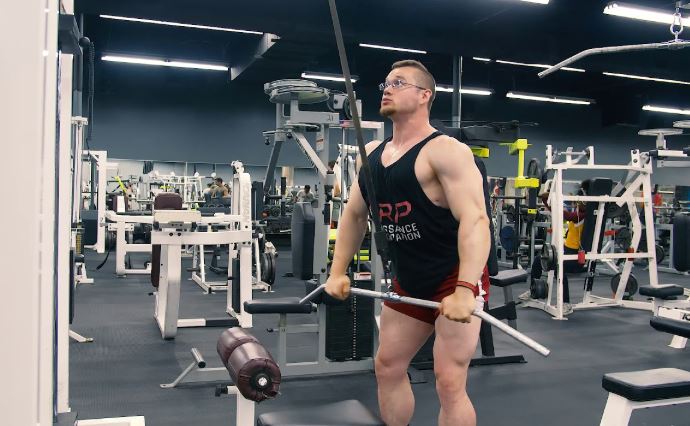
A cable version that is often more lat-dominant and keeps steadier tension.
How to perform:
- Stand facing a high pulley with straight arms (slight elbow bend).
- Pull the handle down in an arc to the thighs.
- Return slowly to the stretched position.
Why it works:
Provides more constant resistance and makes the lat emphasis easier to maintain.
3) EZ-Bar Pullover
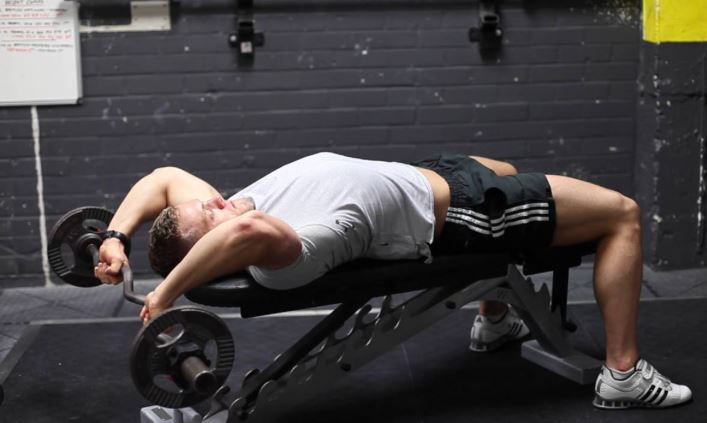
A slightly different feel and grip stability compared to a single dumbbell.
How to perform:
- Lie on a bench and hold an EZ-bar with a medium grip.
- Lower behind the head in a controlled arc.
- Bring it back above the chest.
Why it works:
Can feel more stable for some lifters and allows easy load progression.
4) Plate Pullover
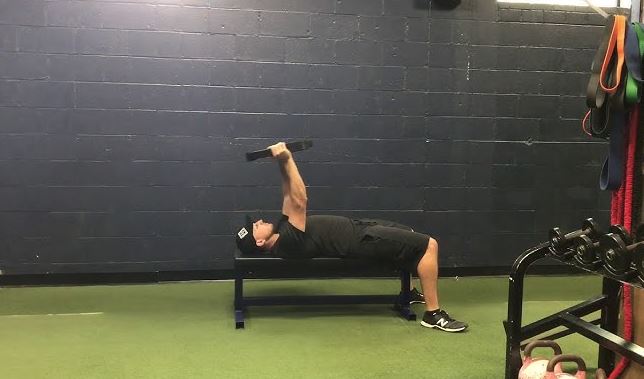
This variation uses a weight plate instead of a dumbbell, which slightly changes grip comfort and loading mechanics.
How to perform:
- Lie flat on a bench with your entire back supported.
- Hold a weight plate with both hands, gripping it firmly at the sides.
- Start with the plate positioned above your chest.
- Lower it in a controlled arc behind your head while keeping a slight bend in your elbows.
- Return the plate to the starting position using the same path.
Why it works:
The plate pullover can feel more comfortable for some lifters due to the grip position and may allow smoother transitions into and out of the starting position. It’s a practical alternative when heavier dumbbells are awkward to handle.
5) Specialized Pullover Machine
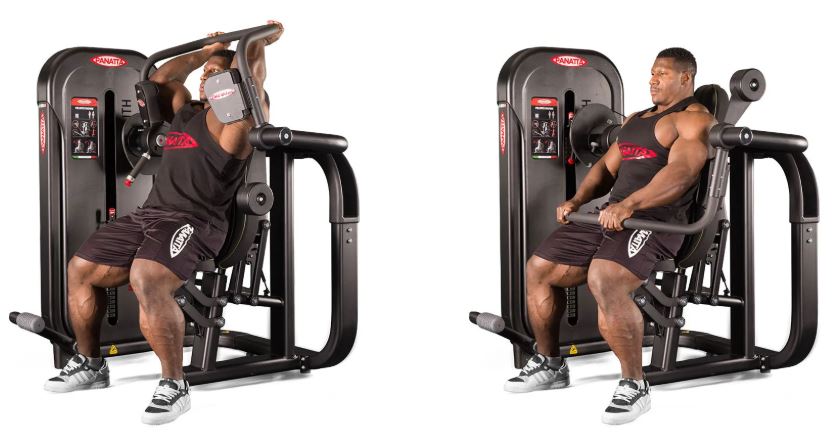
Many gyms offer a dedicated pullover machine designed specifically for shoulder extension.
How to perform:
- Adjust the seat height so your shoulders align with the machine’s pivot point.
- Grip the handles or pads, depending on the machine design.
- Pull the handles downward in an arc toward your torso while keeping your chest lifted.
- Return slowly to the stretched position under control.
Why it works:
A specialized pullover machine provides a guided resistance path and more consistent tension throughout the range of motion. It reduces stabilization demands and can help lifters focus purely on lat or chest contraction without worrying about balance.
Alternative / Replacement Exercises
If you don’t have the right setup for pullovers, these exercises can cover similar goals depending on whether you want chest stretch or lat emphasis.
- Flat bench dumbbell flyes (chest stretch focus)
- Machine chest press (controlled pressing volume)
- Cable fly variations (constant tension chest work)
- Lat pulldown (lat emphasis)
Key Benefits of the Dumbbell Pullover
When performed correctly, the Dumbbell Pullover offers benefits that most chest exercises don’t replicate.
- Deep stretch loading that complements pressing movements
The pullover emphasizes tension in the lengthened position of the chest and lats — a range that traditional pressing exercises do not fully overload. This stretch-mediated stimulus can enhance hypertrophy when combined with heavy compound presses. - Can target chest or lats, depending on technique and intent
By adjusting rib position, elbow angle, and mental focus, the exercise can shift emphasis between the pectoralis major and latissimus dorsi. This versatility makes it a valuable “bridge” movement between chest and back training. - Excellent “finisher” for chest day when presses are already heavy
After barbell or dumbbell pressing, the pullover allows additional chest stimulation without requiring heavy loads. It’s particularly effective for accumulating controlled volume at the end of a workout. - Strong serratus involvement for better shoulder girdle mechanics
The movement challenges the serratus anterior and surrounding stabilizers, supporting healthier shoulder function and improved scapular control over time. - Low setup time and minimal equipment
With only a bench and a single dumbbell required, the pullover is highly accessible and easy to integrate into most training environments, requiring no complex machine adjustments.
If you want the dumbbell pullover to feel like a chest exercise (and not just a lat move), the biggest change is this: keep your ribcage controlled and think “chest stretch,” not “pull with the back.” I cue clients to keep the sternum slightly lifted but the abs lightly braced — that stops the lower back from arching and keeps the tension where we want it.
Two more chest-bias tricks: keep the elbows slightly flared (not pinned in tight like a lat pullover) and stop the range when you feel a deep stretch in the pecs without losing shoulder stability. Then on the way up, think about “bringing the weight back over the chest” and finishing with a subtle pec squeeze — if your lats are doing all the work, you’re usually going too heavy or going too deep.
Who Should Use This Exercise?
- Lifters who want a stretch-focused accessory for chest hypertrophy
- Bodybuilders building a complete chest “finishing” toolbox
- Athletes who want combined chest/lat hypertrophy work with a moderate load
- Lifters who struggle with feeling the chest during flyes and want a different angle
Who Should Avoid This Exercise?
- Lifters with acute shoulder pain or instability in overhead positions
- Anyone who can’t control rib flare and low-back arch under load
- Trainees with a history of shoulder impingement who feel discomfort at the bottom range
- Beginners who can’t maintain elbow angle and shoulder control (until technique is learned with a very light load)
Dumbbell Pullover vs. Flat Barbell Bench Press
Both are valuable, but they serve very different purposes in a chest program.
| Criteria | Dumbbell Pullover | Flat Barbell Bench Press |
|---|---|---|
| Exercise type | Accessory / stretch-focused | Primary compound strength lift |
| Main stimulus | Long-range stretch tension | Mid-range pressing overload |
| Triceps involvement | Low to moderate (stabilizing) | High |
| Load potential | Moderate | High |
| Skill requirement | Moderate | Moderate to high |
| Best use | Finisher/accessory | Main chest strength builder |
Conclusion (Coach-style): Bench press is the “meat and potatoes.” Pullovers are the seasoning that makes the whole plate better—especially when your chest needs more stretch-based stimulus than pressing alone provides.
Programming Insight (Short but Powerful)
The dumbbell pullover works best as a secondary or finishing exercise.
- 3–4 sets of 10–20 reps
- Controlled tempo with a strong focus on the bottom stretch
- Best placed near the end of a chest workout (or as a chest/lat bridge movement)
In real gym life, the dumbbell pullover is the exercise that splits trainees into two camps: “I feel it only in my lats” and “my chest is on fire.” The funny part is that both are usually right — it’s the same movement, but their setup and intent are completely different.
My quick fix is simple: keep the ribs down, keep the elbows softly bent, and stop trying to go ridiculously deep just to impress the mirror. Once the range becomes controlled instead of heroic, most people finally feel a clean chest stretch — and that’s when the pullover becomes a legit finisher.
Conclusion
The dumbbell pullover is a unique stretch-focused movement that can be a powerful chest finisher—while also doubling as a latissimus dorsi exercise depending on technique. When programmed intelligently and performed with strict control, it complements pressing and fly variations by loading the upper body through a long arc and emphasizing the range that many lifters miss.
How do I make the dumbbell pullover target my middle chest instead of my lats?
To emphasize the middle chest during the dumbbell pullover, keep your ribcage controlled (avoid excessive arching), allow a slight outward elbow angle, and focus on feeling a stretch through the pectoralis major rather than pulling with your back. Using moderate weight and controlled tempo also improves chest activation.
Is the dumbbell pullover effective for middle chest hypertrophy?
Yes. When performed with proper chest-focused technique, the dumbbell pullover provides stretch-mediated tension to the sternal fibers of the pectoralis major, making it an effective accessory movement for middle chest development.
Should the dumbbell pullover be done at the beginning or end of a chest workout?
The dumbbell pullover is typically most effective near the end of a chest workout as a hypertrophy-focused finisher after heavy compound pressing exercises.
What is the best rep range for the dumbbell pullover for chest growth?
For middle chest hypertrophy, 10–20 controlled repetitions per set are ideal, emphasizing a slow eccentric (lowering phase) and maintaining tension at the bottom stretch position.
Is the dumbbell pullover better than flyes for chest stretch?
The dumbbell pullover can provide a deeper stretch under load compared to traditional flyes, especially in the overhead range. However, both exercises serve different purposes and can complement each other in a balanced chest training program.
