
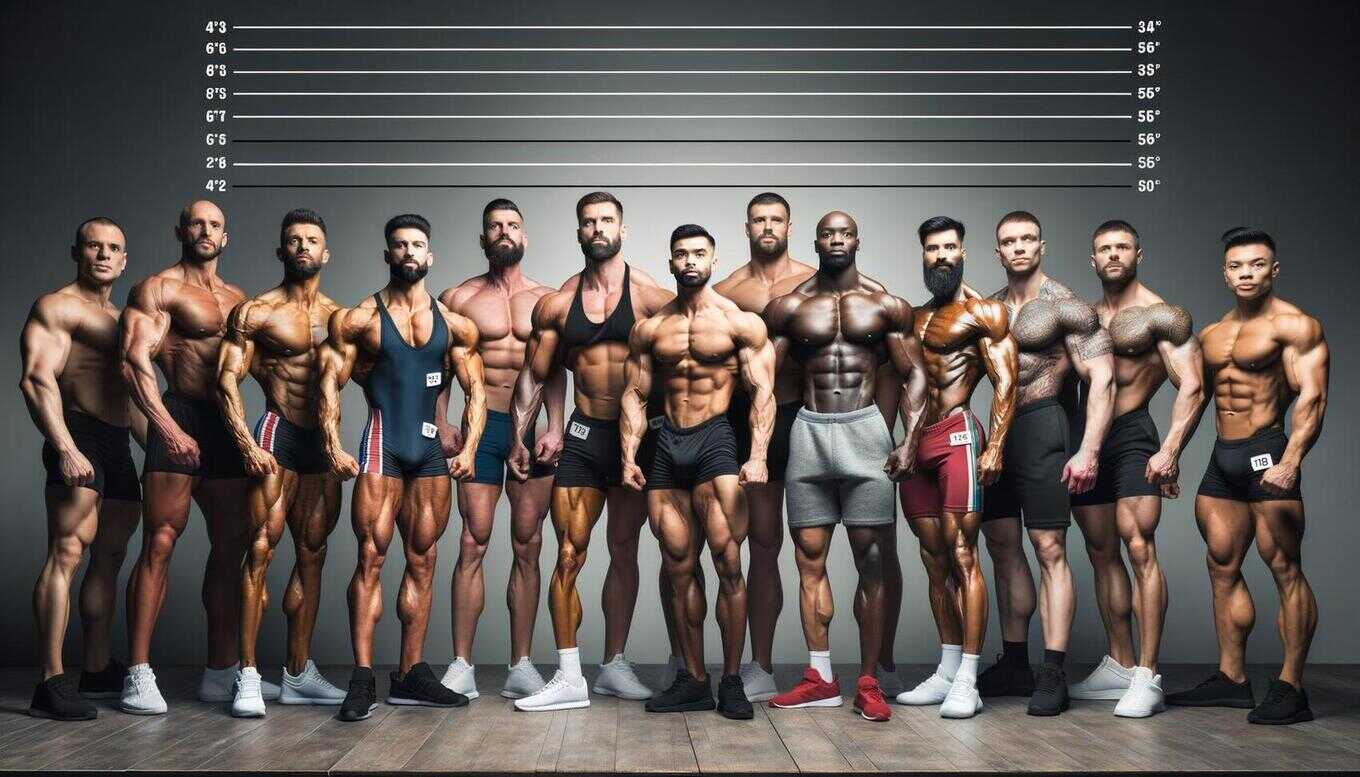
In the world of professional bodybuilding, size isn’t just about muscle mass. While strength and muscle mass are universally acknowledged as key components of success in bodybuilding, height is a factor that often sparks debate and curiosity.
Observers and enthusiasts frequently remark that many professional bodybuilders appear to be shorter than the average person. This observation leads to intriguing questions: why are bodybuilders often short, and what is considered the ideal height for excelling in professional bodybuilding?
The relationship between height and bodybuilding performance is complex, involving a mix of anatomical, genetic, and practical considerations. Several factors contribute to why shorter individuals may have an edge in this highly competitive sport, from muscle appearance and proportion to the efficiency of training regimens. Conversely, taller bodybuilders face their own unique set of advantages and challenges, making the field of professional bodybuilding diverse and multifaceted.
This article aims to explore the reasons behind the prominence of shorter stature among bodybuilders, explore the historical and current trends to determine the ideal height for professional bodybuilding and examine the pros and cons associated with short and tall stature. By understanding these dynamics, we can appreciate how height influences the pursuit of bodybuilding excellence.
Why Are Bodybuilders Often Short?
In the world of professional bodybuilding, it is not uncommon to observe that many of the top competitors are shorter in stature. This phenomenon can be attributed to a variety of factors that influence muscle appearance, genetic predisposition, and training efficiency.
Muscle Appearance and Proportion
One of the primary reasons shorter individuals excel in bodybuilding is due to the way muscle mass is distributed and appears on their frames. In shorter athletes, muscles tend to look fuller and more voluminous because they have less space to cover. This creates a denser, more defined appearance that is highly prized in bodybuilding competitions. The shorter limb lengths also mean that muscles like the biceps, triceps, and quadriceps appear more pronounced, which can give the illusion of a more muscular physique.
Taller bodybuilders have longer limbs and larger frames, which require more muscle mass to achieve the same level of fullness and symmetry as shorter competitors. This means that taller bodybuilders often need to work harder and longer to build the same amount of muscle mass, and they may struggle with achieving the same level of muscle definition.
Genetic Predisposition
Genetics plays a crucial role in determining an individual’s natural aptitude for bodybuilding. Shorter people often have a genetic makeup that favors the development of muscle mass and strength. For example, they might possess a higher proportion of fast-twitch muscle fibers, which are essential for explosive power and muscle growth. Additionally, the shorter bone structure can provide better leverage, enabling more efficient lifting and muscle-building capabilities.
Training Efficiency
Training efficiency is another factor that explains why shorter bodybuilders often have an edge. Shorter limbs can make certain exercises easier to perform, allowing for more effective and targeted muscle training. For instance, shorter athletes may find it easier to execute squats and bench presses, as their reduced range of motion can lead to more controlled, powerful movements. This efficiency can result in quicker muscle gains and a more balanced physique.
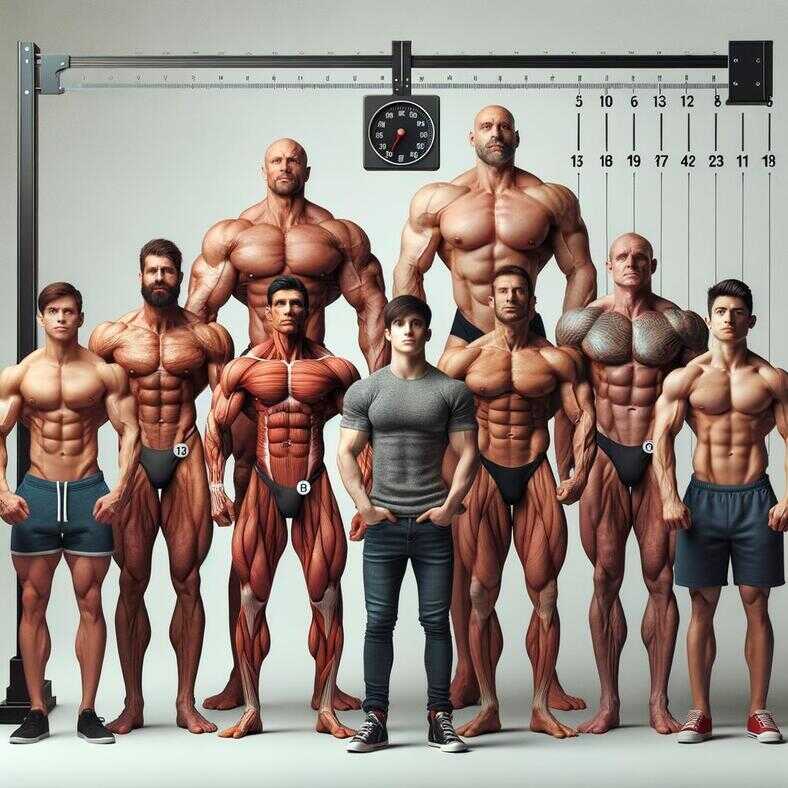
In summary, the prevalence of shorter individuals in professional bodybuilding can be attributed to the advantages in muscle appearance and proportion, genetic predisposition, and training efficiency that their stature provides. These factors collectively contribute to the success of shorter bodybuilders in the competitive arena.
Ideal Height for Professional Bodybuilding
When it comes to the ideal height for professional bodybuilding, there is no one-size-fits-all answer. The sport celebrates a wide array of physiques, and champions have emerged from various height categories. However, historical data and trends provide some insights into what might be considered advantageous regarding height in the world of professional bodybuilding.
Typically, the ideal height for professional bodybuilding is considered to be between 5’6” and 5’10”. This range allows for a balanced distribution of muscle mass, making it easier for bodybuilders to achieve the desired V-taper, with broad shoulders and a narrow waist, which is highly valued in competitions.
Historical Data and Trends
Examining the history of bodybuilding reveals that many legendary bodybuilders have been of average height, typically ranging from 5’6″ to 5’10”. Icons like Arnold Schwarzenegger (6’2″) and Franco Columbu (5’5″) demonstrate that success is achievable across a range of heights. Still, the majority of Mr. Olympia’s winners tend to fall within that middle range. This trend suggests that average height may offer a balanced advantage regarding muscle proportion and aesthetic appeal.
Height Categories in Competitions
Professional bodybuilding competitions often have different categories to accommodate various body types. While there is no strict height classification, the separation into weight classes indirectly influences the perceived ideal height. Shorter bodybuilders may find it easier to pack significant muscle mass relative to their height, thus having a denser, more compact appearance. Taller individuals, on the other hand, may compete in heavier weight classes where their height allows for more muscle distribution, albeit with the challenge of maintaining proportionality.
Success Stories at Various Heights
The annals of bodybuilding are filled with champions of various heights, each showcasing that there is no definitive “ideal” height. For instance, Lee Priest, standing 5’4″, has been celebrated for his extraordinary muscle density and definition. Conversely, Lou Ferrigno, towering at 6’5″, gained fame for his impressive and imposing physique. These success stories underscore that while certain heights may offer specific advantages, individual dedication, genetics, and training regimens play crucial roles in achieving professional success.
In conclusion, while historical trends and competition structures suggest that an average height may offer a slight edge in terms of muscle appearance and proportionality, the ideal height for professional bodybuilding remains flexible. Champions come in all shapes and sizes, each bringing unique attributes to the stage. Understanding the advantages and challenges associated with different heights can help aspiring bodybuilders optimize their training and maximize their potential in this demanding sport.
The height of Mr. Olympia winners
This table showcases the height of all Mr. Olympia winners from 1965 to 2022. It’s fascinating to note that the average height of these elite bodybuilders is around 173 centimeters or 68 inches.
The shortest Mr. Olympia winner is Franco Columbu, who stands at 5’5″(165 cm). Columbu won the prestigious title twice, first in 1976 and then again in 1981. His compact frame allowed him to develop an incredibly dense and muscular physique, which judges highly favored.
On the other end of the spectrum, Arnold Schwarzenegger is the tallest Mr. Olympia winner. Standing at 6’2” (188 cm), Schwarzenegger won the title seven times, from 1970 to 1975 and then again in 1980. His height, exceptional muscle mass, and symmetry made him a dominant force in the sport.
| Year | Winner | Height (Feet) | Height (Centimeters) |
|---|---|---|---|
| 1965-1966 | Larry Scott | 5’7″ | 170 cm |
| 1967-1969 | Sergio Oliva | 5’10” | 178 cm |
| 1970-1975, 1980 | Arnold Schwarzenegger | 6’2″ | 188 cm |
| 1976 | Franco Columbu | 5’5″ | 165 cm |
| 1977-1979 | Frank Zane | 5’9″ | 175 cm |
| 1981 | Franco Columbu | 5’5″ | 165 cm |
| 1982 | Chris Dickerson | 5’6″ | 168 cm |
| 1983 | Samir Bannout | 5’8″ | 173 cm |
| 1984-1991 | Lee Haney | 5’11” | 180 cm |
| 1992-1997 | Dorian Yates | 5’10” | 178 cm |
| 1998-2005 | Ronnie Coleman | 5’11” | 180 cm |
| 2006-2007 | Jay Cutler | 5’9″ | 175 cm |
| 2008 | Dexter Jackson | 5’6″ | 168 cm |
| 2009-2010, 2011 | Jay Cutler | 5’9″ | 175 cm |
| 2011-2017 | Phil Heath | 5’9″ | 175 cm |
| 2018 | Shawn Rhoden | 5’10” | 178 cm |
| 2019 | Brandon Curry | 5’7″ | 170 cm |
| 2020 | Mamdouh Elssbiay (Big Ramy) | 5’9″ | 175 cm |
| 2021 | Mamdouh Elssbiay (Big Ramy) | 5’9″ | 175 cm |
| 2022 | Hadi Choopan | 5’6″ | 168 cm |
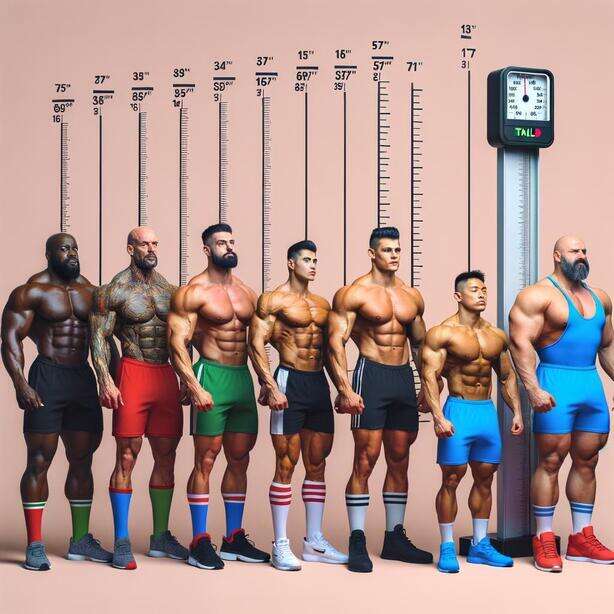
Pros and Cons of Being Short in Professional Bodybuilding
The height of a bodybuilder can significantly influence their career in professional bodybuilding, shaping both their training regimen and competitive outcomes. Shorter bodybuilders, mainly, find themselves at a unique intersection of advantages and challenges. Understanding these nuances can help both aspiring and seasoned bodybuilders optimize their strategies for success.
Advantages
1. Muscle Density and Proportion
One of the most noticeable advantages for shorter bodybuilders is the appearance of muscle density. Due to shorter limb lengths, muscles look fuller and more pronounced, which can be visually impressive on stage. This compact muscle mass often translates to a more aesthetically pleasing physique that aligns well with bodybuilding criteria.
2. Efficient Muscle Growth
Shorter individuals generally require less time to develop muscle mass than their taller counterparts. The distance a muscle has to grow to appear well-developed is shorter, making achieving a balanced, muscular look easier. This can result in quicker progress and the ability to fine-tune their physique more efficiently.
3. Lower Center of Gravity
A lower center of gravity provides better stability and balance during complex lifts and poses. This can enhance performance in both training and competition, allowing for more effective execution of exercises and smoother, more controlled movements on stage.
Challenges
1. Limited Stage Presence
While shorter bodybuilders may excel in muscle density, they can sometimes struggle with overall stage presence. Taller competitors often command more attention due to their height and imposing figures, which can be a disadvantage for shorter bodybuilders in visual assessments.
2. Proportional Imbalance Risk
Achieving and maintaining perfect muscle proportion can be trickier for shorter bodybuilders. Any imbalance or disproportion becomes more noticeable, and judges are quick to spot these inconsistencies. This necessitates a meticulous approach to training to ensure that every muscle group is equally developed.
3. Height Bias in Judging
Although bodybuilding is judged on muscle mass, symmetry, and definition, there can sometimes be an unconscious bias towards taller competitors. Judges may be influenced by the commanding presence of taller bodybuilders, which can affect scoring even if it’s not explicitly part of the criteria.
Pros and Cons of Being Tall in Professional Bodybuilding
In the world of professional bodybuilding, height can play a significant role in a competitor’s journey and outcomes. While shorter bodybuilders often receive attention for their compact and dense muscle appearance, taller bodybuilders also bring unique attributes and face distinct challenges. This section explores the advantages and disadvantages of being tall in professional bodybuilding, along with strategies to manage these aspects effectively.
Advantages
1. Impressive Stage Presence
Taller bodybuilders often have a commanding presence on stage. Their height can make them stand out in a lineup, offering an initial visual impact that can be advantageous during judging.
2. Longer Muscle Bellies
Taller individuals typically have longer muscle bellies, which can result in more aesthetically pleasing muscle shapes when fully developed. This can contribute to a more dramatic and balanced physique.
3. Potential for Greater Muscle Mass
With a larger frame, taller bodybuilders have the potential to carry more muscle mass. This can lead to a more imposing and powerful appearance if they manage to achieve significant muscle hypertrophy.
4. Better Proportions for Certain Poses
Some bodybuilding poses, such as the front double biceps and the lat spread, can look particularly striking on taller competitors due to their extended limb length and expansive muscle spread.
Challenges
1. Difficulty in Achieving Density
Taller bodybuilders often struggle to achieve the same muscle density as their shorter counterparts. Filling out a larger frame with muscle can be a longer and more challenging process, requiring more time and effort.
2. Proportional Imbalances
Maintaining proportionality can be difficult for taller athletes. Ensuring that all muscle groups develop evenly to avoid a lanky appearance requires meticulous planning and training.
3. Higher Caloric and Nutritional Needs
Taller bodybuilders generally have higher caloric and nutritional needs to support muscle growth and recovery. This can complicate diet planning and increase the risk of undernutrition if not carefully managed.
4. Increased Joint Stress
The longer limbs and greater overall body mass of taller bodybuilders can place more stress on joints during heavy lifting. This increases the risk of joint injuries and requires careful attention to technique and recovery strategies.
Conclusion: Why Are Many Bodybuilders Short?
In summary, both shorter and taller bodybuilders bring unique advantages and face specific challenges in professional bodybuilding. While there’s no universally ideal height, shorter bodybuilders often have a better starting position due to their advantageous muscle appearance, proportion, and training efficiency. Meanwhile, tall competitors can create impressive, towering physiques but may struggle with muscle filling and symmetry. Ultimately, success in bodybuilding hinges on a combination of genetics, hard work, and strategic training, regardless of height.
Whether short or tall, bodybuilders who understand and optimize their unique attributes can achieve greatness. As the sport continues to evolve, so too will the understanding and appreciation of the diverse physiques that make up the world of professional bodybuilding.
