


Introduction
When it comes to bodybuilding supplements, casein protein powder often sits in the shadow of whey. While whey gets all the attention for its fast absorption, casein plays a different but equally important role: slow, steady amino acid release that keeps your muscles fed for hours. This unique property makes casein the go-to “nighttime protein” and a powerful ally in muscle retention.
As a strength coach and doctor of kinesiology, I’ve seen athletes overlook casein because it doesn’t give the same instant results as whey. But once they added it strategically, their recovery, satiety, and muscle preservation improved dramatically. Let’s explore why casein deserves a place in your supplement stack.
What is Casein Protein Powder?
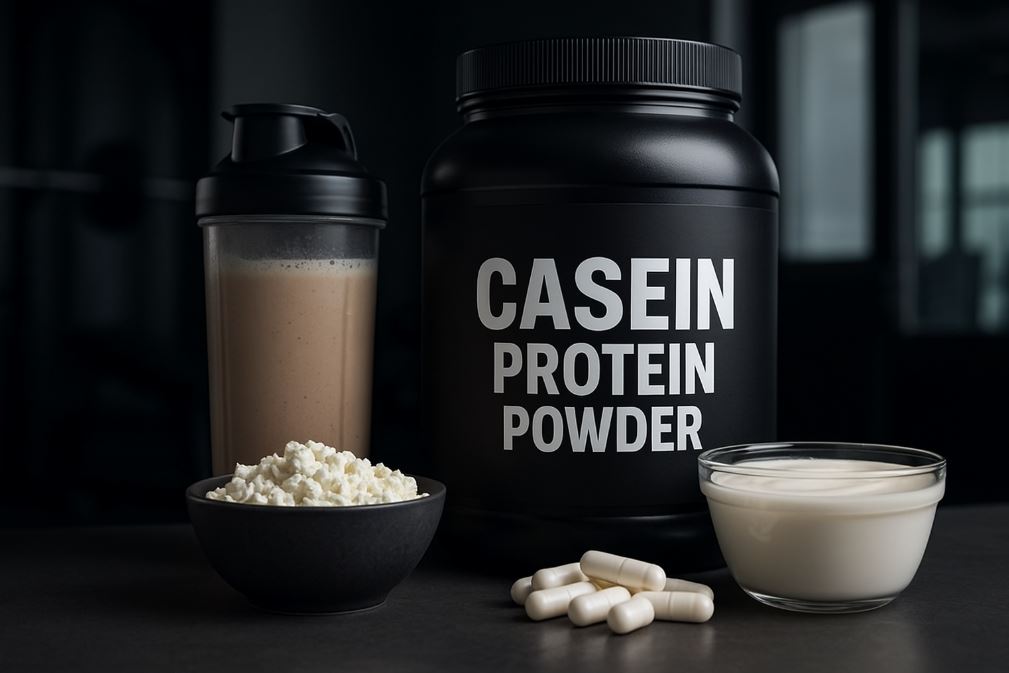
Casein is the primary protein found in milk, making up about 80% of its total protein content (the other 20% is whey). Casein protein powder is typically produced through filtration processes that isolate casein from milk, often in the form of micellar casein — the most common and natural form used in supplements.
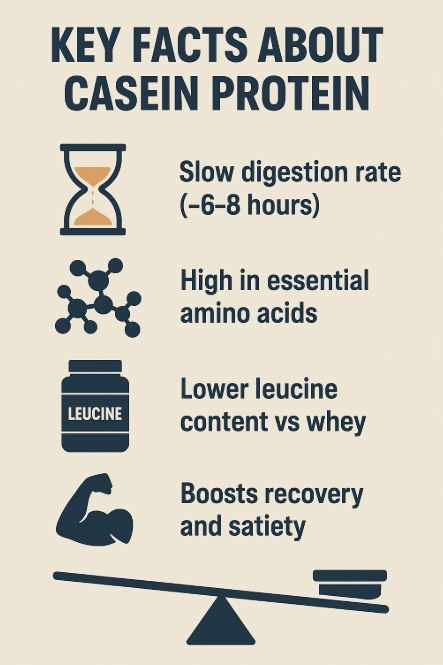
Unlike whey, which digests rapidly, casein forms a gel-like structure in the stomach. This slows down digestion and leads to a gradual release of amino acids into the bloodstream over several hours.
Typical forms of casein protein supplements include:
- Micellar Casein – the gold standard, slowly digested.
- Calcium Caseinate – more processed, slightly faster digestion, often used in blends.
- Hydrolyzed Casein – pre-digested, rare and very expensive, offering faster absorption but losing the slow-release advantage.
How Does Casein Protein Powder Work? – Mechanism of Action
The unique property of casein protein powder lies in its slow digestion and sustained release of amino acids. After ingestion, casein interacts with stomach acid and forms a gel, which delays gastric emptying.
This mechanism provides a “time-release” effect, supplying amino acids to muscle tissue for up to 6–8 hours. This steady flow prevents muscle protein breakdown (catabolism) during extended periods without food, such as overnight sleep or fasting.
Foods Rich in Casein Protein
Casein occurs naturally in dairy products, meaning you’re likely already consuming some in your regular diet if you include milk or cheese. Unlike whey, which separates as the liquid portion of milk, casein stays in the curd during cheese-making, making cheeses and cottage cheese particularly rich sources.
Here’s an overview of common foods high in casein protein and their approximate content per 100 g:
| Food Source | Approx. Casein per 100 g | Notes |
|---|---|---|
| Cottage cheese | 11–12 g | One of the richest natural sources; ideal as a slow-digesting protein snack, especially before bed. |
| Greek yogurt | 8–10 g | Thick, protein-dense dairy with a balanced ratio of casein and whey; provides probiotics as a bonus. |
| Milk (cow’s) | 2.5–2.7 g | About 80% of milk protein is casein, which is practical but contains more lactose than other sources. |
| Hard cheeses (cheddar, parmesan) | 20–25 g | Extremely high in casein, but also rich in fat and calories — better in moderation. |
| Soft cheeses (mozzarella, ricotta) | 8–10 g | Moderate casein source with lower fat content compared to hard cheeses. |
| Casein puddings/protein desserts | Varies (10–15 g/serving) | Commercial casein-rich snacks designed for athletes, offering slow-digesting and convenient. |

Can You Get Enough Casein From Food Alone? Technically, yes — a diet rich in dairy provides a significant amount of casein. But to reach the same 20–40 g dose of casein protein powder commonly used in studies, you’d need to eat huge portions of cheese or yogurt. For example, hitting 30 g of casein would require almost 300 g of cottage cheese or over half a liter of milk.
For athletes, this can be impractical, especially when cutting calories. That’s why casein protein powder is a convenient and concentrated option — you can get the desired dose without excess fat, sugar, or lactose that often comes with whole foods.
Proven Benefits of Casein Protein Powder in Bodybuilding and Sports
Athletes don’t invest in supplements unless there’s a clear return on investment. The actual value of casein protein powder lies in its unique slow-digesting nature, which offers a set of benefits very different from whey or other fast proteins. Let’s look at the main advantages it brings to bodybuilding and sports performance.”
#1 Muscle Preservation Overnight
Casein’s slow digestion makes it the ideal nighttime protein. Studies show that consuming casein before bed increases overnight muscle protein synthesis and reduces muscle breakdown, helping athletes wake up more recovered and less catabolic.
#2 Supports Lean Mass During Caloric Deficit
When dieting, the risk of muscle loss is high. By providing a steady stream of amino acids, casein protein powder helps protect muscle while calories are restricted. This is particularly useful during contest prep or aggressive fat-loss phases.
#3 Enhances Satiety and Reduces Cravings
Casein digests slowly and keeps you feeling full longer than whey. Athletes often report reduced late-night cravings when they take casein before bed, which can be a game-changer during cutting phases.
#4 Complements Whey Protein for Maximum Growth
Whey stimulates muscle protein synthesis rapidly, while casein sustains amino acid availability over a longer period. Using both strategically creates an ideal anabolic environment: whey post-workout for quick recovery and casein at night for protection.
#5 Provides Bioactive Compounds Beyond Amino Acids
Casein contains peptides that may have additional benefits, including antibacterial and immune-modulating properties. Though these effects are still under research, they add to casein’s value beyond just muscle support.
Potential Side Effects and Risks
Like any supplement, casein protein powder isn’t without drawbacks. While generally safe and well-tolerated, some users may experience mild issues depending on digestion, lactose sensitivity, or specific health conditions. Here are the main side effects and risks to keep in mind.
#1 Digestive Discomfort
Because casein forms a gel in the stomach, some users experience bloating or heaviness. Starting with smaller servings (15–20 g) and adjusting can help.
#2 Lactose Intolerance
Although casein powders are lower in lactose than milk, individuals with severe lactose intolerance or dairy allergies should avoid them or opt for lactose-free formulas.
#3 Allergic Reactions
Individuals allergic to milk proteins should avoid using casein protein powder, as it is directly derived from milk.
#4 Not Ideal for Immediate Recovery
Due to slow digestion, casein is less effective than whey right after workouts when rapid amino acid delivery is preferred.
Recommended Dosage and Best Time to Take Casein Protein Powder
#1 Standard Dosage
A typical serving is 20–40 g of casein protein powder once daily, depending on total protein needs.
#2 Best Timing
- Before Bed: The most popular time to support overnight recovery.
- Between Meals: Useful for reducing hunger during extended periods between meals.
#3 How to Take
Casein mixes best with water or milk. It can be blended into shakes, puddings, or even baked goods due to its thicker texture.

Casein Protein Powder vs Whey Protein Powder
One of the most common questions athletes ask is how casein compares to whey protein. Both are high-quality proteins, but they serve different purposes in a bodybuilding plan. To make the differences crystal clear, the table below highlights the most essential distinctions between casein protein powder and whey protein powder.
| Feature | Casein Protein Powder | Whey Protein Powder |
|---|---|---|
| Digestion Speed | Slow (6–8 hrs) | Fast (1–2 hrs) |
| Best Use | Nighttime / Between meals | Post-workout |
| Satiety | High (keeps you full) | Moderate |
| Anabolic Effect | Sustained MPS prevention | Rapid MPS stimulation |
| Lactose | Low, but present | Very low (especially isolate) |
| Cost | Moderate | Moderate–Low |

Who Should Use Casein Protein Powder?
The casein protein powder isn’t essential for every athlete, but it shines in specific scenarios where its slow-digesting nature offers unique advantages. Here’s a closer look at who benefits most:
#1 Bodybuilders in Cutting Phases
When calories are low and the risk of muscle loss is high, casein provides a steady stream of amino acids that helps preserve lean mass. It’s especially effective during contest prep, when every gram of muscle counts.
#2 Athletes Who Train Late in the Evening
Long overnight fasts follow evening workouts. Taking casein before bed ensures that muscles stay nourished during sleep, reducing the catabolic gap between dinner and breakfast.
#3 Individuals Struggling with Late-Night Hunger
Casein digests slowly and promotes satiety, which makes it perfect for curbing cravings that often sabotage fat-loss efforts. A thick casein shake or pudding before bed helps control appetite while feeding the muscles.
#4 Older Athletes with Slower Recovery
As we age, muscle breakdown tends to accelerate, and recovery slows down. Casein protein powder provides a gentle, sustained release of amino acids, enabling older athletes to maintain lean muscle mass and recover more efficiently.
The 12 Best Casein Protein Powders for 2025
Discover the slow-digesting proteins that keep your muscles nourished overnight. Our coach-tested guide compares the 12 best casein protein powders of 2025 for recovery, satiety, and sustained growth.
See the Top Casein Picks →Who Should Avoid Casein Protein Powder?
Although the casein protein powder is safe for most athletes, there are groups for whom it may not be the best choice.
#1 People with Milk Protein Allergies
Casein is a milk protein, so anyone with a confirmed milk protein allergy must avoid it. Even small amounts can trigger allergic reactions, ranging from digestive distress to skin irritation or, in severe cases, anaphylaxis.
#2 Those with Severe Lactose Intolerance
Casein powders contain less lactose than whole milk, but they are not completely lactose-free unless specifically formulated that way. Individuals with strong lactose intolerance may experience bloating, cramping, or diarrhea. In such cases, a lactose-free casein powder or alternative protein source is a safer choice.
#3 Athletes Expecting Rapid Anabolic Effects
Some athletes expect casein to act like whey protein or creatine — delivering a quick performance boost. Because casein digests slowly, it isn’t ideal for immediate post-workout recovery or rapid muscle protein synthesis. For those goals, whey protein isolate or an essential amino acid (EAA) supplement is more effective.
#4 Those on Very Tight Budgets
Casein is often slightly more expensive than whey protein and may not provide a dramatic advantage for casual lifters. If money is limited, prioritizing whey protein and creatine typically delivers more noticeable results.
Different Forms of Casein Protein Powder
Not all casein protein powders are created equal. The form determines how it digests, how it feels in the stomach, and even the cost. Here are the main types of casein protein powder and how they compare:
| Form | Digestion Speed | Main Characteristics | Best Use Case |
|---|---|---|---|
| Micellar Casein | Very slow (6–8 hrs) | The least processed and most natural form; it forms a gel in the stomach for prolonged amino acid release | Ideal before bed or during prolonged fasting periods |
| Calcium Caseinate | Moderate (3–4 hrs) | More processed, mixes more easily, slightly faster digestion, often found in blended proteins | Good between meals for sustained satiety |
| Hydrolyzed Casein | Fast (1–2 hrs) | Pre-digested for rapid absorption; expensive and less common; loses the slow-release benefit | Suitable for athletes who want easier digestion or faster absorption |
Practical Ways to Use Casein Protein Powder
One unique property of casein protein powder is that it thickens when mixed with liquid, making it perfect not only for shakes but also for healthy, high-protein snacks. This sets it apart from whey, which stays thin and watery.
#1 Casein Protein Pudding
- Ingredients: 1 scoop of casein protein powder, 150ml of water or milk, a teaspoon of cocoa powder, and stevia or honey to taste.
- Method: Mix until it forms a thick, creamy pudding. Chill in the fridge for 20 minutes for the best texture.
- Why: Slow-digesting dessert that satisfies cravings while feeding muscles overnight.
#2 Overnight Oats with Casein
- Ingredients: 1 scoop casein protein powder, 40 g of oats, 200 ml milk/almond milk, chia seeds, berries.
- Method: Combine all ingredients in a jar, refrigerate overnight, and enjoy in the morning.
- Why: Provides a balanced breakfast rich in protein and fiber, keeping you full for hours.
#3 Protein Pancakes with Casein
- Ingredients: 1 scoop of casein protein powder, 2 egg whites, 1 whole egg, 40 g oats, and baking powder.
- Method: Blend into a batter and cook in a non-stick pan.
- Why: Fluffy, high-protein breakfast or post-workout meal with slower digestion than whey pancakes.
Conclusion: Is Casein Protein Powder Worth It?
The casein protein powder isn’t essential for everyone, but it provides unique benefits that whey or other supplements can’t match. If you want to improve overnight recovery, reduce late-night hunger, or protect muscle during long fasts, casein is a wise investment.
