



1. Introduction: Why Understanding MPS Matters
Every dedicated bodybuilder and fitness enthusiast knows that training and nutrition go hand in hand — but true mastery of physique development comes from understanding the body’s internal processes. Among these, few are as crucial as Muscle Protein Synthesis (MPS) — the body’s fundamental mechanism for building and repairing muscle tissue.
In simple terms, MPS is the process by which your body takes amino acids (from dietary protein) and incorporates them into new muscle proteins. This ongoing cycle of muscle protein synthesis and breakdown determines whether you gain muscle, maintain it, or lose it over time. Optimizing this process is essential for muscle growth, recovery, and long-term performance.
2. A Brief Look at Muscle Anatomy and Proteins
Skeletal muscle is composed of bundles of muscle fibers, each containing myofibrils made of actin and myosin filaments. These filaments are the machinery that generates force during contraction. Proteins are the building blocks of these filaments, and constant turnover ensures muscle tissue remains functional and adaptable.
Resistance training stimulates the muscle fibers, creating micro-tears and initiating a cascade of repair signals. Dietary protein provides the raw materials for this repair, while MPS is the construction process itself.
3. What Exactly Is Muscle Protein Synthesis?
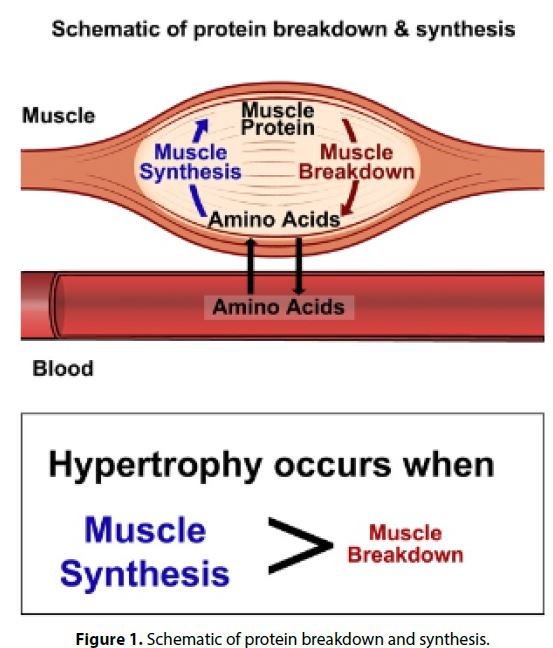
Muscle Protein Synthesis (MPS) is the cellular process of building new muscle proteins from amino acids. It occurs in response to training, nutrition, and hormonal signals. It is in constant competition with Muscle Protein Breakdown (MPB).
- When MPS > MPB: net muscle gain occurs.
- When MPS < MPB: net muscle loss occurs.
A 2016 narrative review titled “Nutritional Supplements in Support of Resistance Exercise to Counter Age-Related Sarcopenia” by Stuart M. Phillips, published in Frontiers in Physiology, examined the role of dietary protein and supplementation in maximizing muscle protein synthesis across the lifespan.
The authors concluded that sustained net gains in muscle mass require frequent and repeated stimulation of MPS through both progressive resistance training and adequate protein intake, ideally spaced evenly throughout the day. They emphasized that high-quality protein sources — particularly those rich in leucine, such as whey — are more effective at activating the mTOR pathway, which directly triggers MPS. The review also noted that older adults may need higher per-meal protein doses to overcome anabolic resistance, making nutrient timing and quality even more critical for long-term muscle preservation and growth.
4. How MPS Works — The Mechanism
The process can be broken down into four main steps:
- Signal Initiation – Mechanical stress from resistance exercise or other stimuli sends signals to muscle cells.
- mTOR Pathway Activation – The mammalian target of rapamycin (mTOR) is a master regulator of protein synthesis. Leucine, a key amino acid, is one of its strongest activators (Atherton PJ, et al., 2010).
- Transcription & Translation – Genetic instructions for muscle proteins are transcribed into mRNA and translated into amino acid chains.
- Protein Assembly – Amino acids are linked together and folded into functional proteins, which are then integrated into the myofibrils.
5. Key Triggers for MPS
Understanding what drives muscle protein synthesis (MPS) is essential for anyone aiming to optimize muscle growth, repair, and performance. Whether you’re a competitive bodybuilder or a dedicated gym-goer, knowing the main factors that switch on MPS can help you align your training, nutrition, and recovery for maximum results.
- Resistance Training – This remains the most potent natural trigger for MPS. When muscles are subjected to mechanical tension, particularly under progressive overload, micro-tears occur within muscle fibers. These micro-tears signal the body to initiate repair and adaptation, leading to increased muscle size and strength over time. Studies, such as Burd et al. (2010), confirm that resistance exercise not only stimulates MPS immediately after training but also keeps it elevated for up to 48 hours, depending on training intensity and volume.
- Protein Intake – Adequate dietary protein is a critical substrate for muscle building. High-quality protein sources that contain all nine essential amino acids (EAAs) – such as whey, casein, eggs, and lean meats – directly fuel MPS. Consuming protein around training sessions enhances recovery, while evenly distributing protein intake across the day maximizes cumulative muscle-building potential.
- Leucine Content – Among all EAAs, leucine has a unique role as a “trigger amino acid.” It acts as a molecular signal to activate the mTOR pathway, which kickstarts MPS. Research suggests that approximately 2–3 grams of leucine per meal is sufficient to maximize the MPS response for most adults. This amount can be found in ~25–30 grams of high-quality protein, especially dairy-based proteins like whey, which are naturally high in leucine.
- Hormonal Factors – Hormones such as insulin, testosterone, and insulin-like growth factor 1 (IGF-1) enhance MPS, particularly when their levels are optimized through resistance training and proper nutrition. Insulin primarily serves to reduce muscle protein breakdown, creating a more favorable net protein balance, while testosterone and IGF-1 increase the capacity for muscle hypertrophy. Combining training stimuli with nutritional strategies that support healthy hormone function yields a synergistic effect on MPS.
6. Nutrition and MPS
Proper nutrition plays a pivotal role in regulating muscle protein synthesis (MPS), acting as the fuel and raw material for building new muscle tissue. Among all nutritional factors, protein intake—especially its quality, timing, and amino acid profile—stands out as the most influential driver of this process.
- Optimal Protein Dose – Research shows ~20–40 g of high-quality protein per meal maximizes MPS in most adults (Moore DR, et al., 2009).
- Protein Quality – Animal-based proteins (whey, casein, eggs) generally produce a stronger MPS response than plant-based proteins, though blending plant sources can match the effect.
- Timing – The so-called “anabolic window” may be longer than previously thought — MPS can remain elevated for up to 48 hours post-training, but post-workout protein still supports recovery.
- Carbohydrates – Adding carbs increases insulin, which helps reduce muscle protein breakdown, indirectly supporting a positive protein balance.
7. The Role of Age, Sex, and Training Status
Understanding how muscle protein synthesis (MPS) responds to protein intake isn’t one-size-fits-all. Factors like age, biological sex, and training background can significantly influence how efficiently your muscles use dietary protein to grow and repair. Being aware of these differences allows athletes and coaches to tailor nutrition strategies for maximum benefit.
- Older Adults – With aging comes anabolic resistance — a reduced sensitivity of muscle tissue to protein intake and resistance training stimuli. Research shows that older adults often require a higher protein dose per meal (about 0.4 g/kg body weight) to achieve the same MPS stimulation seen in younger individuals. This is partly due to reduced muscle perfusion, hormonal changes, and impairments in intracellular signaling pathways (Kumar et al., 2009). Regular resistance training combined with higher-quality, leucine-rich protein sources can help offset this decline.
- Men vs. Women – While both men and women can fully maximize MPS with proper protein intake, hormonal profiles (especially testosterone and estrogen) can affect the rate and magnitude of the response. Men may experience slightly greater absolute MPS rates post-exercise due to higher baseline muscle mass and androgen levels. In contrast, women may benefit from more consistent protein distribution across meals to maintain a steady anabolic environment.
- Training Experience – Beginners often see a more prolonged MPS elevation after resistance exercise, sometimes lasting up to 48 hours. This means early trainees can stimulate growth with slightly less frequent protein feedings and still benefit. In contrast, advanced athletes tend to have a shorter MPS window and may require more strategic timing of protein intake (e.g., around workouts) and slightly higher total daily protein to continue progressing.
8. MPS and Recovery
After resistance training, muscle protein synthesis (MPS) rates can remain elevated for approximately 24–48 hours, with the exact duration influenced by factors such as exercise intensity, training volume, and the athlete’s training status. This elevated MPS window represents a critical recovery phase in which damaged muscle fibers undergo repair, remodeling, and strengthening.
Maximizing recovery during this period requires adequate protein intake (rich in essential amino acids, especially leucine), along with sufficient carbohydrates to replenish glycogen and reduce muscle breakdown. Incorporating quality sleep, hydration, and active recovery methods further supports this process.
Research, such as the study “Timing and distribution of protein ingestion during prolonged recovery from resistance exercise alters myofibrillar protein synthesis” by Areta et al. (2013), has shown that strategically distributing protein intake across the recovery period can significantly enhance MPS rates compared to a single large dose. This finding reinforces the importance of regular protein feedings during the 24–48 hours post-exercise to fully capitalize on the body’s adaptive potential.
If recovery is inadequate — for example, due to insufficient protein intake, chronic sleep deprivation, or excessive training without rest — the balance between MPS and muscle protein breakdown (MPB) may shift unfavorably. Over time, this can lead to slower strength gains, prolonged soreness, and even muscle loss, undermining training progress.
9. Why High MPS Doesn’t Always Equal Bigger Muscles
A single spike in MPS doesn’t automatically translate to visible hypertrophy. Muscle growth occurs over weeks to months of repeated positive net protein balance. Chronic caloric deficit, poor sleep, or inadequate training intensity can limit the effect.
10. Common Myths About MPS
| Myth | Truth |
|---|---|
| More protein always means more muscle. | There’s a limit per meal to how much protein can effectively stimulate muscle protein synthesis (MPS). Consuming excessive amounts in one sitting doesn’t proportionally increase muscle growth potential. |
| MPS only happens right after training. | MPS is an ongoing process that occurs throughout the day and is influenced by both training and diet. Exercise creates a temporary increase in MPS sensitivity, but nutrition continues to affect it for hours afterward. |
| Plant proteins can’t stimulate MPS. | Plant proteins can stimulate MPS if consumed in adequate amounts and combined to provide a complete amino acid profile, ensuring sufficient leucine and other essential amino acids. |
11. Practical Strategies to Maximize Muscle Protein Synthesis
Building muscle efficiently isn’t just about lifting heavy weights — it’s about creating the right environment inside your body for growth. By applying evidence-based strategies, you can optimize muscle protein synthesis (MPS) and ensure that your training efforts translate into real, visible gains.
- Consume High-Quality Protein Sources
Prioritize complete proteins that contain all nine essential amino acids, particularly leucine, which plays a central role in triggering MPS. Foods like whey protein, lean meats, fish, eggs, and dairy are excellent choices. Research suggests that aiming for around 20–40 g of high-quality protein per meal can effectively stimulate MPS in most adults. - Time Protein Intake Around Training
The post-exercise period — often called the “anabolic window” — is when muscles are exceptionally responsive to amino acids. Consuming protein within 30–60 minutes after resistance training can significantly enhance MPS and speed up recovery. However, maintaining regular protein distribution throughout the day (every 3–4 hours) is equally important. - Combine Resistance Training with Proper Nutrition
Exercise alone will not maximize MPS — the synergy between mechanical stimulus (training) and nutrient availability (diet) is essential. Structured strength training programs paired with a diet rich in protein and other key nutrients provide the most potent stimulus for long-term muscle growth. - Avoid Long Periods Without Protein
Going many hours without protein can cause MPS to drop, allowing muscle breakdown to dominate. Spreading protein intake evenly across 4–6 meals or snacks helps keep MPS elevated throughout the day and reduces muscle catabolism. - Include Fast-Digesting Protein Post-Workout
Whey protein is rapidly absorbed and delivers a strong leucine signal to muscle cells, making it an ideal choice after workouts. This quick amino acid availability ensures that your muscles get the raw materials they need for repair and growth when they need them most. - Prioritize Recovery: Quality Sleep and Stress Management
MPS does not happen optimally in a stressed, sleep-deprived body. Growth hormone release and tissue repair are at their peak during deep sleep, while chronic stress can elevate cortisol levels — a catabolic hormone that works against muscle building. Aim for 7–9 hours of quality sleep each night, practice relaxation techniques, and manage stress effectively to create a hormonal environment that supports continuous muscle growth.
12. Conclusion
Muscle Protein Synthesis is the foundation of muscle growth and recovery. By understanding its triggers, time course, and nutritional requirements, athletes can make informed choices to support their training goals. In the long run, optimizing MPS is less about one “magic” meal or workout and more about consistently applying the right strategies day after day.
