


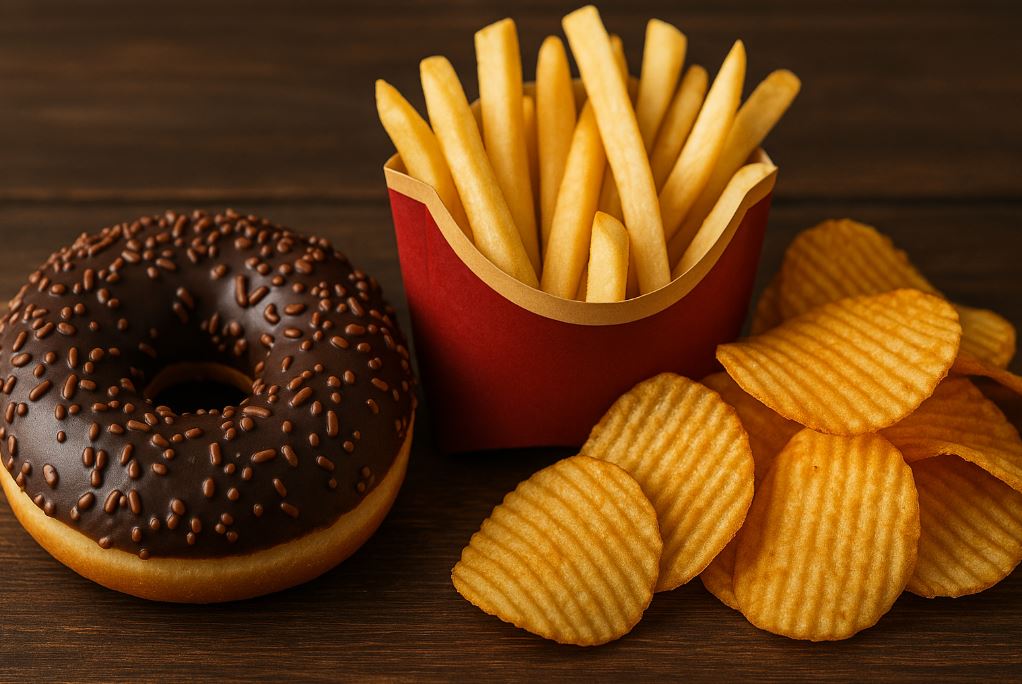
Introduction: Why Food Cravings Control Us More Than Hunger
If you’ve ever finished a big meal but still felt the irresistible urge to indulge in chocolate, chips, or ice cream, you’ve experienced the power of cravings. Unlike hunger, which is a biological signal that the body needs energy, cravings are deeply tied to psychology, brain chemistry, and the environment.
The psychology of food cravings helps explain why humans are hardwired to desire sugar, fat, and salt. These cravings are not simply a matter of a lack of willpower. Instead, they are a product of our evolution, hormones, and emotional state.
As a licensed fitness coach and doctor of kinesiology, I’ve seen hundreds of clients wrestle with cravings. Some were elite athletes cutting weight for competition, others were everyday people trying to drop body fat. Regardless of fitness level, cravings often determined whether they succeeded or struggled endlessly.
In this article, we’ll explore why sugar, fat, and salt dominate our food desires, what happens in the brain when cravings strike, and most importantly, how you can manage them with practical strategies that work in real life.
What Are Food Cravings?
Food cravings are intense, specific desires for a particular food. They differ from hunger in several ways:
- Hunger is general: your body wants calories, any calories.
- Cravings are precise: you don’t just want food, you want ice cream with caramel or salty chips.
Cravings often come with emotional and sensory imagery—you can “taste” the chocolate before you even unwrap it.
Typical triggers include:
- Stress and emotional states
- Learned habits (popcorn with movies, dessert after dinner)
- Hormonal fluctuations (cortisol, leptin, ghrelin)
- Environmental cues (advertising, smell of baked goods, social events)
Understanding the psychology of food cravings is the first step toward mastering them.
Sugar Cravings: Dopamine and the Brain’s Reward System
Sugar is the most notorious craving, and for good reason. Unlike many other foods, sugar directly activates the brain’s reward pathways, making it one of the most potent drivers of repeated eating.
When we consume sugar, the taste receptors on the tongue send signals to the brain’s striatum, a key part of the reward circuit. This triggers the release of dopamine, the neurotransmitter associated with pleasure, motivation, and reinforcement. The effect is immediate—sugar creates a “feel-good hit” that encourages us to seek it again and again.
The Addiction-Like Cycle
- Dopamine spikes: Sugar intake causes a rapid increase in dopamine levels.
- Reward reinforcement: The brain learns to associate sugar with pleasure.
- Tolerance effect: Over time, the brain needs more sugar to produce the same dopamine response—similar to what happens with addictive drugs.
- Withdrawal-like response: When sugar is reduced, cravings intensify, sometimes with irritability or fatigue.
Scientific Evidence
- Volkow et al. (2013, Nature Reviews Neuroscience) demonstrated that sugar stimulates neural pathways overlapping with those activated by addictive substances, explaining why it’s so difficult to resist.
- Avena et al. (2008, Neuroscience & Biobehavioral Reviews) showed in animal studies that sugar bingeing produced signs of dependence, including cravings, tolerance, and withdrawal.
Practical Impact
This is why people casually describe themselves as “chocoholics” or “sugar addicts.” The description is not far from reality—sugar creates a biochemical drive for more, one that extends beyond simple enjoyment. For athletes and dieters, this cycle can derail progress by leading to unnecessary snacking, late-night binges, and difficulty sticking to structured meal plans.
Coach’s Tip: Breaking the Sugar Cycle
As a coach, I’ve learned that cravings rarely disappear with sheer willpower—they need strategic replacement and structure. Here’s what works in real life:
- Protein-first rule: Start meals with lean protein (chicken, eggs, whey, Greek yogurt). Protein boosts satiety hormones and stabilizes blood sugar, reducing sugar cravings later.
- Smart substitution: Replace candy with fruit paired with protein (apple + Greek yogurt, banana + whey shake). This satisfies the sweet taste but prevents sugar spikes.
- Dark chocolate strategy: If clients crave chocolate, I often allow a square of dark chocolate (85% cocoa). It delivers the flavor and satisfaction, but with less sugar.
- Planned indulgence: One pre-scheduled “sweet treat” day per week is often more effective than rigid restriction, which usually leads to rebound overeating.
👉 In practice, when clients adopt these strategies, sugar cravings often reduce by 50–70% within the first 2–3 weeks. It’s not about total elimination but about regaining control over the craving cycle.
Why We Crave Fat: Evolutionary Psychology and Modern Traps

Fat cravings are not random—they are hardwired into human survival. Thousands of years ago, when food was scarce, fat was a rare and vital energy source. Unlike carbohydrates or protein, fat provides 9 calories per gram (more than double the energy density). For early humans, finding a fatty food source (like animal fat or nuts) meant survival during famine.
Evolutionary Advantage Turned Against Us
- Scarcity in the past: Our ancestors were rewarded for craving fat because it helped them store energy for times of scarcity.
- Abundance today: In modern life, fat-rich foods are everywhere—cheeseburgers, fries, pastries, ice cream—making evolutionary cravings a liability rather than an advantage.
- Fat + sugar combo: The modern food industry exploits this by combining fat with sugar (donuts, chocolate, fast food). This hijacks the brain’s reward system, making these foods nearly impossible to resist.
Scientific Evidence
- Lutter & Nestler (2009, Trends in Neurosciences) demonstrated that fat, like sugar, activates reward pathways in the brain, though with slightly different neurochemical patterns.
- Drewnowski (1998, American Journal of Clinical Nutrition) demonstrated that humans have an innate preference for fat-rich foods due to their palatability and high energy density.
Practical Impact
Fat cravings usually show up as comfort eating: pizza after a stressful day, or ice cream when you’re sad. These foods provide emotional relief in the short term but can easily overshoot calorie needs.
Coach’s Tip: Managing Fat Cravings
In coaching, I don’t tell clients to avoid fat—fat is essential for hormone health, joint function, and satiety. The key is quality and portion control.
- Upgrade your fats: Swap fried foods and trans fats for avocados, nuts, olive oil, and omega-3–rich fish.
- Balance with protein: Fat combined with protein (salmon, nuts with Greek yogurt) satisfies cravings while stabilizing appetite.
- Portion awareness: I teach clients to visualize a thumb-sized portion of oil or a palmful of nuts. Without awareness, even healthy fats can become calorie bombs.
- Don’t demonize fat: When clients restrict fat too aggressively, cravings rebound stronger. A moderate intake (20–30% of calories) is ideal for athletes and active individuals.
👉 The real coaching breakthrough comes when clients understand that fat doesn’t make you fat—overeating does. Once this myth is dispelled, they feel less guilty about enjoying healthy fats in moderation, and cravings naturally lose their power.
Why Salt Is So Irresistible: The Physiology of Craving Sodium

Salt cravings are less about indulgence and more about biological necessity. Sodium is critical for fluid balance, nerve signaling, and muscle contraction. Without adequate sodium, the body’s performance drops sharply.
Physiological Drivers of Salt Cravings
- Electrolyte balance: When sodium levels drop (e.g., after sweating during intense training), the body triggers a craving for salt to restore balance.
- Thirst-salt connection: Sodium helps the body retain water. This is why salty foods often taste delicious when dehydrated.
- Evolutionary survival: Just like fat, salt was once scarce. Early humans who craved and sought out salt had better hydration and muscle function.
Scientific Evidence
- Geerling & Loewy (2008, Experimental Physiology) explained how the hypothalamus regulates sodium appetite, driving salt cravings when levels are low.
- Leshem (2009, Physiology & Behavior) showed that salt cravings are heightened during stress, linking sodium appetite to both physiological and psychological states.
Practical Impact
For athletes and bodybuilders, salt cravings are common during heavy sweating or intense training. However, for sedentary individuals exposed to processed foods, cravings often mean excess sodium intake, which contributes to hypertension and bloating.
The Psychology Behind Food Cravings

Beyond biology, cravings are shaped by psychology and environment. What makes food cravings so powerful is not just the sugar, fat, or salt in the food itself, but the context in which we experience them.
1. Emotional Eating
Stress, loneliness, boredom, or sadness often drive cravings for comfort foods. Elevated cortisol (the stress hormone) increases appetite and preference for calorie-dense foods, particularly those high in sugar and fat.
- Example: Many people don’t crave a salad when stressed—they crave ice cream or pizza.
- Emotional eating becomes a learned coping mechanism: instead of dealing with emotions directly, the brain seeks instant relief through food.
👉 Coach’s Fix: I advise clients to identify emotional hunger vs. physical hunger. One method is the HALT technique: ask yourself if you’re Hungry, Angry, Lonely, or Tired before eating. If it’s emotion-driven, try non-food coping strategies (stretching, journaling, calling a friend).
2. Conditioned Cues
Just as Pavlov’s dogs salivated when hearing a bell, humans link specific cues to eating:
- Popcorn when watching a movie.
- Cake at birthdays.
- Beer during sports games.
These cravings are triggered not by hunger but by associations built over time.
👉 Coach’s Fix: Break the cycle with habit swaps. Instead of popcorn at movies, prepare air-popped popcorn with less oil, or crunchy veggies with hummus. The goal is not to eliminate the ritual but to reshape it into a healthier version.
3. Social Influence
Humans are social eaters. Research shows that people often eat up to 30% more in groups than when alone. Social events—such as birthdays, holidays, or cultural traditions—normalize indulgence.
- At Christmas, sweets and heavy meals are expected.
- In sports culture, pizza and beer symbolize bonding.
- Saying “no” to cake at a party can feel socially awkward.
👉 Coach’s Fix: I recommend the “80/20 Rule”—enjoy the food during social gatherings without guilt, but keep the rest of the week structured and balanced. I also teach clients to use mindful portion control: have a slice of cake, but don’t let social pressure push you to three slices.
4. Visual and Sensory Triggers
Smells, advertisements, and even seeing food on social media can spark cravings. Modern marketing exploits this by pairing vibrant colors and enticing language (“irresistible,” “guilt-free,” “indulgent”) with images of calorie-dense foods.
👉 Coach’s Fix: Reduce exposure when possible (mute food-delivery ads, unfollow tempting accounts). When triggers appear, pause and ask: Do I really want this, or is my brain just responding to a cue?
5. Reward & Habit Loops
Every time you respond to a craving with food, you reinforce a reward loop. The brain learns: craving → eating → pleasure. Over time, this becomes automatic.
👉 Coach’s Fix: Break the loop by inserting a different response. For example, when a late-night craving hits, drink a glass of water, brush your teeth, or do 10 push-ups. Small wins rewire the habit loop.
Hormones That Influence Cravings
Several hormones play a direct role in craving intensity:
- Ghrelin: “The hunger hormone” rises before meals and makes food more appealing.
- Leptin: Signals satiety. Leptin resistance (common in obesity) blunts fullness and intensifies cravings.
- Cortisol: Elevated during stress, drives desire for sugar and fat.
- Insulin: Rapid blood sugar drops can trigger urgent sugar cravings.
Athletes dieting for competition often report extreme cravings because low body fat disrupts leptin and ghrelin balance.
📌 Case Study – Coach’s Note
Evening Chocolate Cravings That Wouldn’t Quit
A client of mine, a 32-year-old office worker, came to me frustrated: “I eat healthy all day, but every night I crave chocolate. I try to resist, but eventually I give in and eat half a bar. I feel like I’m sabotaging myself.”
Instead of labeling it as “lack of willpower,” I dug deeper. We discovered several factors:
- Stress: She worked late and used chocolate as a reward.
- Low protein intake at dinner: Her meals lacked satiety, so cravings hit harder.
- Emotional association: Growing up, dessert was always chocolate, so it was wired as comfort.
My intervention strategy:
- Increased her protein at dinner (grilled chicken and vegetables).
- Added a small serving of Greek yogurt with berries as a “sweet finish.”
- Introduced stress-management techniques: 10 minutes of stretching or journaling before bedtime.
- Allowed one “planned indulgence” day per week where she could enjoy chocolate guilt-free.
The result: Within 3 weeks, her nightly chocolate binges disappeared. She no longer felt controlled by cravings, and she even reported enjoying chocolate more on her planned day than during the previous mindless snacking.
👉 This illustrates an essential truth: cravings can’t always be eliminated, but they can be redirected and managed through structured habits.
Practical Coaching Strategies to Manage Cravings
Here are the tools I use with clients:
- Protein-first rule: Start meals with protein to reduce cravings later.
- Planned indulgence: Allow 1–2 treats per week to prevent binge cycles.
- Mindful eating: Slow down, focus on flavor, and recognize satiety cues.
- Food diary: Track when and why cravings occur. Patterns reveal triggers.
- Hydration and sleep: Two overlooked pillars. Dehydration and poor sleep amplify cravings dramatically.
Conclusion: Mastering the Psychology of Food Cravings
The psychology of food cravings shows us that sugar, fat, and salt aren’t accidents of modern food—they are wired into our survival systems and amplified by emotions, hormones, and habits.
But cravings are not destiny. With awareness, smart nutrition strategies, and practical coaching tools, you can turn cravings from a roadblock into a guide.
When you learn to listen, manage, and redirect cravings, you reclaim control over food—and over your fitness journey.
✅ Key Takeaways
- Cravings differ from hunger: they are specific, emotionally charged desires.
- Sugar activates dopamine reward pathways, fat cravings stem from evolution, and salt cravings are tied to physiology.
- Emotional states, hormones, and environment amplify cravings.
- Practical strategies—protein-first, mindful eating, planned indulgence—work in real life.
- As a coach, I’ve seen that cravings can’t always be eliminated, but they can be successfully managed with the right structure.
