



Introduction: Why “Healthy” Foods Can Still Make Us Fat
Walk into any supermarket and you’ll find entire aisles filled with products labeled organic, natural, low-fat, or high-protein. These foods wear the badge of health, and we automatically assume they are good for us in unlimited amounts. This phenomenon is called the halo effect of healthy foods.
The halo effect occurs when a single positive attribute—such as “organic,” “protein-packed,” or “low sugar”—makes us assume the entire food is healthy. As a result, we eat more of it than we should, often leading to excess calorie intake and stalled progress in weight loss or bodybuilding.
As a licensed fitness coach and doctor of kinesiology, I’ve seen countless clients confused about why they aren’t losing weight despite “eating healthy.” In almost every case, the culprit is not fast food or sweets—but rather granola, smoothies, and protein bars. These foods look healthy on the surface, but can easily sabotage your goals if consumed mindlessly.
This article breaks down the psychology behind the halo effect, the hidden calorie traps in common “healthy” foods, and most importantly, actionable coaching tips you can apply immediately.
What Is the Halo Effect of Healthy Foods?
The term “halo effect” originates from psychology. It describes how one positive impression (e.g., someone being attractive) influences our judgment of unrelated traits (e.g., assuming they are also intelligent). In nutrition, the halo effect works the same way.
When we see a food labeled organic or low-fat, our brain unconsciously assumes it is lower in calories, more nutritious, and safe to eat in larger amounts.
Research Example
- A study from Cornell University (2007) showed that people ate almost 50% more when foods were labeled “organic,” even when the calorie content was identical.
- Another study found that people underestimate calories by up to 40% when foods are marketed as “low-fat.”
In short, when a food looks “healthy,” our brain permits us to eat more of it.

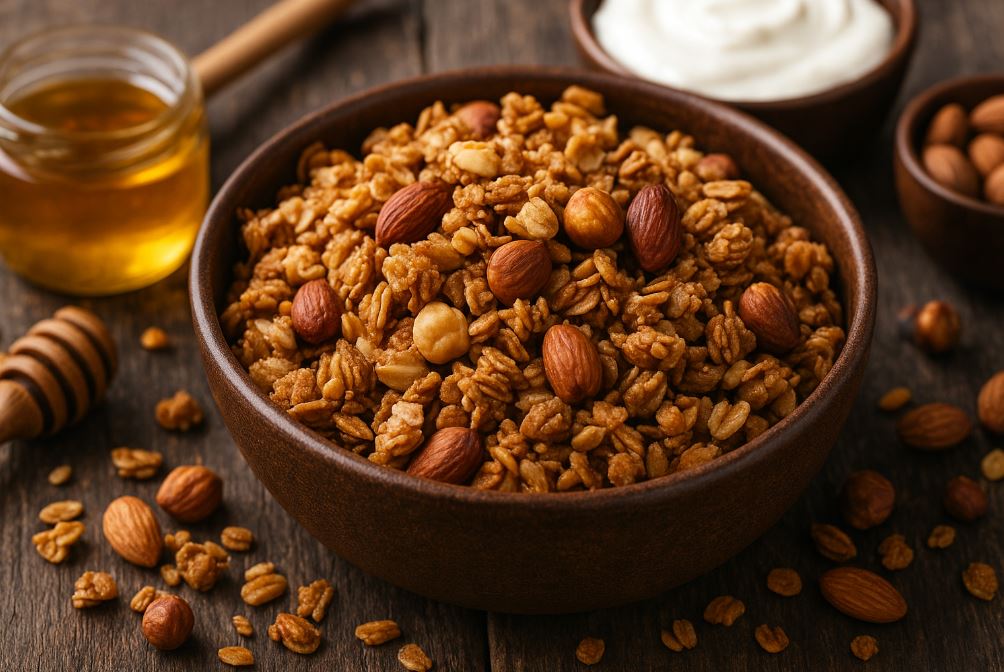
Granola – The Hidden Calorie Bomb
Granola has long been marketed as a “superfood breakfast.” Oats, nuts, honey, and dried fruit sound like a perfect start to the day. But here’s the reality:
- A single cup of granola can contain 400–500 calories.
- Added oils and sugars can make granola as calorie-dense as a slice of cake.
- Many store-bought versions have more sugar than a candy bar.
Why We Overeat Granola
The halo effect makes granola feel like a guilt-free food. “It’s just oats and nuts!” But because it’s energy-dense, eating even a small bowl can blow through your daily calorie needs.
Coach’s Advice
- Use granola as a topping, not the base. Add a tablespoon over Greek yogurt instead of eating a whole bowl.
- Make your own. Roast oats with cinnamon and a touch of honey instead of processed oil-packed versions.
- Measure your serving. Don’t pour directly from the bag; use a scale or measuring cup instead.
Smoothies – When Fruit Turns Into Liquid Calories
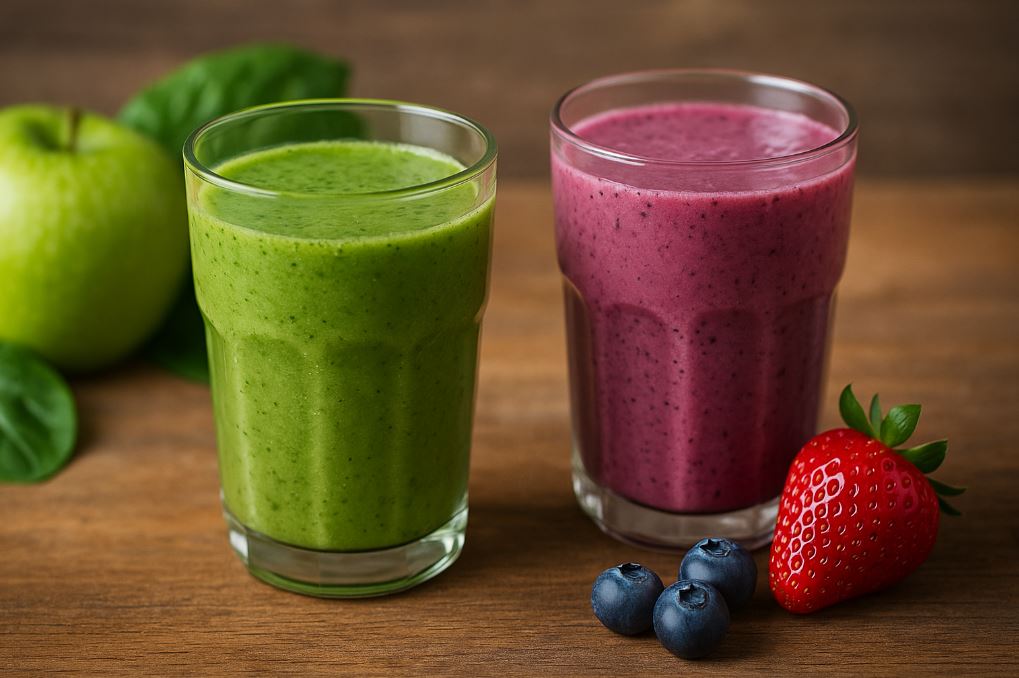
Smoothies are another classic example of the halo effect of healthy foods. They are marketed as the perfect health drink, yet many are closer to milkshakes than diet-friendly meals.
- A medium fruit smoothie from a café can contain 400–600 calories.
- Liquids do not trigger satiety the same way solid foods do. Your brain doesn’t register fullness, so you’re hungry again soon after.
- Smoothies often pack multiple servings of fruit, concentrated juice, and added sweeteners.
Why We Overeat Smoothies
The problem is not the fruit itself—it’s the form. Blending breaks down fiber, allowing your body to digest it more efficiently. This leads to a sugar spike and crash, leaving you craving more food.
Coach’s Advice
- Build a balanced smoothie. Always include a protein source (whey protein, Greek yogurt) and a fiber source (chia seeds, spinach, oats).
- Use smoothies as snacks or post-workout fuel, not meals. They should supplement your diet, not replace solid food entirely.
- Stick to one serving of fruit. Bulk the rest with veggies (spinach, kale, cucumber).
Protein Bars – Candy in Disguise?
Walk down any supplement aisle and you’ll find protein bars in shiny wrappers, boasting 20g of protein and “low sugar.” Sounds perfect, right? Not so fast.
- Many bars contain 200–300 calories, as much as a chocolate bar.
- Sugar alcohols (maltitol, sorbitol) can cause bloating and digestive issues.
- Some brands use added fats and syrups to improve taste, making them little more than candy with protein powder sprinkled in.
Why We Overeat Protein Bars
The halo effect tells us: “It’s protein, so it’s healthy.” But eating two or three in a day can easily add 600–900 extra calories.
Coach’s Advice
- Check the label. Look for bars with fewer than 7g of sugar and at least 15g of protein.
- Use them as convenience snacks, not daily staples. Real meals should come first.
- Pair them smartly. If you eat a protein bar, balance the rest of your meals with whole foods like chicken, eggs, or legumes.

The Psychology Behind Overeating Healthy Foods
The halo effect of healthy foods is not just about labels—it’s about how our brain justifies decisions, often without us realizing it. Even highly disciplined athletes can unconsciously fall into these traps.
Key Psychological Traps
- Licensing Effect
This occurs when people feel they have “earned” the right to indulge. After a tough gym session, it feels justified to grab a massive smoothie or a double serving of granola. Studies show that physical activity can paradoxically increase calorie intake because we reward ourselves afterward. - Perceived Balance
Many dieters operate on a mental balance sheet: “I had a salad for lunch, so I can afford a protein bar and some granola later.” The problem is that those “healthy” snacks often contain more calories than the meal they are meant to offset. This is why weight loss stalls despite “good” choices. - Underestimation Bias
Research from Chandon & Wansink (2007, Journal of Consumer Research) demonstrates that people underestimate calories by 20–40% when foods are labeled as “low-fat,” “organic,” or “healthy.” This means a 500-calorie smoothie might be perceived as only 300 calories in the mind of the consumer. - Moral Licensing
Beyond just food, moral licensing refers to the idea that engaging in something considered “good” (such as exercising or eating vegetables) grants one psychological permission to engage in something considered “bad.” With food, that “bad” choice is often overeating “healthy” snacks. - Health Halo of Branding
Packaging plays a huge role. Words like natural, whole grain, or gluten-free instantly activate the halo effect, even if the food is calorie-dense. A bar with the word protein in bold letters may contain more sugar than a candy bar, but still feels virtuous to eat. - Portion Distortion
When a food is perceived as “healthy,” we unconsciously serve ourselves more. One Cornell University study found that participants ate almost double portions of “organic” cookies compared to identical cookies without the label.
Why This Matters for Athletes and Bodybuilders
👉 Awareness is the first step. Once you recognize these biases, you can make conscious adjustments—measuring portions, questioning labels, and treating “healthy” foods with the same scrutiny as any other calorie source.
Scientific Evidence on Satiety and Liquid Calories
The halo effect of healthy foods becomes even more dangerous when we combine it with the way our bodies respond differently to liquid vs. solid calories. Research in nutrition and physiology shows that the form of calories strongly influences satiety, digestion, and subsequent food intake.
1. Liquid Calories Are Less Satiating
- Study: Mattes, R. D. (1996). Fluid calories and energy balance: The good, the bad, and the uncertain. Physiology & Behavior, 59(3), 615–624.
- Findings: Liquid calories (juices, smoothies, sodas) are less effective at triggering satiety signals compared to solid foods. This means people often consume more total calories after drinking their energy, because the brain doesn’t fully register it as “food.”
2. Fruit Juice vs. Whole Fruit
- Study: Flood-Obbagy, J. E., & Rolls, B. J. (2009). The effect of fruit in different forms on energy intake and satiety at a meal. Appetite, 52(2), 416–422.
- Findings: Eating whole fruit leads to greater satiety and lower subsequent calorie intake compared to fruit juice or puréed fruit. In practical terms, eating an apple fills you more than drinking apple juice, even when calories are identical.
3. Smoothies vs. Solid Meals
- Study: Mourao, D. M., Bressan, J., Campbell, W. W., & Mattes, R. D. (2007). Effects of food form on appetite and energy intake in lean and obese young adults. International Journal of Obesity, 31, 1688–1695.
- Findings: Both lean and overweight participants consumed more total calories after liquid meals compared to solid versions, because liquid foods produced weaker satiety responses.
4. The Satiety Index Concept
- Study: Holt, S. H. A., et al. (1995). A satiety index of common foods. European Journal of Clinical Nutrition, 49(9), 675–690.
- Findings: Foods high in protein and fiber provide the strongest satiety, while energy-dense, sweet foods rank much lower. Granola, smoothies, and protein bars often score poorly in terms of satiety compared to their calorie load.
Practical Coaching Tips to Beat the Halo Effect
Here are proven strategies I use with clients to prevent overeating “healthy” foods:
- Track your intake for one week. Even advanced athletes are shocked when they see how many calories come from snacks.
- Apply the “Protein-First Rule.” Every meal should start with a lean protein source before adding carbs or fats.
- Measure, don’t eyeball. Portion sizes are deceptive—especially for granola and nut butters.
- Reserve convenience foods for emergencies. Protein bars are fine during travel or long workdays, but should not replace real meals.
- Slow down on liquid calories. Drink smoothies slowly and pair them with a solid food (boiled egg, slice of whole-grain toast) to increase satiety.

Conclusion: Healthy Foods Are Not a Free Pass
The halo effect of healthy foods explains why many health-conscious people struggle to lose fat. Granola, smoothies, and protein bars may look innocent, but they often deliver more calories than expected.
The solution is not to avoid these foods but to use them strategically. By applying portion control, checking labels, and prioritizing whole foods, you can enjoy the benefits without sabotaging your goals.
✅ Key Takeaways
- The halo effect makes us underestimate the calorie impact of “healthy” foods.
- Granola, smoothies, and protein bars are the most common traps.
- Portion control and label-reading are essential.
- Real food should always take precedence over convenience products.
- As a coach: I recommend applying the protein-first rule and treating “healthy” snacks as occasional tools—not daily staples.
