


Introduction
When bodybuilders and athletes talk about nutrition, the conversation usually revolves around protein intake, carb timing, or the right fats. But there’s another factor that can drastically influence performance, fat loss, and muscle gain: the glycemic index (GI).
The glycemic index and bodybuilding are closely connected because the type of carbohydrates you eat—not just the amount—can determine how your body responds hormonally, how hungry you feel, and how well you recover after intense training.
What Is the Glycemic Index (GI)?
The glycemic index (GI) is a numerical scale from 0 to 100 that ranks carbohydrate-containing foods based on how quickly and how much they raise blood glucose levels after consumption. Pure glucose is the reference point and is given a GI value of 100.
In simple terms, GI tells you how fast the carbohydrates in a food turn into sugar in your bloodstream.
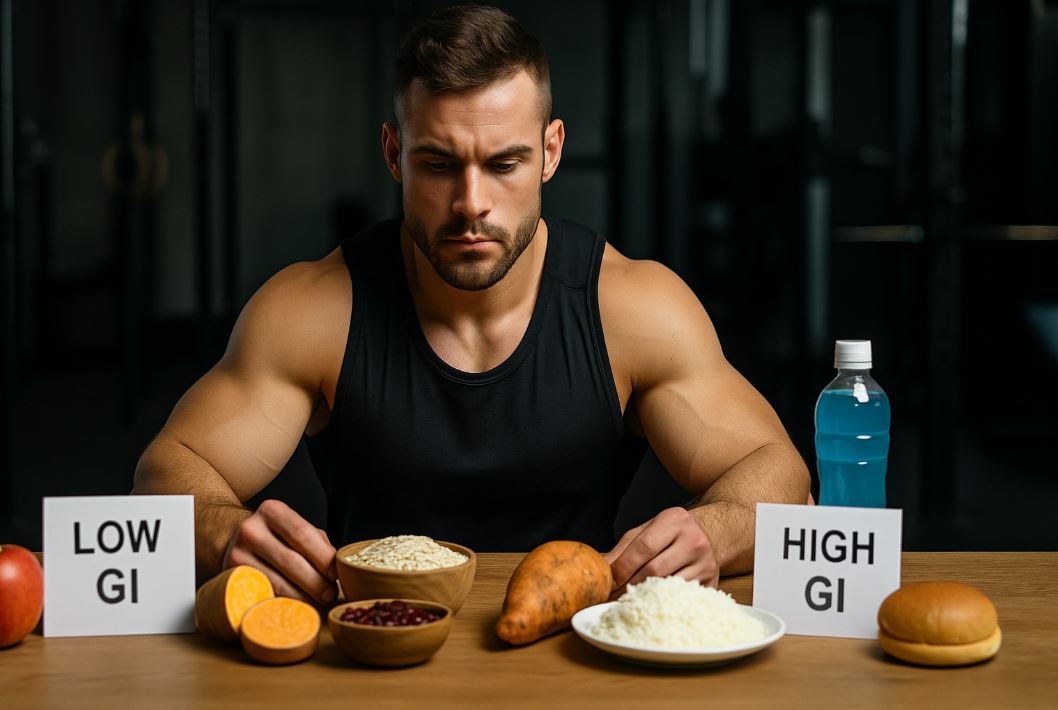
- Low GI (≤55): Foods that digest and absorb slowly, leading to a gradual rise in blood sugar and insulin.
- Medium GI (56–69): Foods that create a moderate increase in blood sugar.
- High GI (≥70): Foods that are digested rapidly, causing a sharp spike in blood sugar and insulin.
GI is measured under controlled laboratory conditions. Test participants consume a portion of food containing exactly 50 grams of available carbohydrates (fiber excluded), and their blood glucose is measured over the next two hours. The result is then compared to the blood glucose response of pure glucose.


Why Is GI Important for Athletes and Bodybuilders?
For athletes and bodybuilders, understanding the glycemic index is more than just nutrition theory—it’s a practical tool that directly influences training performance, recovery, and body composition.
- Energy management: High GI foods can provide a quick burst of energy, making them useful immediately after workouts. Low GI foods provide sustained fuel, ideal for pre-workout meals or dieting phases.
- Appetite control: Low GI foods help you feel full longer, which is essential during fat-loss phases.
- Hormonal response: Different GI foods trigger different insulin responses, which can influence both muscle growth and fat storage.
👉 The glycemic index is not about labeling foods as “good” or “bad.” Instead, it is a tool that helps athletes strategically time and combine carbohydrate sources depending on their goals—whether that’s fat loss, endurance, or maximizing recovery after heavy training.
| GI Category | When to Use | Examples (Bodybuilding Foods) |
|---|---|---|
| Low GI (≤55) | Ideal for steady energy during the day, pre-workout meals, fat-loss phases, and appetite control. | Oats, quinoa, lentils, chickpeas, apples, leafy greens |
| Medium GI (56–69) | Good for balanced meals, moderate energy release, and pre-workout carbs if combined with protein/fats. | Sweet potatoes, brown rice, bananas, whole wheat bread |
| High GI (≥70) | Best post-workout to spike insulin, replenish glycogen, and enhance recovery when paired with protein. | White rice, ripe bananas, honey, sports drinks, rice cakes |
Examples of GI Foods
Here are examples of foods classified by their glycemic index:
| Category | GI Range | Examples (Bodybuilding-Friendly Foods) |
|---|---|---|
| Low GI | ≤55 | Oats, quinoa, lentils, chickpeas, apples, pears, berries, beans, carrots, leafy greens, Greek yogurt, milk, peanuts, almonds, cashews |
| Medium GI | 56–69 | Bananas (slightly ripe), sweet potatoes, brown rice, whole wheat bread, couscous, bulgur, corn, pineapple, raisins, beetroot, popcorn (plain, air-popped) |
| High GI | ≥70 | White bread, white rice, jasmine rice, instant oatmeal, instant mashed potatoes, cornflakes, rice cakes, sports drinks, honey, glucose, watermelon, ripe bananas, pretzels, baked potatoes |
👉 Practical point: Remember, the glycemic index of a food can change depending on ripeness (e.g., green vs ripe bananas), cooking method (e.g., al dente pasta vs soft-cooked), and whether the food is eaten alone or with protein/fat.
Glycemic Load (GL): What It Really Means
Definition and Calculation
Glycemic load (GL) combines both the glycemic index (GI) of a food and the amount of carbohydrate in a typical serving. This makes it a much more practical tool for athletes and bodybuilders than GI alone, since it reflects the real impact a given portion has on blood glucose levels.
- Check Total Carbs and Fiber on the label.
- Compute Available Carbs = Total Carbs − Fiber.
- Use: GL = (GI × Available Carbs) ÷ 100.
Coach’s Tip: Protein, fats, and fiber reduce the real glucose spike, even if the math looks high.
GL Classification (per serving):
- Low GL: ≤10
- Medium GL: 11–19
- High GL: ≥20
Example — Watermelon: High GI but Low GL
Watermelon has a glycemic index of around 72, which would normally classify it as a high-GI food. However, one cup of watermelon contains only about 10 grams of available carbohydrates. When we apply the formula (GL = 72 × 10 ÷ 100 = 7), the glycemic load comes out to roughly 7. This means that despite its high GI, the actual impact of a typical portion of watermelon on blood sugar is low to medium. The lesson here is that even foods with a high GI can have only a minor effect on blood sugar if the carbohydrate content per serving is relatively small.
Practical GL Table (Typical Portions)
| Food / Serving (example) | Approx. GI | Available Carbs | GL (≈) | Notes |
|---|---|---|---|---|
| Watermelon (1 cup cubes) | ~72 | ~10 g | ~7 | High GI, but portion is light → low impact |
| Apple (1 medium) | ~38 | ~20 g | ~8 | Low GL, great satiety |
| Banana (ripe, 1 medium) | ~60 | ~27 g | ~16 | Medium GL; higher as it ripens |
| Oatmeal (1 cup cooked) | ~55 | ~27 g | ~15 | Steady energy — ideal pre-workout |
| Sweet potato (200 g baked) | ~60 | ~40 g | ~24 | High GL at large serving sizes |
| White rice (1 cup cooked) | ~73 | ~45 g | ~33 | High GL — powerful post-workout fuel |
| Quinoa (1 cup cooked) | ~53 | ~25 g | ~13 | Medium GL + rich in micronutrients |
| White bread (2 slices) | ~75 | ~30 g | ~23 | High GL — combine with protein/fats |
| Greek yogurt (200 g, plain) | ~20 | ~7 g | ~1–2 | Very low GL, added protein |
| Sports drink (250 ml) | ~75 | ~25 g | ~19 | Medium-high GL, useful intra/post workout |
Limitations of the Glycemic Index
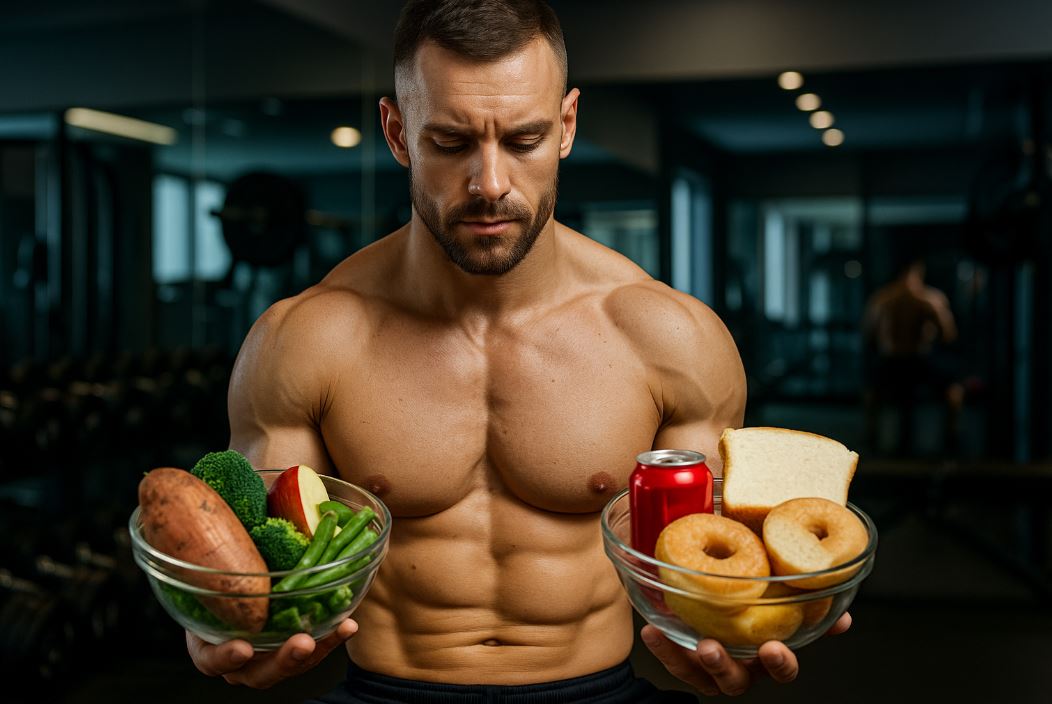
GI is a useful tool, but it has limitations:
- Individual responses vary (genetics, training state, insulin sensitivity). For example, a well-trained bodybuilder may handle white rice more efficiently than a sedentary individual.
- Cooking methods change GI (al dente pasta has lower GI than soft-cooked). Similarly, cooling and reheating potatoes creates resistant starch, which lowers their glycemic impact.
- Combining foods changes the GI of a meal. Adding protein, fat, or fiber slows digestion and lowers the effective glycemic response. For example, white bread eaten alone spikes blood sugar quickly, but if you eat the same bread with chicken breast and olive oil, the rise is much slower and more controlled.
- Glycemic load (GL) is more practical in real life. GI looks only at the quality of carbs, but not the quantity. A food like watermelon has a high GI, but because a typical serving has very few carbs, the glycemic load is low and the actual impact on blood sugar is minimal. This is why GL often gives a more realistic picture of how a meal affects the body.
👉 Think of GI as a compass, not a GPS. It points you in the right direction but isn’t absolute.
Glycemic Index and Appetite
GI plays a huge role in satiety.
- Low GI foods digest slowly, leading to steady blood glucose and longer satiety.
- High GI foods cause a rapid spike in glucose, followed by a sharp drop (reactive hypoglycemia), which can trigger renewed hunger.
Glycemic Index, Insulin, and Hormones
How Insulin Works
Insulin is a hormone secreted by the pancreas that helps move glucose into cells for energy or storage. After a high GI meal, insulin rises quickly to handle the surge in blood sugar.
Insulin and Fat Loss
- Chronic high insulin levels (from frequent high GI meals) may promote fat storage and reduce fat oxidation.
- Low GI diets can help stabilize insulin, supporting fat loss and appetite control.
Insulin and Muscle Growth
- In bodybuilding, insulin is not just a “fat-storage hormone.” It’s also anabolic, helping transport amino acids into muscles and supporting recovery.
- This is why high GI foods post-workout can be beneficial—they spike insulin when muscles are most insulin-sensitive, aiding glycogen replenishment and protein synthesis.
Glycemic Index and Bodybuilding Performance
The relationship between glycemic index and bodybuilding is highly dependent on timing:
- Before training: Low-to-medium GI foods (e.g., oats, sweet potatoes) provide steady energy without causing a sugar crash mid-workout.
- During training: In long or intense sessions, high GI drinks (e.g., glucose, sports drinks) can sustain energy.
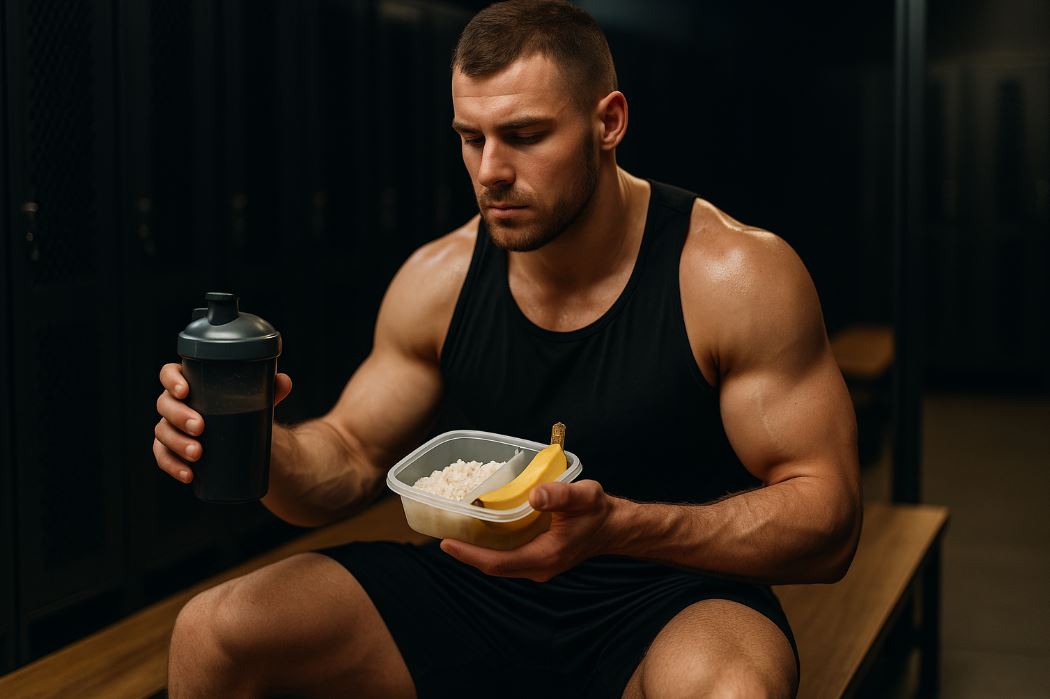
- After training: High GI carbs (e.g., banana, rice, white bread with honey) replenish glycogen stores quickly and pair well with protein shakes for muscle recovery.
GI and Fat Loss
The glycemic index can be a valuable ally for athletes and bodybuilders who are trying to reduce body fat while maintaining muscle mass. Low-GI foods digest more slowly and create a gradual rise in blood sugar, which helps keep hunger under control and reduces the likelihood of overeating. This steady release of energy is particularly useful during a calorie deficit, since it prevents the energy crashes that often lead to snacking on high-calorie foods.
Another important aspect is insulin sensitivity. Diets that emphasize lower-GI foods have been linked to improved insulin sensitivity, which in turn supports healthier fat distribution and makes it easier to mobilize stored fat as an energy source. This is especially relevant for reducing stubborn abdominal fat, an area many athletes struggle with.
⚠️ It is important to remember, however, that fat loss is not determined by GI alone. The most decisive factor is still total energy balance — consuming fewer calories than you expend. The glycemic index should be seen as a tool to make fat loss more manageable, not a magic solution on its own.
| High GI Food | Better Alternative (Lower GI) |
|---|---|
| White bread | Whole grain bread |
| Instant rice | Brown rice or quinoa |
| Sugary cereal | Oatmeal with fruit |
| Potato chips | Roasted sweet potato wedges |
| Candy | Apple with peanut butter |

How to Use GI and GL in Food Choices
Here’s how athletes can use GI and GL strategically:
- Choose low GI carbs for most meals (e.g., oats, lentils, quinoa, non-starchy vegetables).
- Use high GI carbs strategically post-workout for recovery.
- Balance meals: Add protein, fat, and fiber to lower the GI of a meal.
- Think in terms of GL: Even a high GI food can be fine if the portion is small.
Coach’s Perspective
Many bodybuilders make the mistake of avoiding all high GI foods. But context is everything. I encourage my athletes to use high GI carbs after training to kick-start recovery while relying on low GI carbs during the day to stay full and focused.
For example, I often recommend:
- Pre-workout: oatmeal with berries (low GI for stable energy).
- Post-workout: whey shake with ripe banana (high GI for fast recovery).
This combination fuels training, prevents energy crashes, and maximizes recovery.
Conclusion
The glycemic index and bodybuilding are deeply connected through appetite control, hormone regulation, performance, and recovery. By understanding GI and glycemic load, athletes can make smarter food choices, time their carbs for maximum benefit, and avoid common pitfalls like sugar crashes or chronic high insulin.
GI is not about strict rules—it’s about using food strategically to match your training and physique goals.
