


Vitamin D is the most important vitamin for bodybuilders when it comes to muscle growth and recovery. Numerous studies in animals and humans have demonstrated the effects of vitamin D deficiency on various aspects of muscle cell function. In this article, you’ll find out everything you need to know about this crucial vitamin.
What is Vitamin D?
Vitamin D is an essential fat-soluble micronutrient that is made from cholesterol. However, our body needs the UV ray from the sun in order to produce vitamin D. There are two main forms of vitamin D, which are D2, otherwise known as ergocalciferol, and D3, which is also known as cholecalciferol.
Deficiency has been shown to be linked to increased body fat and decreased strength. Vitamin D also plays a big role in muscle recovery post-exercise, repair, regeneration, and hypertrophy. Therefore, as you can see, bodybuilders, athletes, and regular gymgoers have a special interest to keep an eye on that particular vitamin.
Table 1: Vitamin D quick guide
| Alternative names | Cholecalciferol, calcitrol, calciferol |
| Dietary reference intake (DRI) | Adult males: 15 mcg/day (600 IU/day) Adult females: 15 mcg/day (600 IU/day |
| Recommended intake for athletes | 15 mcg/day (600 IU/day) |
| Functions | Absorption of calcium and phosphorus, healthy skin, improved muscle recovery, lower muscle soreness, and improved immune function. |
| Good food sources | Ultraviolet light exposure, fatty fish (catfish, salmon, mackerel, sardines, tuna), fish liver oil; lesser amounts in eggs and canned fish, fortified milk, margarine. |
| Deficiency | Rickets (the failure of the bone to properly mineralize), osteomalacia (adults), increased risk of stress fractures, and increased risk of osteoporosis. Also, muscle weakness and pain, poor muscle recovery, joint pain, poorly functioning immune system, and low bone mineral density that predisposes bones to fracture. |
| Toxicity (high toxicity potential) | Tolerable upper intake levels: 100 mcg/day (4.000 IU/day) Symptoms: Nausea, diarrhea, loss of muscle function, organ damage, skeletal damage |
Vitamin D boosts your exercise benefits
Vitamin D helps you exercise better, longer, and more productively—you get better results, and your muscles work more efficiently, have more oomph, and are stronger.
There’s a reciprocal relationship between D and exercise. Vitamin D improves exercise capacity for these reasons:
- Vitamin D preserves muscle mass.
- Vitamin D improves muscle performance.
- Exercise improves vitamin D production and supply.
We define exercise capacity as strength, coordination, and endurance. Strength is related to lean muscle mass—the more mass you have, the more strength you have. Coordination requires that small and large muscles fire rapidly and in controlled bursts to perform delicate or precise maneuvers. This control requires an adequate number of nerves attached to your muscles as well as well-tuned muscles that can contract and relax rapidly, with no muscle spasms or cramps.
Endurance requires optimal muscle metabolism, a healthy heart, and healthy lungs. Your muscle must be able to burn a variety of fuels efficiently, and the heart and lungs have to deliver enough oxygen to the muscle so it can burn that fuel.
Vitamin D has numerous other functions important for athlete health and performance, including the following:
Vitamin D helps you get the job done
Muscle mass is directly related to vitamin D as well as other variables, such as adequate protein. The severe vitamin D deficiency of osteomalacia and rickets results in muscle atrophy and weakness. These problems can be so severe that toddlers and adults lose their ability to walk, but replacing vitamin D restores their strength and coordination.
Stamina also is important in workouts. How long you can sustain repeated muscle contractions depends on the efficiency and supply of your fuel. Vitamin D improves insulin sensitivity, and this serves muscles well during exercise.
You need vitamin D to breathe well. Researchers measured how much air you can blow out in one second and the total amount of air you can blow out period, and they found that both were significantly higher in people with the highest vitamin D levels compared to those with the lowest levels. The differences were greatest in people sixty or older. The difference due to vitamin D was also greater than the difference due to smoking.
To get plenty of oxygen to your muscles during exercise, you need a strong heart and healthy blood vessels. Vitamin D lowers blood pressure and opens up your blood vessels, allowing more blood to flow.
Exercise boosts your vitamin D
How does exercise enhance vitamin D? When you go outside to walk, bike, run, or row, you’re exposed to sunlight, which facilitates vitamin D production. This increased production of D affects the pro¬duction of collagen in the skin, the growth of sweat glands, hair follicle life-cycles, and muscle and bone. The positive effects of sufficient vitamin D on hair follicles and sweat glands enhance your cooling efficiency during exercise.
The fuel burned during exercise varies with the type of exercise. During short, quick activities such as sprinting and powerlifting, the body uses glucose. But during aerobic exercise or prolonged exertion, you primarily burn fat, and that’s why aerobic exercise is so important for restoring and maintaining lean body mass. That’s also the reason that aerobic exercise raises vitamin D levels. When you burn fat, you liberate vitamin D from that fat and garner it for use elsewhere. It’s safe to attribute at least part of the health benefits of exercise to these higher vitamin D levels.
What are the health benefits of vitamin D?
Recent studies have concluded that vitamin D plays a more significant role in human health than previously believed. Vitamin D also has other benefits that are beneficial to your health, such as bone health, improved immune function and cognition, as well as the reduction in risks of cancer, heart disease, and diabetes to name a few. In light of these benefits, it is absolutely essential to pay attention to your vitamin D level. You can have it checked at your doctor’s office via a simple blood test. Most people don’t have optimal levels, so oral supplementation is necessary.
Vitamin D supplement recommendation

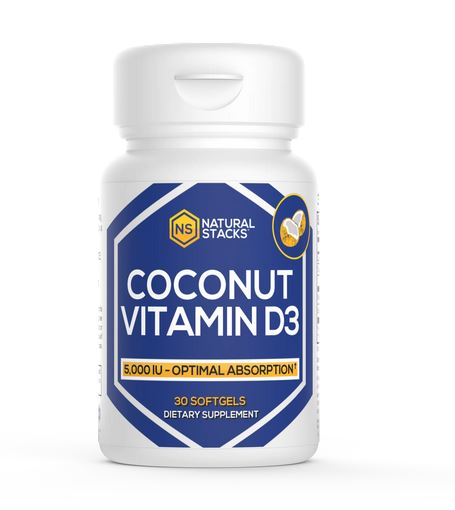
Natural Stacks Vitamin D
Natural Stacks Vitamin D combines a high dose — 5000 International Units (IU) per single-soft gel serving — with 100 milligrams of organic coconut oil to better help with absorption. Natural Stacks uses what they call its “Open Source” transparency program that provides ingredient traceability and third-party testing results for every batch. BUY NOW!
Conclusion
Vitamin D exerts beneficial effects on skeletal muscles and thus may improve physical performance capacity in both physically nonathletic individuals and athletes. In closing, based on the available literature, we propose that vitamin D is beneficial for individuals since it increases muscle protein synthesis, adenosine triphosphate (ATP) concentration, strength, jump height, jumping and sprinting velocity and power, and aerobic and anaerobic exercise capacity. Physical performance could be significantly enhanced and/or preserved with adequate vitamin D. Vitamin D also prevents muscular degeneration and reverses myalgia.
