Close Menu
Bodybuilding Wizard

    Subscribe to Updates

    Join our mailing list to receive the latest updates from our team.

    Facebook X (Twitter) Instagram
    Trending
    • Does Training Legs Really Boost Testosterone? What the Science Says
    • Does Sauna Really Boost Growth Hormone 16x? Myth vs. Science
    • Does Power Posing Really Boost Testosterone? Myth, Science & the Retraction
    • Does Ashwagandha Really Boost Testosterone and Lower Cortisol? Myth vs. Science
    • Progesterone and Exercise: How It Affects Training, Metabolism & the Menstrual Cycle
    • Estrogen and Exercise: How Estradiol Affects Muscle, Fat, Bone Health & Performance
    • Thyroid Hormones and Metabolism: T3, T4, Muscle Growth & Fat Loss Explained
    • Glucagon and Exercise: How It Affects Blood Sugar, Fat Burning & Training
    RSS Facebook X (Twitter) LinkedIn YouTube Pinterest Instagram
    Bodybuilding Wizard
    Subscribe Login
    • Home
    • Tools
      • Interactive Muscle Anatomy
      • Interactive Human Skeleton
      • Bodybuilding & Fitness Calculators
      • Dietary & Nutrition Calculators
      • Body Measurement Calculators
      • Fitness Tests
      • Bodybuilding Glossary
      • DIY Projects
    • Training
      • Weight training basics
      • Advanced bodybuilding
      • Strength training for women
      • Workout programs
      • Home weight training programs
      • Cardio workout
      • Exercise equipment
      • Weight training accessories
      • Weight lifting injuries
      • Weight training for sports
    • Exercises
      • Chest exercises
        • Middle chest exercises
        • Upper chest exercises
        • Lower chest exercises
      • Back exercises
        • Middle back (latissimus dorsi)
        • Upper back (trapezius)
        • Lower back (erector spinae)
      • Arm exercises
        • Bicep exercises
        • Tricep exercises
        • Forearm exercises
        • Grip-strengthening exercises
      • Shoulder exercises
        • Front deltoid
        • Side deltoid
        • Rear deltoid
        • Rotator Cuff
        • Scapular & Shoulder Stability
        • Neck strengthening exercises
      • Leg and glute exercises
        • Quadricep exercises
        • Hamstring exercises
        • Calf exercises
        • Glute & Hip exercises
        • Shin exercises
      • Abdominal exercises
        • Upper abdominal exercises
        • Lower abdominal exercise
        • Oblique exercises
      • Core exercises
      • Kettlebell exercises
      • Foam rolling & Stretching
      • Explosive (dynamic) lifts
    • Motivation
      • Greatest physiques
      • Motivation techniques & tips
      • Events and competitions
      • Latest fitness news
      • Videos
        • Funny gym reels
        • Motivational videos
        • Funny workout videos
      • Pictures
      • Quotes
      • Funny Fitness
      • Transformations
    • Diet
      • Nutrition Fundamentals
      • Diet Types & Strategies
      • Foods & Superfoods for Athletes
      • Muscle Building & Performance Nutrition
      • Weight Loss & Fat Management
      • Food Psychology & Myths
      • Recipes & Meal Ideas
    • Supplements
      • Supplements Review
      • Muscle Building Supplements
      • Anabolic Steroids
      • Fat Burners & Weight Loss
      • Pre-Workout & Energy Boosters
      • Recovery & Sleep Aids
      • Cognitive & Nootropic Support
      • General Supplement Advice
      • Health Supplements
        • Joint & Bone Support
        • Gut Health & Digestion
        • Vitamins & Minerals
        • Superfoods & Greens
      • Steroid Alternatives
    • Anatomy
      • Upper-Body Muscles
      • Lower-Body Muscles
      • Bones & Skeletal Anatomy
      • Muscle Growth & Genetics
      • Joints, Tendons & Connective Tissue
      • Hormones & Endocrine System
      • Physiology & Body Systems
      • Body Composition & Fat
      • General Anatomy & Basics
    • Health
    Bodybuilding Wizard
    You are at:Home»Supplements»Health Supplements»Vitamins & Minerals»The Importance of Vitamin D for Bodybuilders and Athletes
    Vitamins & Minerals

    The Importance of Vitamin D for Bodybuilders and Athletes

    No Comments6 Mins ReadkrunoslavBy krunoslavJune 3, 2023Updated:September 18, 2025
    Vitamin D for Bodybuilders and Athletes
    Share
    Facebook Twitter Pinterest LinkedIn Email Tumblr WhatsApp Telegram

    Vitamin D is the most important vitamin for bodybuilders when it comes to muscle growth and recovery. Numerous studies in animals and humans have demonstrated the effects of vitamin D deficiency on various aspects of muscle cell function. In this article, you’ll find out everything you need to know about this crucial vitamin.

    What is Vitamin D?

    Vitamin D is an essential fat-soluble micronutrient that is made from cholesterol. However, our body needs the UV ray from the sun in order to produce vitamin D. There are two main forms of vitamin D, which are D2, otherwise known as ergocalciferol, and D3, which is also known as cholecalciferol.

    Deficiency has been shown to be linked to increased body fat and decreased strength. Vitamin D also plays a big role in muscle recovery post-exercise, repair, regeneration, and hypertrophy. Therefore, as you can see, bodybuilders, athletes, and regular gymgoers have a special interest to keep an eye on that particular vitamin.

    Table 1: Vitamin D quick guide

    Alternative namesCholecalciferol, calcitrol, calciferol
    Dietary reference intake (DRI)Adult males: 15 mcg/day (600 IU/day)
    Adult females: 15 mcg/day (600 IU/day
    Recommended intake for athletes15 mcg/day (600 IU/day)
    FunctionsAbsorption of calcium and phosphorus, healthy skin, improved muscle recovery, lower muscle soreness, and improved immune function.
    Good food sourcesUltraviolet light exposure, fatty fish (catfish, salmon, mackerel, sardines, tuna), fish liver oil; lesser amounts in eggs and canned fish, fortified milk, margarine.
    DeficiencyRickets (the failure of the bone to properly mineralize), osteomalacia (adults), increased risk of stress fractures, and increased risk of osteoporosis. Also, muscle weakness and pain, poor muscle recovery, joint pain, poorly functioning immune system, and low bone mineral density that predisposes bones to fracture.
    Toxicity (high toxicity potential)Tolerable upper intake levels:
    100 mcg/day (4.000 IU/day)
    Symptoms: Nausea, diarrhea, loss of muscle function, organ damage, skeletal damage
    Vitamin D quick facts

    Vitamin D boosts your exercise benefits

    Vitamin D helps you exercise better, longer, and more productively—you get better results, and your muscles work more efficiently, have more oomph, and are stronger.

    There’s a reciprocal relationship between D and exercise. Vitamin D improves exercise capacity for these reasons:

    • Vitamin D preserves muscle mass.
    • Vitamin D improves muscle performance.
    • Exercise improves vitamin D production and supply.

    We define exercise capacity as strength, coordination, and endurance. Strength is related to lean muscle mass—the more mass you have, the more strength you have. Coordination requires that small and large muscles fire rapidly and in controlled bursts to perform delicate or precise maneuvers. This control requires an adequate number of nerves attached to your muscles as well as well-tuned muscles that can contract and relax rapidly, with no muscle spasms or cramps.

    Endurance requires optimal muscle metabolism, a healthy heart, and healthy lungs. Your muscle must be able to burn a variety of fuels efficiently, and the heart and lungs have to deliver enough oxygen to the muscle so it can burn that fuel.

    Vitamin D has numerous other functions important for athlete health and performance, including the following:

    • Muscle contraction (through activation of enzymes required for muscle stimulation)
    • Facilitated intestinal absorption of calcium
    • Muscular enlargement (because of enhanced muscle protein anabolism)
    • Lower muscle soreness
    • Improved immune function
    • Improved muscle recovery and lower muscle inflammation through increased production of anti-inflammatory cytokines and interleukin-4
    • Decreased production of inflammatory agents interleukin-6, interferon-y, and inter-leukin-2

    Vitamin D helps you get the job done

    Muscle mass is directly related to vitamin D as well as other variables, such as adequate protein. The severe vitamin D deficiency of osteomalacia and rickets results in muscle atrophy and weakness. These problems can be so severe that toddlers and adults lose their ability to walk, but replacing vitamin D restores their strength and coordination.

    Stamina also is important in workouts. How long you can sustain repeated muscle contractions depends on the efficiency and supply of your fuel. Vitamin D improves insulin sensitivity, and this serves muscles well during exercise.

    You need vitamin D to breathe well. Researchers measured how much air you can blow out in one second and the total amount of air you can blow out period, and they found that both were significantly higher in people with the highest vitamin D levels compared to those with the lowest levels. The differences were greatest in people sixty or older. The difference due to vitamin D was also greater than the difference due to smoking.

    To get plenty of oxygen to your muscles during exercise, you need a strong heart and healthy blood vessels. Vitamin D lowers blood pressure and opens up your blood vessels, allowing more blood to flow.

    Exercise boosts your vitamin D

    How does exercise enhance vitamin D? When you go outside to walk, bike, run, or row, you’re exposed to sunlight, which facilitates vitamin D production. This increased production of D affects the pro¬duction of collagen in the skin, the growth of sweat glands, hair follicle life-cycles, and muscle and bone. The positive effects of sufficient vitamin D on hair follicles and sweat glands enhance your cooling efficiency during exercise.

    The fuel burned during exercise varies with the type of exercise. During short, quick activities such as sprinting and powerlifting, the body uses glucose. But during aerobic exercise or prolonged exertion, you primarily burn fat, and that’s why aerobic exercise is so important for restoring and maintaining lean body mass. That’s also the reason that aerobic exercise raises vitamin D levels. When you burn fat, you liberate vitamin D from that fat and garner it for use elsewhere. It’s safe to attribute at least part of the health benefits of exercise to these higher vitamin D levels.

    What are the health benefits of vitamin D?

    Recent studies have concluded that vitamin D plays a more significant role in human health than previously believed. Vitamin D also has other benefits that are beneficial to your health, such as bone health, improved immune function and cognition, as well as the reduction in risks of cancer, heart disease, and diabetes to name a few. In light of these benefits, it is absolutely essential to pay attention to your vitamin D level. You can have it checked at your doctor’s office via a simple blood test. Most people don’t have optimal levels, so oral supplementation is necessary.

    Vitamin D supplement recommendation

    • natural stacks coconut vitamin d supplement

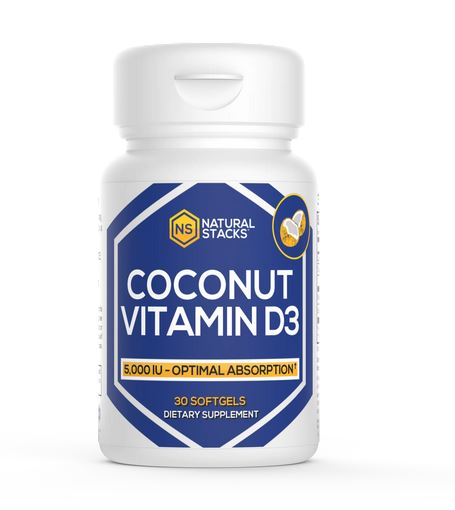
      Natural Stacks Vitamin D

      Natural Stacks Vitamin D combines a high dose — 5000 International Units (IU) per single-soft gel serving — with 100 milligrams of organic coconut oil to better help with absorption. Natural Stacks uses what they call its “Open Source” transparency program that provides ingredient traceability and third-party testing results for every batch. BUY NOW!
    Conclusion

    Vitamin D exerts beneficial effects on skeletal muscles and thus may improve physical performance capacity in both physically nonathletic individuals and athletes. In closing, based on the available literature, we propose that vitamin D is beneficial for individuals since it increases muscle protein synthesis, adenosine triphosphate (ATP) concentration, strength, jump height, jumping and sprinting velocity and power, and aerobic and anaerobic exercise capacity. Physical performance could be significantly enhanced and/or preserved with adequate vitamin D. Vitamin D also prevents muscular degeneration and reverses myalgia.

    Share. Facebook Twitter Pinterest LinkedIn Tumblr Email WhatsApp
    krunoslav
    • X (Twitter)

    Hey! My name is Kruno, and I'm the owner and author of Bodybuilding Wizard. I am a licensed fitness trainer with a Ph.D. in kinesiology. Throughout my career, I have dedicated myself to helping individuals achieve their health and fitness goals through personalized training programs. In addition to my academic qualifications, I have completed various specialized courses, including certifications in nutrition and strength training, which have further enhanced my ability to provide comprehensive fitness guidance. I started this website back in late 2014, and it has been my pet project ever since. My goal is to help you learn proper weight training and nutrition principles so that you can get strong and build the physique of your dreams!

    Related Posts

    Vitamin D and Testosterone: The Crucial Link Every Athlete Needs to Understand

    Vitamin D3 and Testosterone Levels: The Sunshine Hormone Link

    Zinc and Testosterone in Bodybuilding: The Critical Mineral for Strength and Hormonal Balance

    Leave A Reply Cancel Reply

    You must be logged in to post a comment.

    WE ARE SOCIAL
    • Facebook 3.6K
    • Twitter
    • YouTube 133
    • Instagram
    RECENT POSTS
    August 26, 2026

    Does Training Legs Really Boost Testosterone? What the Science Says

    August 24, 2026

    Does Sauna Really Boost Growth Hormone 16x? Myth vs. Science

    August 24, 2026

    Does Power Posing Really Boost Testosterone? Myth, Science & the Retraction

    August 23, 2026

    Does Ashwagandha Really Boost Testosterone and Lower Cortisol? Myth vs. Science

    August 23, 2026

    Progesterone and Exercise: How It Affects Training, Metabolism & the Menstrual Cycle

    RECENT COMMENTS
    • Justin Dew on Designing your own home gym
    • krunoslav on Meet Your Muscles: How muscles are named?
    • Christina on Meet Your Muscles: How muscles are named?
    • igtropin on Stiff-Leg Deadlift: Proper Form, Muscles Worked & Hamstring Growth Guide
    • teragon labs on Barbell Back Squat: Proper Form, Benefits, Muscles Worked & Expert Tips
    LATEST GALLERIES

    Subscribe to Updates

    Join our mailing list to receive the latest updates from our team.

    ABOUT
    ABOUT

    We are a group of bodybuilding enthusiasts and this is our effort to have all the details about bodybuilding on a single website. We strive to educate and inform our visitors so that they can make the correct training, nutrition, and supplement decisions on their own. Bodybuilding Wizard will make your dream body your reality and take you to a whole new level!

    POPULAR POSTS
    April 2, 2014

    Lying Leg Curl: Complete Guide to Hamstring Isolation, Strength & Muscle Growth

    February 18, 2019

    Meet Your Muscles: How muscles are named?

    March 28, 2014

    Free weights: The main tool for building muscles

    BODYBUILDING WIZARD
    Bodybuilding Wizard Footer Logo
    Facebook X (Twitter) Instagram Pinterest YouTube
    • About
    • Authors
    • Editorial Policy
    • Write for us
    • Privacy
    • Contact
    • Terms of Use
    • Advertising
    • FAQ
    Copyright © 2014-2026 BodybuildingWizard. All rights reserved. Powered by WordPress. Made with love and lots of caffeine.

    Type above and press Enter to search. Press Esc to cancel.

    Sign In or Register

    Welcome Back!

    Login to your account below.

    Lost password?