


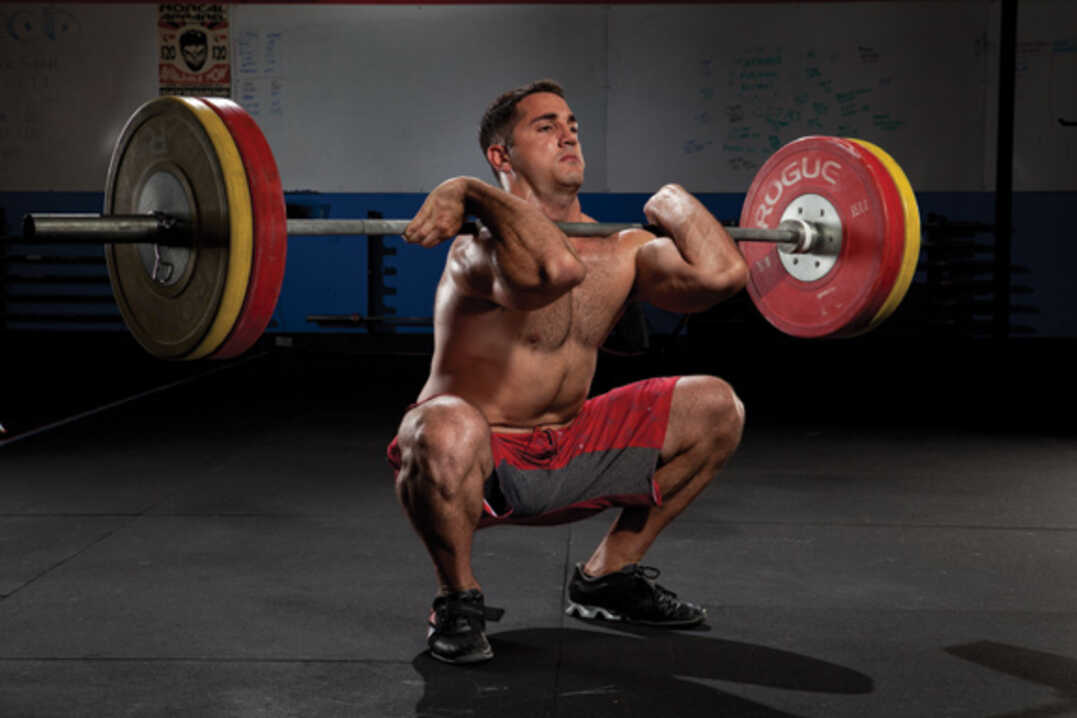
Have you ever watched lifters perform the squat clean and thought about giving it a go? If you’re looking to master this dynamic and explosive lift, you’re in the right place! The squat clean is not just a test of strength but also of agility, balance, and coordination. It’s a staple in Olympic weightlifting and a favorite in cross-training workouts.
When you close this article you will know how to perform the squat clean with perfect form, you’ll be aware of the common mistakes to avoid, and the muscles engaged in this super powerful lift. We’ll also discuss the pros and cons of, its suitability for beginners, who it’s best suited for, and who should avoid it at any cost. Additionally, we’ll cover how to progress into this lift, explore its variations, suggest potential replacement exercises, and explain the differences between the squat clean, power clean, and hang clean.
What is the Squat Clean?
The squat clean is a dynamic weightlifting exercise where you move a loaded barbell from the ground to your shoulders while simultaneously dropping into a deep squat position. This move is fluid and powerful, combining the clean and the front squat into one seamless motion.
The Squat Clen perfect technique
Nailing the squat clean requires a blend of strength, mobility, and impeccable technique/form. When executed correctly, it not only maximizes your performance but also minimizes the risk of injuries.
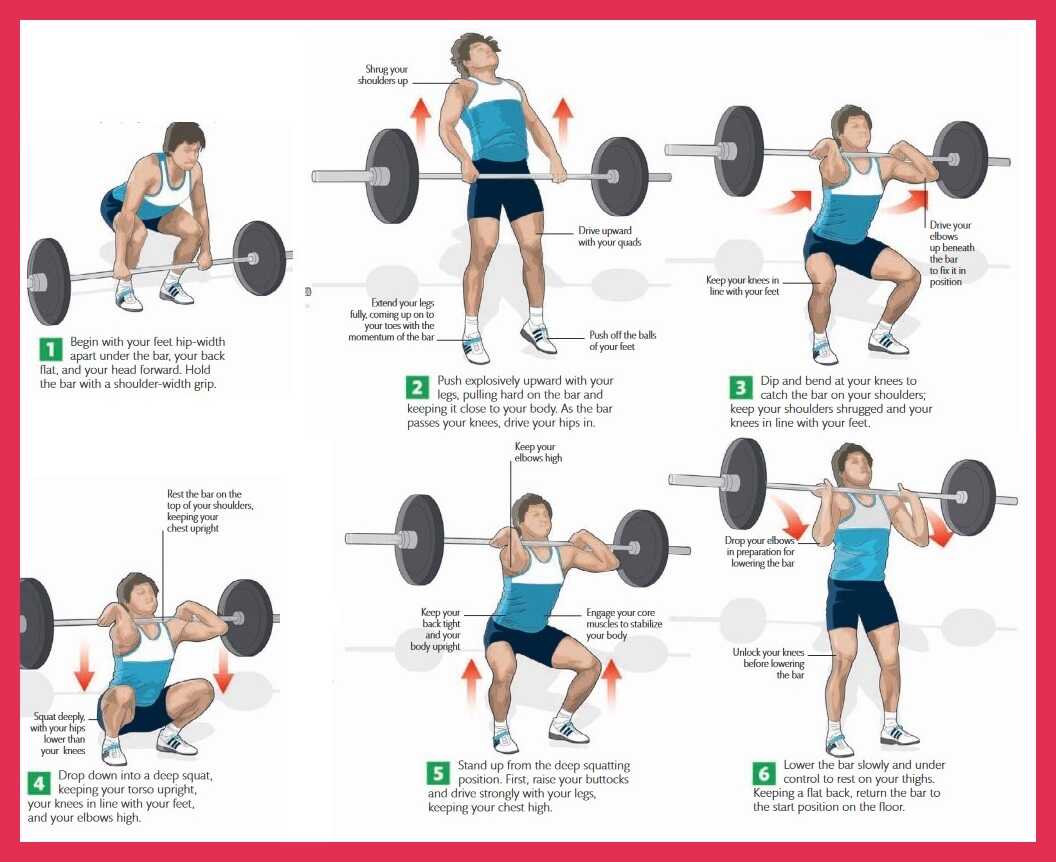
- Setup: Stand with your feet shoulder-width apart, toes pointing slightly outward. Place the barbell on the floor in front of you.
- Squat down and grip the barbell with an overhand grip, hands just outside your knees.
- Keep your chest up, your back flat, and your head in a neutral position.
- Lift-Off: Initiate the lift by driving through your heels.
- Keep the bar close to your shins as you lift it off the floor.
- Extend your hips and knees simultaneously.
- First Pull: Pull the barbell up to just above your knees.
- Think about pulling your chest up and driving your hips forward.
- Maintain a flat back and tight core.
- Second Pull: As the bar passes your knees, explosively extend your hips, knees, and ankles.
- Shrug your shoulders and pull yourself under the bar.
- Keep the bar close to your body throughout the movement.
- Catch: Rotate your elbows forward to catch the barbell on the front of your shoulders.
- Simultaneously, drop into a full squat with the bar resting on your front deltoids.
- Ensure your elbows are high and your chest is up.
- Stand Up: Push through your heels to stand up from the squat.
- Extend your hips and knees fully to complete the lift.
- Maintain your grip on the bar with high elbows.
- Reset: Carefully lower the barbell back to the starting position. Prepare for the next repetition by ensuring your body is correctly aligned.
Step-by-step video guide
Given that the squat clean is a highly dynamic and multiphase lift, understanding the intricacies can be challenging through static images alone. This video will guide you step-by-step, ensuring you grasp each movement and technique required to perform the squat clean with precision.
Additional tips for better performance and safety
If you really want to master the squat clean, it’s essential to focus on these extra tips for better performance and safety. Whether you’re aiming to lift heavier or perfect your form, these strategies can make a significant difference. By fine-tuning your approach, not only can you enhance your effectiveness, but you’ll also minimize the risk of injury.
- Warm Up Appropriately: Ensure your muscles are adequately prepared by incorporating dynamic stretches and mobility exercises before engaging in squat cleans.
- Start Light: Begin with manageable weights to perfect your form, gradually increasing the load as your technique improves.
- Maintain a Neutral Spine: Keep your back straight and avoid rounding your spine to prevent injuries and maintain control through the lift.
- Use Your Legs: Focus on driving with your legs and engaging your hips during the lift to generate power and stability.
- Breathing Technique: Inhale deeply before the lift and exhale as you complete it to maintain core stability and strength.
- Video Your Lifts: Recording your lifts from a front-side angle can help you identify and correct form issues with the assistance of a coach or through self-assessment.
- Practice Consistency: Regularly practicing the squat clean will help you develop muscle memory and improve your performance over time.
- Focus on Smooth Transitions: Avoid pausing at any point of the lift; aim for a fluid movement from start to finish.
- Avoid Rushing: Don’t rush through the lift. Instead, start slow and increase your speed as you get more comfortable.
- Keep the Bar Close: Keep the barbell close to your body to maintain control and balance throughout the lift.
- Mind Your Knees: Be cautious about your knee position. Avoid pushing them too far back or not bringing them back under the bar soon enough.
- Listen to Your Body: If something feels off or painful, don’t push through it. Adjust your form or weight as necessary and consult a coach if needed.
Muscles involved during a Squat Clean
The beauty of the squat clean lies in its ability to engage a large number of muscle groups simultaneously. It’s no wonder we often refer to it as a full-body exercise.

- Quadriceps: Responsible for extending the knees as you lift the barbell from the ground.
- Glutes: Engage to extend your hips and help drive the bar upward.
- Hamstrings: Assist in extending the hips and controlling the descent during the squat.
- Deltoids: Crucial for stabilizing the barbell and supporting shoulder movement.
- Trapezius: Help elevate the shoulders during the pull phase.
- Spinal Erectors: Maintain your back’s alignment and stability throughout the lift.
- Core Muscles (Abdominals and Obliques): Provide stability and protect the lower back during the entire motion.
- Hip Flexors: Activate during the squat portion, especially as you drop under the bar.
- Biceps and Triceps: Assist in pulling and stabilizing the barbell.
- Lats: Engage to help keep the bar close to your body during the pull.
Pros and cons of including squat cleans in a workout routine
Pros:
- Full-Body Workout: Squat cleans engage multiple muscle groups, enhancing overall strength and conditioning.
- Explosive Power: This exercise builds explosive power, which is crucial for athletes in many sports.
- Functional Fitness: Squat cleans improve functional strength and mimic real-life movements, making them great for general fitness and everyday activities.
- Strength Gains: Allows lifting heavier weights compared to other clean variations, thus promoting significant strength gains.
- Metabolic Boost: High-intensity nature of the lift can boost metabolism and aid in fat loss.
Cons:
- Technical Skill Required: Squat cleans require a high level of technique and practice, which might be challenging for beginners.
- Injury Risk: Poor form or attempting too much weight can lead to injuries, particularly in the lower back, knees, and shoulders.
- Equipment Necessity: Requires a barbell and weight plates, which may not be readily available for all individuals.
- Recovery Time: The intense nature of this exercise might require more recovery time compared to other weightlifting movements.
- Not Beginner-Friendly: Due to its complexity, it’s not ideal for those new to weightlifting without proper coaching or supervision.
How do you progress to squat clean?
Progressing to the squat clean involves mastering a series of foundational movements. Start with the following steps:
- Master the Front Squat: Begin by perfecting your front squat. This will help you get comfortable with the front rack position and build the necessary leg strength.
- Work on the Deadlift: The deadlift sets the foundation for the initial pull phase of the squat clean. Focus on maintaining a strong and stable back position.
- Practice the Clean Pull: The clean pull helps develop explosive power. It’s essentially a deadlift followed by a powerful shrug, getting you used to the explosive hip extension required for the squat clean.
- Learn the High Pull: This exercise builds on the clean pull, emphasizing a high elbow position to prepare for the catch phase.
- Drill the Hang Clean: The hang clean focuses on the second pull and the transition to the front squat. Start with the bar just above the knees and focus on explosive movement.
- Combine Movements: After mastering the individual components, start combining them. Perform a full clean from the floor, utilizing the technique and strength you’ve developed.
- Use Progressive Loading: Gradually increase the weight as you gain confidence and improve your technique.
Progressing to the squat clean takes time. Focus on technique and seek feedback from experienced lifters or coaches to ensure you’re on the right track.
Differences between the Squat Clean, Power Clean, and Hang Clean
The squat clean, power clean, and hang clean may seem similar but each has distinct characteristics.
The squat clean requires a full-depth squat to catch the bar and is a key part of Olympic weightlifting. It involves a greater range of motion, making it demanding on both strength and technique as you transition under the bar quickly.
The power clean is caught in a partial squat, meaning you pull the bar higher and rely less on flexibility and mobility. It emphasizes explosive power and speed without the deep squat, often used in athletic training programs to develop overall power and agility.
The hang clean begins with the bar above the knees and focuses on the upper body’s pulling strength. This variation is particularly effective for developing explosive power from a more static position, making it a favorite in sports where quick lifts from mid-thigh are crucial.
Of these, the squat clean is generally considered the most demanding due to its full-depth catch, which requires significant mobility, strength, and technical precision. It allows lifters to handle heavier weights since the bar doesn’t need to be pulled as high.
Replacement exercises
- Power Clean
- Hang Power Clean
- Front Squat
- Split Snatch
- Deadlift
- High Pull
- Barbell Push Press
- Overhead Squat
- Clean and Jerk
- Power Snatch
- Trap Bar Deadlift
Conclusion
Wrapping up, the squat clean is undeniably a potent exercise that offers numerous benefits for those who are ready to take on its challenge. While it demands attention to detail and a commitment to perfect form, the rewards in terms of strength and functional fitness are well worth the effort. From engaging multiple muscle groups to enhancing overall athleticism, the squat clean stands out as a vital component of advanced weightlifting routines.
As an advocate for effective training, I believe that anyone serious about their fitness journey should consider incorporating this lift into their regimen (at least from time to time). However, it’s crucial to approach it with patience and under proper guidance, especially for beginners. This ensures safety and maximizes results. For those who find it daunting, start with foundational exercises like the front squat and gradually progress.
