

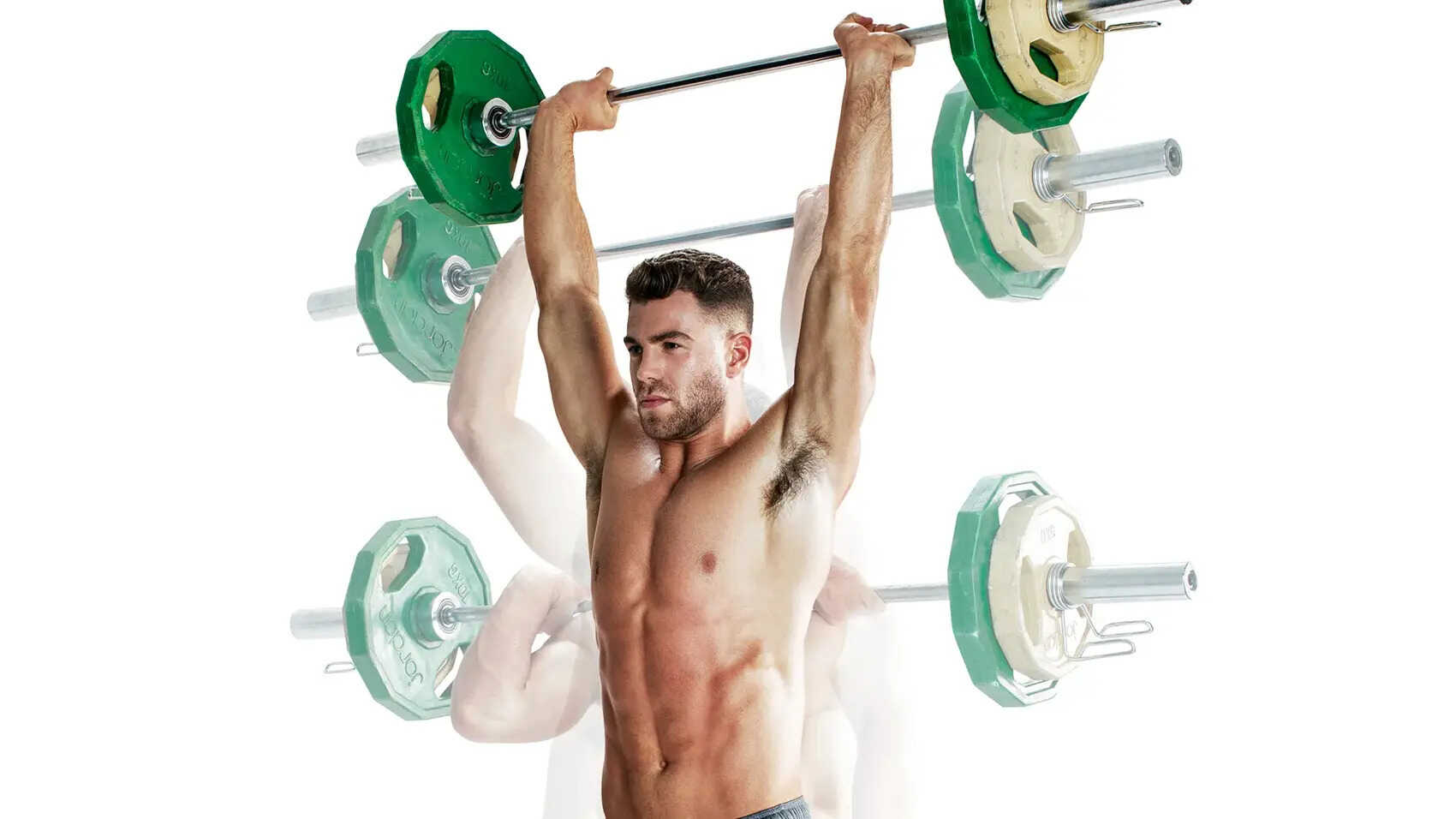
The Barbell Push Press is an explosive movement that can build both strength and power, making it a must-know exercise in the fitness world. Unlike the strict shoulder press, which emphasizes upper body strength by isolating the deltoids, the push press engages your entire body, integrating your legs, core, and upper body into a unified force. This dynamic lift (ideal for a functional bodybuilding routine) not only challenges your muscles but also your coordination and stability, offering a comprehensive workout that can take your fitness to the next level.
Mastering the push press can yield significant benefits. Read on to discover step-by-step instructions for proper technique, performance tips, common errors to avoid, and much more.
What is the barbell push press exercise
The barbell push press is a dynamic lift that engages multiple muscle groups through a combination of a shallow squat and an overhead press. Unlike the shoulder press, which relies solely on the shoulders and arms, the push press utilizes the dip of the knees and a powerful drive from the legs to generate momentum. This movement allows you to press heavier weights overhead.
Barbell push press = Shallow squat + Overhead press
Key Characteristics:
- Leverages leg drive to assist in lifting the bar overhead
- Engages shoulders, upper chest, triceps, and core muscles
- Helps improve explosive strength and power
- Requires a coordinated, multi-joint movement
Perfect technique for the barbell push press lift
Achieving the perfect exercise technique in the barbell push press is crucial for maximizing your gains and preventing injuries. With each movement, you engage a variety of muscle groups, and precision in your form ensures that you’re targeting the right areas while maintaining overall safety. Here are the steps to master this powerful lift.

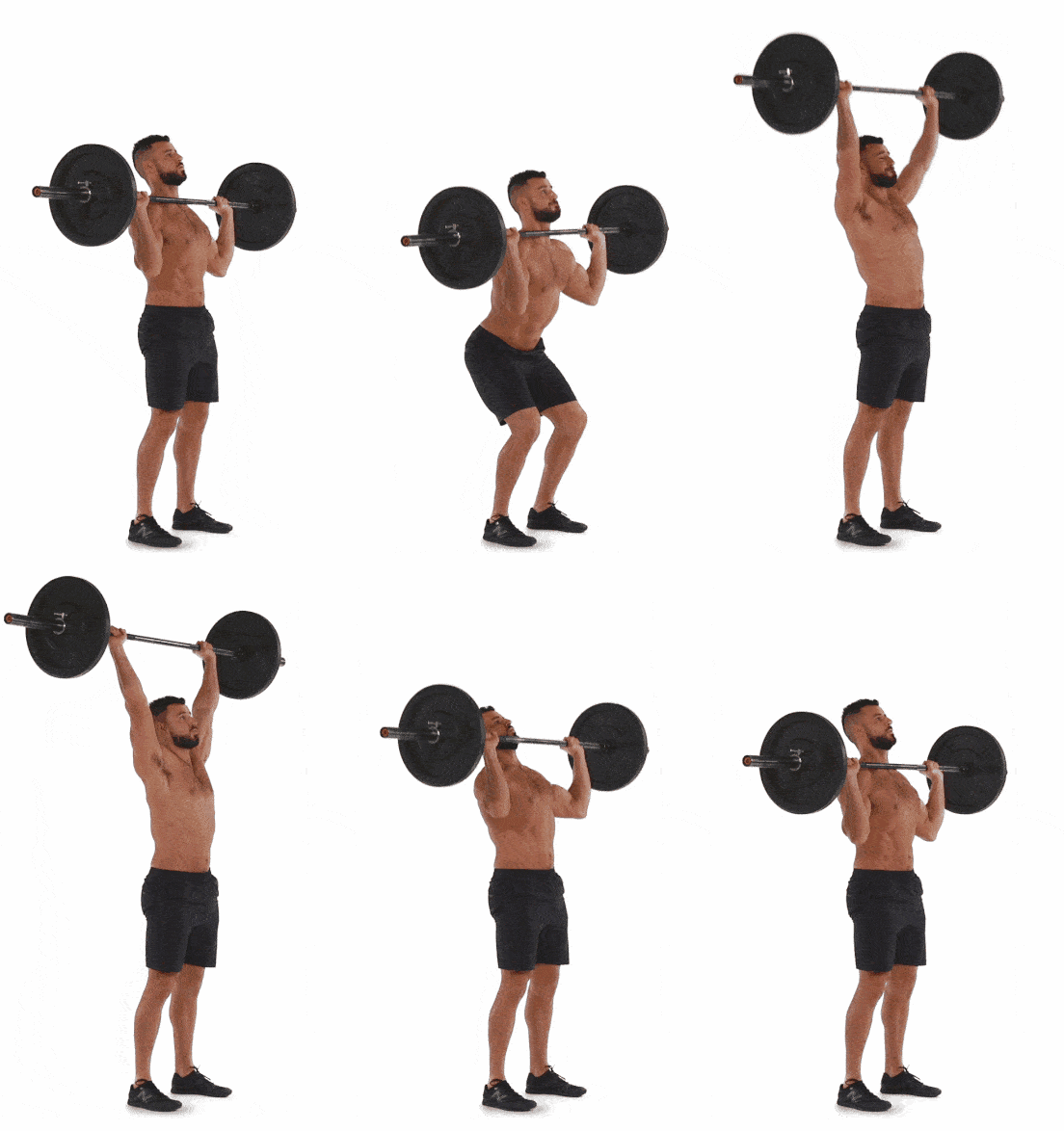
- Start by standing with your feet shoulder-width apart and grasp the barbell with a grip just outside your shoulders (image step 3). Your elbows should be slightly in front of the bar.
- Lift the barbell to rest on the front of your shoulders by engaging your core and lifting from your legs.
- Lower yourself into a shallow quarter squat. This dip should be controlled and your back should remain in a neutral position.
- Explosively drive upwards through your heels, extending your knees and hips fully, transferring the momentum to press the barbell overhead.
- Once the barbell is overhead, lock out your elbows and keep the barbell in line with your ears. Ensure your core is tight and your spine neutral.
- Lower the barbell back to your shoulders in a controlled manner, ready to repeat the movement.
Push press video guide
If you’re a visual learner, watching a detailed video guide can greatly enhance your understanding of the barbell push press technique. Seeing the movements in action can help cement the proper form and timing, ensuring you perform the exercise safely and effectively. Below, you’ll find a comprehensive video that breaks down each step of the push press.
Performance pointers & common mistakes
The barbell push press is a powerhouse move that offers both strength and functional benefits. Like any other exercise, mastering the technique is crucial to maximize gains and minimize injury risk. Below are some key performance tips and common mistakes to watch out for when performing this dynamic lift:
Performance Tips
- Grip It Right: Ensure your thumbs are wrapped around the bar, and your grip is narrow enough to keep your forearms vertical. This helps in stabilizing the bar and activating the surrounding muscles.
- Engage Your Core: Maintaining a tight core throughout the lift not only aids in balance but also helps protect your lower back.
- Explosive Power: Remember, the push press is about generating force from your legs. Drive up through your heels and use the momentum to press the bar overhead powerfully.
- Controlled Descent: Don’t just drop the bar back to your chest; lower it in a controlled manner to avoid putting strain on your shoulders.
Common Mistakes
- Squatting Too Low: A push press requires a shallow dip, not a deep squat. Going too low can dissipate the energy you need for the upward drive.
- Leaning Back: Leaning back to lift the bar overhead can strain your lower back. Keep a neutral spine to protect yourself from injury.
- Using Arms Only: Don’t attempt to lift the bar solely with your arms. The power should come from the coordinated movement of the legs, core, and arms.
- Poor Elbow Position: Keeping your elbows too far back or too low can compromise form. Ensure that elbows are lifted slightly in front of the bar to maintain an optimal pressing path.
For more tips we strongly recommend you to read the article “Exercise Technique: The Push Press” by Chris Bishop, MSc, Shyam Chavda, MSc, CSCS, and Anthony Turner, PhD, CSCS*D Department of Science and Technology, London Sports Institute, Middlesex University, London, United Kingdom
Muscles engaged during the barbell push press exercise
The barbell push press is a compound exercise that engages multiple muscle groups, emphasizing the shoulders and upper body.
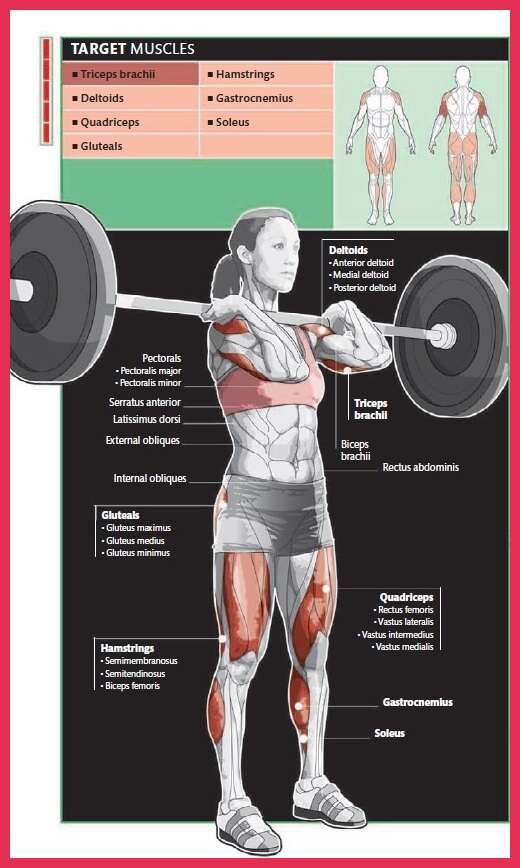
- Deltoids: Primarily targeted as you press the weight overhead.
- Triceps: Activated to extend the arms during the upward phase.
- Quadriceps: Engaged during the initial dip and driving phase.
- Glutes: Provide support and power through the hip extension.
- Core Muscles: Including the rectus abdominis and obliques, work to stabilize the torso.
- Trapezius: Assists in stabilizing and lifting the bar overhead.
Key benefits of barbell push press exercise
- Full-body strength: The barbell push press engages multiple muscle groups, enhancing overall strength and power.
- Improved athletic performance: It aids in developing explosive power, which is vital for athletic movements.
- Enhanced coordination: The exercise requires synchronization of the lower and upper body, boosting overall coordination.
- Functional fitness: Builds strength that’s applicable to everyday activities and other forms of training.
- Greater shoulder stability: Strengthens the rotator cuff and stabilizes muscles around the shoulder joint.
- Core activation: Engages the core muscles for balance and stability during the lift.
- Versatility: Offers variations to keep your workout routine diverse and challenging.
Athletes in the following sports can highly benefit from this exercise:
- Weightlifting
- CrossFit
- Basketball
- Football
- Rugby
- Martial Arts
- Volleyball
Exercise variations
Are you looking to mix things up? The barbell push press has several variations you can explore to keep your workouts dynamic and challenging.
- Dumbbell Push Press: This variation requires stabilizing the weight in each hand, placing more emphasis on the deltoids and core stability.
- Single Arm Barbell Push Press: Performing the push press with one arm improves unilateral strength and can reveal imbalances between sides.
- Behind-the-Neck Push Press: This version targets the shoulders differently and can increase scapular mobility, but it requires excellent shoulder health.
- Split Stance Push Press: By adopting a split stance, this variation adds an element of balance and core engagement, simulating functional movements.
- Banded Push Press: Adding resistance bands to the barbell increases the difficulty and variability of the lift, especially at the top range of motion.
- Trap Bar Push Press: Using a trap bar can change the mechanics slightly, offering a neutral grip that some lifters may find more comfortable.
Replacement exercises for the barbell push press
While the barbell push press is a fantastic exercise for building strength and power, sometimes circumstances call for alternative movements. These replacement exercises can target similar muscle groups and provide various benefits suited to different training needs and goals. Here are a few effective alternatives:
- Dumbbell Push Press: This variation increases muscle balance and stability by requiring each arm to press weight independently.
- Arnold Press: A unique twist on the standard shoulder press that works the deltoids through a greater range of motion.
- Single Arm Landmine Press: Engages core stability while focusing on one arm at a time for balanced shoulder development.
- Clean and Press: Combines a clean with a press, enhancing explosive strength and coordination across multiple joints.
- Z Press: Performed seated on the ground, this press targets shoulder strength without the assistance of your lower body.
Differences between the barbell push press and the barbell shoulder press (military press)
When you compare the barbell push press to the barbell shoulder press, you’ll notice some key distinctions in their execution and muscle engagement. Understanding these differences can help you choose the best exercise for your fitness goals.
- Leg Involvement: The barbell push press engages the lower body to generate momentum for lifting the bar, whereas the shoulder press relies solely on upper body strength with no assistance from the legs.
- Weight Capacity: The push press allows you to lift heavier weights due to the additional momentum generated by the lower body, while the shoulder press typically uses lighter weights due to its strict form.
- Complexity: The push press is more dynamic and involves a synchronized movement, making it slightly more complex to master compared to the relatively straightforward shoulder press.
- Primary Muscles Worked: Both exercises primarily work the shoulders and triceps, but the push press also significantly engages the quadriceps, glutes, and core due to the leg drive.
- Training Focus: The shoulder press (military press) is ideal for building strict upper body strength and muscular endurance, while the push press is excellent for developing explosive power and overall athleticism.
Special considerations and warnings for beginners
When it comes to special considerations and warnings for beginners, the barbell push press can be somewhat demanding given its dynamic nature. While it is an excellent exercise for developing upper body strength and power, beginners should approach it with caution to ensure proper form and reduce the risk of injury.
The barbell push press is appropriate for beginners. However, it’s crucial to first establish a solid foundation in basic exercises such as the shoulder press and bodyweight squats. These fundamentals will help in developing the strength and stability needed for a successful push press. Starting with light weights and perfecting your form is essential before progressing to heavier lifts.
As a beginner, you should consider the following progression steps:
- Begin with mastering the overhead press. This movement will help you build the foundational strength and technique needed for the more dynamic push press. Focus on keeping your core tight and maintaining a neutral spine throughout the lift.
- Once you’re comfortable with the overhead press, introduce thepush press with light weights. Start by practicing the dip and drive motion without any added resistance. This will help ingrain the movement pattern and build the necessary coordination between your lower and upper body.
- Gradually increase the weight as you become more proficient with the form. Ensure each repetition is executed with control and precision. Adding weight too quickly can lead to form breakdown and increase the risk of injury.
- Consider integrating power cleans into your routine as well, as they complement the push press and improve your explosiveness and overall athleticism.
- Keep your progress steady and pay attention to how your body responds. If necessary, seek guidance from a certified fitness coach to ensure you’re on the right track.
Conclusion about the barbell push press exercise
In summary, the barbell push press exercise is an incredibly versatile and effective movement that can significantly enhance your upper body strength, power, and overall athletic performance. By incorporating momentum from your lower body, this exercise allows you to lift heavier weights and engage a wider array of muscles compared to traditional overhead presses.
Whether you are an athlete looking to improve your performance in sports or a fitness enthusiast aiming to build functional strength, the barbell push press can bring remarkable benefits to your training regimen. However, it is crucial to practice proper techniques to maximize the advantages and avoid injury.
We’d love to hear from you! Have you tried incorporating the barbell push press exercise into your workouts? How has it impacted your strength and performance? Share your experiences and tips in the comments below.
