



📌 Introduction
For many bodybuilders and performance athletes, the pursuit of peak physique can come with unexpected consequences. One of the most distressing is steroid-induced gynecomastia—the painful and often embarrassing enlargement of male breast tissue triggered by anabolic–androgenic steroid use. Far from a purely cosmetic issue, gynecomastia can undermine confidence, disrupt hormone balance, and require medical or surgical intervention if left unchecked.
In this expert guide, we’ll explain precisely what gynecomastia is, why it occurs with certain steroids, and how to recognize its early signs. You’ll learn which compounds carry the highest risk, the underlying hormonal mechanisms at play, and proven strategies for prevention, medical treatment, and long-term management. Whether you’re planning a cycle or dealing with post-cycle complications, this deep dive will equip you to protect both your health and your hard-earned gains.
📌 What Is Gynecomastia?
Gynecomastia refers to the benign enlargement of breast glandular tissue in males. This condition results from a hormonal imbalance — specifically, an increase in estrogen relative to androgens. It may affect one or both breasts, and while not typically dangerous, it can be psychologically distressing, especially for bodybuilders and athletes.
While gynecomastia is commonly associated with puberty, aging, or certain medications, it also frequently occurs in athletes who misuse anabolic steroids. In these cases, it is known as steroid-induced gynecomastia.
Steroid-induced gynecomastia is the abnormal enlargement of male breast tissue caused by hormonal imbalances resulting from anabolic steroid use. It typically occurs when excess androgens are converted into estrogen, stimulating glandular growth in the chest.
📌 Can Gynecomastia Happen Without Steroid Use?
Yes, gynecomastia can develop without any involvement of anabolic steroids. Some of the most common non-steroid causes include:
- Pubertal hormone surges (usually self-limiting)
- Aging and natural testosterone decline
- Certain medications (e.g., anti-androgens, antidepressants, heart medications)
- Liver disease or kidney failure
- Obesity (excess aromatase activity in fat tissue)
However, when it comes to athletes or bodybuilders, the use of exogenous hormones — exceptionally anabolic steroids — significantly raises the risk.
📌 Does Gynecomastia Affect Both Men and Women?
While the term “gynecomastia” is specific to men, breast tissue growth caused by hormonal imbalance can occur in both sexes. In women, however, such changes are usually part of a different set of medical conditions and are not classified as gynecomastia.
In the context of anabolic steroids, gynecomastia almost exclusively affects male users due to the disruption of their natural testosterone-to-estrogen balance.
In women, anabolic steroids can paradoxically lead to breast atrophy rather than gynecomastia, yet some agents with progestogenic activity may cause mastalgia or transient enlargement. This guide will focus primarily on male presentations.
📌 How Steroids Cause Gynecomastia
Steroid-induced gynecomastia results primarily from the aromatization of excess testosterone into estrogen. Here’s how the process unfolds:
- Exogenous testosterone or anabolic steroids increase androgen levels far beyond normal.
- The body attempts to restore hormonal balance by converting some of this excess testosterone into estrogen via the aromatase enzyme.
- Elevated estrogen stimulates breast gland development, especially if the user is genetically predisposed.
Certain anabolic steroids, especially those that aromatize readily, significantly raise the risk.
📌 Symptoms and Characteristics of Steroid-Induced Gynecomastia
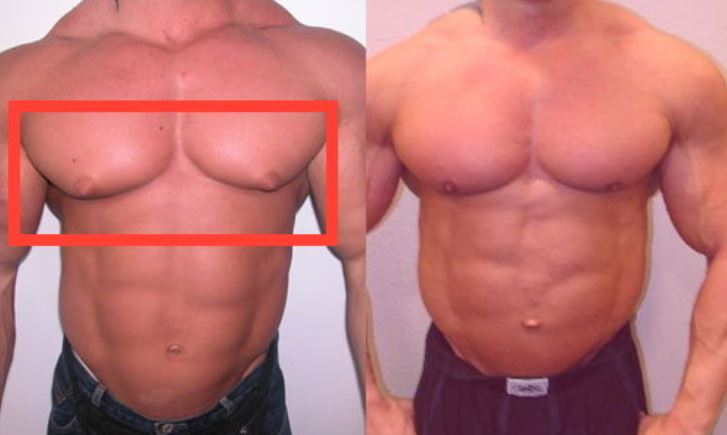
Gynecomastia tends to develop gradually. Early detection is critical to avoid permanent tissue growth. Key signs include:
- Tenderness or sensitivity in one or both nipples
- Puffy or swollen nipples
- A rubbery or firm lump beneath the nipple
- Visible enlargement of the breast area
- Psychological discomfort or body image issues
Unlike fat deposits (lipomastia), true gynecomastia involves actual glandular tissue.
📌 Steroids Most Likely to Cause Gynecomastia
Some anabolic steroids are highly estrogenic, making users more vulnerable. The main culprits include:
- Dianabol (Methandrostenolone)
- Testosterone esters (e.g., Testosterone Enanthate, Cypionate, Sustanon)
- Anadrol (Oxymetholone)
- Deca-Durabolin (Nandrolone Decanoate) — although only mildly aromatizing, it can act via progestin pathways
Steroids that do not aromatize or have anti-estrogenic properties have a much lower risk:
- Winstrol (Stanozolol)
- Primobolan (Methenolone)
- Masteron (Drostanolone)
- Proviron (Mesterolone)
| Steroid | Aromatizable | Progestogenic | Relative Risk |
|---|---|---|---|
| Testosterone esters | High | Low | 🔴 Very High |
| Dianabol | High | Low | 🔴 Very High |
| Anadrol | Moderate | Low | 🔴 High |
| Nandrolone (Deca) | Low | High | 🟠 Moderate–High |
| Equipoise | Moderate | Low | 🟠 Moderate |
| Turinabol | None | Low | 🟢 Low |
| Trenbolone | None | High | 🟠 Moderate |
| Primobolan | None | Low | 🟢 Very Low |
📌 Diagnosing Gynecomastia in Athletes
Diagnosing gynecomastia typically involves:
- A physical exam to assess tissue texture
- Medical history, including steroid use and other medications
- Blood tests to evaluate hormone levels (testosterone, estradiol, LH, FSH, prolactin)
- Ultrasound or mammogram to distinguish glandular growth from fat or tumors
Early detection improves the chances of reversing the condition without surgery.
📌 How to Treat Steroid-Induced Gynecomastia
Treatment options depend on the stage and severity of the condition.
1. Reversible (early) stage:
- Stop steroid use immediately
- Use anti-estrogens such as:
- Tamoxifen (Nolvadex) – a selective estrogen receptor modulator (SERM)
- Raloxifene – another SERM used in some cases
- Consider aromatase inhibitors (AI) like Anastrozole or Letrozole, which block estrogen synthesis
2. Advanced (fibrotic) stage:
- If the tissue becomes permanent, the only practical solution is surgical removal (gynecomastia surgery or liposuction)
📌 How to Prevent Gynecomastia While on Steroids
If you plan on using anabolic steroids (despite risks), prevention should be a top priority:
- Use aromatase inhibitors (AI) proactively during the cycle
- Keep dosages within reasonable limits
- Avoid stacking multiple aromatizing compounds
- Monitor estrogen levels regularly with blood tests
- Include SERMs in post-cycle therapy (PCT)
- Choose compounds with low estrogenic activity
Ultimately, no strategy is foolproof — the best prevention is avoiding steroid use altogether.
📌 Steroid Gyno vs. Pseudogynecomastia
Some users confuse gynecomastia with pseudogynecomastia, which is caused by fat accumulation rather than glandular growth.
| Feature | Gynecomastia | Pseudogynecomastia |
|---|---|---|
| Tissue type | Glandular | Fat |
| Feel | Firm or rubbery lump | Soft and squishy |
| Pain or tenderness | Often present | Rare |
| Responds to weight loss | No | Yes |
| Needs surgery if persistent | Often | Rarely |
📌 Emotional and Psychological Impact
Steroid-induced gynecomastia can have deep emotional consequences:
- Low self-esteem
- Social withdrawal or gym avoidance
- Depression or anxiety
- Obsession with physique flaws
This is often overlooked, but it’s a powerful motivator for many to seek treatment or quit steroids entirely.
📌 Final Thoughts: Steroid-Induced Gynecomastia
Gynecomastia caused by anabolic steroid use is a profound and often avoidable side effect. It’s a clear signal that your hormonal balance is off and potentially causing long-term harm.
Understanding which compounds carry higher risks, how estrogen conversion works, and how to manage or prevent symptoms is essential, especially if you choose to pursue performance enhancement through steroids.
Education and responsible decision-making can prevent irreversible physical and emotional damage.
✅ Key Takeaways
- Steroid-induced gynecomastia results from hormonal imbalance, specifically increased estrogen.
- Aromatizing steroids such as Dianabol and Testosterone are high-risk.
- Early-stage gynecomastia may respond to SERMs and AIs, while late-stage gynecomastia may require surgery.
- Prevention strategies include limiting doses, monitoring estrogen, and including anti-estrogen medications in your cycle.
- Emotional distress is a real and often underestimated aspect of this condition.
⚠️ Medical Disclaimer: The information provided in this article is intended for general informational and educational purposes only and is not a substitute for professional medical advice, diagnosis, or treatment. Always consult a qualified healthcare provider with any questions you may have regarding a medical condition, treatment, or health-related goals. Never disregard professional medical advice or delay seeking it because of something you have read on the Bodybuilding Wizard website.
📚 References
- Beniwal, M., Singh, K., Singh, P., Sharma, A., & Beniwal, S. (2023). The burden of anabolic androgenic Steroid-Induced gynecomastia. Indian Journal of Plastic Surgery, 56(04), 338–343. https://doi.org/10.1055/s-0043-1771293
- Dickson, G. (2012, April 1). Gynecomastia. AAFP. https://www.aafp.org/pubs/afp/issues/2012/0401/p716.html
- Swerdloff, R. S., & Ng, J. C. M. (2023, January 6). Gynecomastia: etiology, diagnosis, and treatment. Endotext – NCBI Bookshelf. https://www.ncbi.nlm.nih.gov/books/NBK279105/
- The Royal Australian College of General Practitioners. (n.d.). An interesting case of gynaecomastia. Australian Family Physician. https://www.racgp.org.au/afp/2016/january-february/an-interesting-case-of-gynaecomastia
- Hartgens, F., & Kuipers, H. (2004). Effects of Androgenic-Anabolic Steroids in Athletes. Sports Medicine, 34(8), 513–554. https://doi.org/10.2165/00007256-200434080-00003
- Wilson, J. D. (1996). Androgen Abuse by Athletes. Endocrine Reviews, 17(6), 521–525.
- Yesalis, C. E. (2000). Anabolic Steroids in Sport and Exercise (2nd ed.). Human Kinetics.
What is steroid-induced gynecomastia and how does it differ from regular gynecomastia?
Steroid-induced gynecomastia refers specifically to male breast tissue growth caused by anabolic–androgenic steroid use. Unlike natural gynecomastia, which may occur due to puberty, aging, or medical conditions, this type is triggered by hormonal imbalances from external steroids—especially those that convert to estrogen (like testosterone or Dianabol).
Can steroid-induced gynecomastia go away on its own?
In very early stages, mild gynecomastia may regress when the steroid cycle ends and hormone levels normalize. However, once fibrous tissue forms (typically after 6–12 months), it becomes permanent and may only be removed surgically.
What are the first signs of steroid-induced gynecomastia?
Initial symptoms often include:
A small, rubbery lump under the nipple
Increased sensitivity or pain in the areola
Mild swelling in one or both breasts
These signs typically appear 4–8 weeks into a cycle with aromatizing steroids.
Which anabolic steroids are most likely to cause gynecomastia?
Steroids with high aromatization potential or progestin activity carry the highest risk:
Testosterone (all esters)
Dianabol (Methandrostenolone)
Anadrol (Oxymetholone)
Deca-Durabolin (Nandrolone)
Non-aromatizing steroids like Turinabol or Primobolan have minimal risk.
Can tamoxifen reverse steroid-induced gynecomastia?
Yes—Tamoxifen (a SERM) is commonly used to block estrogen receptors in breast tissue. It is most effective during early-stage gynecomastia (within the first 3–6 months). Dosages typically range from 10–20 mg per day.
Is surgery the only option for long-standing gynecomastia?
In most chronic cases where fibrotic tissue has formed, surgery—specifically subcutaneous mastectomy—is the only effective solution. It involves removing the glandular tissue beneath the nipple and restoring the chest contour.
How can I prevent gynecomastia during a steroid cycle?
To minimize your risk:
Choose non-aromatizing steroids when possible
Use aromatase inhibitors (AIs) like anastrozole on-cycle
Keep estrogen levels in check with regular bloodwork
Maintain a healthy body fat level (fat increases estrogen conversion)
Is post-cycle therapy (PCT) enough to stop gynecomastia?
PCT with SERMs like tamoxifen or clomiphene can help restore testosterone production and block residual estrogenic effects. However, it’s most effective as a support strategy, not as a sole preventive measure.
Does gynecomastia affect testosterone levels or muscle gains?
While gynecomastia itself doesn't reduce testosterone, the hormonal imbalance that causes it often includes suppressed natural testosterone, which can hinder recovery, libido, and future muscle-building capacity.
Can over-the-counter supplements help treat or prevent steroid-induced gynecomastia?
Most OTC “gyno blockers” lack clinical evidence and are not strong enough to reverse active gynecomastia. Only prescription medications (like tamoxifen or AIs) or surgical intervention have proven efficacy.
