



Have you ever wondered how many calories you need each day? Understanding your daily caloric intake is crucial, whether you aim to lose weight, build muscle, or maintain your current weight. Calculating this can seem like a mystery, but it doesn’t have to be.
Your body’s unique energy requirements depend on factors like age, gender, weight, height, and activity level.
Understanding your daily caloric needs can sometimes feel daunting. This article aims to make it digestible and straightforward. We will explore how to calculate your calorie intake requirements, considering the changing demands of your body over time. We’ll analyze how factors like physical activity, basal metabolic rate, and the thermic effect of food influence your daily energy expenditure and how crucial it is to account for these when determining your caloric needs.
With our easy-to-use calorie intake calculator, you’ll have the tools to estimate how many calories you need to maintain, lose, or gain weight effectively. Additionally, we’ll guide you through calculating a calorie maintenance goal, creating a calorie deficit for weight loss, and achieving a calorie surplus for weight gain. Quality versus quantity in your caloric intake will also be discussed, ensuring you understand how much to eat and the importance of what you consume.

Calorie intake calculator
A calorie intake calculator is designed to help you estimate the number of calories you need each day to maintain, lose, or gain weight. It considers several factors influencing your daily calorie requirements to provide a personalized recommendation.
To use a calorie intake calculator effectively, you will typically need to input the following information:
- Age – This is a crucial factor as metabolic rate changes with age.
- Gender – Men and women generally have different metabolic rates.
- Weight – Your current weight is key for determining your caloric needs.
- Height – Taller individuals may require more energy.
- Activity Level – The more active you are, the more calories you’ll need. This could range from sedentary to very active.
- Goal – Whether you’re aiming to maintain, lose, or gain weight.
How to calculate calorie intake requirements?
Understanding your calorie intake requirements is essential for maintaining a healthy lifestyle, whether you want to lose, maintain, or gain weight. Start by determining your Basal Metabolic Rate (BMR), the number of calories your body needs to perform essential life-sustaining functions. To calculate your BMR, you’ll need to consider your height, weight, age, and gender. Commonly used equations include the Harris-Benedict or the Mifflin-St Jeor formulas.
Once you have your BMR, you’ll need to factor in your activity level using an activity multiplier to estimate your Total Daily Energy Expenditure (TDEE), which represents the total calories needed to maintain your current weight.
Here’s a simplified process to find your calorie needs:
- Calculate your BMR: Use an online calculator or apply the appropriate formula to estimate the calories your body requires at rest.
- Determine your activity level: Are you sedentary, lightly active, moderately active, very active, or do you engage in physically demanding activities? Assign the corresponding activity factor.
- Calculate your TDEE: Multiply your BMR by your activity multiplier. This gives you an estimate of your daily calorie needs to maintain your current weight.
- Adjust for goals: To lose weight, create a calorie deficit; to gain weight, aim for a surplus. The general recommendation is a 500-calorie increase or decrease to achieve roughly a pound of weight change weekly.
How do we account for changing calorie needs?
Accounting for changing calorie needs involves recognizing that your body doesn’t always demand the same energy. Factors like increased activity levels, changes in metabolism, or even seasonal shifts can affect how many calories you require day-to-day. Here’s how you can adapt:
- Monitor Your Activity Levels: Keep track of your activity throughout the day. Days with more physical activity may require a higher calorie intake, while sedentary days may need less.
- Listen to Your Body: Your body is a great communicator. Pay attention to hunger cues and energy levels. If you’re feeling sluggish, you might need more energy; conversely, if you’re consistently full, you could reduce intake.
- Stay Flexible: Understand that calorie needs aren’t static. Adjust your diet based on feedback from your body and lifestyle changes. For instance, recovery periods after intense exercise might require more calories for optimal healing.
- Use Tools & Trackers: Utilize apps and online calculators to estimate needs based on current weight, height, age, and activity levels. These tools can offer insights into adjustments needed as conditions change.
- Consult a Nutritionist: If you’re uncertain about adjustments, a professional can provide personalized guidance tailored to your changing requirements.
To determine how many calories you burn during an activity, identify its MET value. You can find MET values for different exercises in the Compendium of Physical Activities. Once you’ve got the MET, multiply it by the time you spent exercising and your weight to get the total calorie burn.
The Metabolic Equivalent of Task (MET) value expresses the energy cost of physical activities. It allows you to compare the intensity of different activities. For instance, an activity with a MET value of 1 burns as many calories as you do at rest, whereas a MET of 8 means the activity burns eight times more calories than resting.
Calories burned during an activity = time [minutes]× (MET × 3.5) × weight [kg]/ 200
TDEE = BMR + (total calories burned in activities)
How do you calculate calorie maintenance?
Calculating your calorie maintenance is a two-step process that starts with determining your Basal Metabolic Rate (BMR), which is the number of calories your body needs to perform essential life-sustaining functions like breathing and digestion. To calculate BMR, you can use the Harris-Benedict Equation, which considers your age, gender, height, and weight.
Once your BMR is determined, you’ll apply an activity multiplier to account for your lifestyle and physical activity level. This will give you your Total Daily Energy Expenditure (TDEE), representing the calories needed to maintain your current weight:
- Sedentary (little to no exercise): BMR x 1.2
- Lightly active (light exercise/sports 1-3 days a week): BMR x 1.375
- Moderately active (moderate exercise/sports 3-5 days a week): BMR x 1.55
- Very active (hard exercise/sports 6-7 days a week): BMR x 1.725
- Extra active (very hard exercise/physical job): BMR x 1.9
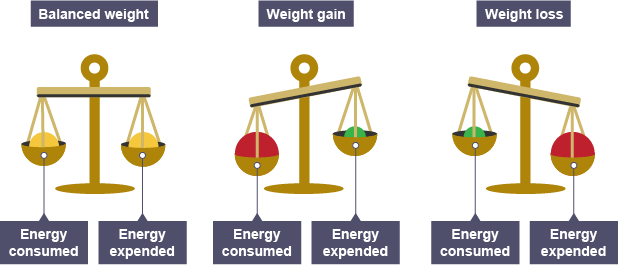
Your calorie intake should match your Total Daily Energy Expenditure (TDEE) to maintain your current weight. TDEE reflects how much energy your body uses in a day, considering your basal metabolic rate (BMR) and your level of physical activity. By consuming the same number of calories as your TDEE, you’re giving your body the exact amount of energy needed to support your daily activities and functions without gaining or losing weight. This balance ensures that the energy you take in through food equals the energy you expend, maintaining your current weight steady.
How do you calculate calorie surplus for weight gain?
Calculating a calorie surplus is crucial for those looking to gain weight, specifically for building muscle. Here’s how you can quickly determine the extra calories needed:
Step 1: Determine Your Maintenance Calories
Before adding extra calories, you must know how many calories you need to maintain weight. This is often known as your maintenance level. The information on determining your maintenance calories has already been detailed in the preceding paragraphs.
Step 2: Decide on Your Caloric Surplus
A safe and effective calorie surplus ranges from 10% to 20% above your maintenance level. For instance, if your maintenance calories are 2,500, a 10% surplus would mean consuming an additional 250 calories daily.
Step 3: Adjust According to Goals
If your primary goal is muscle gain without excess fat, lean towards a smaller surplus. A higher surplus may be needed for faster mass gain, but be mindful of potential fat gain.
How to calculate calorie intake for weight loss?
Achieving weight loss is about consuming fewer calories than your body expends. First, determine your basal metabolic rate (BMR), the number of calories your body needs to maintain essential physiological functions at rest. Use formulas like the Harris-Benedict Equation that require age, gender, height, and weight.
After computing your BMR, assess your activity level to understand your Total Daily Energy Expenditure (TDEE). Multiply your BMR by an activity factor, ranging from 1.2 for a sedentary lifestyle to 1.9 for a very active one.
Subtracting 500 to 1000 calories from your TDEE can create a calorie deficit, generally leading to weight loss of about 1-2 pounds per week, which is considered a healthy rate.
Remember, this isn’t one-size-fits-all; adjustments may be necessary based on how your body responds and specific health conditions. Consider consulting a healthcare provider or nutritionist to tailor your calorie calculations and ensure a safe and effective weight loss journey.
Numerical example
Let’s analyze this using a concrete numerical example. We will consider a 35-year-old male weighing 80 kg and standing 180 cm tall. This individual engages in moderate exercise approximately 3-5 times per week. In this scenario, we aim to calculate three primary components: his maintenance calorie intake, the calories required to achieve weight gain, and the calorie deficit needed for weight loss.
Let’s break down the numbers using the Mifflin-St Jeor equation for BMR calculation:
BMR = (10 x weight in kg) + (6.25 x height in cm) – (5 x age in years) + 5
For a 35-year-old male with a height of 180 cm and a weight of 80 kg:
- BMR = (10 x 80) + (6.25 x 180) – (5 x 35) + 5
- BMR = 800 + 1125 – 175 + 5 = 1755 kcal/day
Next, apply the activity multiplier for moderate exercise (1-3 times per week), which is approximately 1.55:
- Maintenance Calories = BMR x 1.55
- Maintenance Calories = 1755 x 1.55 = 2720.25 kcal/day (approximately 2720 kcal/day)
To gain weight, generally, an additional 500 kcal/day is suggested:
- Calories for Weight Gain = 2720 + 500 = 3220 kcal/day
For weight loss, a reduction of 500 kcal/day is commonly used:
- Calories for Weight Loss = 2720 – 500 = 2220 kcal/day
The calculated caloric intake for this individual is approximately:
- Maintenance: 2720 kcal/day
- Weight Gain: 3220 kcal/day
- Weight Loss: 2220 kcal/day
Caloric Intake: Quantity vs. Quality
When considering caloric intake, it’s not all about the numbers. While the quantity of calories you consume is crucial for managing your weight—whether you aim to lose, gain, or maintain—it’s equally important to focus on the quality of those calories. Foods are not created equal; thus, 200 calories of fresh spinach differ vastly from 200 calories of a sugary soda.
High-quality calories come from nutrient-dense foods, which provide essential vitamins, minerals, and other vital nutrients your body needs. These include vegetables, fruits, whole grains, lean proteins, and healthy fats. Eating these foods ensures that while you stay within your calorie limit, you also fuel your body with the nutrients it needs to function optimally.
Conversely, low-quality calories, commonly found in processed snacks and sugary drinks, often lack these essential nutrients and may contribute to health issues when consumed in excess. These so-called “empty calories” can lead to weight gain and increased risk of diseases without offering nutritional benefits.
Finding a balance between quantity and quality can enhance overall well-being. Choosing nutrient-rich foods helps you make the most of your calorie intake, ensuring both energy and nourishment needs are met. So, remember, while the numbers matter, where those numbers come from can make all the difference.
Related Calculators
Conclusion
Understanding and managing your caloric intake is essential for achieving your health and fitness goals. Whether you aim to maintain, lose, or gain weight, knowing how many calories you need is crucial. Using these methods and calculators, you can tailor your diet to reflect your requirements and adapt to changes in your lifestyle. While tracking the quantity of calories is essential, the quality of your intake plays a significant role in overall health. Combining strategic eating with regular physical activity will help you meet your objectives effectively and sustainably.
