



Overview (Why This Exercise Exists)
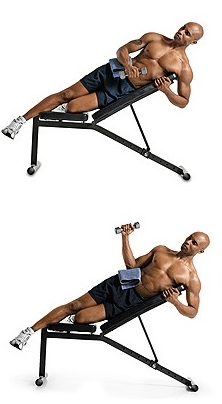
Incline dumbbell external rotation is a refined variation of traditional rotator cuff training that uses a slight incline to alter the resistance profile and improve muscle activation. By positioning the body on an incline bench—typically around 15 degrees—this exercise changes how gravity interacts with the movement, creating a more consistent and controlled loading pattern compared to flat or side-lying variations.
Like other external rotation exercises, this movement primarily targets the infraspinatus and teres minor, which are essential for stabilizing the shoulder joint and controlling rotational movement. However, the incline setup allows for a smoother transition of tension throughout the range of motion, making it particularly useful for improving control and reducing “dead zones” where the rotator cuff might otherwise be underloaded.
Another key advantage of this variation is comfort and positioning. Some individuals find that the incline angle reduces strain on the shoulder or neck compared to flat setups, while still maintaining proper alignment and isolation. The use of a towel under the elbow further enhances activation by keeping the upper arm in an optimal position relative to the torso.
As a coach working with lifters and athletes, I often use incline dumbbell external rotation as a progression from basic side-lying variations. It provides slightly more advanced control demands while still allowing precise, low-load training of the rotator cuff—making it an excellent choice for both injury prevention and long-term shoulder development.
Equipment Needed
To perform the incline dumbbell external rotation correctly, you need minimal equipment, but proper setup is essential for achieving the intended resistance profile. The incline angle plays a key role in how gravity loads the movement, making this setup slightly different from other dumbbell external rotation variations.
Required equipment:
Optional (highly recommended):
The incline bench provides a more gradual, controlled resistance curve than flat or side-lying positions. The towel helps maintain proper arm alignment by keeping the elbow slightly away from the torso, which improves activation of the infraspinatus and teres minor.
Because this exercise targets small stabilizing muscles, heavy weights are unnecessary and counterproductive. Light resistance, combined with strict control, is far more effective at improving shoulder stability and rotator cuff function.
Key insight: The incline angle is not just for comfort—it directly influences how resistance is applied throughout the movement, making proper setup essential for effectiveness.
Step-by-Step Instructions for the Incline Dumbbell External Rotation
Executing incline dumbbell external rotation correctly depends on precise positioning and strict control. The incline angle slightly changes how gravity loads the movement, so maintaining proper alignment of the arm and elbow is essential for isolating the rotator cuff.
A. Starting Position (Setup)
Proper setup ensures that the rotator cuff is placed under effective tension while minimizing compensation from larger muscle groups.
Key cue: Your arm should form an “L” shape, with the elbow fixed and the forearm free to rotate.

B. Movement (Execution)
The movement should be smooth, controlled, and driven entirely by shoulder rotation.
Movement analogy: Imagine your forearm rotating like a hinge or gate, with your elbow acting as the pivot point.
Tempo Recommendation: 2–3 seconds upward rotation, 2–3 seconds controlled return
Resistance Curve Insight
The incline dumbbell external rotation stands out because the slight bench angle changes how gravity loads the movement, creating a smoother and more consistent resistance profile compared to flat or standard side-lying variations.
In a flat side-lying position, resistance is minimal at the bottom and increases sharply toward the top as the moment arm grows. On an incline, however, the starting position is already partially loaded because the forearm is no longer perfectly aligned with gravity. This reduces the “dead zone” at the bottom of the movement and allows the rotator cuff to stay under tension for a greater portion of the range of motion.
As you rotate the forearm upward, resistance still increases, but the transition is more gradual. This makes the movement feel smoother and often easier to control, especially for those working on technique, rehabilitation, or improving neuromuscular coordination.
Practical takeaway: The incline position improves tension distribution across the entire movement, making it an excellent option for more consistent rotator cuff activation and better control throughout the range of motion.
To maximize results, this movement should be part of a structured rotator cuff exercise program that targets all key shoulder functions.
Muscles Worked in Incline Dumbbell External Rotation
Incline dumbbell external rotation is a highly targeted isolation exercise designed to strengthen the shoulder’s external rotators while improving joint stability and control. Although the movement is small, it plays a crucial role in maintaining proper shoulder mechanics.
Primary Muscles
These muscles are directly responsible for external rotation of the shoulder.
Secondary Muscles
These muscles assist the movement but are not the primary focus.
Stabilizers
These muscles help maintain proper alignment and control throughout the exercise.
Antagonists
These muscles perform the opposite action (internal rotation) and should be balanced with external rotators.
Key insight: The goal of this exercise is not to generate force, but to strengthen the small stabilizing muscles that protect the shoulder during heavier upper-body movements.
Common Mistakes
Incline dumbbell external rotation is a precision-based exercise, and even small technical errors can significantly reduce its effectiveness. Because the incline changes the resistance profile, proper control and positioning become even more important.
Key takeaway: If the exercise feels unstable or requires effort from larger muscle groups, your technique or weight selection is likely incorrect. This movement should feel controlled, precise, and stable.
Performance Tips (Coach’s Cues)
Incline dumbbell external rotation is all about precision. Because the incline changes how resistance is applied, small technical details make a big difference in how effectively the rotator cuff is trained.
Coach’s insight: As a coach working with lifters and athletes, I often use this variation when someone struggles to “feel” the rotator cuff in flat or side-lying versions. The incline naturally improves tension distribution, making it easier to develop control and awareness without increasing the load.
Video Demonstration — Proper Incline Dumbbell External Rotation Technique
Watching a proper demonstration is especially valuable for this variation because the incline angle subtly changes the mechanics of movement. Small details—like elbow positioning and body stability—determine whether the rotator cuff is actually being trained.
In a correct execution, you should notice:
Pay close attention to how the incline position allows for smoother tension throughout the movement compared to flat variations. The motion should be driven entirely by shoulder rotation, with no torso movement or lifting of the upper arm.
What to look for: If the movement appears smooth, controlled, and precise—with no momentum or body rotation—that’s a sign of proper technique. If the weight is heavy or the movement looks forced, it is being performed incorrectly.
Exercise Variations & Alternatives for the Incline Dumbbell External Rotation
If you want to adjust this exercise based on your setup, comfort, or training goals, there are several effective variations and alternatives. While all of them target the rotator cuff, each offers a slightly different resistance profile and level of control.
1) Side Lying Dumbbell External Rotation

How to perform:
Why it works:
This is the most basic and beginner-friendly variation. It relies on gravity and is excellent for learning proper technique and control.
2) Flat Bench Dumbbell External Rotation (Bench-Supported)

How to perform:
Why it works:
Provides a stable setup and slightly different resistance curve, making it a useful alternative for those who prefer more support.
3) Cable External Rotation
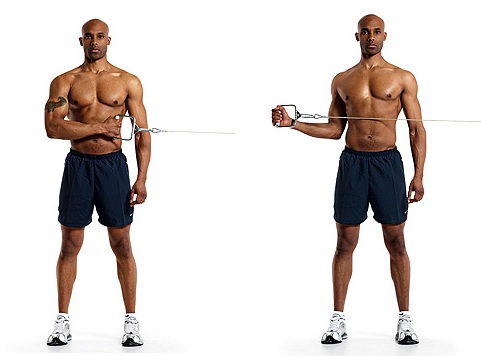
How to perform:
Why it works:
Cables provide consistent tension throughout the entire range of motion, making this one of the most effective alternatives for controlled strengthening.
4) Band External Rotation
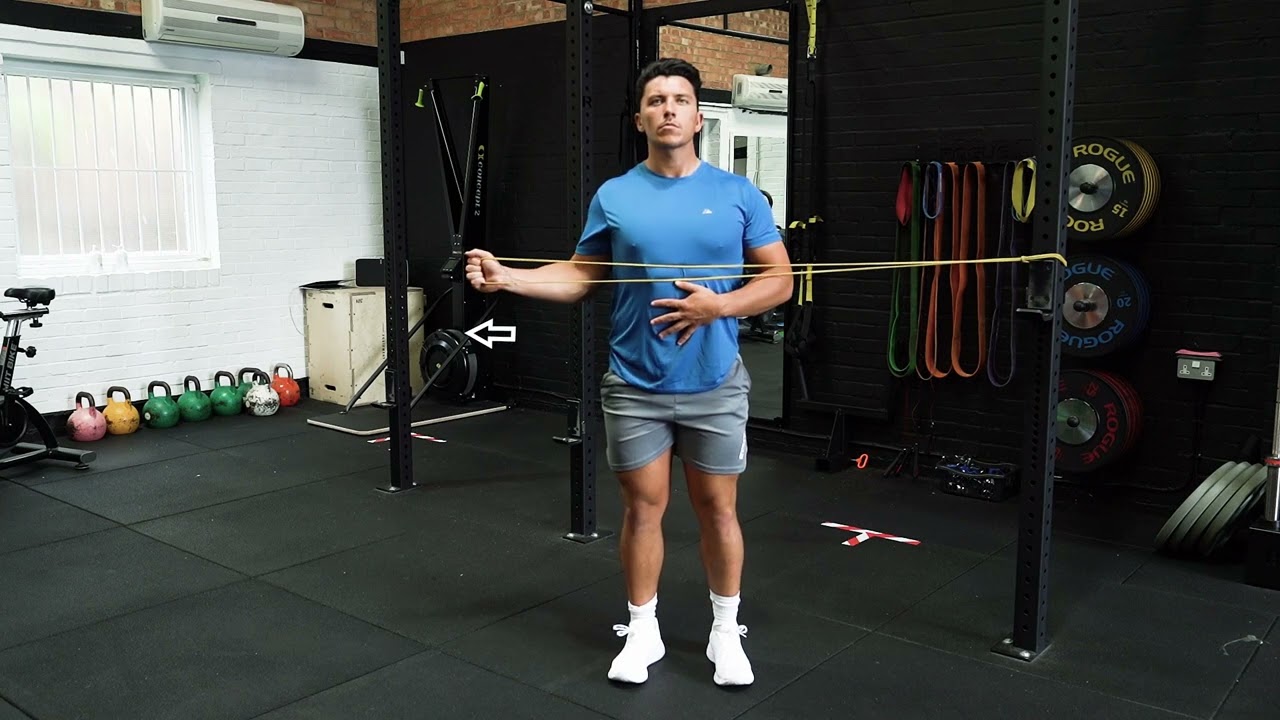
How to perform:
Why it works:
Bands provide variable resistance and are ideal for warm-ups, high-rep activation work, or home training.
Key insight: The incline variation provides a more consistent resistance profile, but all variations serve the same purpose: improving rotator cuff strength and shoulder stability through controlled rotation.
Key Benefits of the Incline Dumbbell External Rotation
Incline dumbbell external rotation offers several unique benefits compared to other rotator cuff exercises, primarily due to its improved resistance profile and controlled setup. Despite using very light weights, it plays a significant role in building stronger, more stable shoulders.
Key insight: This variation is not about lifting heavier—it’s about improving how the rotator cuff works throughout the entire movement, which is critical for long-term shoulder health.
Who Should Use This Exercise?
Incline dumbbell external rotation is a versatile rotator cuff exercise that can benefit a wide range of individuals. Because it combines controlled resistance with a stable setup, it is suitable for both beginners and more advanced trainees who want to improve shoulder function and resilience.
Key takeaway: If your goal is better shoulder control, improved stability, and reduced injury risk, incline dumbbell external rotation is a valuable addition to your training routine.
Incline Dumbbell External Rotation vs Side Lying Dumbbell External Rotation
Both incline and side-lying dumbbell external rotation are excellent exercises for strengthening the rotator cuff, but they differ in how resistance is applied and how the movement feels throughout the range of motion. Understanding these differences can help you choose the most effective variation for your needs.
| Criteria | Incline Dumbbell External Rotation | Side Lying Dumbbell External Rotation |
|---|---|---|
| Resistance profile | More even tension throughout | Low at the bottom, high at the top |
| Starting tension | Moderate (no true dead zone) | Minimal (dead zone at bottom) |
| Ease of control | Smoother and easier to control | Slightly more abrupt tension change |
| Stability | High | High |
| Learning difficulty | Beginner to intermediate | Beginner-friendly |
| Muscle activation feel | More consistent | Peak contraction focused |
| Comfort | Often more comfortable for the shoulders/neck | Can feel less natural for some |
| Best use | Technique refinement, activation, progression | Basic learning, rehab, isolation |
Conclusion: Both variations are highly effective, but they serve slightly different purposes. Side-lying external rotation is often the best starting point because it is simple, stable, and easy to learn. However, its resistance profile includes a “dead zone” at the bottom and a sharp increase in tension toward the top.
Incline dumbbell external rotation improves on this by providing more consistent tension throughout the movement. This makes it easier to maintain control, develop a stronger mind–muscle connection, and train the rotator cuff more evenly across the entire range of motion.
Practical takeaway: Start in a side-lying position to learn proper mechanics, then use incline as a progression to achieve smoother tension and better overall rotator cuff control.
As a coach working with lifters and athletes, I often use incline dumbbell external rotation when someone has already learned the basics of side-lying external rotation but still struggles to feel smooth, consistent rotator cuff tension. The incline setup often makes the movement feel more natural and controlled, which can be a big advantage for improving shoulder awareness without adding more weight.
One of the biggest mistakes here is assuming that a better setup means you should lift heavier. It does not. This exercise still belongs in the “precision over load” category. Keep the towel under the elbow, move gently, and stay within your natural range of motion. When done correctly, this variation can be one of the most joint-friendly and effective ways to build a stronger, more reliable rotator cuff.
Where This Exercise Fits in a Workout
Incline dumbbell external rotation is not a primary strength exercise but a precision-based movement designed to improve shoulder stability, control, and resistance to injury. Because of its smoother resistance profile, it can be especially useful in both learning and refining rotator cuff function.
As a Warm-Up (Most Recommended)
This is one of the best ways to use the exercise—activating the rotator cuff before heavier upper-body work.
Best used before: bench press, overhead press, rows, pull-ups
As a Prehab / Activation Drill
It can be included as part of a shoulder health routine or performed between sets of compound exercises.
Ideal for improving shoulder stability and correcting imbalances
As a Technique Refinement Tool
Because of its more even resistance curve, this variation is particularly useful for improving control and developing a better mind–muscle connection.
As a Finisher (Accessory Work)
You can perform it at the end of your workout to reinforce rotator cuff activation after heavier lifts.
Important Guidelines
Practical takeaway: Incline dumbbell external rotation works best as a supportive tool that enhances your main lifts by improving shoulder function, not by replacing them.
Conclusion
Incline dumbbell external rotation is a highly effective progression for rotator cuff training that combines controlled movement with a more consistent resistance profile. By using a slight incline, this variation improves tension throughout the range of motion, making it easier to develop control, stability, and proper shoulder mechanics.
While it may not contribute directly to visible muscle size or maximal strength, its role in maintaining joint integrity, correcting imbalances, and preventing injury is essential for long-term upper-body performance. A well-functioning rotator cuff allows you to train harder, move more efficiently, and reduce the risk of common shoulder problems.
Because it requires minimal equipment and uses very light resistance, this exercise can be easily integrated into almost any routine—whether as a warm-up, activation drill, or accessory movement.
Final takeaway: If you want smoother, more controlled shoulder movement and stronger rotator cuff function across the entire range of motion, incline dumbbell external rotation is a valuable addition to your training.
