


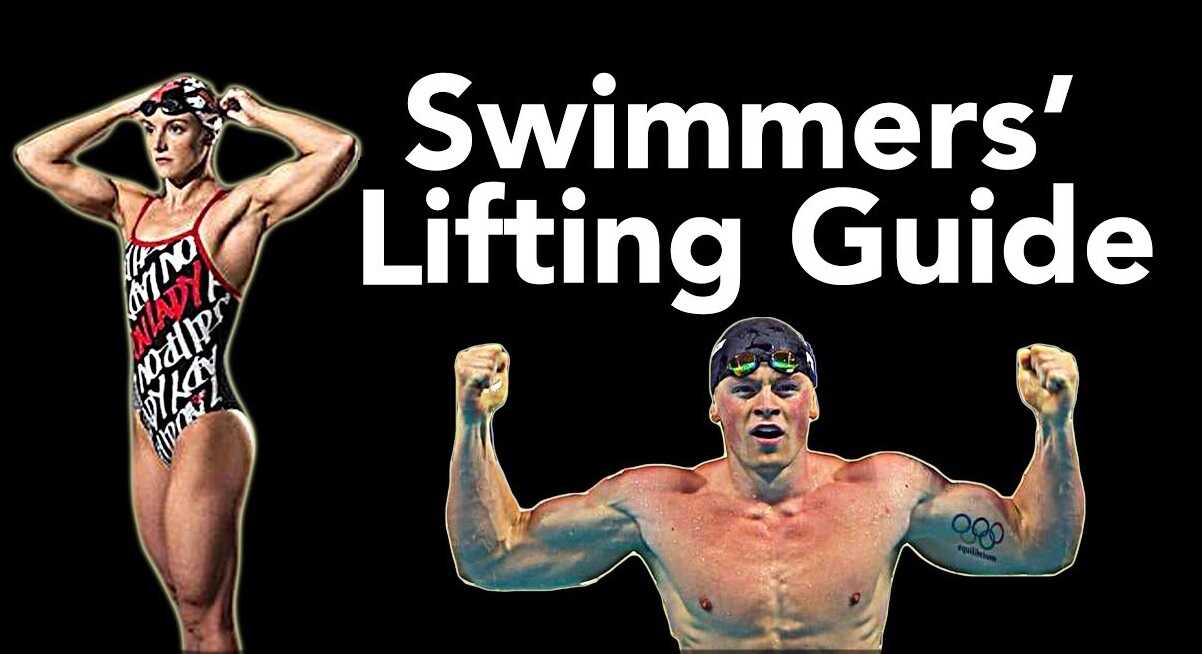
As a swimmer yourself, you often hear about the importance of incorporating strength training into your training regimen. Maybe you’re a bit wary or unsure where to start. Or perhaps, you’re just hunting for the most effective exercises and tips to give you that edge in the pool. Fear no more! We’ve got you covered with our comprehensive guide on “Strength Training for Swimmers.”
Offering a blend of handy tips, key exercises, a dash of science, and more, this guide is designed to help you navigate through the world of strength training with ease and efficiency.
“Pumping iron” is not just for body builders, as balance, strength and endurance lay at the heart of every swimmer’s performance. Perfecting your technique and clocking lap after lap are crucial, but without the solid foundation provided by strength training, you may struggle to reach your full potential.
Whether you’re just dabbling in the pool or aiming for the Olympics, our ultimate guide will equip you with knowledge and actionable tools to bolster your swimming performance. Let’s dive in!
The most effective strength training exercises for swimmers
Strength training for swimmers should focus on improving overall body strength, with a particular emphasis on the upper body and core. Here are the far most important strength training exercises every swimmer should incorporate into his training.
- Pull-ups target the back, shoulders, and arms, which are all crucial for powerful swimming strokes. They also help to improve grip strength, which can be beneficial for starts and turns.
- Bench press targets the chest and triceps, which are important for the push-off phase of each stroke. It also helps to improve overall upper body strength, which can help to increase stroke power and endurance.
- Deadlifts are also highly recommended for swimmers. This compound exercise targets the lower back, glutes, and hamstrings, which are all important for maintaining a strong and stable body position in the water. Deadlifts also help to improve overall body strength and power.
- Core exercises, such as planks and Russian twists, are also vital for swimmers. A strong core is essential for maintaining a streamlined position in the water, which can help to reduce drag and improve speed. These exercises also help to improve body rotation during strokes, which can increase stroke efficiency.
It’s important to use the correct form and technique when performing these exercises to prevent injuries. It’s also crucial to incorporate adequate rest and recovery into your training routine, as overtraining can lead to decreased performance and increased risk of injury.

Key exercises for each swimming style
Getting to grips with your preferred swimming style goes way beyond perfecting your techniques in the water. Strength training on dry land is vital to improve overall performance and advance in your respective swimming style. Let’s delve into some unique exercises for the various swimming styles.
| Swimming Style | Key Strength Exercises |
|---|---|
| Freestyle | Pull-ups, Lat pulldowns, Dumbbell rows, TRX rows, Core exercises |
| Backstroke | Deadlifts, Hyperextensions, Lat pulldowns, Rear delt flies, Core exercises |
| Breaststroke | Push-ups, Bench presses, Butterfly stretches, Leg presses, Dumbbell Pullovers |
| Butterfly | Pull-ups, Dips, Core rotations, Hyperextensions, Medicine ball slams |
| Sidestroke | Side Planks, Hip Abductions, Lunges, Dumbbell lateral Raises, Mountain Climbers |
| Swimming Style | Description |
|---|---|
| Freestyle | Also known as the front crawl, this is the fastest and most efficient of all swimming styles. It requires strong shoulder and arm muscles, along with a solid core, to power through the water with a synchronized flutter kick. |
| Backstroke | The backstroke involves swimming on your back, using a flutter kick and alternating windmill arm actions. It enables you to breathe easily, but it requires a high level of coordination and strong back and shoulder muscles. |
| Breaststroke | One of the most popular swimming styles, the breaststroke requires synchronous movements of the arms on the same horizontal plane, coupled with a whip kick. This stroke is highly technical and requires strong chest and leg muscles. |
| Butterfly | Arguably the most challenging of all strokes, the butterfly requires enormous upper body strength, a good sense of timing, and a highly robust core. Swimmers perform it using a dolphin kick while moving their arms in unison. |
| Sidestroke | Used primarily in rescue swimming, the sidestroke involves lying on one side and using a scissor kick along with a combination of sweeping arm movements. This stroke is low-speed but efficient and requires strong oblique and leg muscles. |
How does strength training impact a swimmer’s performance?
Overall, incorporating strength training into a swimmer’s routine can lead to significant improvements in their performance.
- ENHANCES SWIMMER’S POWER, ENDURANCE, AND SPEED. It does this by developing the muscles used in different swimming strokes, thus enabling swimmers to move through the water more efficiently.
- IMPROVES SWIMMER’S BODY COMPOSITION. It helps in building lean muscle mass and reducing body fat, which can contribute to better buoyancy in the water. This is particularly important in competitive swimming where every second counts.
- PREVENTS INJURIES. Regular strength training can help strengthen the muscles and connective tissues, reducing the risk of common swimming injuries such as shoulder impingement or lower back pain.
- IMPROVES SWIMMER’S CORE STABILITY. A strong core is essential for maintaining proper body alignment in the water, which can lead to more efficient strokes and reduced drag.
- ENHANCES SWIMMER’S ENDURANCE. By strengthening the muscles, swimmers can maintain high-intensity efforts for longer periods, which is crucial during long-distance swims or competitive events.
Expert tips are available for optimizing swimmer strength training
- FOCUS ON EXERCISES THAT MIMIC THE MOVEMENTS USED IN SWIMMING. This specificity in training can help to improve strength and endurance in the muscles used most during swimming. For example, exercises like lat pulldowns, seated rows, and butterfly presses can mimic the pulling motion used in various swim strokes.
- INCORPORATE BOTH DRYLAND AND IN-WATER STRENGTH TRAINING. Dryland training, which includes exercises like push-ups, pull-ups, and weight lifting, can help to build overall strength and power. In-water strength training, like resistance swimming or using hand paddles, can help to improve swimming-specific strength and technique.
- PERIODIZATION. This involves varying your training program throughout the year to prevent plateaus and continue to challenge your body. This can include changing the intensity, volume, or type of exercise you’re doing.
- INSIST ON CORE DEVELOPMENT. Core strength is crucial for swimmers, as it helps to maintain body position and balance in the water. Incorporating core exercises, like planks, Russian twists, and bird dogs, into your strength training routine can help to improve your swimming performance.
- DON’T NEGLECT RECOVERY. Recovery is just as important as the training itself. Make sure to include rest days in your training schedule and consider incorporating active recovery exercises, like yoga or light swimming, to help your muscles recover.
Common mistakes swimmers make in strength training
Here are some common and well-known mistakes swimmers make in strength training and how can they be avoided.
- NEGLECTING THE IMPORTANCE OF A WELL-ROUNDED WORKOUT. Often, swimmers focus too much on upper body strength, overlooking the importance of core and lower body strength. To avoid this, swimmers should incorporate exercises that target all muscle groups into their workout routine. This could include squats and lunges for lower body strength, planks and sit-ups for core strength, and pull-ups and push-ups for upper body strength.
- NOT INCORPORATING SPORT-SPECIFIC EXERCISES. Swimmers need to perform exercises that mimic the movements they make in the water to build functional strength. For example, exercises like lat pull-downs and seated rows can help improve the pulling motion used in swimming. To avoid this mistake, swimmers should consult with a strength and conditioning coach or physical therapist who can help design a sport-specific training program.
- OVERTRAINING. This can lead to fatigue, decreased performance, and increased risk of injury. To avoid overtraining, swimmers should ensure they are getting adequate rest and recovery time between workouts. This includes getting enough sleep, eating a balanced diet to replenish energy stores, and using active recovery techniques like stretching and foam rolling.
- NEGLECTING THE IMPORTANCE OF PROPER FORM AND TECHNIQUE. This can lead to ineffective workouts and an increased risk of injury. To avoid this, swimmers should ensure they are performing each exercise with proper form. This may involve working with a personal trainer or strength and conditioning coach who can provide feedback and corrections.
- NOT OVERLOADING MUSCLES PROGRESSIVELY. This means gradually increasing the weight, repetitions, or intensity of exercises over time to continue challenging the muscles and promoting growth and strength gains. Without progressive overload, swimmers may hit a plateau in their strength training. To avoid this, they should aim to increase the difficulty of their workouts in some way regularly.

The general template of a full workout plan for a swimmer
Designing a weekly/monthly workout plan for swimmers involves a combination of in-pool workouts and strength training. An ideal plan distributes workouts evenly throughout the week to ensure proper rest and recovery. Here’s an example of how a weekly schedule might look:
- Monday: Full-body strength training at the gym focusing on major muscle groups such as the back, chest, shoulders, glutes, and legs. Exercises could include squats, lunges, bench presses, and pull-ups, plus a short swimming session for easy laps and mobility drills.
- Tuesday: An intense pool training session focusing on improving speed and endurance. This could involve numerous sprint sets and long-distance swims.
- Wednesday: A day reserved for active recovery. This could include a light swim, stretching, yoga, or other low-intensity exercises to aid muscle recovery.
- Thursday: A morning session for core strength training, including exercises like planks, sit-ups, and Russian twists, followed by an afternoon session in the pool focusing on technique and stroke efficiency.
- Friday: Another rigorous in-pool workout day focusing on race-pace sets and building stamina.
- Saturday: Upper and lower body strength training in the gym or at home, concentrating on specific muscles used while swimming, like the deltoids, trapezius, and latissimus dorsi.
- Sunday: Complete rest day. Take this opportunity to recover and rejuvenate for the coming week.
Here’s how your strength training program may look like:
One-month strength training workout plan for a swimmer
Here’s a comprehensive 4-week strength training workout plan tailored exclusively for swimmers. The plan involves working out thrice a week, with each session encompassing five exercises. You’ll be targeting 4 sets of each exercise with repetitions varying between 8 to 12.
| Week | Training Day | Exercise | Sets | Reps |
|---|---|---|---|---|
| 1 | Monday, Wednesday, Friday | Lat pulldowns | 4 | 8-12 |
| Seated cable rows | 4 | 8-12 | ||
| Squats | 4 | 8-12 | ||
| Lunges | 4 | 8-12 | ||
| Planks | 4 | 8-12 | ||
| 2 | Monday, Wednesday, and Friday | Deadlifts | 4 | 8-12 |
| Pull-ups | 4 | 8-12 | ||
| Leg press | 4 | 8-12 | ||
| Jumping jacks | 4 | 8-12 | ||
| Push-ups | 4 | 8-12 | ||
| 3 | Monday, Wednesday, Friday | Barbell bench press | 4 | 8-12 |
| Romanian deadlift | 4 | 8-12 | ||
| Power clean | 4 | 8-12 | ||
| Barbell hip thrusts | 4 | 8-12 | ||
| Crunches | 4 | 8-12 | ||
| 4 | Monday, Wednesday, Friday | Goblet squat | 4 | 8-12 |
| Russian twist | 4 | 8-12 | ||
| Bent over rows | 4 | 8-12 | ||
| Burpees | 4 | 8-12 | ||
| Mountain climbers | 4 | 8-12 |
Conclusion about strength training for swimmers
In conclusion, strength training for swimmers isn’t just an option, but an essential component of a complete training regimen. There’s a wide array of exercises, each targeting specific muscle groups and strokes, to enhance a swimmer’s power, efficiency, and endurance. Utilizing expert tips and adopting a well-structured workout plan can aid in optimizing performance.
However, it is equally crucial to understand the differences between the workout plans for swimmers and standard workout regimes. The frequency, intensity, and even equipment used in strength training for swimmers vary greatly from conventional training routines.
Engaging in strength training has proven impacts on a swimmer’s performance, besides contributing to improved swimming speed. However, precautions need to be taken to avoid common mistakes and include proper rest and recovery periods in the training schedule. This careful balance between activity and rest can prevent injury, avoid burnout, and assure the swimmer’s health and longevity in the sport.
The listed resources are excellent references for those who wish to delve deeper into the science and physiology behind swim training. They provide invaluable insights into the complex interaction of strength training and swimming performance, making them essential reads for any swimmer looking to advance their ability and efficiency in the pool.
References:
- Maglischo, E. W. (2003). Swimming Fastest. Champaign, IL: Human Kinetics.
- Wilmore, J. H., & Costill, D. L. (2004). Physiology of Sport and Exercise. Champaign, IL: Human Kinetics.
- Crosland, J. (2011). Muscular Power and Swim Performance: A Study of the Effects of Various Training and Strength Conditioning Formats on Propelling Force, Speed and Endurance in University-level Advanced Swimmers. Loughborough: University of Loughborough.
- Miyashita, M., & Mutoh, Y. (1982). Swimming Physiology of Fish. Berlin: Springer.
- Houmard, J., Costill, D., Mitchell, J., Park, S., Hickner, R., & Roemmich, J. (1992). "Reduced training maintains performance in distance runners." International Journal of Sports Medicine.
- Swaine, I. (1992). Arm and Leg Gross Efficiency and Cycle Time During Front Crawl Swimming at Different Stroke Rates. US: Journal of Sports Sciences.
- Sharp, R., Costill, D., Fink, W., & King, D. (1986). "Effects of eight weeks of bicycle ergometer sprint training on human muscle buffer capacity." International Journal of Sports Medicine.
- Solano, S., & Canavan, P. (1987). The Physiological Demand of Front Crawl Swimming in Adolescent Competitive Swimmers. Australia: Journal of Sports Sciences.
- McMaster, W., & Troup, J. (1993). Elite Swim Training. Champaign, IL: Human Kinetics.
- Smith, D., Norris, S., & Hogg, J. (2002). "Performance evaluation of swimmers: scientific tools." Sports Medicine.
