


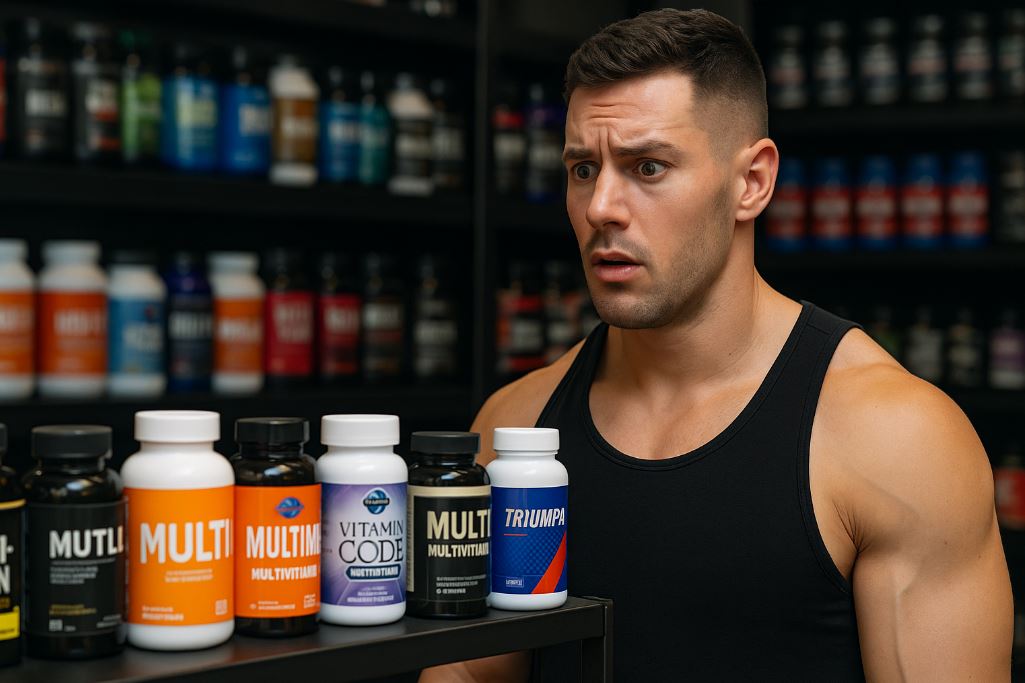
When it comes to building muscle, boosting performance, and recovering faster, training and protein are not the only factors that matter. Vitamins and minerals are the unsung heroes of sports nutrition. They may not directly stimulate muscle growth like protein or resistance training, but they create the internal environment that enables these processes to occur effectively. Without them, energy systems falter, recovery slows, and the body simply can’t take full advantage of the hard work put into training…
As a coach and kinesiologist, I’ve seen athletes plateau simply because of hidden deficiencies in micronutrients. To help you avoid this, I’ve put together a comprehensive guide to the best vitamins and minerals for athletes and bodybuilders in 2025 — lab-tested, practical, and field-approved.
⚡ Quick Summary – Our Top Picks
Before diving into the detailed reviews, here’s a quick summary of the best vitamins and minerals for athletes and bodybuilders in 2025, so you can immediately see which products stand out for different needs.
| Rank | Product | Best For | Key Benefit |
|---|---|---|---|
| 1 | Optimum Nutrition Opti-Men | Best Multivitamin for Men | Performance & recovery |
| 2 | Garden of Life Vitamin Code Women | Best Multivitamin for Women | Hormonal & bone support |
| 3 | Animal Pak Multivitamin | Best for Hardcore Bodybuilders | Old-school strength formula |
| 4 | Legion Triumph Multivitamin | Best Premium Multivitamin | Science-based doses |
| 5 | NOW Vitamin D3 5000 IU | Best Vitamin D | Strong bones & immunity |
| 6 | Thorne Vitamin C 1000 | Best Vitamin C | Recovery & antioxidant defense |
| 7 | Jarrow Formulas Methyl B-12 | Best Vitamin B12 | Energy & nervous system |
| 8 | Solgar Vitamin E | Best Vitamin E | Anti-oxidative recovery |
| 9 | Thorne Magnesium Bisglycinate | Best Magnesium | Muscle function & sleep |
| 10 | NOW Zinc Picolinate | Best Zinc | Hormones & immunity |
| 11 | Nature Made Iron | Best Iron | Oxygen transport & energy |
| 12 | Nuun Sport Electrolytes | Best Electrolytes | Hydration & endurance |
These top picks give you a snapshot of the best vitamins and minerals for athletes and bodybuilders in 2025, but to truly understand why each product matters — and how it can support your training and recovery — let’s dive into the detailed reviews.
🔝 Detailed Reviews: Best Vitamins and Minerals for Athletes and Bodybuilders
Choosing the right supplement often comes down to more than just the label — it’s about matching the product to your training demands, recovery needs, and lifestyle. That’s why in this list you’ll find both complete multivitamin formulas and single-nutrient products like vitamin D, magnesium, or zinc. Not every athlete needs a massive formula with dozens of ingredients; sometimes the more intelligent choice is a targeted supplement that addresses a specific deficiency. By combining both approaches, you’ll see which products provide broad coverage and which are designed to fine-tune performance and recovery.
Optimum Nutrition Opti-Men
A classic multivitamin designed for men, packed with over 75 ingredients. It covers all essential vitamins and minerals, plus added amino acids and antioxidants.
Pros:Cons:
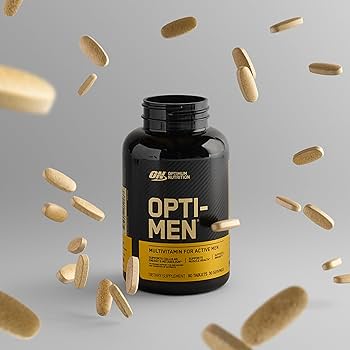
Male athletes and bodybuilders who want an all-in-one daily solution.
Key details: Coach’s Note:Most of my male clients start with Opti-Men because it’s reliable and covers the basics well. Think of it as insurance for your training diet.
Garden of Life Vitamin Code Women
A whole-food-based multivitamin designed specifically for female athletes. It includes probiotics, digestive enzymes, and bone-supporting nutrients.
Pros:Cons:

Female athletes who want comprehensive support for bones, hormones, and digestion.
Key details: Coach’s Note:Many female clients struggle with iron and vitamin D deficiency. This formula helps close those gaps efficiently.
Animal Pak Multivitamin
The legendary bodybuilding multivitamin. A no-nonsense, pill-pack system with huge doses of vitamins, minerals, antioxidants, and performance enhancers.
Pros:Cons:
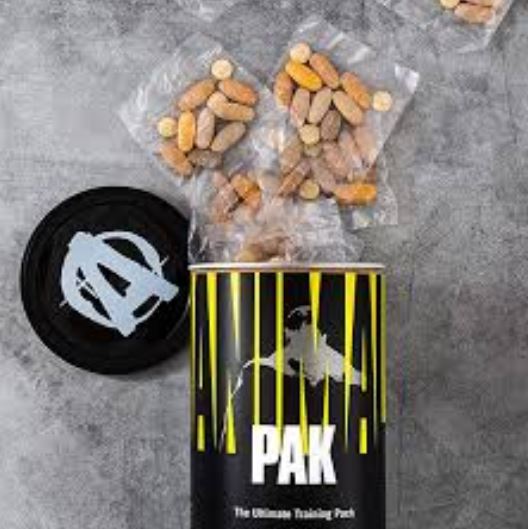
Hardcore lifters in heavy training cycles.
Key details: Coach’s Note:Animal Pak is old-school bodybuilding in supplement form. It’s intense, but it works for those training like pros.
Legion Triumph Multivitamin
A modern, science-based multivitamin with clinically effective doses. Transparent labeling and third-party testing make it stand out.
Pros:Cons:

Athletes who want quality over quantity, with research-backed doses.
Key details: Coach’s Note:I recommend Triumph to athletes who want a premium, reliable multivitamin without the “kitchen sink” approach.
NOW Vitamin D3 5000 IU
Vitamin D deficiency is common among athletes, especially in the winter months. This product delivers an effective, safe dose in softgels.
Pros:Cons:

Athletes who train indoors or live in low-sunlight regions.
Key details: Coach’s Note:I always recommend blood testing before supplementing Vitamin D. Many athletes feel stronger and recover faster once the deficiency is corrected.
Thorne Vitamin C 1000
Vitamin C plays a major role in recovery and immune defense. Thorne’s formula is clean and trusted.
Pros:Cons:

Athletes during heavy training phases or when immune defense is crucial.
Key details: Coach’s Note:Vitamin C won’t replace sleep and nutrition, but it’s a great buffer during intense training.
Jarrow Formulas Methyl B-12
B12 is critical for energy production and the nervous system. This form (methylcobalamin) is the most bioavailable.
Pros:Cons:
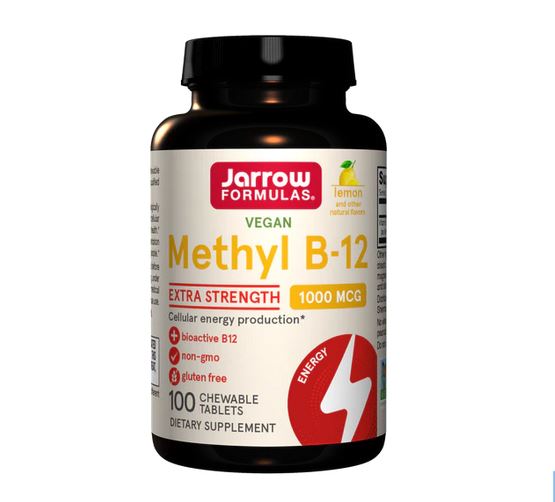
Vegan athletes and those with fatigue issues.
Key details: Coach’s Note:Low B12 is a silent progress killer. I’ve seen vegans make huge gains in energy once they add this.
Solgar Vitamin E
A strong antioxidant that helps protect muscles from oxidative stress and supports recovery.
Pros:Cons:
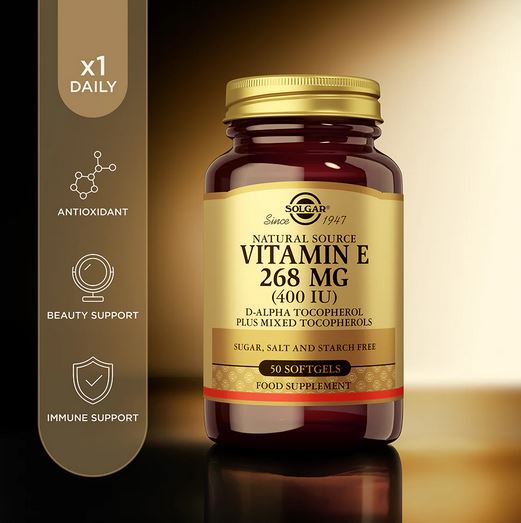
Athletes under oxidative stress from heavy training.
Key details: Coach’s Note:Vitamin E isn’t a must for everyone, but for athletes in peak training phases, it can be a real asset.
Thorne Magnesium Bisglycinate
Magnesium supports over 300 enzymatic processes, including muscle contraction and sleep.
Pros:Cons:

Athletes struggling with sleep, cramps, or fatigue.
Key details: Coach’s Note:Most athletes are magnesium-deficient. This is one of the first minerals I check when clients complain of poor recovery.
NOW Zinc Picolinate
Zinc is essential for maintaining hormone balance, supporting immunity, and facilitating tissue repair.
Pros:Cons:

Strength athletes focused on recovery and hormonal health.
Key details: Coach’s Note:Zinc is often overlooked but makes a big difference in recovery and immunity.
Nature Made Iron
Iron deficiency is particularly common among female athletes, resulting in fatigue and impaired performance.
Pros:Cons:

Female athletes with diagnosed low iron levels.
Key details: Coach’s Note:Never take iron “just in case.” Blood tests are essential before supplementing.
Nuun Sport Electrolytes
Hydration tablets with sodium, potassium, and magnesium to support endurance and recovery.
Pros:Cons:

Athletes training in hot climates or doing long endurance sessions.
Key details: Coach’s Note:Electrolytes aren’t just for marathoners. Even bodybuilders benefit during sweaty summer training blocks.
After examining each product in detail, the next step is to understand how to determine which vitamin or mineral truly aligns with your goals, lifestyle, and training demands — that’s where the Buyer’s Guide comes in.
🛒 Buyer’s Guide: How to Choose the Best Vitamins and Minerals for Athletes
Choosing the best vitamins and minerals for athletes and bodybuilders in 2025 is not about grabbing the flashiest label or the biggest bottle. It’s about aligning supplementation with your unique needs, lifestyle, and training demands. Here’s what every athlete should carefully consider before buying:
🔍 Step 1: Do you need a multivitamin or targeted nutrients?
- Multivitamin formulas give you broad coverage. They’re like an “insurance policy” against gaps in your diet. Useful for busy athletes who may not track their nutrition perfectly.
- Single vitamins or minerals are for specific, confirmed needs. For example:
- Vitamin D for those with low sun exposure.
- Iron for women with a diagnosed deficiency.
- Magnesium for athletes struggling with cramps or sleep.
👉 Don’t assume “more is better.” Targeted supplementation is often a more innovative and safer approach.
🧪 Step 2: Check your baseline with bloodwork
Before adding high-dose supplements, ask yourself: Do I truly understand what my body is lacking?
- Blood tests for Vitamin D, iron, B12, magnesium, and zinc can reveal hidden deficiencies.
- Supplementing without testing may lead to unnecessary intake, wasted money, or even side effects.
- For bodybuilders, regular lab work is as important as tracking macros and training progress.
🏷️ Step 3: What to look for on the label
Not all supplements are created equal. When reading a label:
- Ingredient transparency → Does the label list exact amounts of each nutrient, or just a “proprietary blend”? Always choose transparent products.
- Dosage → Is the dose aligned with science-based recommendations, or is it just “pixie dust” to make the label look impressive?
- Form of nutrient → Some forms absorb better (e.g., Magnesium bisglycinate vs. Magnesium oxide, Methyl B-12 vs. Cyanocobalamin).
- Additives → Watch for unnecessary fillers, artificial colors, or sweeteners.
🏅 Step 4: Certifications and trustworthiness
- Look for NSF Certified for Sport, Informed-Sport, or USP Verified seals. These guarantee that the product is free from banned substances and contaminants.
- Established brands that undergo third-party testing are generally more reliable than flashy newcomers.
💸 Step 5: Budget vs. consistency
The best supplement is the one you’ll actually take consistently.
- Multivitamins that require swallowing 10 or more pills daily (like Animal Pak) may be effective, but they can be intimidating.
- A simple capsule or powder may be a better fit for your lifestyle.
- Check cost per serving, not just the upfront price.
🧠 Step 6: Match supplement choice with your training goal
- Strength & Hypertrophy → Prioritize Vitamin D, Magnesium, and Zinc (support hormones, recovery, muscle contraction).
- Endurance → Focus on Iron (oxygen transport) and Electrolytes (hydration).
- General health & immunity → Multivitamins, Vitamin C, and Vitamin E can provide protective benefits.
Over the years, I’ve seen too many athletes buy “mega formulas” thinking they’ll cover every possible weakness. The truth is, no pill can replace a well-structured diet. Supplements should fill specific gaps — not act as a crutch for poor nutrition. Start with blood tests, identify your weak spots, and then choose the product that’s most likely to move the needle for your performance and recovery.
📊 Comparison Table – 12 Best Vitamins & Minerals
You’ve already seen the detailed breakdown of each product, but this table provides a quick side-by-side comparison of everything. Each supplement is scored based on effectiveness, certification & quality, value for money, and practicality. The Overall Score reflects a weighted average, where effectiveness and quality carry the most weight, since they have the greatest impact on an athlete’s performance and recovery.
| Product | Type | Best For | Certification | Overall Score |
|---|---|---|---|---|
| Optimum Nutrition Opti-Men | Multivitamin | Male athletes | GMP | 9.0 |
| Garden of Life Vitamin Code Women | Multivitamin | Female athletes | NSF, Non-GMO | 9.1 |
| Animal Pak Multivitamin | Multivitamin pack | Bodybuilders | GMP | 8.7 |
| Legion Triumph | Multivitamin | Premium users | Third-party tested | 9.2 |
| NOW Vitamin D3 5000 IU | Vitamin D | Bone health & immunity | GMP | 9.0 |
| Thorne Vitamin C 1000 | Vitamin C | Recovery & antioxidant | NSF for Sport | 9.1 |
| Jarrow Formulas Methyl B-12 | Vitamin B12 | Vegans & energy | GMP | 8.9 |
| Solgar Vitamin E | Vitamin E | Antioxidant support | Non-GMO | 8.8 |
| Thorne Magnesium Bisglycinate | Mineral | Sleep & recovery | NSF for Sport | 9.2 |
| NOW Zinc Picolinate | Mineral | Hormones & immunity | GMP | 8.9 |
| Nature Made Iron | Mineral | Oxygen & energy | USP Verified | 8.7 |
| Nuun Sport Electrolytes | Electrolytes | Hydration & endurance | Informed-Sport | 8.8 |
Table 2: Quick Comparison of the 12 Best Vitamins and Minerals for Athletes and Bodybuilders (2025 Edition)
Expert Insight: The Female Athlete’s Perspective
When it comes to supplementation, female athletes often face unique challenges compared to their male counterparts. Iron deficiency is significantly more common in women, particularly those involved in endurance sports or high-intensity training. Low iron levels can lead to fatigue, poor performance, and even an increased risk of injury if left unaddressed. Similarly, vitamin D and calcium play a critical role in maintaining bone density, which is especially important for women prone to stress fractures.
Another key factor is hormonal balance. Zinc and magnesium, often overlooked, support not only recovery and sleep but also regulate systems that influence menstrual health and performance. A female-focused multivitamin, combined with blood testing to identify deficiencies, can make a dramatic difference in training quality and long-term health.
As a coach, I’ve noticed that when my female clients address these specific needs — iron, vitamin D, calcium, and magnesium — they report more stable energy, fewer training slumps, and stronger progress over time.
Expert Insight: The Male Athlete’s Perspective
For male athletes and bodybuilders, supplementation needs often differ from those of women. While iron deficiency is rare in men, other nutrients become more critical. Vitamin D and magnesium are strongly linked to testosterone support, muscle contraction, and recovery. Zinc also plays a central role in hormone regulation and immune function, making it a key mineral for men who train intensely.
Another important consideration is that many male athletes tend to rely heavily on protein- and calorie-dense foods, sometimes neglecting the diversity of micronutrients. A high-quality multivitamin, supplemented with targeted single nutrients like vitamin D, magnesium, and zinc, can provide the balance needed to optimize strength, recovery, and long-term performance.
In my work with male athletes, I’ve noticed that those who stay on top of vitamin D, magnesium, and zinc almost always recover faster, sleep better, and make steadier gains in strength. It’s rarely the flashy supplements that make the difference — it’s covering these basic nutritional gaps that truly supports performance.
Practical Stack Examples for Athletes
While it’s easy to get lost in the sea of supplements, most athletes only need a few key nutrients to support their training. To make things simple, here are three practical stack examples that cover the most common scenarios:
- General Athlete Stack → Multivitamin + Vitamin D + Magnesium
- Provides broad coverage, supports immune function, and helps recovery from daily training.
- Female Endurance Athlete Stack → Multivitamin + Iron + Calcium + Vitamin D
- Designed to address the higher risk of iron deficiency while supporting bone health and long-term performance.
- Strength Athlete Stack → Vitamin D + Zinc + Magnesium
- Targets hormonal health, muscle contraction, and recovery for individuals focused on lifting heavy weights and building muscle size.
I always tell my athletes: keep your supplement stacks simple. Three or four well-chosen nutrients will do more for your performance than ten products you can’t stay consistent with. Focus on proven essentials like vitamin D, magnesium, and zinc — the results speak louder than marketing hype.
Conclusion
The best vitamins and minerals for athletes and bodybuilders in 2025 aren’t flashy miracle pills. They are the quiet, evidence-backed essentials that keep your body running at its best — supporting energy production, bone health, hormone balance, and recovery. Without them, even the most disciplined training and protein intake can fall short, because the body doesn’t have the internal environment needed to grow and perform.
My top recommendations remain consistent: a high-quality multivitamin for overall coverage, vitamin D and magnesium for performance and recovery, and electrolytes for hydration and endurance. From there, specific nutrients such as iron, zinc, or B12 can be added based on individual needs, especially if confirmed by blood work.
As a coach and kinesiologist, I always remind my athletes that supplements should never replace a balanced diet. They are tools — powerful ones when used correctly — to close nutritional gaps, enhance resilience, and give you the extra edge. Choose wisely, stay consistent, and remember that long-term success in bodybuilding and sports comes from the combination of innovative training, proper recovery, balanced nutrition, and strategic supplementation.
Can taking too many vitamins at once reduce absorption?
Yes, certain nutrients compete for absorption. For example, high doses of calcium can reduce iron absorption. That’s why spacing supplements across the day is often more effective.
Do athletes need higher doses of vitamins than the general population?
In some cases, yes. Heavy training increases oxidative stress and nutrient turnover, meaning athletes may require slightly higher intakes of vitamins C, D, B-complex, magnesium, and zinc.
Are liquid vitamins better absorbed than tablets?
Not necessarily. Absorption depends more on the form of the nutrient (e.g., magnesium bisglycinate vs. oxide) than on whether it’s liquid, capsule, or tablet.
Can vitamins and minerals improve sleep quality in athletes?
Yes. Magnesium, zinc, and vitamin D are linked to improved sleep regulation, which in turn enhances recovery and muscle growth.
Should athletes cycle vitamins and minerals like they do with creatine?
No. Unlike performance supplements, vitamins and minerals are daily essentials. However, dosages should be tailored and sometimes reduced once deficiencies are corrected.
Is it safe to combine vitamins and minerals with protein powders or pre-workouts?
Yes, but be mindful of overlap. Many pre-workouts contain added vitamins like B12 or niacin. Doubling up may lead to unnecessary excess.
Do vitamins and minerals expire or lose potency over time?
Yes. Fat-soluble vitamins (A, D, E, K) and certain minerals remain stable longer, but water-soluble vitamins like vitamin C degrade faster. Always check expiration dates.
Can electrolyte imbalance mimic vitamin deficiency symptoms?
Absolutely. Low sodium, potassium, or magnesium can cause fatigue, cramps, and weakness, which athletes often mistake for lack of vitamins.
Are whole-food-based multivitamins truly better than synthetic ones?
They may contain added phytonutrients and enzymes, but the body absorbs vitamins in the same molecular form. The bigger difference is quality, testing, and dosage.
How long does it take to notice results from correcting a deficiency?
It varies: iron and B12 improvements may take weeks, while vitamin D and magnesium often improve energy, sleep, or recovery within a few days to a couple of weeks.
