



For most people, weight management means managing how much they eat and how much they move. But for some people, comprehensive lifestyle modifications are not enough to bring weight into the healthy range and keep it there. In these cases, medications can help with weight management; some of them require a prescription, and others are medications or dietary supplements available over the counter.
Alli and Xenical are the names of pharmaceutical drugs that contain orlistat. Studies have shown that they can help people lose more weight than dieting alone. In this post, you’ll find out what exactly Alli is, what is its mechanism of action, how it differs from Xenical, and what benefits and downsides can you expect from taking this nonprescription weight loss medication.
Weight loss meditations: a brief overview
Prescription medications approved by the FDA for the treatment of obesity include those that reduce appetite and increase the sense of fullness (for example, phentermine and lorcaserin) and those that decrease the absorption of fat in the intestine (for example, orlistat). In general, these are recommended for individuals with a BMI greater than or equal to 30 kg/m2, or a BMI greater than or equal to 27 kg/m2 with one or more obesity-related risk factors.
They are prescribed as part of a weight management program that includes diet and exercise. As with any other treatment, the risks should be weighed against the benefits before starting medication for weight loss. One of the major disadvantages of drug treatment is that even if the drug promotes weight loss, the weight is usually regained when the drug is discontinued.
What is Alli?
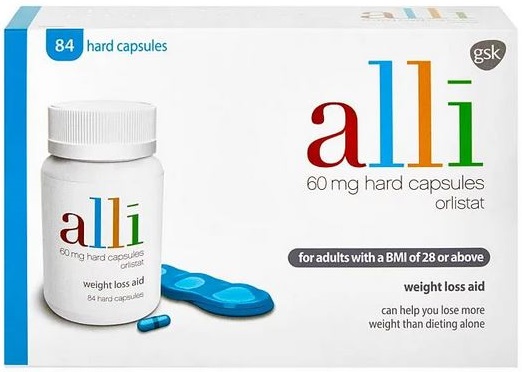
Alli (orlistat) is an over-the-counter version of the prescription drug (Xenical) used to help people lose weight.
How Alli differs from Xenical?
As stated in the introduction, Alli and Xenical are the names of pharmaceutical drugs that contain orlistat. Actually, Alli is a lower dose (60 mg of orlistat per capsule) version of the prescription drug Xenical (120 mg of orlistat per capsule), which has been available since 1999. Like Xenical, Alli works mainly in the gastrointestinal tract to block the absorption of about 30% of the fat you eat.

Is Alli regulated by the FDA?
Like prescription drugs, over-the-counter weight loss meditations are regulated by the FDA and must adhere to strict guidelines regarding the dose per pill and the effectiveness of the ingredients. The FDA has approved only a limited number of substances for sale as nonprescription weight-loss medications. Alli is one of them.
How Alli works? What is the exact mechanism of action?
Alli belongs to a class of drugs called lipase inhibitors. It acts by disabling the enzyme lipase, which breaks triglycerides into fatty acids and monoglycerides. When Alli is present, the triglycerides are not broken down, so they cannot be absorbed. The undigested fat is eliminated in the feces. In other words, the fat passes through the intestine and goes out in the stool instead of into the bloodstream as it would without taking Alli. This cuts the number of calories from dietary fat that are absorbed, but it is not without side effects (explained later in this article).
This medication only works on enzymes that break down fat, not on other enzymes, so carbohydrates and proteins are not affected and can still be absorbed.

Benefits of taking Alli
Downsides and possible side effects
Recommendations while taking Alli
When to take Alli? Is Alli the right choice for me?
You should only take Alli if you are overweight and have already tried dieting and exercise. If they haven’t worked for you, talk to your healthcare provider about a weight management program that involves medication. But remember, you still must follow a healthy lifestyle, one that involves regular exercise and eating right.
To determine if you are overweight, you can calculate your body mass index (BMI) using your height and weight information. A BMI of 18.5 to 24.9 is considered normal weight. A BMI of 25 to 29.9 is considered overweight.
How to take Alli?
Alli comes in capsule form. It is taken by mouth three times a day with a meal or up to one hour afterward. You should take the drug with a meal that contains a little bit of fat, but not too much. If you eat a no-fat meal, your doctor may tell you to skip your dose of medicine. Never take more medicine than recommended. Ask your healthcare provider for diet recommendations.
Replacement supplements
Recommended readings
Conclusion
Alli contains orlistat, the same active ingredient found in the prescription weight loss drug Xenical but only at half the dose of Xenical.
If you decide to take Alli alone, without undertaking a weight-loss program, you’re going to be disappointed. The drug doesn’t work unless you follow a healthy, low-fat diet and do some regular exercise. If you like your steak, bacon, butter, and other high-tat fare, you’re going to have problems with this drug. Eating more than 30 percent of your calories, or roughly 15 grams of fat per meal, can trigger loose, oily stools since the excess fat that is blocked from absorption is quickly excreted.
Alli is intended for people who have a BMI of 27 or higher. If you want to lose 5 pounds to fit into your bikini, we suggest that you don’t take this drug. Normal-weight people who take Alli place themselves at unnecessary risk of suffering side effects such as loss of bowel control and vitamin loss. So for the casual dieter, go back to the basics, push yourself away from the table, exercise, and change your lifestyle.
