


Have you ever been stuck in a training rut, where progress remains elusive no matter how hard you push? You’re not alone. Many bodybuilders encounter this frustrating plateau at some point. But what if there was a way to jolt your muscles into new growth? Enter forced repetitions, an advanced bodybuilding technique designed to help break through those stubborn plateaus.
Forced reps push you beyond your typical limits, requiring assistance during the latter part of a set to achieve more reps than you’d typically manage alone. This technique taps into your muscles’ untapped potential, sparking new growth and strength.
This article explains the essence of forced repetitions, exploring their pros and cons, common mistakes, and the most suitable exercises for this technique.
What Are Forced Repetitions?
Forced repetitions are a bodybuilder’s ace in the hole when maximizing workout intensity and breaking through those stubborn plateaus. When your muscles reach their limit, forced reps come into play by extending the set for a few extra reps. This is achieved with the help of a training partner who assists you just enough to keep the weights moving past normal muscular fatigue. Pushing your limits effectively stresses your muscles into becoming more substantial and resilient. The primary goal of this high-intensity training technique is to push the muscles beyond their limits, stimulating further growth and strength gains.
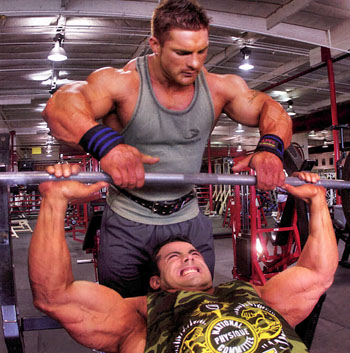
Example: A bench press involving forced reps. You easily knock out 8 reps but fail on the 9th rep with the weight halfway off your chest. At that point, you continue pushing as your training partner provides as little help as possible until the rep is completed.
The Science Behind Forced Repetitions
The rationale behind forced repetitions lies in the concept of muscular overload. When muscles are pushed to their limits, they undergo micro-tears, which repair and grow back stronger during recovery. By utilizing forced repetitions, bodybuilders can extend their set beyond the point of failure, potentially leading to more significant muscle hypertrophy and strength.
How to Use Forced Reps Step-By-Step?
Step One – Reach Muscle Failure
Begin with a challenging weight on an exercise like the bench press. Push yourself until you can no longer perform another rep on your own. This is where muscle failure occurs, and your partner is ready to step in.
Step Two – Receive Assistance
Your training partner now adds enough support to help you squeeze out more reps. For instance, they may slightly aid you in lifting the barbell during a bench press. The key is to keep their help minimal so your muscles remain fully engaged during these assisted repetitions.
Step Three – Complete Additional Reps
Thanks to your partner’s assistance, you can power through a few extra reps beyond your usual limits, typically 2-3 more reps.
The Pros of Forced Repetitions
Forced repetitions can be a game-changer for those looking to elevate their workouts to the next level. Here are the main advantages of using forced repetitions.
1. Enhanced Muscle Growth
One of the primary benefits of forced repetitions is their ability to stimulate muscle growth. By pushing through the fatigue barrier, athletes can recruit additional muscle fibers, increasing hypertrophy.
2. Breaking Through Plateaus
For those stuck in a rut, forced repetitions can provide the necessary stimulus to overcome plateaus. The extra repetitions can shock the muscles, encouraging new growth and strength adaptations.
3. Improved Mental Toughness
Engaging in forced repetitions requires a significant amount of mental fortitude. Athletes often find that pushing through discomfort enhances their resilience and training dedication.
4. Increased Strength Gains
Repeatedly pushing the muscles to work harder can lead to increased strength. As the muscles adapt to the additional stress, lifters may find they can lift heavier weights in future workouts.
The Cons of Forced Repetitions
While forced repetitions can be an effective tool for advanced bodybuilders looking to push past plateaus, several disadvantages must be considered.
1. Risk of Injury
While forced repetitions can be beneficial, they also carry a higher risk of injury. Pushing beyond one’s limits can lead to improper form, which increases the likelihood of strains or tears.
2. Overtraining
Utilizing forced repetitions too frequently can lead to overtraining, resulting in fatigue, decreased performance, and a more extended recovery period. It’s essential to balance this technique with adequate rest and recovery.
3. Dependency on Assistance
Athletes may become reliant on a training partner to complete forced repetitions, which can hinder their ability to push themselves during solo workouts. This dependency can be counterproductive in the long run.
4. Not Suitable for Beginners
Forced repetitions are an advanced technique and may not be suitable for beginners. Before attempting this method, new lifters should focus on developing proper form and building a solid foundation.
Pros
Cons
Common Mistakes with Forced Repetitions
1. Poor Form
One of the most common mistakes athletes make during forced repetitions is sacrificing form to complete extra reps. Maintaining proper technique is crucial to preventing injuries and ensuring that the intended muscle groups are being effectively targeted.
2. Too Many Repetitions
While the goal is to push beyond failure, doing too many forced repetitions can lead to overtraining. Athletes should limit forced reps to three per set and only when necessary.
3. Too Frequent Use
Performing forced repetitions too frequently is another standard error. This technique is very taxing on the body and should be used sparingly to prevent overtraining.
4. Neglecting Recovery
Forcing the muscles to work harder should be balanced with proper recovery. Skipping rest days or failing to implement recovery protocols can lead to burnout and decreased performance.
5. Inconsistent Partner Assistance
Inconsistent assistance from a training partner can render forced repetitions ineffective. Lifters should ensure their partner is knowledgeable and capable of providing the necessary support to maximize benefits.
Do forced reps work for all exercises?
Forced repetitions can be a potent tool in your bodybuilding arsenal, but they aren’t universally applicable to every exercise. Compound movements and specific single-joint movements are most suitable for forced reps. Exercises like the bench press, lat pulldown, machine row, shoulder press, hack squat, leg curl, leg extension, and leg press are excellent candidates for incorporating forced repetitions. These movements are usually performed under controlled conditions, where a partner can assist safely.
On the other hand, exercises requiring intricate balance, such as those performed on unstable surfaces or excessively complex free-weight lifts (Olympic lifts and deadlifts), might not be appropriate. Attempting forced reps in these scenarios could significantly increase the risk of injury if the lifter’s form deteriorates as they approach fatigue.
As a general guideline, if a spotter can step in and provide assistance without interfering with the exercise’s flow, then the movement is appropriate for employing forced reps.
Are forced reps suitable for beginners?
Forced reps might be enticing for newcomers, hoping to maximize their gains. However, they are generally not recommended for beginners. Here’s why:
- Need for Foundation: Beginners should focus on mastering the fundamentals of exercise form and building a solid strength foundation. Understanding how to perform exercises correctly and consistently is crucial before incorporating advanced techniques like forced reps.
- Potential for Injury: Without prior experience and strength, beginners who try forced repetitions are at a higher risk of injury. The requirement for assistance and pushing beyond one’s safe limits can lead to compromised form and overexertion.
- Avoiding Overtraining: As a beginner, your body is still adapting to new physical demands, making you more susceptible to overtraining. Rushing into high-intensity techniques could backfire, leading to fatigue and prolonged recovery times instead of efficient progress.
Ultimately, it’s more beneficial for beginners to stick to progressive overload principles and a well-rounded training regimen that allows them to advance safely and sustainably.
How do forced repetitions compare to other advanced training techniques?
Forced repetitions stand out among advanced training techniques because they focus on maximizing muscular fatigue by continuing a set past the point of failure with assistance. While similar techniques like drop sets and supersets also aim to enhance intensity and muscle stimulation, they differ fundamentally in their approach and execution.
Drop Sets: Unlike forced reps, drop sets involve reducing the weight after reaching failure to continue the set without assistance. This technique shifts the intensity to a lighter load, which can benefit volume but may not push the muscle under as much strain as forced reps.
Supersets: By combining two exercises back-to-back without rest, supersets elevate heart rate and endurance more than directly increase strength or size. While they effectively target multiple muscle groups, they don’t provide the focused fatigue of forced reps.
Forced repetitions offer a unique benefit in directly targeting a muscle’s ability to push beyond its limits under a controlled environment, unlike other techniques that either alter load or approach muscle fatigue from a different angle. Approximately 70% of bodybuilders incorporate forced repetitions into their training routines.
How often should forced repetitions be included in a workout routine?
As a general guideline, it’s best to use forced reps sparingly—think of them as a powerful tool to be utilized only periodically. Integrating forced reps into one or two exercises per workout session is sufficient for most lifters. Aim to focus on stubborn muscle groups or specific plateaus you wish to address. Remember that overuse can lead to overtraining and requires extended recovery. To avoid burnout and potential injury, consider limiting sessions featuring forced reps to once every two weeks. This frequency ensures you reap the benefits of increased intensity without compromising long-term progress.
Limit forced repetitions to two or three sets per target area. For example, if you are training chest and using the bench press, incline press, and flat bench flys for a workout, use a set of forced reps on the last heavy set of bench presses and incline presses. During the rest of the workout, perform the work sets only to positive failure.
Conclusion about forced repetitions
Forced repetitions can be a powerful tool in a bodybuilder’s arsenal for overcoming plateaus and enhancing muscle growth. However, it is crucial to approach this technique cautiously, considering the potential risks and ensuring that exercises are performed correctly. By understanding the pros, cons, and common mistakes associated with forced repetitions, athletes can make informed decisions about incorporating this advanced technique into their training regimen.
