


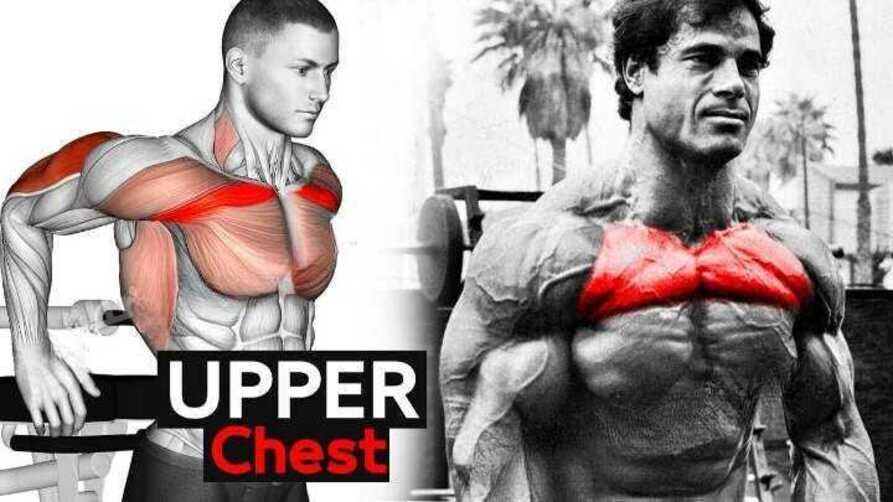
Are you looking to build a strong and muscular chest? A muscular, well-defined chest is often viewed as a symbol of strength and power. It’s not just about aesthetics, though. A strong, developed chest provides numerous physical benefits that extend well beyond looking good. Such muscles play a pivotal role in upper-body exercises and everyday activities alike, helping with tasks that require pushing, lifting, or throwing. More than that, they contribute to improved posture, thereby aiding spinal health, and allowing for deeper, more efficient breathing. Engaging and training these muscles has also been linked to higher metabolism rates, making your weight management efforts more effective. Thus, achieving powerful chest muscles isn’t just for show – it’s a valuable goal in the pursuit of overall bodily health and function.
In this ultimate guide, we will share with you the most effective chest exercises that target the upper portion (upper fibers) of the pectoralis major muscles. Whether you’re a beginner or an experienced lifter, these exercises are perfect for muscle growth (true mass builders) and overall strength. Each listed exercise will be backed up with detailed instructions, tips, and a clear video presentation of the correct technique of performance.
The brief anatomy of the chest muscles
The chest is made up primarily of two muscles: (1) the pectoralis major, and (2) the pectoralis minor.
The pectoralis major has two anatomic sections or heads. The first one is the upper clavicular head (upper pectoralis major). The second one is the lower sternal head (lower pectoralis major). Although the pectoralis muscle has only two anatomic divisions, functionally it may be considered in three sections (upper, middle, and lower) depending on the angle through which the arm is moved. This is the main reason why we can talk about the upper, middle, and lower chest exercises.

If you aim to develop a broad, three-dimensional upper chest, it’s crucial to target the clavicular head of your pecs. Located along your collarbone, this often overlooked region of your chest muscles is the secret to achieving a well-rounded upper chest. Pictured in blue on the provided chest muscle ‘x-ray,’ the clavicular head differs from the middle and lower sections of your pecs, with a stronger link to the uppermost part of your arm (marked in green).
The intensity of engagement in different muscle fibers within your pectoral muscles varies, based on the specific angle you utilize as you move your arm forward.
Targeting the clavicular head of the pectoralis major – the upper part of your chest – requires specific exercises. These muscle fibers are often underdeveloped because classic chest exercises, such as the flat bench press and fly, primarily engage the middle fibers of the pectoralis major muscle. That’s why it’s crucial to incorporate movements that specifically target the upper chest. The unique innervation of the upper segment of the pectoralis major enables us to focus and train this specific part of the chest more than any other area.
The upper chest (clavicular head) is best worked when the exercise is performed on an incline, such as an incline press or incline dumbbell fly. You want your arms to extend at about 30 to 45-degree angles to your body, or eye level if you are standing.
If you are more interested in the anatomy of the pectoral muscles (which is certainly recommended for every serious bodybuilder to know), we refer you to our article which deals exclusively with the anatomy of the pectoral muscles.
Quick tips for upper-chest training
When it comes to enhancing your upper chest, there’s no one-trick-solution. It requires a combination of the right exercises, training strategies, and dedication. Let’s dive into some quick tips that can optimize your upper chest training.
- Incline movements are your best ally. Lifting at an angle of about 30 to 45 degrees would be most effective. This angle emphasizes the upper pecs by placing them under greater tension.
- Angles beyond 45 degrees often shift the focus away from your chest and onto your shoulders, which is not what you desire if your goal is to prioritize the upper chest.
- Prioritize your upper chest exercises at the beginning of your workout when your energy levels are highest. After that perform exercises that hit your middle and lower fibers.
- Ensure to maintain a full range of motion when performing exercises to maximize muscle engagement.
- Ensure to contract your upper chest intensely at the peak of each repetition.
- Add variety to your upper chest exercises to avoid hitting a plateau.
- Don’t rush your reps. Taking your time with each repetition ensures you’re working the muscle and not relying on momentum.
- Focus on the mind-muscle connection. Concentrating on the muscle you’re working on can enhance your results.
- Incorporate stretches and warm-ups before starting the exercise routine to avoid injury.
To capitalize on your workouts and achieve maximum muscle development, it’s critical to train your muscles through a substantial range of motion. Incorporate various exercises into your regimen that challenge and load the muscle from diverse angles. Furthermore, ensure that the load you’re working with brings you close to exhaustion. Aspects like workout intensity and volume (measured in reps and sets) will vary based on your physique, level of training, and training split (for example, whether you’re focusing on full-body workouts or targeted body part routines).
The best exercise to target upper chest muscles (clavicular head)
The upper (clavicular) head of your chest muscle is unique since it plays a major role in aesthetics and upper body strength. With its position, it significantly impacts the overall shape and fullness of your chest. To hit the upper chest area best, upper chest-specific workouts are instrumental.
When it comes to upper chest exercises, there are plenty of options to choose from. Our exercise database contains many upper chest exercises you can choose from. However, not all chest exercises are created equal (while they all have their unique advantages), and some may be more effective than others in achieving your desired results (maximal muscle growth).
Since you can’t do them all, we’re sure you want to know the best upper-chest exercises to include in your chest workout routine – those that provide total muscle stimulation and stimulate muscle growth in the shortest time. We’ve done the work to compare them for you and to make the list of those who stand out with their ability to promote the greatest growth of the pectoral muscle.
However, one thing must be absolutely clear at the start. It is impossible to fully isolate the upper, middle, and lower portions (fibers) of the pectoralis major muscle. This is because the chest muscles (pectoralis major and minor) work together as a unit. Every chest exercise will hit the entire muscle. However, some exercises can place more emphasis on either the upper, middle, or lower portion of the chest.
How exactly did we choose exercises? As usual, we took the science into account. These exercises were chosen based on their proven results in the lab, ease of learning and performing, total muscle stimulation and intensity, popularity among lifters and bodybuilders, and availability of equipment in commercial gyms. By incorporating a combination of these exercises into your routine, you can effectively target and develop your chest muscles.

#1 INCLINE BARBELL BENCH PRESS
This formidable exercise, a variation of the traditional flat bench press, is an exceptional tool that targets the upper portion of the pectoral muscles.
HOW TO DO IT:
- Start by positioning yourself on an incline bench. Set at a 30 to 45-degree angle, the bench should provide sturdy back support.
- Plant your feet flat on the ground, slightly wider than your shoulders. A stable foot placement serves as a strong base during the entire movement.
- Reach out and grasp the barbell using an overhand grip, your hands spaced just beyond shoulder-width apart. This grip allows optimal chest activation and helps maintain balance.
- Inhale deeply and unrack the barbell, safely lowering it to the upper part of your chest, directly above your collarbone.
- Exhale as you press the barbell upwards, fully extending your arms without locking your elbows to avoid injury. Return to the starting position and repeat as necessary.
COACH’S TIP (PERFORMANCE POINTERS):
- Engage Your Core: Always maintain abdominal tension. It stabilizes your body, minimizing unnecessary movement during the lift.
- Mind Your Grip: Avoid placing your hands too wide or too narrow. Approximately shoulder-width apart allows better force distribution.
- Maintain Form: Resist the temptation to lift heavier than your capacity. Poor form will only lead to ineffective results, risking injury.
- Breathe Right: Coordinate your breath with the movement. Inhale as you lower the barbell, and exhale as you lift. Proper breath control enhances force generation.
#2 INCLINE DUMBBELL BENCH PRESS
The incline dumbbell bench press is a variation of the traditional incline barbell bench press that targets specifically the upper part of your pectoral muscles, providing you with not only strength but the well-rounded development and definition everyone desires.
The incline dumbbell press may be the best exercise for developing the upper chest. This is supported by research that indicates that more of the muscle fibers of the upper pec come into play when performing this exercise than do when performing the incline barbell press.
HOW TO DO IT:
- Set an adjustable bench to an angle of 45 degrees. If your bench is not adjustable, find one that is inclined.
- Sit on the bench with a dumbbell in each hand. Rest them on your thighs. Your palms should be facing each other.
- Lean back onto the bench. Use your thighs to help raise the dumbbells. Hold them at shoulder width.
- Once you’re in position, move the dumbbells to the sides of your shoulders. The palms of your hands should now face forward. This is your starting position.
- Breathe out and push the dumbbells up with your chest. Keep your hands close to each other at the top of the movement but don’t let them touch. Your arms should be fully extended above you and perpendicular to the floor.
- Pause for a second and then start to lower the dumbbells slowly. Breathe in as you perform this part of the movement.
- Continue to lower the dumbbells until they are level with your chest (elbows are at a 90-degree angle). The dumbbells should be on either side of your chest.
- This is one rep. To start the next rep, push the dumbbells back up to the starting position. Repeat for your desired set of reps.
COACH’S TIP (PERFORMANCE POINTERS):
- Strive to keep the dumbbells over your shoulders, directly in line with your pecs, at the top of the press. This ensures you’re utilizing the full range of motion and maximizing synergy between your chest and arms.
- Make sure your wrists are locked in a straight, secure position, not rolling back. This protects your wrists from strain and helps maintain the force through the chest, rather than diverting it elsewhere unexpectedly.
- Maintain control of the weights at all times, lowering them gradually.
#3 MACHINE INCLINE CHEST PRESS
If you’re aiming to enhance your upper chest muscles, then the machine incline press could be your best bet. It’s a go-to for beginners since it provides greater stability and safety compared to the traditional incline barbell press. Interestingly, these machines often present various grip options. Opting for a neutral grip, where your thumbs are up and your palms are facing each other, tends to prioritize the pectorals more than a pronated grip when the palms are facing forward. Besides honing in on the pectorals, particularly the top section, a regular incline press routine will also beneficially target your shoulders and triceps.
HOW TO DO IT:
- Adjust the seat height so that the handles are aligned at chest level. This ensures optimum pressure on your upper pecs and avoids potential injury.
- With your back firmly against the backrest, grasp the handles with a firm but comfortable grip. Your palms should be facing downward, and your fingers should be wrapped around the handles.
- Exhale as you push the handles away from your body in a smooth, regular motion until your arms are fully extended without locking out your elbows at the top.
- Pause for a moment and then slowly allow the handles to return to the original position (without letting the weights touch the stack), all while taking a deep breath in. This should be a controlled movement; don’t let the weight pull you back fast. Always remember to keep the chest muscles engaged.
- Repeat for the desired number of reps.
COACH’S TIP (PERFORMANCE POINTERS):
- Ensure your shoulders and lower back maintain contact with the bench throughout the entirety of this exercise.
- Refrain from bouncing the handles back on the machine.
- To fully engage and develop your muscles, it’s crucial to contact them as you lift and then to control the return movement carefully on the way down.
#4 SMITH MACHINE INCLINE PRESS
The Smith machine incline press offers several distinct advantages. Firstly, it inherently stabilizes the weight, preventing you from getting off balance and reducing the risk of injury. This means you can focus solely on feeling the burn in your upper chest. This exercise is also an excellent choice for solo workout enthusiasts as it doesn’t require a spotter. On the flip side, this upper chest exercise isn’t without its drawbacks. The fixed bar path, while beneficial in some aspects, can limit the engagement of your secondary and stabilizer muscles. This less natural movement can lead to lesser overall strength development when compared to free-weight exercises.
HOW TO DO IT:
- Set up your adjustable exercise bench directly beneath a Smith machine bar, adjusting the backrest angle to anything between 30 to 45 degrees.
- Ensure that you are lying comfortably on the incline bench so that the bar aligns with the upper or middle region of your chest.
- Grasp the bar with an overhand grip (palms turned forward) spaced slightly wider than shoulder-width apart.
- Plant your feet firmly on the ground for stability. Undo the safety hooks and maintain your arms fully extended while holding the bar above your chest.
- With control and precision, bring down the bar slowly towards the center of your chest, especially targeting the area above your nipple line.
- Allow the bar to briefly make contact with your chest and pause for a moment.
- Push the bar upwards until your arms are almost fully extended, ensuring that you don’t completely lock your elbows.
COACH’S TIP (PERFORMANCE POINTERS):
- Keep your elbows perpendicular to and away from your body.
- Ensure your shoulders, head, and hips continuously touch the bench for stability throughout the exercise.
- Avoid bouncing the bar off your chest or arching your back, as this can put unnecessary strain on your chest muscles and risk injury.
- Do not rush the descent of the weight; control is paramount here.
- At the end of your set, ensure the bar is safely reracked.
#5 DECLINE PUSH-UPS
This great upper chest exercise is simple to include in your workout regimen, needs little to no equipment, and works for both fitness newbies and gym veterans alike. The way you perform a decline push-up is similar to a traditional push-up with a slight modification. Don’t let the name fool you – the decline push-up puts a spotlight on your upper pecs. Elevating your lower body, increases the amount of resistance your body encounters, making it a more challenging variant than the conventional push-up. This simple twist enhances your workout, making the decline push-up a notably tougher exercise.
HOW TO DO IT:
- Position your body in a standard push-up stance, but place your feet on an elevated surface like a sturdy box or a step stool.
- Your hands should be slightly wider than shoulder-width apart.
- Lower your body until your chest almost touches the ground, then push yourself back to the starting position.
- Strive to keep your body in a straight line from your head to your heels for the entire movement duration.
COACH’S TIP (PERFORMANCE POINTERS):
- Stay aligned. Your entire body, from your head to your ankles, should form a straight line. Make sure your rear end isn’t poking above your shoulder level. Throughout the entire push-up, keep your abs tightly wound to maintain this stance.
- Avoid the ‘swayback’ pitfall. Keep your abdominal muscles engaged and pulled in this will help prevent your back from arching excessively.
- Keep your head in check. It should be in line with your spine and never drooping downwards.
- Ensure your body posture is correct throughout the movement. From your heels to your neck, maintain a straight line. Pay special attention so that you don’t allow your pelvis to sag toward the ground or let your rear lift upward.
#6 INCLINE BENCH DUMBBELL FLY
Chest fly exercises, unlike most typical chest drills that generally involve pressing movements, utilize adduction to provide a unique challenge to the chest muscles. This means the muscular effort focuses on drawing the arms towards the chest rather than pushing them away. Incorporating chest fly variations in your upper body workout assists in stimulating your muscles from different angles. The most strenuous part of this exercise is the extended position at the bottom, where your pecs need to engage to return the dumbbells to the start. Navigating this part successfully helps to optimize the workout routine for maximum benefit.
HOW TO DO IT:
- Hold a dumbbell in each hand. Sit on an incline bench positioned at approximately a 30- to 45-degree angle.
- Extend the arms above the body and turn the palms toward each other.
- With a slight bend in the elbows, lower the arms to the sides in a controlled manner until the palms face the ceiling.
- Reverse the motion and bring the arms back above the body.
- Repeat.
COACH’S TIP (PERFORMANCE POINTERS):
- Be careful not to cut the range of motion short as you perform more repetitions and become fatigued. If this starts to happen, end the set early or grab a lighter pair of dumbbells.
- With less involvement from the lower chest, the incline dumbbell fly doesn’t call for as much weight as chest pressing exercises or flat bench flies. This makes it an efficient yet less strenuous option for upper chest workouts.
- At the bottom of the movement, make sure you feel a stretch in the pecs.
#7 INCLINE CABLE FLY
This excellent upper chest exercise creates constant tension in your muscles throughout the full range of motion. This consistent pressure helps to stimulate muscle growth more effectively than the incline bench dumbbell fly. Incline cable flies help strengthen and shape the chest muscles, creating a toned and sculpted appearance.
HOW TO DO IT:
- Begin by adjusting the pulleys to the lowest setting on the machine, below the level of your torso.
- Set up an incline bench at a 45-degree angle between the pulleys.
- Choose a suitable weight on each pulley and grasp a handle in each hand.
- Lie back on the incline bench, reaching your hands together at full arm length in front of your face. Ensure your shoulders align with the pulleys to establish your starting point.
- Keep a slight elbow bend to protect from exerting excessive stress on the biceps tendon.
- Execute a wide arc movement with your arms out to both sides until you sense a stretch in your chest.
- Return to the start by contracting your chest muscles and bringing the machine handles together at the level of your chest. Squeeze your pectorals together in this position.
- Repeat for the desired number of reps.
COACH’S TIP (PERFORMANCE POINTERS):
- Only your shoulder joints should be moving – your arms remain stationary throughout the movement.
- As you move your arms back to the starting position, exhale while compressing your chest muscles.
- Avoid using excessive weight.
- Avoid rounding your shoulders (keep them back and down throughout the entire range of motion).
- Perform the exercise using slow and controlled movement – avoid using momentum to swing the weight,
#8 LOW-PULLEY CABLE FLY (STANDING LOW TO HIGH CABLE FLY)
Adjusting the pulleys to their highest setting targets the lower sections of the chest while placing them at the lowest setting predominantly engages the upper and inner chest muscles. These areas are often challenging to fully develop for those involved in bodybuilding.
HOW TO DO IT:
- Start by attaching single-handle D-grip handles to the lower pulleys on a cable crossover machine.
- Choose your preferred resistance level.
- Position yourself in the middle of the cable crossover machine, maintaining a slight bend in your knees, and have one foot forward.
- Grip the handles with your palms facing upwards, keeping a slight bend in your elbows pointing down and behind you. Keep your lower back arched and your chest elevated.
- Execute this exercise by simultaneously moving your arms upwards and inwards, drawing the handles to a point directly in front of you until your hands align with your chin (the handles should meet at the head’s height).
- Pause for a moment, engage your pec muscles with a squeeze, then gradually allow the handles to revert to the initial position.
- Repeat for the desired number of reps.
COACH’S TIP (PERFORMANCE POINTERS):
- Standing slightly ahead of the pulleys ensures an optimal path to engage your pectoral muscles.
- Avoid sudden pulling up and harsh dropping on the stack–keep it controlled and steady.
- Grip the handles securely and ensure that your palms face each other throughout the workout.
- Incorporate a balanced rhythm – raise and lower the weights at an even rate. This uniformity adds to the effectiveness of the exercise.
- Keep your body steady during the process. Avoid unnecessary movement up and down – ensure the focus stays on your chest muscles.
Other upper-chest exercises worth trying
Closing thoughts: Best exercises for building upper-chest mass and strength
Focusing on your chest muscles from different angles is key to maximizing muscle development, and this certainly applies to your upper chest or clavicular head. As one of three main areas of your pectoral muscle – along with the middle and lower fibers – it’s crucial to dedicate a portion of your chest workout to exercises that target the upper chest. We’ve done the hard work for you and based on thorough research and expert-led guidance, we’ve curated a list of the most effective exercises for boosting upper chest muscle growth.
The selection of exercises we’ve covered in this article is designed to pack size and strength onto your chest, driving muscle growth (hypertrophy) in record time. Although you have a treasure trove of exercises at your fingertips, be sure not to dive into all of them at once. By changing up your exercises from workout to workout, you’re able to avoid hitting a weightlifting plateau. This means you’ll continue to see improvement and growth rather than stalling in progress. Additionally, by altering the exercises you use, you’re also able to target those muscle fibers from slightly different angles each time.
When these exercises are paired with a targeted nutrition and supplement strategy, you’ll have a comprehensive plan for achieving a muscular and defined chest.
Literature consulted
- "Strength Training Anatomy" by Frederic Delavier: This book provides detailed illustrations of the upper chest muscles and how they respond to various exercises, which relates to the focus on chest development in this article.
- "Nutrient Timing: The Future of Sports Nutrition" by John Ivy: The study discusses the crucial role that proper nutrition and supplementation can play in muscle growth and development, aligning with the exercise and nutrition aspects mentioned in the post.
- "Science and Development of Muscle Hypertrophy" by Brad Schoenfeld: This book delves into the science of muscle growth with a specific emphasis on hypertrophy, relevant to the article's topic of building a muscular chest.
- "Applied Anatomy and Biomechanics in Sport" by Timothy Ackland: This study offers insights into how sports and exercise impact the human body and can be used to target specific muscle groups, such as the upper chest, discussed in this post.
- "Exercise Biochemistry" by Vassilis Mougios: This book’s nod to the biochemistry involved in exercise could offer scientific backing to the nutritional strategies mentioned in the article.
