



Introduction
Chin-up vs pull-up — which builds more muscle? It’s one of the most debated questions in strength training, yet most lifters do one of these exercises without fully understanding what it targets. You might be adding reps, getting stronger, and still wondering why your back isn’t growing the way you expected—or why your arms fatigue before anything else.
At first glance, chin-ups and pull-ups look almost identical. Same movement, same bar, same goal: pull your body up. But in reality, a small change in grip completely shifts how your muscles work—and which muscles do most of the work.
As a coach working with lifters and athletes, I see this mistake all the time. Someone focuses heavily on one variation, thinking it’s “the best,” while ignoring the fact that each exercise has a different purpose. One builds more back width. The other brings more arm involvement and overall pulling strength.
That’s why this isn’t just a comparison article.
👉 This is about understanding which exercise builds more muscle for your specific goal—and how to use both correctly in your training.
If you’re a beginner struggling to perform your first reps, check out our step-by-step progression guides for pull-ups and chin-ups. And if you want a deeper breakdown of each exercise, you can explore our detailed exercise guides as well.
In this article, we’ll break down the real differences between chin-ups and pull-ups, which muscles they target, and ultimately answer the question: which one should you be doing for maximum muscle growth?
Chin-Up vs Pull-Up (Quick Answer)
If you’re looking for a simple answer to chin-up vs pull-up — which builds more muscle, here it is:
👉 Both build muscle—but in slightly different ways.
- Chin-ups (underhand grip) involve more biceps, making them easier for most lifters and better for overall pulling strength and arm development.
- Pull-ups (overhand grip) place more emphasis on the lats and upper back, making them more effective for building back width.
👉 So which builds more muscle?
- If your goal is back development (especially width) → Pull-ups are generally better
- If your goal is overall pulling strength and arm growth → Chin-ups often win
But here’s the key point:
👉 The best choice depends on your goal—not the exercise itself.
Most lifters shouldn’t choose one over the other—they should use both strategically.
Key Difference Between Chin-Ups and Pull-Ups
At a glance, chin-ups and pull-ups look almost identical. But one small detail changes everything:
👉 Grip position
- Chin-Up: palms facing toward you (supinated grip)
- Pull-Up: palms facing away from you (pronated grip)
This small change significantly alters muscle recruitment and mechanics.
Grip Position Changes Muscle Involvement
With a chin-up, the supinated grip puts your biceps in a stronger position. This allows you to pull more efficiently and often perform more reps.
With a pull-up, the pronated grip reduces biceps contribution, forcing your lats and upper back to do more of the work.
👉 Result:
- Chin-ups feel more like a combined back + arm exercise
- Pull-ups feel more like a back-dominant movement
Difficulty Level
Most people find:
- Chin-ups → easier
- Pull-ups → harder
Why?
Because your biceps assist more in chin-ups, giving you extra pulling power.
👉 This is why beginners usually achieve their first chin-up before their first pull-up.
If that’s you:
👉 Check out your progression guides for:
Movement Pattern and Control
Chin-ups often feel more natural for many lifters because:
- The grip is more comfortable
- The elbows stay closer to the body
- It’s easier to control the movement
Pull-ups, on the other hand:
- Require better back activation
- Demand stronger scapular control
- Are more technically challenging
👉 In simple terms:
- Chin-ups = easier, more arm involvement
- Pull-ups = harder, more back-focused
Muscles Worked (Detailed Breakdown)
To truly understand which exercise builds more muscle, you need to understand what muscles are actually doing the work.
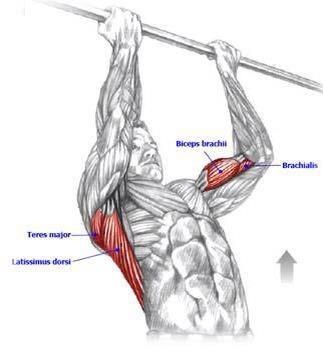
Chin-Ups — Primary Muscles
👉 Chin-ups heavily involve the arms, especially during the initial pull.
This is why many lifters:
- Feel strong biceps activation
- Can perform more reps
- Progress faster in this movement
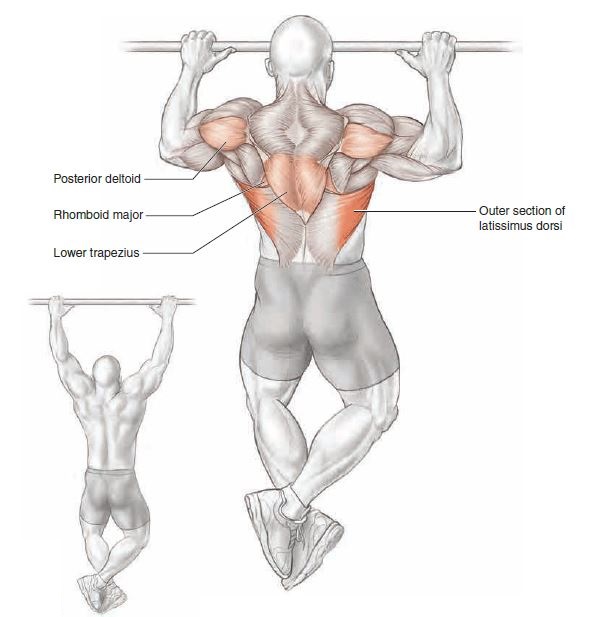
Pull-Ups — Primary Muscles
- Lats (primary focus)
- Upper back (traps, rhomboids)
- Rear delts
- Less biceps involvement
👉 Pull-ups shift more load to the back, especially the lats.
This makes them more effective for:
- Building width
- Developing that V-taper look
Which Builds More Muscle?
Now to the real question: chin-up vs pull-up — which builds more muscle?
👉 The honest answer is:
Both build muscle effectively—but they don’t build the same muscle to the same degree.
For Back Development (Width & Lats)
If your primary goal is to build a wider back and develop your lats:
👉 Pull-ups have the advantage
Because of the pronated grip, your biceps contribute less, forcing your lats and upper back to take on more of the workload.
This leads to:
- Greater lat activation
- Better stimulus for the back width
- Stronger development of the V-taper
👉 In simple terms:
Pull-ups are more “back-focused.”
For Overall Muscle Growth (Back + Arms)
If your goal is total upper-body pulling development:
👉 Chin-ups are often more effective
Why?
- You can usually perform more reps
- You can handle more total volume
- The biceps contribute significantly
This results in:
- More total muscle recruitment
- Faster strength progression
- Greater arm development
👉 In simple terms:
Chin-ups build more total pulling muscle—but with more arm involvement.
For Beginners
For most beginners:
👉 Chin-ups build more muscle early on
Because:
- They are easier to perform
- They allow better control
- They help build strength faster
👉 This means more effective training early in your journey.
Which Is Better for Beginners?
For beginners, the most important factor is not which exercise is “better” in theory, but which one you can perform effectively and consistently.
👉 And in most cases:
Chin-ups are a better starting point.
Why Chin-Ups Are Easier
Chin-ups use a supinated grip, which places your biceps in a stronger position. This gives you more pulling power and makes the movement feel more natural.
Because of that, beginners often:
- Achieve their first chin-up sooner
- Perform more reps
- Build strength faster
Why Pull-Ups Are Harder
Pull-ups reduce biceps involvement and shift more of the work to the lats and upper back.
This makes them:
- More technically demanding
- Harder to control
- More challenging for beginners
Best Strategy for Beginners
👉 Instead of choosing one, use a progression approach:
- Start with chin-ups to build base strength
- Add assisted pull-ups
- Progress toward full pull-ups
Which Is Better for Strength?
If your goal is to build raw pulling strength, both exercises are excellent—but they challenge your body in slightly different ways.
Chin-Ups for Strength
Chin-ups allow you to:
- Lift more total weight (because of biceps assistance)
- Perform more reps
- Progress faster in volume
👉 This makes them great for:
- Early strength development
- Adding weighted reps later
Pull-Ups for Strength
Pull-ups demand more from your back muscles.
They:
- Reduce arm assistance
- Increase lat activation
- Require more control
👉 This makes them excellent for:
- Developing “pure” back strength
- Improving pulling mechanics
Strength Verdict
👉 If we simplify it:
- Chin-ups = more total strength output
- Pull-ups = more back-specific strength
Which Is Better for Back Width vs Arm Development?
This is where the difference becomes very clear.
For Back Width
👉 Pull-ups are superior
Because they:
- Emphasize the lats
- Reduce biceps dominance
- Create a stronger width stimulus
For Arm Development
👉 Chin-ups are superior
Because they:
- Heavily involves the biceps
- Allow stronger contractions
- Support higher volume
Simple Breakdown
- Want a wider back? → Pull-ups
- Want bigger arms? → Chin-ups
Chin-Up vs Pull-Up — Comparison Table
This is where the differences become crystal clear.
👉 If you want a quick, side-by-side breakdown, use this table:
| Feature | Chin-Up | Pull-Up |
|---|---|---|
| Grip | Supinated (palms facing you) | Pronated (palms facing away) |
| Main Muscle Focus | Biceps + Lats | Lats + Upper Back |
| Difficulty | Easier | Harder |
| Muscle Activation | More arm involvement | More back activation |
| Best For | Beginners, arm growth | Back width, advanced lifters |
| Strength Carryover | High (easier progression) | High (back-focused strength) |
| Mind-Muscle Connection | Easier to feel arms | Requires better back control |
This table highlights one crucial idea:
Chin-ups and pull-ups are not competing exercises—they are complementary.
- Chin-ups help you build strength and volume
- Pull-ups help you target the back more directly
That’s why the best results come from using both, not choosing one over the other.
When to Use Chin-Ups vs Pull-Ups
Now that you understand the differences, the next question is:
👉 When should you use chin-ups, and when should you use pull-ups?
The answer depends on your goal, your experience level, and how you structure your training.
Use Chin-Ups When Your Goal Is Strength and Progression
Chin-ups are a great choice if you want to:
- Build pulling strength faster
- Increase total reps and training volume
- Develop your biceps alongside your back
- Work toward your first bodyweight pull
Because they are easier to perform, chin-ups allow you to:
- Train more frequently
- Progress more quickly
- Build confidence early on
Use Pull-Ups When Your Goal Is Back Development
Pull-ups are the better option if you want to:
- Build back width
- Emphasize your lats
- Reduce arm dominance
- Improve back-focused pulling technique
They force your lats to do more of the work, which is exactly what you want if your goal is a wider, more developed back.
Best Approach: Use Both Strategically
The biggest mistake is choosing one and ignoring the other.
Instead, use them together:
Option 1 — Same Workout
- Start with pull-ups (back-focused, harder)
- Follow with chin-ups (more volume, easier)
This gives you both:
- Strong back stimulus
- Additional volume for growth
Option 2 — Split Days
- Day 1: Pull-ups (back focus)
- Day 2: Chin-ups (strength + arms)
Great for balanced development
Option 3 — Progression Approach (Beginners)
- Start with chin-ups
- Add assisted pull-ups
- Progress to full pull-ups
This builds a solid foundation step by step
Coach’s Recommendation — Chin-Ups vs Pull-Ups
As a coach working with lifters and athletes, I rarely recommend choosing between chin-ups and pull-ups. Both exercises are extremely effective—but they serve slightly different purposes.
Most people either overuse chin-ups because they’re easier, or avoid pull-ups because they’re harder. The best results come from using both strategically. Start with pull-ups to challenge your back and build width, then use chin-ups to add volume and strengthen your arms.
If you’re a beginner, focus on mastering chin-ups first and gradually work toward pull-ups. If you’re more advanced, include both in your program to maximize overall muscle development. When used correctly, they complement each other—and that’s what drives the best long-term results.
Final Thoughts
Chin-ups and pull-ups are both powerful muscle-building exercises—but they serve different purposes. Pull-ups are better for targeting your back and building width, while chin-ups make it easier to build strength and add volume.
The best approach is not to choose one over the other, but to use both strategically based on your goals.
When combined properly, they create a stronger, more balanced, and more effective upper-body development.
Complete Your Pulling Strength & Back Development
Want to go deeper than this chin-up vs pull-up comparison? Use the related guides below to master each exercise, build your first reps, and develop a broader, stronger back.
Do chin-ups and pull-ups build the same muscles?
Not exactly. Both exercises target the lats and upper back, but chin-ups involve significantly more biceps, while pull-ups place more emphasis on the lats and upper back. The difference is not in which muscles are used, but in which muscles do most of the work.
Which exercise leads to faster muscle growth for beginners?
Chin-ups usually lead to faster early progress because they are easier to perform, allowing more reps and better control. This results in higher training volume, which is a key driver of muscle growth in beginners.
Can I build a big back using only chin-ups?
Yes, but it’s not optimal. Chin-ups will build your back, but they tend to rely more on arm strength. For maximum back development—especially width—you should include pull-ups as well.
Why do pull-ups feel harder even if I’m strong?
Pull-ups reduce biceps involvement, forcing your lats and upper back to work harder. If your back is underdeveloped relative to your arms, pull-ups will feel significantly more challenging.
Do chin-ups or pull-ups burn more calories?
The difference is minimal. Both are compound bodyweight exercises that recruit multiple muscle groups, so calorie expenditure is similar. Intensity and total volume matter more than the variation itself.
Which is better for improving grip strength?
Pull-ups are generally better for grip strength because the pronated grip is more demanding on the forearms and hands compared to the supinated grip used in chin-ups.
Can I replace pull-ups with chin-ups completely?
You can, but you’ll miss out on optimal lat-focused development. Chin-ups are a great exercise, but they shouldn’t completely replace pull-ups if your goal is a well-developed back.
Do chin-ups put more stress on the elbows?
For some people, yes. The supinated grip can increase stress on the elbows, especially if mobility is limited or volume is too high. Proper warm-up and controlled tempo can help reduce this.
Which exercise is better for weighted training?
Both work well with added weight, but many lifters find it easier to progress with weighted chin-ups first. Pull-ups become more valuable as back strength improves and control increases.
Should advanced lifters prioritize pull-ups over chin-ups?
In most cases, yes. Advanced lifters often benefit more from pull-ups because they provide a stronger back stimulus. However, chin-ups should still be included for volume, variation, and arm development.
