


Introduction
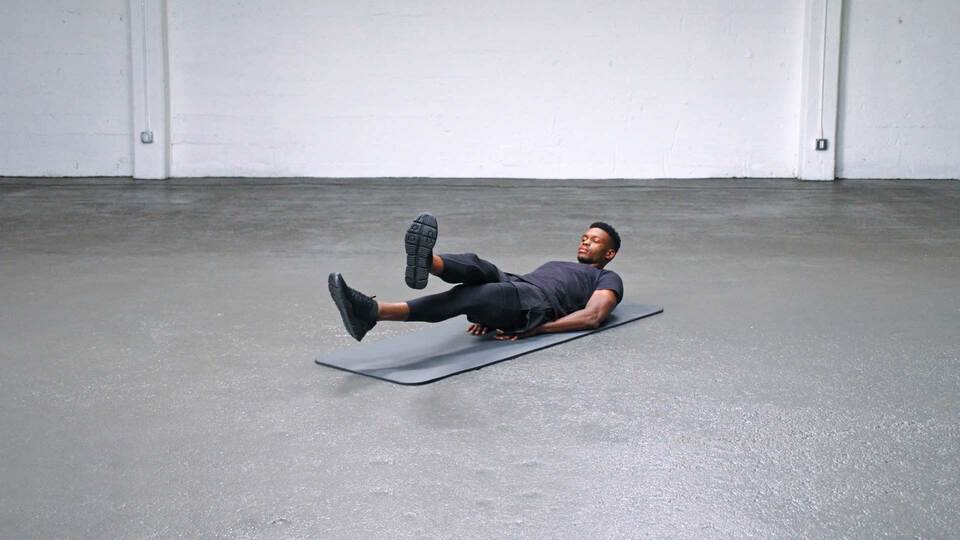
Scissor kicks are a powerful core exercise that targets the lower abs, hip flexors, and obliques through controlled lateral leg movements. The exercise gets its name from the scissor-like motion of the legs crossing back and forth, and it is commonly included in abdominal and high-intensity interval training routines due to its efficiency and simplicity.
Whether you are targeting your lower core, building functional strength, or improving hip mobility, scissor kicks are a valuable addition to any fitness regimen. The crisscrossing motion that gives this exercise its name is also what distinguishes it most clearly from its closest relative, the flutter kick, where flutter kicks move the legs up and down; scissor kicks move them across each other horizontally, shifting a meaningful amount of the training emphasis toward the obliques.
As with most floor-based leg-raise exercises, the real test of whether scissor kicks are working the abs or simply working the hip flexors comes down to one detail: whether the lower back stays pressed into the mat throughout. Get that right, and scissor kicks deliver a genuinely effective combined ab, oblique, and hip flexor stimulus in a single continuous movement.
Exercise Snapshot
Muscles Worked in Scissor Kicks
Scissor kicks offer a dynamic way to target both deep and superficial core muscles simultaneously.
Primary muscles
- Rectus abdominis — especially the lower section, which works for leg stabilization throughout the crossing motion
- Obliques — activated through the lateral leg motion and the pelvic stabilization required to control it, making this the primary distinguishing muscle group compared to purely vertical leg exercises
- Hip flexors — crucial for lifting and maintaining leg height throughout the entire set
Secondary muscles
- Transverse abdominis — provides trunk stability and supports spine alignment throughout the movement
- Adductors — the inner thigh muscles help control and cross the legs smoothly as they pass over one another
- Quadriceps — assist in leg extension and control throughout the crossing motion
Antagonists
The lower back muscles and hip flexors work in coordinated opposition to the abdominal bracing, with the core actively resisting the lumbar extension that the hip flexors would otherwise create during the sustained leg elevation.
The crisscrossing motion is the key mechanical detail that separates scissor kicks from simpler vertical leg exercises. As one leg crosses over the other, the obliques have to actively stabilize the pelvis against the rotational and lateral forces that crossing motion creates — a demand that purely vertical kicking patterns do not generate. That oblique recruitment, layered on top of the same lower rectus abdominis and hip flexor demands found in vertical leg exercises, is what makes scissor kicks a more complete lower-core exercise than their vertical counterparts.
How to Do Scissor Kicks: Step-by-Step Form Guide
Starting position
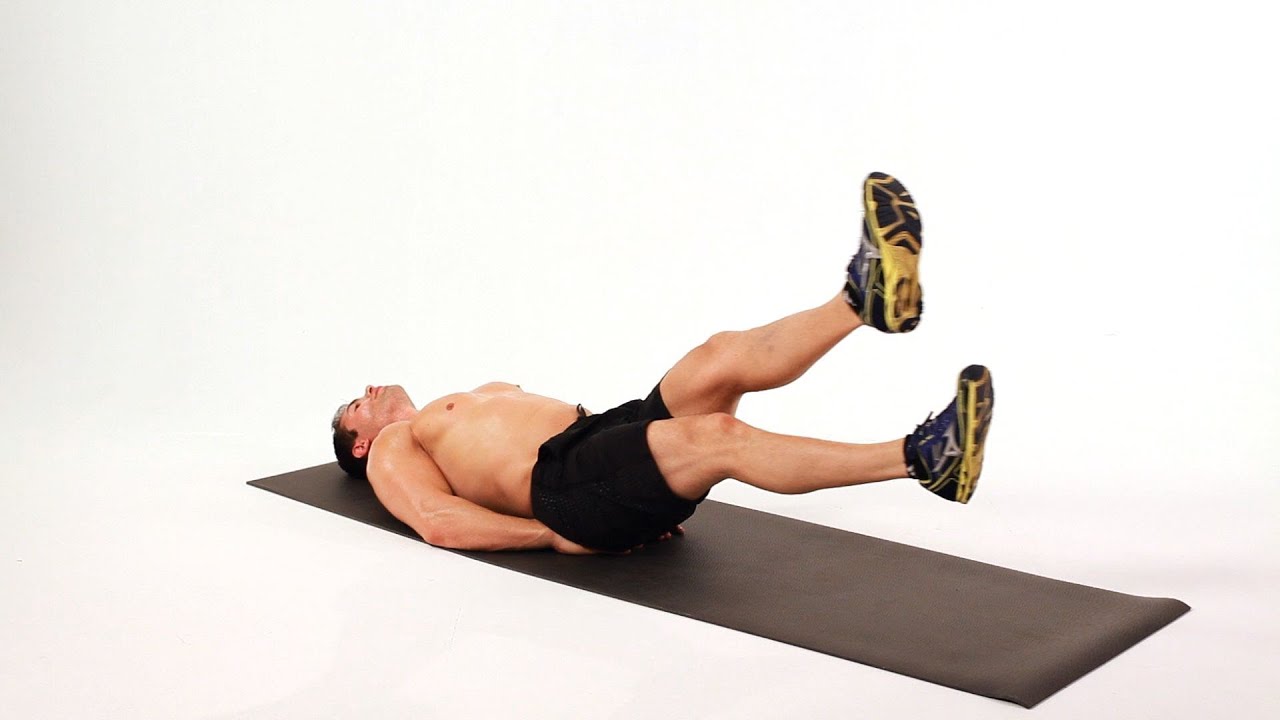
- Lie flat on your back, arms at your sides, or hands tucked under your glutes for support
- Raise both legs 4 to 6 inches off the ground, keeping them straight and parallel
- Keep your head and shoulders down for reduced strain, or raise them slightly for added core tension
Execution
- Cross your legs, moving them horizontally across each other in a crisscross motion
- Alternate the position so the top leg becomes the bottom leg
- Continue alternating smoothly without letting the heels touch the ground
- Maintain steady breathing throughout the movement — avoid holding your breath
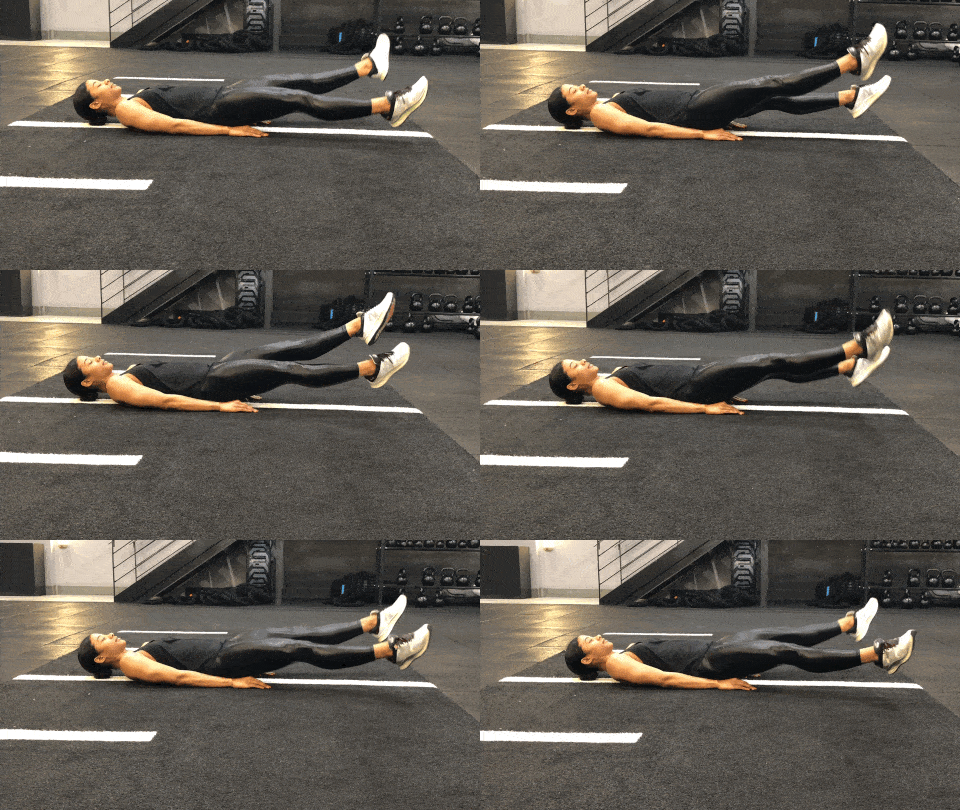
The key coaching cue: Precision and core control are essential for avoiding lower back strain and ensuring effective abdominal engagement. Keep your legs straight and controlled, avoiding jerky or swinging motions. Engage your core to keep your lower back pressed into the mat, and keep the movement small, tight, and horizontal rather than large and uncontrolled. For beginners, placing the hands under the hips provides additional support for lumbar stability.
5 Common Scissor Kick Mistakes (And How to Fix Them)
1. Letting the lower back arch off the mat
This is the central technical failure of the exercise, identical in principle to other floor-based leg exercises. If the lower back lifts away from the floor, the hip flexors overpower the abdominal bracing, shifting the exercise from a combined ab-oblique-hip flexor movement toward a near-pure hip flexor exercise. Engage the core to keep the lower back pressed into the mat throughout every single rep.
2. Jerky or swinging leg motion
Fast, uncontrolled crossing motions rely on momentum rather than deliberate muscular control, particularly of the obliques, which are meant to stabilize the pelvis during crossing. Keep your legs straight and controlled, avoiding any jerky or swinging quality to the movement.
3. Letting the feet touch the ground between reps
Allowing the feet to rest on the floor between crossing motions releases tension from the core and hip flexors, breaking the continuous-tension quality that makes this exercise effective. Do not let your feet touch the ground between reps.
4. Moving too large a range
Exaggerating the crossing motion beyond a small, tight, horizontal range does not increase the training stimulus — it typically just increases momentum and reduces control. Keep the movement small, tight, and horizontal rather than wide and sweeping.
5. Holding the breath
Irregular or held breathing makes it harder to sustain the controlled rhythm this exercise depends on. Maintain steady breathing throughout the movement and avoid holding your breath, particularly as fatigue accumulates later in the set.
Benefits of Scissor Kicks
Enhances core stability and lower abdominal strength
Scissor kicks directly enhance core stability and lower abdominal strength through the sustained isometric demand of resisting hip flexor pull throughout the crossing motion.
Improves pelvic control and coordination
The lateral crossing pattern improves pelvic control and coordination in a way that purely vertical leg exercises do not address as directly.
Activates obliques and hip flexors simultaneously
A few simple bodyweight exercises train the obliques and hip flexors together as directly as scissor kicks do, making this an efficient choice for trainees who want both muscle groups addressed in a single movement.
No equipment needed — can be done anywhere
Scissor kicks require no equipment beyond floor space, making them practical for home, travel, or gym-based training alike.
Complements other core and lower-body routines
Scissor kicks fit naturally alongside other core and lower-body exercises, adding emphasis on the obliques and hip flexors to a more complete training plan.
Useful in injury prevention and rehab when performed with control
When performed with strict control, scissor kicks can serve a useful role in injury prevention and rehabilitation contexts, given the relatively low spinal loading compared to more dynamic ab exercises.
Are Scissor Kicks Good for Obliques or Mostly Hip Flexors?
Scissor kicks train both, and the lateral crossing motion genuinely does recruit the obliques more directly than a purely vertical leg exercise like the flutter kick. But the same caution applies here as with any floor-based leg-raise pattern: if the lower back is allowed to arch off the mat, the hip flexors take over the movement with far less resistance from the core, and the exercise quietly becomes a hip flexor exercise with a side-to-side flourish rather than a genuine oblique and lower ab movement.
The obliques specifically depend on the pelvis staying stable and controlled as the legs cross — if the hips are rocking or twisting excessively with each crossing motion, that is often a sign that the obliques are not adequately stabilizing the movement and the legs are simply swinging across each other instead. Keeping the motion small, controlled, and horizontal, with the lower back glued to the mat throughout, is what determines whether scissor kicks deliver their intended combined oblique-and-lower-ab benefit or default into a hip-flexor-dominant exercise with extra rotation.
Who Should Use This Exercise
- Beginners and intermediate trainees looking for an accessible, equipment-free lower core exercise with oblique emphasis
- Athletes seeking combined hip flexor and oblique training relevant to rotational and multi-directional sports
- Anyone building a circuit or HIIT routine that benefits from a low-equipment, core-focused exercise
- Trainees recovering from injury who need a controlled, low-impact core exercise under appropriate guidance
Who Should Be Cautious
- People with lower back pain — if the core cannot adequately resist the hip flexors’ pull, this exercise can aggravate existing back issues; ensure lower back contact with the floor can be maintained throughout before adding volume
- People with hip flexor injuries — the continuous hip flexion demand may aggravate certain existing hip flexor conditions
- Beginners who cannot maintain lower back contact — start with the head and shoulders down and hands under the hips for support until core control improves
How to Make It Easier or Harder
Easier
- Hands under the hips — this support position provides additional lumbar stability while the core learns to resist the hip flexors’ pull
- Head and shoulders down — keeping the head and shoulders on the mat rather than raised reduces the overall intensity
- Smaller range of motion — a more modest 4 to 6 inch leg elevation keeps the exercise manageable while building strength
Harder
- Weighted scissor kicks — using ankle weights intensifies the resistance throughout the crossing motion
- Hands-free scissor kicks — raising the arms overhead removes the lumbar support option and challenges the core considerably more
- Elevated scissor kicks — performing the movement while lying on an inclined bench provides a greater range of motion
- Vertical scissor kicks — performing the leg-crossing motion vertically, similar to flutter kicks, changes the plane of resistance
- Resistance band scissor kicks — adding a band around the ankles increases lateral resistance throughout the crossing motion
Scissor Kicks vs. Flutter Kicks
Though often used interchangeably, these two exercises differ meaningfully in motion and focus.
| Scissor Kicks | Flutter Kicks | |
|---|---|---|
| Movement pattern | Horizontal crisscross motion | Vertical up-and-down motion |
| Primary emphasis | Increased oblique engagement | Hip flexors more intensely |
| Plane of motion | Frontal/transverse (lateral crossing) | Sagittal (forward-back) |
| Core demand | Lower rectus abdominis + obliques | Lower rectus abdominis, transverse abdominis |
| Difficulty | Beginner – Intermediate | Beginner – Intermediate |
| Best for | Oblique engagement through lateral movement | Hip flexor endurance and vertical leg control |
The practical takeaway: Scissor kicks feature a horizontal crisscross motion that increases oblique engagement, while flutter kicks use a vertical up-and-down motion that targets the hip flexors more intensely. Incorporating both movements can balance core development and increase endurance and muscle control, since each exercise emphasizes a slightly different aspect of lower core and hip function. I program scissor kicks when oblique engagement is the specific priority and flutter kicks for pure hip flexor endurance — together, they provide more complete lower-core coverage than either performed alone.
Exercise Variations
Weighted Scissor Kicks
Using ankle weights intensifies the resistance throughout the crossing motion, increasing the demand on the hip flexors, obliques, and core stabilizers, while maintaining the lower back position.
Hands-Free Scissor Kicks
Raising the arms overhead removes the lumbar support that hands-under-hips provides, considerably challenging the core to maintain the correct lower back position without that assistance.
Elevated Scissor Kicks
Performing the movement while lying on an inclined bench provides a greater range of motion than the floor version, changing the angle of resistance throughout the crossing motion.
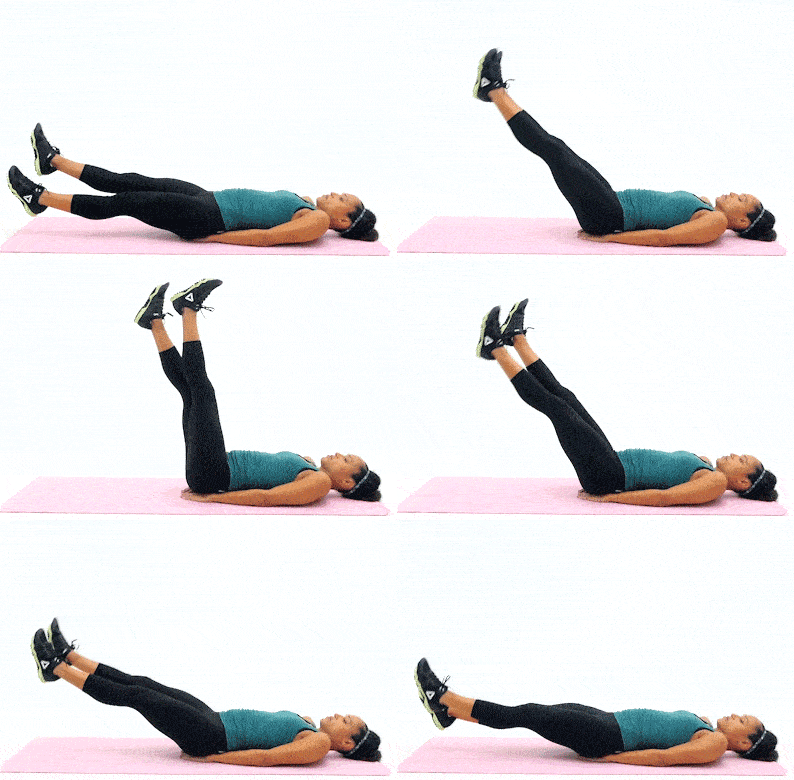
Vertical Scissor Kicks
In this variation, the legs move through a greater range of motion, traveling from a low position toward vertical while maintaining the scissor pattern throughout the rep.
Resistance Band Scissor Kicks
Adding a band around the ankles increases lateral resistance throughout the crossing motion, intensifying the demand on the adductors and obliques that control the crossing pattern.
Replacement Exercises (Alternatives)
If scissor kicks are uncomfortable or not ideal for your routine, try:
- Flutter Kicks
- Reverse Crunches
- Leg Raises
- Bicycle Crunches
- Side-Lying Leg Circles
- Dead Bug
- V-Ups
How To Incorporate Scissor Kicks Into Your Workouts
- As a warm-up — the controlled, moderate-intensity nature of scissor kicks makes them a reasonable way to activate the core, obliques, and hip flexors before a main session
- As a finisher — placed at the end of a core session once heavier work is complete
- As part of a circuit or HIIT routine — scissor kicks fit naturally into interval-based formats, contributing to both core training and overall conditioning
- Rep range: 20–40 seconds of continuous crossing motion, or 20–30 total crosses, depending on whether training for time or repetitions
- Sets: 3 working sets
- Frequency: 3–4 times per week alongside other core training
- Progression trigger: When the current duration or rep count is performed with consistent lower back contact, controlled crossing, and no hip rocking — increase duration, remove arm support, or progress to a weighted or banded variation
Conclusion
Scissor kicks are an efficient and versatile bodyweight exercise that enhances core strength, coordination, and control. With no equipment required and plenty of variety, they can be tailored to all fitness levels. When performed with proper form, scissor kicks provide a potent stimulus to the lower abs and obliques, making them a valuable part of any core training plan.
Keep the lower back pressed into the mat throughout. Keep the crossing motion small, tight, and controlled rather than wide and swinging. Watch for hip rocking as a sign that the obliques are not adequately stabilizing the movement. Get those fundamentals right, and scissor kicks will deliver combined development of the obliques, lower abs, and hip flexors that make this exercise worth the space it occupies in a well-rounded core program.
For a complete core training program covering every function, explore our core exercises library. See our guides to upper ab, lower ab, and oblique exercises as well.
Key Takeaways
- Scissor kicks build core strength, especially in the obliques and lower abs, through a horizontal crisscross leg motion.
- Controlled motion is critical — avoid prioritizing speed over form, since momentum-driven reps shift the work away from the core.
- Variations allow scalability for beginners and advanced athletes alike, from hands-under-hips support to weighted or banded resistance.
- Perfect for home, travel, or gym-based workouts — no equipment is required, just floor space and a mat.
- Complements both strength and conditioning programs, fitting naturally into warm-ups, finishers, or HIIT circuits.
