


Close Menu
Bodybuilding Wizard

    Subscribe to Updates

    Join our mailing list to receive the latest updates from our team.

    Facebook X (Twitter) Instagram
    Trending
    • Decline Machine Press (Hammer Strength Decline Press): How To, Muscles Worked, Benefits & Alternatives
    • Ring Dips: How To, Muscles Worked, Benefits & Alternatives
    • Reverse-Grip Incline Dumbbell Press: How To, Muscles Worked, Benefits & Alternatives
    • Landmine Chest Press: How To, Muscles Worked, Benefits & Alternatives
    • Reverse-Grip Bench Press: How-To, Muscles Worked, Benefits & Alternatives
    • Dumbbell Squeeze Press (Hex Press): How To, Muscles Worked, Benefits & Alternatives
    • Muscle-Tendon Unit: How Muscles Transfer Force to Bones
    • Anatomical Position and Directional Terms: A Guide for Lifters
    RSS Facebook X (Twitter) LinkedIn YouTube Pinterest Instagram
    Bodybuilding Wizard
    Subscribe Login
    • Home
    • Tools
      • Interactive Muscle Anatomy
      • Interactive Human Skeleton
      • Bodybuilding & Fitness Calculators
      • Dietary & Nutrition Calculators
      • Body Measurement Calculators
      • Fitness Tests
      • Bodybuilding Glossary
      • DIY Projects
    • Training
      • Weight training basics
      • Advanced bodybuilding
      • Strength training for women
      • Workout programs
      • Home weight training programs
      • Cardio workout
      • Exercise equipment
      • Weight training accessories
      • Weight lifting injuries
      • Weight training for sports
    • Exercises
      • Chest exercises
        • Middle chest exercises
        • Upper chest exercises
        • Lower chest exercises
      • Back exercises
        • Middle back (latissimus dorsi)
        • Upper back (trapezius)
        • Lower back (erector spinae)
      • Arm exercises
        • Bicep exercises
        • Tricep exercises
        • Forearm exercises
        • Grip-strengthening exercises
      • Shoulder exercises
        • Front deltoid
        • Side deltoid
        • Rear deltoid
        • Rotator Cuff
        • Scapular & Shoulder Stability
        • Neck strengthening exercises
      • Leg and glute exercises
        • Quadricep exercises
        • Hamstring exercises
        • Calf exercises
        • Glute & Hip exercises
        • Shin exercises
      • Abdominal exercises
        • Upper abdominal exercises
        • Lower abdominal exercise
        • Oblique exercises
      • Core exercises
      • Kettlebell exercises
      • Foam rolling & Stretching
      • Explosive (dynamic) lifts
    • Motivation
      • Greatest physiques
      • Motivation techniques & tips
      • Events and competitions
      • Latest fitness news
      • Videos
        • Funny gym reels
        • Motivational videos
        • Funny workout videos
      • Pictures
      • Quotes
      • Funny Fitness
      • Transformations
    • Diet
      • Nutrition Fundamentals
      • Diet Types & Strategies
      • Foods & Superfoods for Athletes
      • Muscle Building & Performance Nutrition
      • Weight Loss & Fat Management
      • Food Psychology & Myths
      • Recipes & Meal Ideas
    • Supplements
      • Supplements Review
      • Muscle Building Supplements
      • Anabolic Steroids
      • Fat Burners & Weight Loss
      • Pre-Workout & Energy Boosters
      • Recovery & Sleep Aids
      • Cognitive & Nootropic Support
      • General Supplement Advice
      • Health Supplements
        • Joint & Bone Support
        • Gut Health & Digestion
        • Vitamins & Minerals
        • Superfoods & Greens
      • Steroid Alternatives
    • Anatomy
      • Upper-Body Muscles
      • Lower-Body Muscles
      • Bones & Skeletal Anatomy
      • Muscle Growth & Genetics
      • Joints, Tendons & Connective Tissue
      • Hormones & Endocrine System
      • Physiology & Body Systems
      • Body Composition & Fat
      • General Anatomy & Basics
    • Health
    Bodybuilding Wizard
    You are at:Home»Training»Advanced bodybuilding»Why Your Biceps Aren’t Growing: 10 Mistakes & Proven Fixes That Actually Work
    Advanced bodybuilding

    Why Your Biceps Aren’t Growing: 10 Mistakes & Proven Fixes That Actually Work

    No Comments20 Mins ReadkrunoslavBy krunoslavApril 19, 2026Updated:April 22, 2026
    why biceps aren't growing
    Share
    Facebook Twitter Pinterest LinkedIn Email Tumblr WhatsApp Telegram
    Table of Contents
    • Introduction
    • Why Your Biceps Aren't Growing (Quick Answer)
    • Why Biceps Growth Is More Difficult Than You Think
    • Reason #1: You're Using Too Much Momentum
    • Reason #2: You Lift Too Heavy
    • Reason #3: Poor Exercise Technique
    • Reason #4: Not Controlling the Eccentric
    • Reason #5: Limited Range of Motion
    • Reason #6: Poor Exercise Selection
    • Reason #7: No Progressive Overload
    • Reason #8: Training Too Much (Overtraining)
    • Reason #9: Weak Mind-Muscle Connection
    • Reason #10: Recovery & Nutrition Issues
    • Best Exercises for Biceps Growth
    • Simple Biceps Workout Plan
    • Final Thoughts

    Introduction

    Building bigger biceps seems simple: do curls, add weight over time, and your arms should grow. But in reality, that’s not what happens for many lifters. If you’ve ever wondered why your biceps aren’t growing despite regular training, you’re not alone. As a coach working with beginners, athletes, and experienced lifters, I hear the same frustration all the time: “I train my arms hard, but my biceps barely change.”

    That frustration often leads people in the wrong direction. They start adding more exercises, doing endless sets of curls, or chasing heavier weights without fixing the real issue. In most cases, biceps growth problems don’t come from lack of effort—they come from specific mistakes in technique, exercise execution, or training structure.

    As a coach, I’ve seen that the biceps are among the easiest muscles to train incorrectly. Because they are a small muscle group, even minor technical errors—such as swinging the weight, relying on momentum, or poor elbow positioning—can shift the load away from the biceps.

    In this article, I’ll break down the real reasons your biceps may not be growing and give you clear, practical fixes you can apply right away. The goal is not just to train harder, but to train smarter—and finally get your biceps to respond.

    Why Your Biceps Aren’t Growing (Quick Answer)

    Why Your Biceps Aren’t Growing — Quick Explanation

    If your biceps aren’t growing despite regular training, the most common reasons are poor exercise technique, excessive reliance on momentum, lifting too heavy, lack of full range of motion, and insufficient progressive overload. In many cases, the problem is not how often you train your biceps, but how effectively you load and control the muscle during each repetition.

    To fix this, focus on strict form, controlled tempo, and a full range of motion. Reduce the weight if necessary, keep your elbows stable, and avoid swinging the body. Incorporating a mix of compound pulling movements and isolation exercises, while training biceps consistently with proper recovery, is key to growth.

    In practice, once you improve execution and start applying real tension to the biceps, most lifters quickly notice better muscle contraction, stronger pumps, and visible arm development.

    Why Biceps Growth Is More Difficult Than You Think

    At first glance, biceps training looks very simple. You curl the weight, squeeze at the top, and repeat. But in practice, building bigger biceps is often more difficult than it seems—especially for lifters who rely on momentum or poor technique.

    The main function of the biceps is elbow flexion, but also forearm supination (rotating the palm upward). Most people focus only on lifting the weight, while ignoring these key functions. As a result, other muscles—like the shoulders and forearms—often take over the movement.

    Another major issue is control. Unlike larger muscle groups, biceps are small and easy to “cheat.” Even a slight body swing or elbow movement can shift tension away from the biceps. From the outside, the rep looks strong—but internally, the muscle is not being properly loaded.

    As a coach working with lifters of all levels, I’ve seen that biceps growth is rarely about doing more exercises. It’s about doing the basics correctly. Two lifters can perform the same curls with the same weight, yet only one builds bigger arms. The difference comes down to control, positioning, and the effectiveness with which tension is applied to the muscle.

    Understanding this is key. If you’re not training the biceps in a controlled and targeted way, they simply won’t grow—no matter how many sets you do.
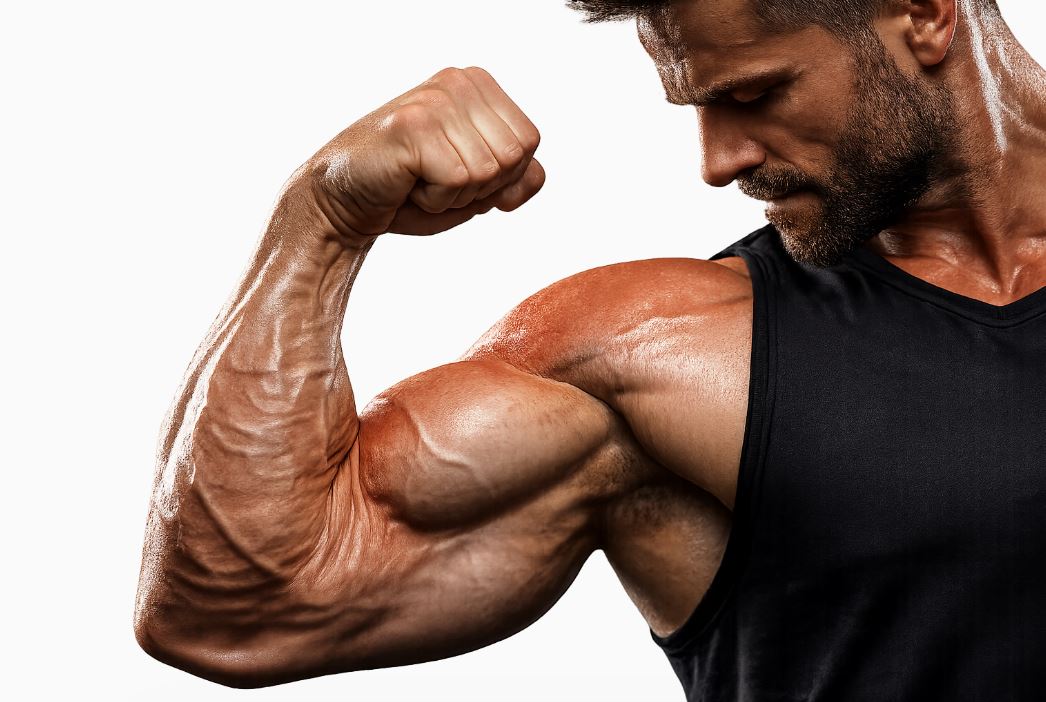
    biceps training mistakes

    Reason #1: You’re Using Too Much Momentum

    One of the biggest reasons your biceps aren’t growing is that you’re relying on momentum instead of muscle.

    Many lifters swing their body, lean back, or use their shoulders to lift the weight. This allows them to move heavier loads, but it reduces the tension on the biceps.

    From the outside, the reps look strong. But internally, the biceps are doing less work than they should.

    This problem is especially common with barbell curls. The heavier the weight, the more the body wants to “cheat” to complete the lift.

    As a coach, I see this all the time. Lifters chase heavier weights, but their biceps stay the same size. The reason is simple—the muscle is not being properly loaded.

    How To Fix It

    To grow your biceps, you need to eliminate momentum and keep constant tension on the muscle throughout the movement.

    • Control your body position. Stand upright and avoid leaning back or swinging your torso to lift the weight.
    • Use lighter weights. Reduce the load to a level where you can perform strict, controlled repetitions.
    • Slow down the tempo. Lift the weight under control and lower it slowly (2–3 seconds) to increase time under tension.
    • Keep your elbows stable. Your elbows should stay close to your body and not drift forward or backward during the curl.
    • Focus on the biceps, not the weight. Think about contracting the biceps on every rep instead of just moving the bar up and down.

    Once you remove momentum, you will feel your biceps working much more. And when the muscle is under real tension, growth finally starts.

    Reason #2: You Lift Too Heavy

    Lifting too heavy is one of the fastest ways to stall biceps growth.

    When the weight is too heavy, your body recruits other muscles to help. The shoulders, lower back, and even hips get involved. The biceps lose their role as the primary driver.

    Heavy weights also reduce control. Reps become shorter, faster, and less precise. The muscle is no longer under consistent tension.

    As a coach, I often see lifters trying to impress with heavy curls. But their form breaks down, and their biceps do not grow.

    How To Fix It

    To build bigger biceps, choose a weight that allows for strict form and full control.

    • Use a moderate load. Stay mostly in the 8–12 rep range for hypertrophy.
    • Prioritize form over weight. If your technique breaks down, the weight is too heavy.
    • Control the eccentric. Lower the weight slowly to maximize tension.
    • Avoid ego lifting. Focus on muscle development, not how much weight you can lift.
    • Keep constant tension. Do not let the muscle “rest” at the bottom of the movement.

    When you reduce the weight and improve execution, the biceps start doing the work. And that’s when real growth begins.

    Reason #3: Poor Exercise Technique

    Even small technical mistakes can completely change how your biceps work.

    At first glance, a curl looks simple. But details matter. Elbow position, wrist alignment, and range of motion all affect how much tension the biceps receive.

    One common issue is letting the elbows drift forward. This turns the movement into a front-delt exercise rather than a biceps curl.

    Another problem is wrist position. If your wrists bend too much, your forearms take over, reducing biceps activation.

    As a coach, I often see lifters performing curls that look fine at a distance, but up close, the technique is costing them results.

    How To Fix It

    Proper technique ensures that the biceps stay under tension throughout the entire movement.

    • Keep your elbows fixed. Your elbows should stay close to your torso and remain stable during the entire set.
    • Maintain neutral wrists. Avoid excessive wrist bending. Keep the wrists aligned with the forearms.
    • Use full control. Perform each rep slowly and deliberately, without jerking the weight.
    • Focus on the contraction. Squeeze the biceps at the top of each rep for maximum activation.
    • Stay consistent with form. Every rep should look the same. Do not let fatigue break your technique.

    When your technique improves, your biceps finally start receiving the stimulus they need. And once that happens, growth becomes much more consistent.

    Reason #4: Not Controlling the Eccentric

    Most lifters focus only on lifting the weight. They ignore the lowering phase.

    But the eccentric (lowering) part of the curl is where a lot of muscle growth happens.

    If you drop the weight too quickly, you lose tension. The biceps are not forced to control the load. This reduces the overall stimulus.

    Fast eccentrics also make it easier to use momentum on the next rep. Over time, this makes the exercise less effective.

    As a coach, I often fix biceps growth issues just by slowing down the eccentric phase.

    How To Fix It

    To maximize biceps growth, you need to control the weight on the way down.

    • Slow down the lowering phase. Take 2–4 seconds to lower the weight under control.
    • Resist gravity. Do not just let the weight drop. Actively control it with your biceps.
    • Keep tension throughout. Avoid fully relaxing at the bottom of the movement.
    • Use lighter weight if needed. If you can’t control the eccentric, the weight is too heavy.
    • Stay focused on the muscle. Think about the biceps lengthening under tension during each rep.

    When you control the eccentric, time under tension increases. And that is one of the key drivers of muscle growth.

    Reason #5: Limited Range of Motion

    If you’re not using a full range of motion, your biceps are not working as much as they should.

    Many lifters perform partial reps without realizing it. They either don’t fully extend the arms at the bottom or cut the movement short at the top.

    This limits both the stretch and the contraction of the biceps. Over time, that reduces muscle activation and growth.

    A full stretch at the bottom is especially important. It places the biceps under tension in a lengthened position, which is a strong stimulus for hypertrophy.

    As a coach, I often see immediate improvement just by fixing the range of motion.

    How To Fix It

    To maximize biceps growth, you need to train through a full and controlled range of motion.

    • Fully extend your arms. Lower the weight until your arms are almost fully straight.
    • Get a strong contraction. Curl the weight all the way up and squeeze the biceps at the top.
    • Avoid half reps. Do not shorten the movement just to lift heavier weights.
    • Control both phases. Use a steady tempo on the way up and down.
    • Adjust the weight if needed. If you can’t use the full range, the weight is too heavy.

    A full range of motion increases muscle tension and activation. And over time, that leads to better and more consistent biceps growth.

    Reason #6: Poor Exercise Selection

    Not all biceps exercises are equally effective.

    Many lifters rely on just one type of curl. Or they repeat the same movement every workout. Over time, this limits growth.

    The biceps have two heads and different functions. If you only train one angle, you don’t fully develop the muscle.

    Another problem is ignoring variation in grip and position. Small changes can significantly affect how the biceps are loaded.

    As a coach, I often see progress return simply by improving exercise selection.

    How To Fix It

    To build bigger biceps, you need a mix of exercises that target the muscle from different angles and positions.

    • Use more than one curl variation. Combine barbell, dumbbell, and cable curls for balanced development.
    • Train different arm positions. Include exercises with arms in front of the body (preacher curls) and behind the body (incline curls).
    • Change your grip. Use supinated (palms up), neutral (hammer), and sometimes angled grips to target different parts of the arm.
    • Include cables for constant tension. Cable curls help maintain tension throughout the entire movement.
    • Match exercises to your weak points. If a specific part of your biceps is lagging, choose exercises that target it directly.

    Better exercise selection leads to better muscle stimulation. And better stimulation leads to more consistent biceps growth.

    Reason #7: No Progressive Overload

    If you’re not progressively increasing the challenge, your biceps have no reason to grow.

    Many lifters repeat the same weights and reps for weeks or months. The workouts feel hard, but nothing changes. The body adapts quickly, and without a new stimulus, growth stops.

    Progressive overload does not mean lifting heavier every time. It means gradually increasing the demand placed on the muscle.

    As a coach, I often see lifters stuck at the same level simply because they are not tracking their performance or improving it.

    How To Fix It

    To build muscle, you need a clear progression strategy.

    • Track your workouts. Write down weights, reps, and sets so you can measure progress.
    • Increase reps first. Aim to reach the top of your rep range before adding more weight.
    • Add small weight increments. Even small increases over time lead to big results.
    • Improve execution. Better control and cleaner reps also count as progress.
    • Stay consistent. Growth comes from repeating and improving the same movements over time.

    When you apply progressive overload correctly, your biceps are forced to adapt. And when the muscle adapts, it grows.

    Reason #8: Training Too Much (Overtraining)

    More is not always better—especially for biceps.

    Many lifters train biceps too often or with too much volume. They add extra sets, extra exercises, and even train biceps multiple days in a row. Over time, this leads to fatigue instead of growth.

    What many people forget is that biceps are already heavily involved in other exercises. Every pulling movement—rows, pull-ups, lat pulldowns—activates the biceps to a significant degree.

    In fact, exercises like chin-ups and neutral-grip pull-ups can stimulate the biceps just as much—or even more—than many traditional isolation exercises. Yet most lifters still treat biceps as if they are only trained during curls.

    As a coach, I often see lifters doing 15–20 sets of direct biceps work per week, on top of all their pulling exercises. The result is simple: the muscle never fully recovers.

    How To Fix It

    To grow your biceps, you need to balance stimulus and recovery.

    • Reduce total volume. Aim for quality over quantity. 8–12 hard sets per week is enough for most lifters.
    • Count indirect work. Remember that pull-ups, rows, and pulldowns already train your biceps.
    • Train biceps 2× per week. Spread your volume across sessions instead of doing everything in one workout.
    • Avoid training to failure every set. Leave 1–2 reps in reserve to manage fatigue.
    • Prioritize recovery. Give your biceps enough time to recover between sessions.

    When you reduce unnecessary volume, your biceps can finally recover and grow. And in many cases, doing less actually leads to better results.

    Reason #9: Weak Mind-Muscle Connection

    If you can’t feel your biceps working, it’s very hard to make them grow.

    Many lifters simply move the weight up and down without focusing on the muscle. The reps are completed, but the biceps are not fully engaged.

    Because biceps are a small muscle group, it’s easy for other muscles—like the shoulders or forearms—to take over. When that happens, the stimulus shifts away from the biceps.

    As a coach, I often see two lifters using the same weight. One feels a strong contraction in the biceps, while the other feels mostly tension in the forearms. The results over time are completely different.

    How To Fix It

    To improve mind-muscle connection, you need to slow down and become more aware of how the movement feels.

    • Slow down your reps. Control both the lifting and lowering phases to feel the muscle working.
    • Use lighter weights. Heavy weights make it harder to focus on the target muscle.
    • Squeeze at the top. Hold the contraction for a brief moment at the top of each rep.
    • Eliminate distractions. Focus fully on the muscle during the set.
    • Use isolation first if needed. Pre-activate the biceps before compound pulling movements.

    When the mind-muscle connection improves, activation becomes much stronger. And stronger activation leads to better and more consistent biceps growth.

    Reason #10: Recovery & Nutrition Issues

    You can train perfectly and still see no biceps growth if recovery and nutrition are not in place.

    Muscle growth happens outside the gym. Training creates the stimulus, but recovery is where the muscle actually grows. If that process is limited, results will be limited too.

    Many lifters underestimate this. They train hard but don’t eat enough protein, get enough calories, or sleep enough.

    As a coach, I’ve seen many cases where biceps started growing without changing the training program—simply by improving nutrition and sleep.

    How To Fix It

    To support biceps growth, you need to give your body the resources it needs to recover and adapt.

    • Eat enough protein. Aim for around 1.6–2.2 g of protein per kilogram of body weight daily.
    • Stay in a slight calorie surplus. Building muscle is much harder if you are not eating enough.
    • Prioritize sleep. Aim for 7–9 hours of quality sleep per night
    • Manage stress. High stress levels can negatively affect recovery and performance.
    • Stay consistent. Results come from daily habits, not occasional “perfect” days.

    When recovery and nutrition are in place, your training finally pays off. And that’s when you start seeing real biceps growth.

    If some of these reasons sound familiar, that’s because the same fundamental principles apply to all muscle groups. However, the way these mistakes show up in biceps training is often very specific—and that’s where most lifters go wrong.

    Struggling With Other Muscle Groups?

    Explore more muscle growth guides and find out what may be holding back your progress.

    Chest Back Shoulders Triceps Legs Calves
    Quick Fix Checklist — Why Your Biceps Aren’t Growing

    If your biceps are not growing, focus on fixing execution and recovery before adding more exercises or volume.

    ✅ Use strict form and eliminate momentum during curls

    ✅ Control the eccentric and avoid dropping the weight

    ✅ Train through a full range of motion on every rep

    ✅ Keep your elbows stable and wrists neutral

    ✅ Use a mix of exercises (barbell, dumbbell, cables)

    ✅ Track your weights, reps, and progression over time

    ✅ Don’t overtrain—remember pull exercises already hit biceps

    ✅ Support growth with enough protein, calories, and sleep

    Coach’s Note — The Truth About Biceps Growth

    As a coach working with lifters of all levels, I’ve seen this play out countless times. Someone trains biceps hard, adds more curls every week, increases the weight… and still sees little to no growth. Meanwhile, someone else trains with lighter weights, better control, and suddenly their arms start to grow.

    Here’s the truth: most people don’t have a biceps problem—they have a technique problem. Swinging the weight, rushing reps, and chasing heavier curls might look impressive, but it shifts the work away from the biceps.

    And no—this isn’t a cartoon where you just flex your arm like Popeye and suddenly your biceps double in size. Muscle growth is not about ego lifting. It’s about control, tension, and consistency.

    Once you learn to actually train your biceps properly, everything changes. You feel the difference immediately. And more importantly—you start seeing it.

    Best Exercises for Biceps Growth

    Choosing the right exercises matters, but execution matters even more. You don’t need a long list of movements—you need a few effective ones performed with proper technique and full control.

    Heavy Compound Pulling (Foundation)

    • Chin-Ups (Supinated Grip). One of the most effective exercises for biceps growth. In many cases, chin-ups can activate the biceps as much as—or even more than—traditional curl variations.
    • Neutral Grip Pull-Ups. A great option for building both biceps and overall arm strength. The neutral grip often allows for strong contraction with less joint stress.

    Direct Biceps Work (Targeted Hypertrophy)

    • Barbell Curl. A classic mass builder that allows you to use heavier loads—if performed with strict form.
    • Dumbbell Curl. Improves range of motion and allows for better control and symmetry between arms.

    Isolation & Constant Tension

    • Cable Curl. Provides constant tension throughout the movement, which is excellent for muscle activation.
    • Preacher Curl. Helps eliminate momentum and keeps tension directly on the biceps.

    If you want a more detailed breakdown of biceps training, including exercise variations and technique tips, check out our full guides on the best biceps exercises for muscle growth.

    The key is not to constantly change exercises, but to get stronger and more controlled within these movements. Once you combine proper exercise selection with good technique, biceps growth becomes much more consistent.

    Want Bigger, Stronger Biceps?

    Discover the most effective, expert-approved exercises to build thicker, stronger biceps and maximize muscle growth.

    View Best Biceps Exercises

    Simple Biceps Workout Plan

    If your biceps aren’t growing, you don’t need more exercises—you need a simple plan that focuses on control, proper execution, and consistent progression.

    As a coach, I’ve found that training biceps twice per week works best for most lifters. It allows enough stimulus for growth while still giving the muscle time to recover.

    Day 1 — Strength & Control

    • Chin-Ups (Supinated Grip) — 4 sets × 6–8 reps
    • Barbell Curl — 3 sets × 8–10 reps
    • Cable Curl — 3 sets × 12–15 reps

    Focus on strict form. Avoid momentum and control every rep.

    Day 2 — Volume & Activation

    • Neutral Grip Pull-Ups — 4 sets × 6–8 reps
    • Dumbbell Curl — 3 sets × 8–12 reps
    • Preacher Curl — 3 sets × 10–12 reps

    Focus on feeling the biceps working. Squeeze at the top of each rep.

    Key Guidelines

    • Train biceps 2× per week. Spread your volume across sessions for better recovery.
    • Control every repetition. Avoid swinging and rushing the movement.
    • Use a full range of motion. Stretch fully at the bottom and contract at the top.
    • Use a full range of motion. Stretch fully at the bottom and contract at the top.

    This simple structure works because it combines compound pulling with direct biceps work, while keeping volume manageable. Stay consistent, focus on quality, and your biceps will respond.

    Common Mistakes — Why Your Biceps Still Aren’t Growing

    If your biceps are not growing, you are likely making at least one of these common mistakes. Fixing them can quickly improve your results.

    ❌ Using momentum and swinging the weight on every rep

    ❌ Lifting too heavy and losing control of the movement

    ❌ Letting elbows move forward and shifting tension away from the biceps

    ❌ Dropping the weight too fast and ignoring the eccentric phase

    ❌ Using partial range of motion instead of full stretch and contraction

    ❌ Doing too many exercises and too much volume

    ❌ Ignoring compound pulling movements like chin-ups

    ❌ Poor recovery, low protein intake, and lack of sleep

    Final Thoughts

    If your biceps aren’t growing, the problem is rarely a lack of effort. Most lifters are already training hard. The real issue is that their training is not effectively targeting the biceps.

    In most cases, the solution is not to do more, but to do things better. Better technique. Better control. Better exercise selection. Once you start applying tension to the biceps the right way, progress becomes much more predictable.

    As a coach, I’ve seen this shift happen many times. Lifters who were stuck for months suddenly start feeling their biceps working, improving their execution, and finally seeing visible growth. Not because they trained harder, but because they trained smarter.

    Stay consistent. Focus on quality over quantity. Track your progress and give your body time to adapt. If you fix the key mistakes and apply the principles from this article, your biceps will respond.

    Why don’t I feel my biceps during curls?

    This usually happens because you are using momentum or letting other muscles take over. Poor form and fast reps reduce biceps activation. Slowing down and improving technique fixes this quickly.

    How often should I train biceps for growth?

    Most people get the best results training biceps 2 times per week. This provides enough stimulus while allowing proper recovery.

    Are chin-ups better than biceps curls?

    In many cases, yes. Chin-ups can activate the biceps as much as or even more than curls, especially when performed with strict form.

    Why are my biceps not growing but my back is?

    Your back muscles may be dominating pulling movements. This means your biceps are not receiving enough direct tension. Improving mind-muscle connection helps solve this.

    Do I need heavy weights to build bigger biceps?

    No. Heavy weights are not required. Moderate weights with strict form and full range of motion are often more effective for hypertrophy.

    What is the best rep range for biceps growth?

    The most effective range is usually 8–12 reps. However, combining different rep ranges can improve overall development.

    Can I train biceps every day?

    No. Biceps need time to recover. Training them too often can reduce growth instead of improving it.

    Why is one biceps bigger than the other?

    Muscle imbalances are common. Using dumbbells and focusing on controlled reps can help correct asymmetry over time.

    Are cable curls better than dumbbell curls?

    Both are effective. Cable curls provide constant tension, while dumbbells allow greater range of motion. Using both is ideal.

    What is the biggest mistake preventing biceps growth?

    The most common mistake is poor technique combined with using momentum. If your biceps are not doing the work, they will not grow.

    Share. Facebook Twitter Pinterest LinkedIn Tumblr Email WhatsApp
    krunoslav
    • X (Twitter)

    Hey! My name is Kruno, and I'm the owner and author of Bodybuilding Wizard. I am a licensed fitness trainer with a Ph.D. in kinesiology. Throughout my career, I have dedicated myself to helping individuals achieve their health and fitness goals through personalized training programs. In addition to my academic qualifications, I have completed various specialized courses, including certifications in nutrition and strength training, which have further enhanced my ability to provide comprehensive fitness guidance. I started this website back in late 2014, and it has been my pet project ever since. My goal is to help you learn proper weight training and nutrition principles so that you can get strong and build the physique of your dreams!

    Related Posts

    Why Do My Knees Cave In During Squats? 8 Causes (And How to Fix It)

    Why Is My Grip So Weak? 10 Reasons You’re Losing Strength (And How to Fix It)

    Lower Back Pain After Deadlifts? 10 Common Causes and How to Fix Them

    Leave A Reply Cancel Reply

    You must be logged in to post a comment.

    WE ARE SOCIAL
    • Facebook 3.6K
    • Twitter
    • YouTube 134
    • Instagram
    RECENT POSTS
    October 10, 2026

    Decline Machine Press (Hammer Strength Decline Press): How To, Muscles Worked, Benefits & Alternatives

    October 10, 2026

    Ring Dips: How To, Muscles Worked, Benefits & Alternatives

    October 6, 2026

    Reverse-Grip Incline Dumbbell Press: How To, Muscles Worked, Benefits & Alternatives

    October 4, 2026

    Landmine Chest Press: How To, Muscles Worked, Benefits & Alternatives

    October 3, 2026

    Reverse-Grip Bench Press: How-To, Muscles Worked, Benefits & Alternatives

    RECENT COMMENTS
    • Justin Dew on Designing your own home gym
    • krunoslav on How Skeletal Muscles Are Named: A Simple Guide to Muscle Names
    • Christina on How Skeletal Muscles Are Named: A Simple Guide to Muscle Names
    • igtropin on Stiff-Leg Deadlift: Proper Form, Muscles Worked & Hamstring Growth Guide
    • teragon labs on Barbell Back Squat: Proper Form, Benefits, Muscles Worked & Expert Tips
    LATEST GALLERIES

    Subscribe to Updates

    Join our mailing list to receive the latest updates from our team.

    ABOUT
    ABOUT

    We are a group of bodybuilding enthusiasts and this is our effort to have all the details about bodybuilding on a single website. We strive to educate and inform our visitors so that they can make the correct training, nutrition, and supplement decisions on their own. Bodybuilding Wizard will make your dream body your reality and take you to a whole new level!

    POPULAR POSTS
    April 2, 2014

    Lying Leg Curl: Complete Guide to Hamstring Isolation, Strength & Muscle Growth

    February 18, 2019

    How Skeletal Muscles Are Named: A Simple Guide to Muscle Names

    March 28, 2014

    Free weights: The main tool for building muscles

    BODYBUILDING WIZARD
    Bodybuilding Wizard Footer Logo
    Facebook X (Twitter) Instagram Pinterest YouTube
    • About
    • Authors
    • Editorial Policy
    • Write for us
    • Privacy
    • Contact
    • Terms of Use
    • Advertising
    • FAQ
    Copyright © 2014-2026 BodybuildingWizard. All rights reserved. Powered by WordPress. Made with love and lots of caffeine.

    Type above and press Enter to search. Press Esc to cancel.

    Sign In or Register

    Welcome Back!

    Login to your account below.

    Lost password?