



Have you ever wondered why biotin is often found in the ingredient list of your favorite shampoos and health supplements? Biotin, also known as vitamin B7, plays a much more significant role in our bodies than just giving us lustrous hair and strong nails (often hailed as the “beauty vitamin”). This essential nutrient is vital for overall health and well-being, from fueling your workouts to impacting your metabolism.
Biotin is crucial for converting food into energy, supporting muscle growth, and even aiding in fat loss. It’s a powerhouse nutrient for both everyday health and fitness enthusiasts alike.
Athletes and fitness enthusiasts are particularly keen to explore biotin’s potential to enhance their workouts and recovery processes.
In this article, we’ll dive deep into what biotin is, its primary roles in the human body, and why it’s an essential nutrient for everyone – whether you’re an average person or a very active athlete. We’ll also explore symptoms of biotin deficiency, daily recommended dosages, and the best biotin sources from animal and plant-based foods. Finally, you’ll fully understand how it impacts metabolism, fuels workouts, and improves exercise performance.
Key facts about biotin
Biotin, also known as vitamin B7 or vitamin H, is a water-soluble vitamin that breaks down fats, carbohydrates, and proteins to convert food into energy. While often celebrated for its benefits to hair, skin, and nails, biotin’s contributions extend far beyond aesthetics (6). This versatile vitamin is fundamental to energy production, macronutrient metabolism, and overall physical performance.
| Key Roles of Biotin in the Human Body | - Facilitates energy production by converting food into usable energy |
| - Breaks down macronutrients: fats, carbohydrates, and proteins | |
| - Supports the synthesis of critical fatty acids and amino acids | |
| - Enhances metabolic functions | |
| - Plays a critical role in maintaining healthy skin, hair, and nails. It supports the production of keratin, a protein that is a key structural component of these tissues | |
| - Assists in the process of gene expression by influencing the activity of certain enzymes that modify histones, which are proteins that help package DNA in the cell nucleus | |
| - Supports the nervous system | |
| Symptoms of Biotin Deficiency | While biotin deficiency is rare, it can lead to symptoms such as: |
| - Hair loss and thinning | |
| - Increased brittleness of nails | |
| - Skin issues such as dermatitis or rashes | |
| - Chronic fatigue and tiredness | |
| - Muscle aches and pains | |
| Biotin-Rich Foods | - Animal Sources: Egg yolks, liver, salmon, beef, chicken, pork, milk, cheese, yogurt, butter |
| - Plant Sources: Nuts, seeds, sweet potatoes, broccoli, avocados, bananas, sunflower seeds, mushrooms, legumes | |
| Daily Recommended Dosage | - Average Person: 30 mcg/day |
| - Very Active Person (Athlete): 30-100 mcg/day |
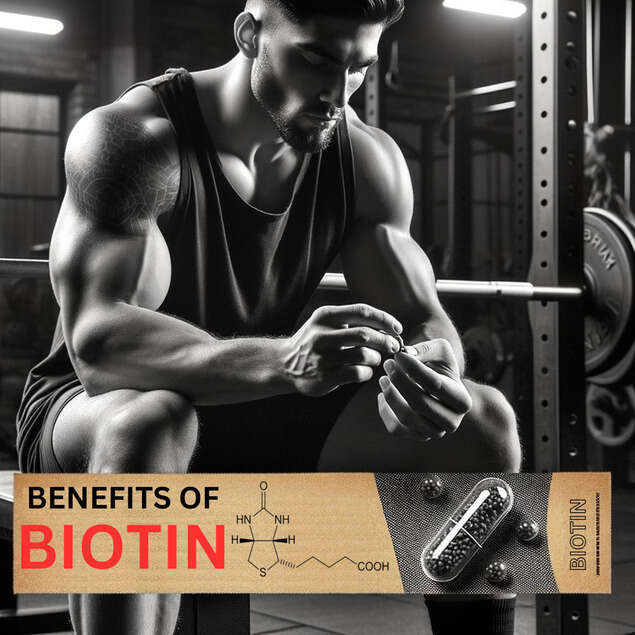
The role of biotin in fitness and bodybuilding
Biotin plays a pivotal role in converting nutrients into energy, vital for intense workouts and recovery while supporting muscle growth and fat loss.
I. Biotin and Metabolism: Fueling Your Workouts
Biotin is crucial in your body’s metabolism and energy production, which is especially important for fueling your workouts. This water-soluble vitamin acts as a coenzyme that helps convert food into energy, making it essential for metabolizing carbohydrates, fats, and proteins.
During exercise, your body demands rapid energy production. Biotin supports this by enhancing the breakdown of these macronutrients into usable forms of energy (1).
Biotin ensures that the carbs you consume are transformed into glucose, which your muscles use for energy. It also helps in fat metabolism, turning fatty acids into energy sources, and proteins into amino acids for muscle repair and growth.
- Carbohydrates: Biotin helps convert carbohydrates into glucose, your body’s primary fuel source during high-intensity workouts.
- Fats: By metabolizing fats, biotin provides a sustained energy release, ideal for long-duration exercises.
- Proteins: Biotin aids in breaking down proteins into amino acids, which are crucial for muscle repair and growth and enhance overall exercise performance.
Understanding these mechanisms highlights why adequate biotin intake is vital for optimizing their metabolism, improving exercise performance, and supporting muscle growth and recovery.
II. Biotin and Exercise Performance
Biotin plays a pivotal role in enhancing your exercise performance through its involvement in energy metabolism.
A. Enhancing Energy Levels
When you exercise, your body’s demand for energy skyrockets. Biotin ensures that your metabolism runs smoothly, enabling the efficient production of ATP (adenosine triphosphate), the primary energy currency of cells. With sufficient biotin levels, your muscles receive a steady supply of ATP, thereby reducing fatigue and allowing you to sustain your workouts for longer periods.
B. Recovery and Muscle Repair
Exercise, particularly intense or prolonged physical activity, causes microscopic tears in muscle fibers. The body repairs these tears during recovery, increasing muscle growth and strength. Biotin contributes to this recovery process by supporting amino acid metabolism and protein synthesis. These functions are essential for the repair and rebuilding of muscle tissues. Adequate biotin levels ensure your muscles recover efficiently, reducing downtime between workouts and enabling more consistent training.
C. Reducing Fatigue
Fatigue is a common barrier to consistent exercise performance. Biotin helps reduce fatigue by optimizing the body’s ability to use nutrients for energy production (2). Specifically, it aids in metabolizing branched-chain amino acids (BCAAs), which are vital for muscle endurance. By effectively breaking down these amino acids, biotin helps delay the onset of muscle fatigue, allowing you to sustain high-intensity exercise for extended periods. Furthermore, biotin’s role in maintaining healthy adrenal function supports the body’s stress response, which can also mitigate feelings of exhaustion during and after workouts.
In summary, biotin significantly impacts exercise performance by enhancing workout efficiency, aiding in muscle recovery and repair, and reducing fatigue. These benefits make biotin an invaluable nutrient for anyone looking to maximize their fitness potential.
III. Biotin and Fat Loss
Biotin plays an integral role in various metabolic processes, and its influence on fat loss is an area of growing interest and research.
This vitamin contributes to fat loss through multiple mechanisms, primarily acting as a coenzyme in essential metabolic pathways. One of its key roles is facilitating the conversion of food into energy. Biotin assists in the metabolism of fatty acids, which involves breaking down fats into simpler components that the body can use efficiently. This process helps reduce fat stores and ensures that the body has a steady supply of energy, which is particularly beneficial during physical activities.
Moreover, biotin is critical in the Krebs cycle, a series of chemical reactions all aerobic organisms use to generate energy. By supporting this cycle, biotin helps increase the basal metabolic rate, thereby accelerating the body’s rate of burning calories, including those from fat reserves.
Biotin’s efficacy in promoting fat loss is often enhanced when combined with other nutrients. For instance, biotin works synergistically with chromium, another essential trace mineral. Chromium helps regulate blood sugar levels and improve insulin sensitivity, further enhancing the body’s ability to metabolize fats effectively.
Additionally, biotin is often paired with B-complex vitamins, such as niacin, riboflavin, and thiamine. These vitamins collectively support metabolic functions, including the breakdown of carbohydrates, fats, and proteins. This synergy ensures a more comprehensive approach to weight management and fat loss by optimizing the body’s overall metabolic efficiency.
Numerous studies have explored biotin’s role in metabolism and fat loss, providing a scientific basis for its benefits. Research has shown that biotin deficiency can impair fatty acid synthesis and reduce energy production, hindering fat loss efforts. Conversely, adequate biotin levels have been linked to improved metabolic functions and enhanced fat oxidation.
IV. Biotin’s Role in Muscle Growth
Biotin plays a crucial role in muscle growth by acting as a coenzyme in synthesizing proteins, which are the building blocks of muscle tissue.
A. Stimulating Muscle Protein Synthesis
Muscle protein synthesis (MPS) builds new proteins, which is fundamental for muscle growth and repair. Biotin acts as a coenzyme for several carboxylase enzymes essential in the metabolism of amino acids, the building blocks of proteins. By facilitating the conversion of these amino acids into usable forms, biotin helps accelerate MPS, thereby aiding in the growth of muscle tissue (5).
B. Preventing Muscle Breakdown
Muscle breakdown, or catabolism, is the process where muscle tissue is degraded to release amino acids for energy or other bodily functions. During intense exercise or periods of inadequate nutrition, the body may break down muscle tissue. Biotin helps mitigate this by enhancing the body’s ability to utilize alternative energy sources, such as fats and carbohydrates, thereby reducing the reliance on muscle protein for energy.
Additionally, biotin supports the maintenance of stable blood sugar levels by aiding in carbohydrate metabolism. Stable blood sugar levels help prevent the catabolic state triggered by low glucose availability, thereby preserving muscle mass.
C. Optimizing Muscle Repair
Recovery is a critical component of muscle growth, and biotin supports this phase by optimizing it. After intense physical activity, the body initiates a repair process to fix the microtears in muscle fibers caused by exercise. Biotin contributes to this repair process by promoting the synthesis of glycogen, a form of stored energy in muscles crucial for recovery.
Moreover, biotin helps reduce inflammation and oxidative stress, which can impair muscle recovery. By minimizing these detrimental effects, biotin allows for more efficient repair and rebuilding of muscle tissue, paving the way for enhanced muscle growth.
V. Biotin and Blood Sugar Control
Biotin plays a crucial role in maintaining stable blood sugar levels by regulating the metabolism of carbohydrates. This regulation is essential because it ensures that your body efficiently converts carbohydrates into glucose, used as fuel during workouts. By reducing fasting blood glucose, biotin helps prevent spikes and crashes in energy levels, which can significantly impact exercise performance (3).
For athletes and fitness enthusiasts, stable blood sugar levels mean sustained energy throughout their workouts. This steady supply of energy helps enhance endurance and prevent exhaustion (3). Moreover, biotin’s role in blood sugar control is also beneficial for recovery post-exercise, as it aids in replenishing glycogen stores more effectively.
Practical Recommendations
For those looking to harness the benefits of biotin, it is advisable to consume a balanced diet rich in biotin-containing foods. Eggs, nuts, seeds, leafy greens, and whole grains are excellent sources. Biotin supplements may be a practical option for individuals with higher biotin requirements, such as athletes or those with specific health needs. However, consulting with a healthcare provider before starting any supplementation is always recommended.
Biotin supplements
While many people can get sufficient biotin through a balanced diet, certain groups may benefit from biotin supplements (4). Individuals who show signs of biotin deficiency, such as thinning hair, brittle nails, or skin irritations, might find it helpful to take biotin supplements. Additionally, pregnant or breastfeeding women, people with specific genetic disorders, athletes, and bodybuilders with higher nutritional demands could also benefit from supplemental biotin.
Quality and bioavailability are key factors when selecting a biotin supplement. Here are some top-rated biotin supplements on the market:
- Sports Research Biotin with Coconut Oil: Known for its high potency, this supplement includes coconut oil, which aids in better absorption of biotin, making it a popular choice among fitness enthusiasts.
- Natrol Biotin Maximum Strength: Each tablet is designed to support metabolism and energy production. Natrol’s high-strength formula is perfect for those with significant biotin needs.
- Zhou Nutrition Hairfluence: This supplement is a favorite for those looking to improve not just their biotin intake but also overall hair health. It combines biotin with other vital vitamins and minerals.
- Garden of Life Mykind Organic Plant Collagen Builder: For those preferring organic options, this supplement offers a blend of biotin and collagen-building botanicals, which can be particularly beneficial for skin, hair, and nail health.
These supplements stand out due to their high-quality ingredients, additional supportive nutrients, and consistent positive user reviews. Always consult with a healthcare provider before beginning any new supplement regimen.
Summary of Key Points
Biotin, often referred to as vitamin B7, is an essential nutrient that plays a crucial role in various bodily functions. This water-soluble vitamin can be sourced from various foods, including eggs, nuts, and certain vegetables, and is also available in supplement form. The daily recommended intake for biotin varies depending on age, gender, and life stage, but its importance in maintaining optimal health is universally recognized.
Biotin significantly influences metabolism, participating actively in carbohydrate, fat, and protein metabolism. It facilitates the breakdown of these macronutrients, converting them into energy vital for everyday activities and exercise performance. By enhancing metabolic efficiency, biotin improves workout outcomes, aids in faster recovery, and helps reduce exercise-induced fatigue.
Regarding fat loss, biotin supports the body’s ability to metabolize fats more effectively. In synergy with other nutrients, this process promotes a more efficient fat-burning mechanism, which can be particularly beneficial for those aiming to lose weight. Scientific studies have proved that adequate biotin intake can support fat loss goals.
Moreover, biotin plays a pivotal role in muscle growth. It stimulates muscle protein synthesis, prevents muscle breakdown, and optimizes muscle repair. These functions are essential for anyone looking to build and maintain muscle mass, making biotin a critical component of a muscle-building diet.
