


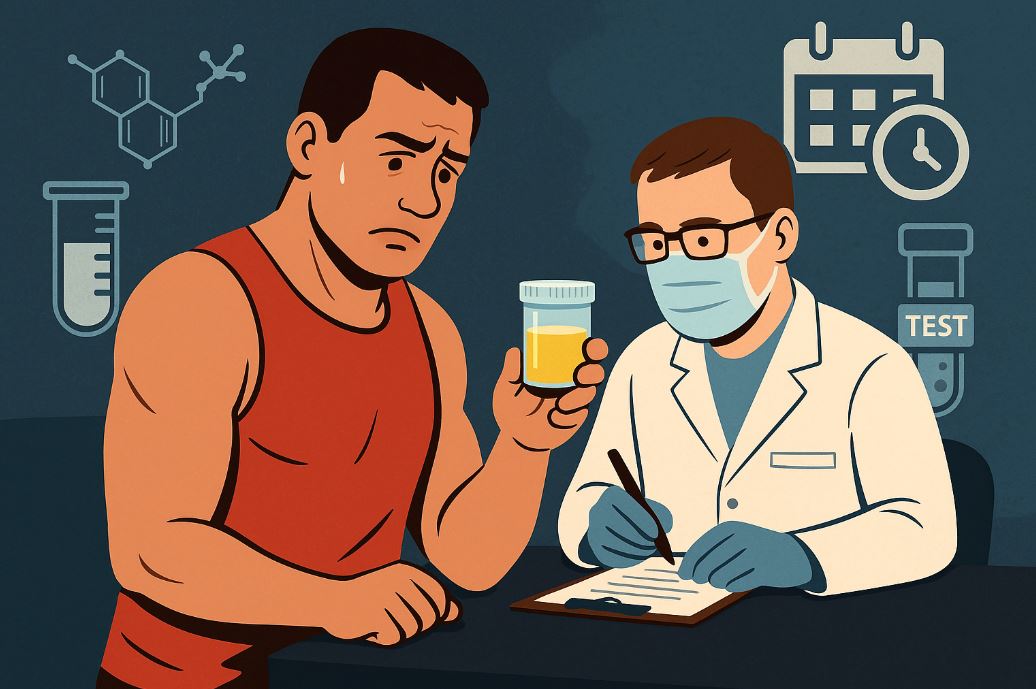
Anabolic steroids may promise increased strength, faster recovery, and dramatic physique changes—but they also come with serious consequences, especially in competitive sports. Anti-doping agencies across the globe continuously refine their methods to detect banned substances, making it increasingly difficult for athletes to cheat the system.
This comprehensive guide to steroid testing and detection times explores how various substances are tested, how long they remain detectable, and what every athlete needs to know about staying clean, compliant, and competitive.
📌 Why Steroid Testing Matters in Modern Sports
Performance-enhancing drugs (PEDs) undermine the integrity of sport. When one athlete uses banned substances, it creates an uneven playing field, jeopardizing the legitimacy of competitions. More importantly, steroid abuse presents serious health risks, including cardiovascular complications, hormonal imbalance, liver damage, and psychiatric effects.
Over the years, steroid scandals have rocked the world of sports:
- 🏃♂️ Ben Johnson was stripped of his 1988 Olympic gold medal after testing positive for Stanozolol.
- ⚾ The BALCO scandal exposed designer steroids used by elite athletes like Barry Bonds.
- 🚴 Lance Armstrong’s downfall highlighted how performance enhancement could become systemically hidden, not just individually abused.
These incidents (among countless others) underscore the need for robust steroid testing and detection systems.
📌 Overview of Steroid Testing Methods
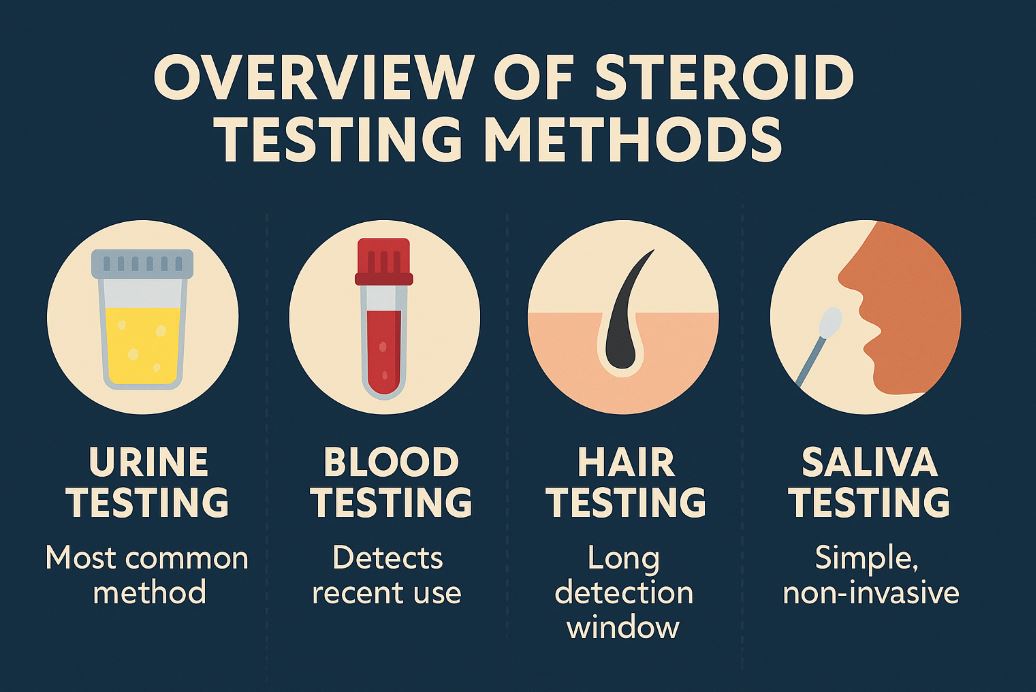
Athletes today face more sophisticated testing protocols than ever before. Anti-doping agencies employ a combination of cutting-edge analytical tools, longitudinal monitoring, and intelligent testing strategies designed to catch even the most subtle forms of performance-enhancing drug (PED) use. These tests aren’t just about detection — they’re about pattern recognition, timing, and biological profiling.
1) Urine Testing
Urine tests remain the gold standard for steroid detection due to their non-invasiveness and ability to capture a broad spectrum of metabolites. Techniques such as gas chromatography-mass spectrometry (GC-MS) and liquid chromatography-tandem mass spectrometry (LC-MS/MS) are the cornerstone of modern testing. These high-precision methods can detect steroid metabolites at levels as low as nanograms per milliliter, even long after the parent drug has been metabolized.
Some metabolites, such as those of trenbolone or nandrolone, can persist for weeks or months, depending on the dosage, frequency, and the ester used. Moreover, advanced isotope ratio mass spectrometry (IRMS) can distinguish between naturally produced testosterone and synthetic versions, even when levels fall within the “normal” range.
2) Blood Testing
While less common than urine testing, blood testing offers distinct advantages, particularly in detecting short-acting compounds, microdosing, or testosterone esters. Blood samples enable the measurement of hormonal fluctuations, unusual hematocrit levels, and biological markers, such as LH (luteinizing hormone) suppression. It’s particularly effective when urine analysis alone is inconclusive.
In endurance sports, blood testing is essential for identifying EPO abuse, but it’s also useful in bodybuilding and strength sports for pinpointing steroid abuse patterns.
3) Hair Follicle Testing
Though still rare in athletic competitions, hair testing is gaining traction in forensic settings and some non-WADA drug screening protocols. This method captures chronic steroid use over extended periods, sometimes up to 90 days or longer. Because anabolic steroids integrate into the hair shaft, this test can provide a time-stamped record of exposure, which is nearly impossible to mask or dilute.
However, its use is currently limited by factors such as hair length, individual hair growth rates, and environmental contamination, which restrict its application in mainstream sports testing.
4) Athlete Biological Passport (ABP)
The Athlete Biological Passport is one of the most powerful deterrents against doping today. Rather than detecting specific drugs, the ABP monitors key biomarkers over time, including red blood cell counts, testosterone/epitestosterone (T/E) ratios, and steroid blood profiles. Sudden or unnatural shifts in these markers may indicate doping, even if the substance itself isn’t identifiable.
For example, if an athlete’s hemoglobin spikes or their T/E ratio becomes erratic, it triggers targeted follow-up testing. This model has led to several high-profile doping busts, even in the absence of a failed drug test.
👉 For further details on testing methods, the World Anti-Doping Agency (WADA) provides extensive documentation.
📌 Detection Times of Common Anabolic Steroids
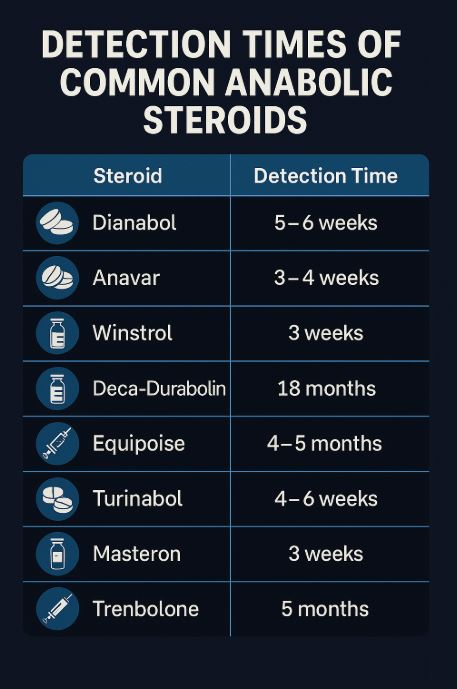
Detection time refers to the duration for which a steroid remains detectable in the body after use. This varies depending on the compound, ester, dosage, and testing method.
📊 Steroid Detection Times Table
This chart focuses only on a selection of well-known anabolic steroids and does not cover all possible compounds or designer drugs. Detection times can vary based on dosage, ester length, injection frequency, individual metabolism, and the type of testing technology used.
| Steroid | Administration | Detection Time |
|---|---|---|
| Testosterone Enanthate | Intramuscular | 3–4 months |
| Testosterone Propionate | Intramuscular | 2–3 weeks |
| Dianabol (Methandrostenolone) | Oral | 5–6 weeks |
| Trenbolone Acetate | Intramuscular | 4–5 months |
| Deca-Durabolin (Nandrolone) | Intramuscular | 18–24 months |
| Winstrol (Stanozolol) | Oral/Injectable | 3–4 weeks |
| Anavar (Oxandrolone) | Oral | 3 weeks |
| Anadrol (Oxymetholone) | Oral | 8–10 weeks |
🧠 Conclusion: Long-estered injectable steroids (like Deca-Durabolin) remain in the body significantly longer than fast-acting oral steroids (like Winstrol or Anavar). This makes timing critical for athletes trying to avoid detection.
📌 Factors That Influence Detection Time
Several variables can affect how long steroids are detectable:
- Dosage & Duration: Higher doses and longer cycles increase retention time.
- Ester Length: Long-acting esters (e.g., Decanoate) slow release and extend detection time.
- Metabolism: Athletes with faster metabolic rates may clear compounds more quickly.
- Hydration & Urine Dilution: While not foolproof, increased water intake may temporarily reduce metabolite concentration in urine.
- Enzyme Inhibitors: Some users attempt to manipulate liver enzymes to delay metabolism, though this approach is risky and unreliable.
📌 How Athletes Try to Cheat the System
Despite strict testing, some athletes still attempt to game the system. Common evasion techniques include:
- Masking Agents: Diuretics or substances that suppress steroid markers.
- Synthetic Urine: Substitution during testing, often via prosthetics.
- Timing Cycles: Using fast-acting steroids off-season to avoid detection during competition.
- Micro-Dosing: Administering small amounts to evade detection thresholds.
- Designer Steroids: Some athletes have used chemically altered compounds specifically engineered to avoid detection. A notable example is THG (tetrahydrogestrinone), central to the BALCO scandal. These drugs may not appear on standard testing panels until labs identify and validate them.
However, modern labs detect even trace amounts, and longitudinal monitoring through ABP makes it harder to hide consistent use.
📌 Legal and Ethical Consequences of Failing a Test
Failing a drug test can be career-ending:
- First-time offenders may face bans of 2 to 4 years, depending on the substance.
- Repeat Offenders can receive lifetime bans.
- Loss of Sponsorships, titles, and reputation damage are often irreversible.
- In bodybuilding, a failed test at a natural competition can lead to permanent expulsion.
High-profile cases like Armstrong and Marion Jones illustrate how failed tests affect more than just medals—they reshape public perception.
📌 Can Supplements Cause False Positives?
Yes — and it’s more common than many athletes realize. Some over-the-counter supplements, especially those marketed for muscle growth, fat loss, or enhanced performance, have been found to contain traces of anabolic steroids, prohormones, or other banned substances not listed on the label. These undeclared ingredients can trigger false positives on doping tests, putting an athlete’s career at serious risk.
How does this happen?
- Cross-contamination: Supplements may be produced in facilities that also handle substances banned by law, leading to accidental contamination.
- Spiking: Some manufacturers intentionally add performance-enhancing substances to increase the product’s effects, without disclosing them.
- Mislabeling: Ingredient lists may be incomplete or misleading, especially in unregulated or imported products.
To minimize risk:
- Choose third-party tested products: Look for certifications such as NSF Certified for Sport or Informed Sport, which test for over 250 banned substances.
- Avoid “hardcore” supplements: Be especially cautious with pre-workouts, testosterone boosters, and imported products with aggressive claims but vague labels.
- Use trusted databases: Check brands and products through platforms like NSF’s Certified Products List or Informed-Sport.
📌 Detection Time vs. Clearance Time
It’s vital to distinguish between:
- Clearance Time: The point at which the drug is no longer biologically active or producing its effects.
- Detection Time: How long metabolites remain in the system and can be traced.
Steroids may be inactive but still detectable for months, especially with long esters like nandrolone.
📌 Tips for Athletes: How to Stay Clean and Compliant
- Study the WADA Prohibited List annually.
- Check supplement certification before use.
- Consult team doctors for any prescribed hormone treatments.
- Never trust “undetectable steroid” marketing claims.
- Don’t self-administer medications or use grey-market products.
Playing clean is not only a regulatory requirement—it’s a personal and professional responsibility.
📌 Notable Cases of Athletes Trying to Evade Detection
While steroid testing has become increasingly sophisticated, history is filled with athletes who attempted to outsmart the system. Their methods—ranging from basic to elaborate—often reveal just how far some competitors are willing to go for performance or prestige.
🏃♂️ Ben Johnson (1988 Olympics – Track and Field)
Canadian sprinter Ben Johnson was famously stripped of his Olympic gold medal after testing positive for Stanozolol. Later investigations revealed that his team manipulated testing windows and micro-dosed to avoid detection—until it backfired during a surprise Olympic test.
⚾ Barry Bonds and BALCO (MLB)
Through the Bay Area Laboratory Co-Operative (BALCO), Bonds and other athletes used “designer steroids” like THG (tetrahydrogestrinone) that were chemically modified to be initially undetectable by standard lab tests. This forced anti-doping labs to upgrade detection capabilities.
🚴♂️ Lance Armstrong (Cycling)
While not strictly steroids, Armstrong’s case is infamous for his elaborate use of EPO, testosterone patches, and blood doping. His team used timed administration and masking agents, evading detection for years—until whistleblower testimony and biological passport anomalies exposed the truth.
🏋️♀️ Ilya Ilyin (Weightlifting)
The Kazakh Olympic gold medalist tested positive for both Stanozolol and Dehydrochloromethyltestosterone (Oral Turinabol) years after the competition. The positive results were obtained through retrospective testing, demonstrating how frozen samples are retested using newer technology long after the event.
🧪 Marion Jones (Track and Field)
Despite years of negative tests, Jones later admitted to using steroids, obtained through BALCO. Her case highlighted how test evasion wasn’t just chemical, but involved lying on affidavits and evading suspicion through media credibility.
📌 Conclusion
Understanding steroid testing and detection times is crucial for any athlete navigating modern competitive sports. With more advanced testing methods, stricter regulations, and long-term data retention, the era of beating the system is nearing its end.
Staying clean not only preserves your eligibility and reputation but also protects your long-term health.
📌 Disclaimer
This article is for informational purposes only and does not constitute medical or legal advice. The use of anabolic steroids can pose serious health and legal risks. Always consult a qualified healthcare professional before considering any performance-enhancing substances. The author and website do not promote or endorse steroid use and assume no responsibility for individual decisions.
✅ Key Takeaways: Steroid Testing and Detection Times
- Steroid testing and detection times vary widely depending on the type of steroid, its ester, dosage, and individual metabolism.
- Detection windows can range from a few days to over a year, especially for long-acting injectable steroids.
- Testing methods, such as urine analysis, blood testing, and biological passports, continue to improve in sensitivity and reliability.
- Athletes have attempted to evade detection using masking agents, micro-dosing, and timing strategies — all of which carry high risks and harsh penalties.
- Supplements can cause false positives due to contamination or mislabeling; therefore, athletes should use only products that have been third-party tested.
- Testing authorities such as WADA and USADA maintain strict testing protocols year-round, both in and out of competition.
- Even top-level athletes like Ben Johnson and Lance Armstrong have faced career-ending consequences due to failed doping tests.
- Understanding steroid testing and detection times is essential not only for clean competition but for safeguarding an athlete’s career and reputation.
- Legal consequences, suspensions, and public backlash can result from a single failed test, regardless of intent.
- Education, transparency, and effective support systems are crucial for navigating anti-doping rules in competitive sports.
How long do anabolic steroids stay in your system?
Detection times vary depending on the specific steroid, its ester, dosage, and the user’s metabolism. For example, oral steroids like Dianabol may be detected for up to 6 weeks, while long-acting injectables like Deca-Durabolin (Nandrolone Decanoate) can be detected for up to 18 months.
What is the most accurate test to detect steroid use in athletes?
The most advanced method is Gas Chromatography-Mass Spectrometry (GC-MS), often combined with Isotope Ratio Mass Spectrometry (IRMS). These can differentiate between synthetic and endogenous hormones, even in microdoses, making evasion nearly impossible.
Can you fail a steroid test after using testosterone?
Yes. While testosterone is naturally produced by the body, testing agencies use the T/E ratio (Testosterone to Epitestosterone) to flag abnormalities. A ratio above 4:1 is considered suspicious and may trigger further testing using IRMS.
How soon before a competition should athletes stop using steroids to avoid detection?
There’s no safe window. Even with fast-acting steroids, metabolites can linger for weeks. Athletes using long-ester steroids like Trenbolone Enanthate or Deca-Durabolin may test positive months after last use.
What are common methods athletes use to cheat steroid tests?
Techniques include using masking agents, urine substitution, microdosing, and timing cycles. However, anti-doping agencies like WADA now use athlete biological passports (ABPs) to detect subtle changes over time, making cheating far riskier.
Which steroids have the longest detection times?
Steroids with long esters like Nandrolone Decanoate (up to 18 months) and Boldenone Undecylenate (up to 5 months) stay the longest. Detection also depends on the sensitivity of the test and lab technology.
Do anabolic steroid detection times differ between blood and urine tests?
Yes. Urine tests are more commonly used and have longer detection windows, especially for metabolites. Blood tests are used for specific substances and offer shorter windows, but greater accuracy in hormonal levels.
Can over-the-counter supplements cause a false positive on steroid tests?
In rare cases, contaminated or mislabeled supplements may contain banned prohormones or designer steroids. Athletes are encouraged to use third-party tested products to avoid unintentional violations.
Is steroid testing mandatory in professional bodybuilding?
It depends on the federation. Natural bodybuilding leagues enforce strict drug testing, while major events like Mr. Olympia do not routinely test competitors, allowing widespread but unofficial use of anabolic steroids.
Are there legal consequences for testing positive for steroids in sports?
Yes. Athletes may face suspensions, medal stripping, public exposure, and in some countries, criminal charges or travel bans. The consequences can permanently damage reputations and careers.
