



Nicknamed “lat’s little helper,” the teres major works so closely with the latissimus dorsi that most lifters have never trained it as a distinct muscle in its own right — yet it has its own origin, its own nerve supply, and its own genuinely important anatomical relationships that have nothing to do with the lats at all. Understanding the functional anatomy of the teres major clears up a common point of confusion (it’s frequently mistaken for a rotator cuff muscle, which it isn’t) and reveals why this thick, unassuming muscle deserves more individual attention than its nickname suggests.
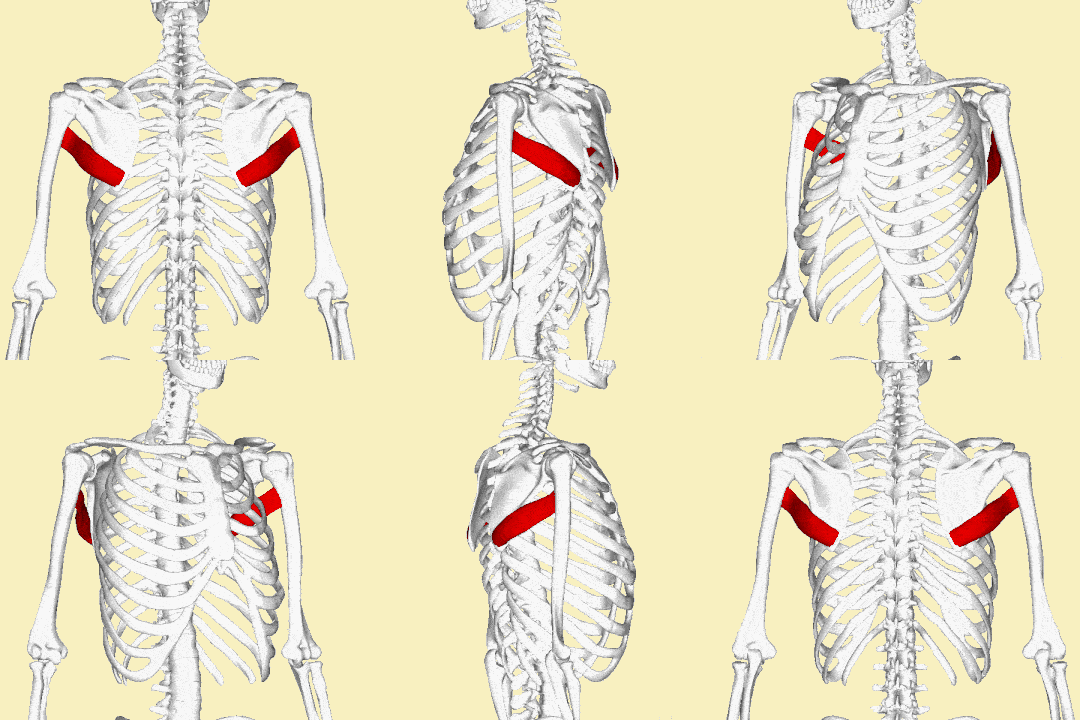
Quick Answer
The teres major is a thick, rectangular muscle running from the lower shoulder blade to the upper arm bone, positioned just above the latissimus dorsi. Its primary functions are shoulder extension, adduction, and internal rotation — the same three actions as the lats, which is why the two muscles function almost as a single unit during most pulling exercises. Despite sitting right next to the teres minor and sharing part of its name, the teres major is not part of the rotator cuff.
| Muscle type | Thick, rectangular muscle of the posterior shoulder |
|---|---|
| Primary functions | Shoulder extension, adduction, internal rotation |
| Secondary functions | Scapular stabilization |
| Innervation | Lower subscapular nerve (C5–C7) |
| Blood supply | Posterior circumflex humeral artery, thoracodorsal branch of the subscapular artery |
| Common exercises | Pull-ups, lat pulldowns, dumbbell pullovers |
| Main bodybuilding role | Back width and thickness alongside the lats |
Overview
The teres major sits at the lower, outer corner of the scapula, directly above the latissimus dorsi and working so closely alongside it that the two muscles are often described as functioning like a single unit. According to Physiopedia’s reference on the teres major, it’s sometimes nicknamed “lat’s little helper” specifically because of this close synergistic relationship, and along with the pectoralis major and latissimus dorsi, it’s also called the “climbing muscle,” since all three can pull the trunk upward toward a fixed arm — the exact mechanism behind a pull-up.
Despite this close functional partnership with the lats, the teres major has its own distinct origin, nerve supply, and blood supply, and it’s genuinely important to understand it as its own muscle rather than simply an extension of the lats. It’s also frequently and incorrectly assumed to be part of the rotator cuff, likely due to its proximity to the teres minor — a mix-up worth clearing up. To see how it fits into the rest of your muscular system, check out our interactive muscle anatomy tool.

Anatomy & Location: The Functional Anatomy of the Teres Major
The teres major is a thick, somewhat flattened muscle located at the inferior angle of the scapula, on its posterior surface. Its fibers run parallel to those of the latissimus dorsi and, along with the lats, form the posterior wall of the armpit — a visible, palpable landmark sometimes called the posterior axillary fold.
Characteristics at a Glance
| Characteristic | Value |
|---|---|
| Shape | Thick, flattened, rectangular |
| Location | Inferior angle of the scapula, superior to the latissimus dorsi |
| Fiber direction | Spirals slightly as it courses toward the humerus, running parallel to the lats |
| Crosses | Shoulder (glenohumeral) joint |
The teres major and latissimus dorsi tendons lie so close together at their shared insertion that a small bursa separates them, cushioning the two structures as they move independently despite their overlapping paths.

Origin, Insertion, Innervation & Blood Supply
For a broader explanation of these anatomical terms, see our guide to muscle anatomy basics: origin, insertion, and innervation.
| Attribute | Detail |
|---|---|
| Origin | Posterior surface of the inferior angle of the scapula |
| Insertion | Medial lip of the intertubercular (bicipital) groove of the humerus |
| Innervation | Lower subscapular nerve (C5–C7) |
| Blood supply | Posterior circumflex humeral artery, thoracodorsal branch of the subscapular artery |
According to StatPearls’ anatomical reference on the teres major, the lower subscapular nerve that supplies the teres major is the same nerve that supplies the lower portion of the subscapularis, meaning these two muscles share part of their nerve pathway despite being located in completely different areas of the shoulder. Kenhub’s anatomical reference on the teres major notes that the tendon inserts just posterior to the latissimus dorsi tendon on the humerus, with a small bursa separating the two — a detail that helps explain why the muscles can be felt as distinct structures despite their closely intertwined function.
Function
The teres major’s primary actions are shoulder extension, adduction, and internal rotation — the exact same three actions performed by the latissimus dorsi — which is why the two are so difficult to separate during training or even to distinguish by feel. It also contributes to scapular stabilization, helping control the position of the shoulder blade during pulling movements. Unlike the true rotator cuff muscles, the teres major does not attach to the shoulder joint capsule itself, which is one of the defining anatomical reasons it’s excluded from that group despite sitting immediately adjacent to the teres minor.
An Important Anatomical Landmark
The teres major forms part of a clinically relevant passageway called the triangular interval, located just below the more commonly discussed quadrangular space. This detail is a good example of why the functional anatomy of the teres major matters beyond simple muscle action: the triangular interval is bordered by the teres major above, the long head of the triceps medially, and the humerus laterally — and it serves as the passageway for the radial nerve and the deep brachial (profunda brachii) artery as they travel from the front to the back of the arm. This is a genuinely distinct anatomical space from the quadrangular space used by the teres minor, reinforcing just how different these two similarly named muscles really are.
Muscles Closely Related
The teres major is frequently confused with its similarly named neighbor, despite the two having almost nothing in common functionally.
- Teres minor — sits just above the teres major and shares part of its name, but it’s part of the rotator cuff, performs external rotation (essentially the opposite of the teres major’s internal rotation), and is innervated by the axillary nerve rather than the lower subscapular nerve.
- Subscapularis — shares part of its nerve supply with the teres major (the lower subscapular nerve), and the two muscles are sometimes considered a functional unit due to this overlap, despite the subscapularis being a true rotator cuff muscle and the teres major not.
Synergists & Antagonists
Synergists (muscles that work alongside the teres major to help produce the same movement):
- Latissimus dorsi — the primary partner in nearly every teres major action, working so closely together that true isolation of either muscle is difficult
- Pectoralis major — assists internal rotation and adduction
Antagonists (muscles that oppose the teres major’s action, working in the opposite direction):
- Posterior deltoid — opposes internal rotation via external rotation assistance
- Infraspinatus and teres minor — perform external rotation, directly opposing the teres major
Common Exercises

Because the teres major and latissimus dorsi function closely together, almost any pulling exercise that targets the lats also targets the teres major to a similar degree.
| Exercise | Role of the Teres Major |
|---|---|
| Wide-grip pull-up | Major contributor |
| Wide-grip lat pulldown | Major contributor |
| Close-grip lat pulldown | Major contributor |
| Dumbbell pullover | Major contributor |
| Straight-arm pulldown | Major contributor |
Bodybuilder’s Take
“Do I need separate exercises for the teres major, or does back day already cover it?” For nearly all lifters, standard back training already thoroughly covers the teres major. Because it shares the same three primary actions as the lats and is recruited alongside them in almost every pulling movement, there’s rarely a need to program anything specifically targeted at this muscle in isolation.
“Why do I sometimes feel a strain near my armpit during heavy pull-ups or pulldowns?” This area — where the teres major and latissimus dorsi tendons run close together near the humerus — is a plausible source of discomfort during heavy pulling, particularly if volume or load increases suddenly. The teres major is also relatively prone to developing trigger points, which can produce local pain that sometimes radiates to the outer shoulder.
Common beginner mistakes:
- Assuming the teres major needs dedicated isolation work, when in practice it’s thoroughly trained by standard lat-focused pulling exercises
- Confusing teres major with the teres minor or assuming it’s part of the rotator cuff, leading to incorrect assumptions about its function and training needs
- Increasing pulling volume or load too quickly, which can contribute to strain in the closely packed tendon region shared with the lats
Common Conditions
This section is educational and should not replace professional medical advice.
Isolated teres major injuries are relatively rare compared to injuries of the rotator cuff or latissimus dorsi, and when strains do occur, they typically result from sudden stretching or direct impact rather than gradual overuse. The muscle is also prone to developing myofascial trigger points, which can produce localized pain that sometimes radiates to the outer shoulder and may contribute to difficulty with arm abduction and elevation. Persistent shoulder or upper back pain, particularly pain that limits pulling strength or arm elevation, should be evaluated by a healthcare professional rather than treated through.
Common Myths
A clear grasp of the functional anatomy of the teres major clears up most of the persistent confusion surrounding this muscle.
Myth: The teres major is part of the rotator cuff. It isn’t. Unlike the four true rotator cuff muscles, the teres major doesn’t attach to the shoulder joint capsule, which is one of the key anatomical reasons it’s excluded from that group despite sitting right next to the teres minor.
Myth: Teres major and teres minor are essentially the same muscle. Despite the similar name and neighboring location, they have nearly opposite rotational functions, different nerve supplies, and only the teres minor is part of the rotator cuff.
Myth: You need dedicated teres major exercises to fully develop it. Because it works so closely with the latissimus dorsi, standard back-focused pulling exercises like pull-ups and lat pulldowns already thoroughly train the teres major for most lifters.
Key Takeaways
- The teres major shares the same three primary actions as the latissimus dorsi and works almost as one unit with it.
- Despite sitting next to the teres minor, it is not part of the rotator cuff.
- It forms part of the triangular interval, a passageway for the radial nerve, distinct from the teres minor’s quadrangular space.
- Most lifters don’t need dedicated teres major exercises, since standard lat-focused pulling movements train it thoroughly.
- Along with the pec major and lats, it’s sometimes called the “climbing muscle” for its role in pulling the trunk toward a fixed arm.
Frequently Asked Questions
What is the main function of the teres major?
Its main jobs are shoulder extension, adduction, and internal rotation — the same three actions performed by the latissimus dorsi, which it works closely alongside.
Is the teres major part of the rotator cuff?
No. Despite sitting right next to the teres minor, the teres major doesn’t attach to the shoulder joint capsule and isn’t one of the four rotator cuff muscles.
Are teres major and teres minor the same muscle?
No. They have nearly opposite rotational functions, different nerve supplies, and only the teres minor is part of the rotator cuff.
Do I need dedicated exercises for the teres major?
Most lifters don’t. Because it functions so closely with the latissimus dorsi, standard pulling exercises like pull-ups and lat pulldowns already train it thoroughly.
Why is the teres major sometimes called the “climbing muscle”?
Along with the pectoralis major and latissimus dorsi, it can pull the trunk upward toward a fixed arm, which is the core mechanism behind climbing and pull-up movements.
Sources & References
Every claim in this guide is grounded in anatomical references and published research. Explore the primary sources below.
