

The rib cage, also known as the thoracic cage, is a crucial component of the human skeletal system, providing structure, support, and protection for vital organs. In this article, we will discuss the anatomy and function of the rib cage. We will explore its definition, function, and detailed anatomy, covering aspects such as its location, shape, size, muscles attached, blood supply, innervation, and the specific parts that make up the human rib cage. Additionally, we will discuss the different types of ribs, how the rib cage interacts with other bones, and the common injuries and conditions that can affect it.
Understanding the role of major bones, like the ribs, is crucial for athletes, bodybuilders, and fitness enthusiasts. Comprehending how these structures work not only helps achieve peak physical performance but also prevents injuries.
Furthermore, we will explore common rib cage injuries associated with activities like weightlifting and provide tips for maintaining a healthy rib cage. The importance of a healthy rib cage extends beyond basic bodily functions; it is integral to the performance and safety of individuals engaged in sports and bodybuilding. Join us as we navigate the complex yet fascinating dynamics of one of the body’s pivotal structures.
What is the Rib Cage?
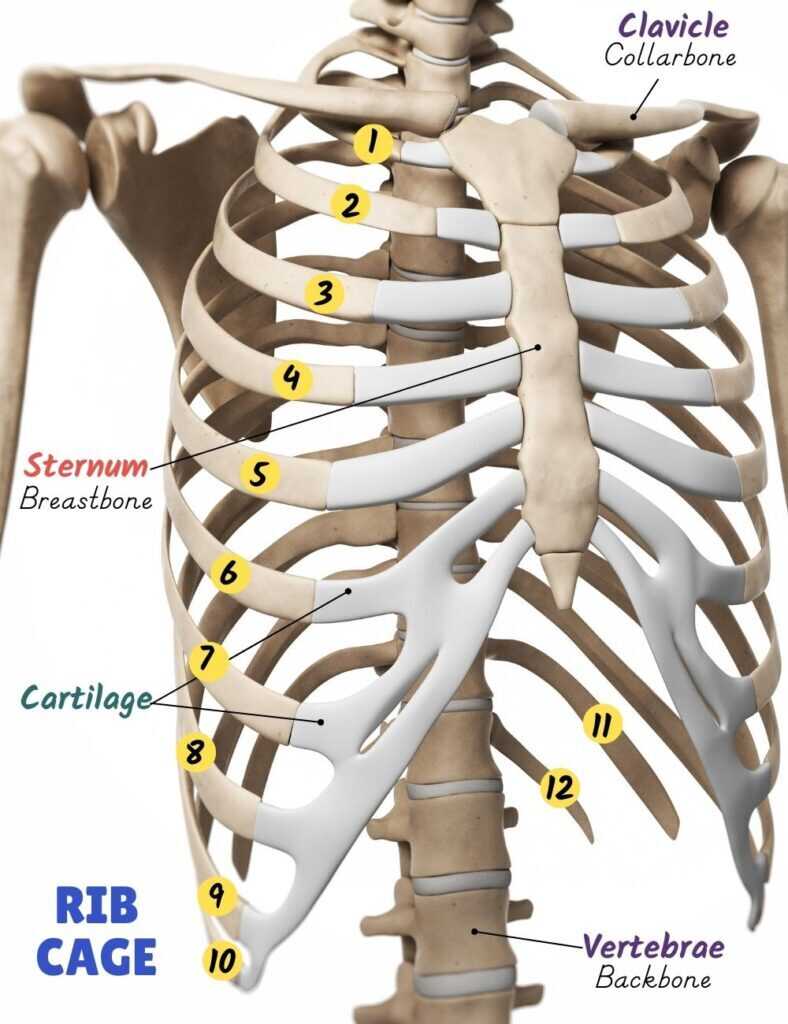
The rib cage is a vital part of your body that looks like a cage wrapping around your chest. Its main goal is to shield essential organs like your heart and lungs. It’s made up of 12 pairs of ribs that curve around your torso, and the sternum sits at the front, making it firm yet flexible. This structure not only safeguards your thoracic organs but also plays a critical role in helping you breathe effectively and keeping your upper body stable.
Brief Anatomy of the Rib Cage
Understanding its basic anatomy provides insight into its function and importance in human physiology.
A. Location of the Rib Cage
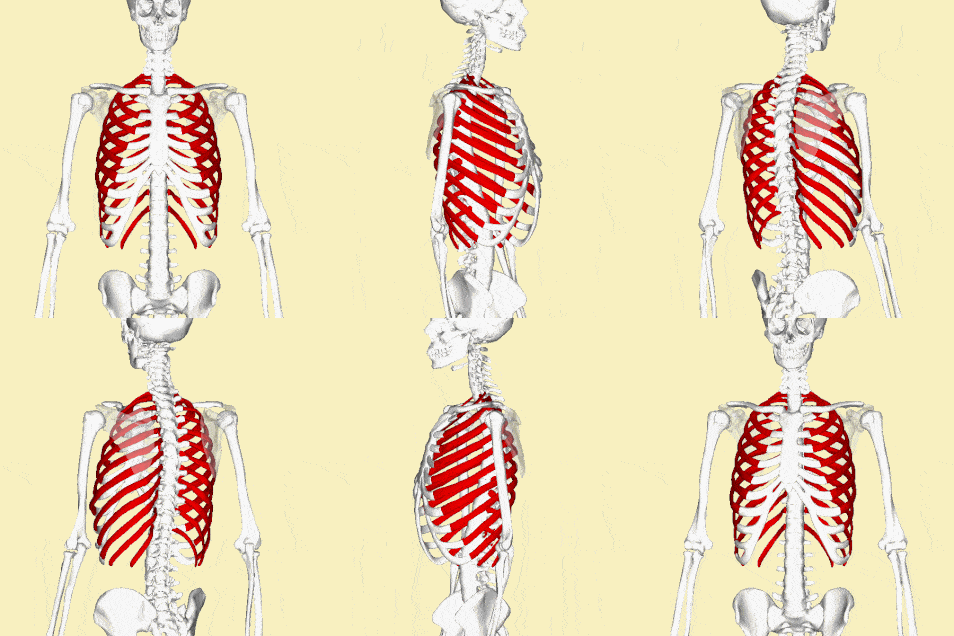
The rib cage is in the chest area. It sits between your neck and abdomen. The rib cage surrounds the lungs and heart, providing protection. It is connected to the spine at the back and extends forward, near your breastbone.
B. Appearance of the Rib Cage
The rib cage is shaped like a dome or a barrel. It encases the chest like a protective shell. The ribs arc around the sides, connecting to the spine at the back. They join the sternum at the front to form a sturdy framework.
C. Size of the Rib Cage
The size of the rib cage can vary from person to person, yet on average, it is about 12 inches wide and 24 inches deep for adults. The rib cage is larger in males than in females, accommodating differences in lung capacity and torso size.
D. Parts of the Rib Cage
The rib cage consists of bones and the joints that link them together.
Bones:
- Ribs: The rib cage consists of 24 ribs, organized into 12 pairs. These ribs form the protective bony framework around the chest, or thorax.
- Thoracic Vertebrae (T1-T12): There are 12 thoracic vertebrae in the upper-mid section of the spine. These vertebrae provide support and attachment for the ribs.
- Sternum: This flat bone is located at the front-center of the chest. It provides central support and connects to the ribs via the costal cartilages.
Joints:
- 20 Costal cartilages: These connect the ribs to the sternum, providing flexibility to the chest wall.
- 20 Costochondral joints: Located between the ribs and the costal cartilages, these joints allow for slight movements during breathing.
- 10 Interchondral joints: These joints occur between the cartilage of ribs seven to ten, allowing for additional flexibility.
- 24 Costovertebral joints: Each rib articulates with the spine here, enabling the ribs to move during respiration.
- 24 Costotransverse joints: These joints link the rib tubercles to the transverse processes of the thoracic vertebrae, providing stability.
E. Types of Ribs
- True Ribs (1-7): These ribs are directly attached to the sternum via their own individual costal cartilages. They provide robust support and significant protection to the heart and lungs.
- False Ribs (8-10): Unlike true ribs, these ribs are not directly attached to the sternum. Instead, they are connected to the sternum through the cartilage of the rib above them, forming a jointed structure known as the costal margin.
- Floating Ribs (11-12): These ribs do not attach to the sternum at all. They are shorter and primarily protect the lower back organs, such as the kidneys. Despite their lack of direct connection to the sternum, they play a vital role in body flexibility.
- Atypical Ribs: Certain ribs, like the first, second, tenth, eleventh, and twelfth, differ in shape or structure from the rest and serve unique functions. These include additional protection for the shoulders and support in areas requiring flexibility.
F. Muscles Attached to the Rib Cage
Your rib cage isn’t just a protector; key muscles support it. These muscles help with breathing, movement, and posture. Knowing these connections enables you to understand how your body works.
- Intercostal muscles: Situated between the ribs. Assist in expanding and contracting the chest cavity during breathing.
- Serratus anterior: Connects the ribs to the scapula. Plays a role in the movement of the shoulder blade.
- Pectoralis major: Extends from the clavicle and sternum across the chest. Helps in arm flexion and rotation.
- Pectoralis minor: Lies beneath the pectoralis major. Stabilizes the scapula.
- Diaphragm: A dome-shaped muscle below the rib cage. The primary muscle for breathing.
- Scalene muscles: Located in the neck. Assist in elevating the first two ribs during inspiration.
G. Blood Supply to the Rib Cage
The rib cage is well-supplied with blood. Each rib gets blood from two primary sources. The anterior intercostal arteries supply the front part. These arteries are branches of the internal thoracic artery. At the back, the ribs receive blood from the posterior intercostal arteries. The eleventh rib gets blood mainly from the posterior intercostal artery. The twelfth rib receives blood from the subcostal artery. Each rib has a groove where arteries and veins run, ensuring good blood flow. Floating ribs are mostly supplied from the back. This rich blood supply is vital for rib health and function.
H. Innervation
The rib cage gets its nerve supply mainly from the intercostal nerves. These nerves provide both sensory and motor branches. They help us feel sensations and control muscle movements. Specifically, the muscular branches innervate the intercostal muscles.
Additionally, the subclavian nerve plays a role in the area. Pleural sensory branches, lateral cutaneous branches, and anterior cutaneous branches are other vital nerves. They innervate different parts of the thorax and skin, ensuring proper sensory functions.
Functions of the Rib Cage
Protection of Vital Organs
The rib cage acts as a sturdy shield. It protects vital organs, such as the heart and lungs. This structure helps prevent injury from impacts or accidents.
Support for Upper Body
Your rib cage provides essential support. It helps maintain the stability of your upper body. This structure allows for an upright posture and balance.
Facilitation of Breathing
The rib cage plays a crucial role in breathing. It expands and contracts with each breath. This movement helps inflate and deflate your lungs.
Attachment Point for Muscles
Muscles find anchorage in the rib cage. These muscles assist in various movements and functions. They play essential roles in respiration and body movements.
Interactions with other bones
The rib cage provides stability by connecting with several bones. It articulates with the sternum and vertebral column. The true ribs connect directly to the sternum, forming sternocostal joints. This allows flexibility and support. The vertebrae serve as the backbone attachment. This interaction enables dynamic movement and stability. Floating ribs, meanwhile, do not connect with the sternum, granting more freedom. Together, these connections protect the body and facilitate breathing.
✅ Trainer’s Perspective (Author’s Insight)
As a fitness coach and someone who has worked with numerous athletes and bodybuilders over the years, I’ve come to realize just how underrated the rib cage is in terms of performance and injury prevention. Many people focus solely on muscles or joints, but the rib cage is truly foundational—it’s where power begins in many upper-body movements.
I’ve personally worked with clients who’ve experienced rib-related issues, mainly due to poor lifting mechanics or overuse in high-volume training cycles. In weightlifters, I’ve noticed cases of costochondritis and even minor rib dislocations caused by lack of thoracic mobility and poor bracing techniques. Teaching proper breathing mechanics, especially diaphragmatic breathing during heavy compound lifts like squats and deadlifts, has drastically improved performance and reduced injury risk for many of my clients.
From a bodybuilding standpoint, a well-developed rib cage paired with strong intercostal and serratus anterior muscles can significantly enhance the aesthetic of the torso. It’s not just about protection—it’s about posture, power, and presentation.
Understanding the rib cage isn’t just for anatomy students; it’s for anyone serious about lifting, training, and staying injury-free.
💥 Exercises That Put the Most Stress on the Ribs and Rib Cage
This section highlights exercises that can potentially cause issues with the ribs, including those that result from compression, torsion, improper breathing, or excessive stress on the thoracic region of the torso. For example:
🔻 1. Heavy Back Squats
- Why they stress the ribs: During deep squats with heavy weights, the pressure on the torso, especially when using the Valsalva maneuver, can place significant stress on the ribs, notably the lower (floating) ribs.
- Potential issue: Rib pain, intercostal muscle strain, or even micro-fractures from overtraining.
- Tip: Focus on proper breathing (bracing through the diaphragm), avoid “chest inflation,” and use a lifting belt only when necessary.
🔻 2. Barbell Bench Press (heavy variant)
- Why they stress the ribs: Excessive back arching causes the ribs to flare upwards, placing stress on the sternum and costal cartilages.
- Potential issue: Costochondritis (inflammation of the cartilage connecting the ribs to the sternum).
- Tip: Maintain a controlled back arch, and avoid going too heavy if discomfort is felt in the front of the rib cage.
🔻 3. Weighted Pull-Ups / Chin-Ups
- Why they stress the ribs: Poor form (like aggressively swinging or twisting the torso) can lead to rib and intercostal muscle strain.
- Potential issue: Intercostal muscle pulls, especially when performing the movement with added weight and poor control.
- Tip: Keep the torso stable and avoid kipping or swinging motions.
🔻 4. Overhead Press / Military Press
- Why they stress the ribs: Pressing weight overhead while flaring the ribs outward can overload the anterior rib cage.
- Tip: Engage your core and use the “rib tuck” technique to keep your ribs down and your torso stable.
Introduction to Rib Cage Health
The rib cage is vital to your body’s structure. While it’s designed to be strong, it’s not immune to injuries and conditions. Let’s explore some common issues that can affect your ribs.
I. Common Injuries and Conditions Affecting the Rib Cage
- Fractured Ribs: Breaks or cracks in the ribs are usually caused by trauma. It often hurts when you breathe.
- Rib Dislocation: When a rib moves out of its normal position. It can cause pain and discomfort.
- Costochondritis: Inflammation of the cartilage connecting the ribs to the breastbone. A sharp pain in the chest is a common sign.
- Flail Chest: This occurs when multiple adjacent ribs are fractured. It can severely affect breathing.
- Osteoporosis: A condition where bones, including ribs, become weak and brittle. This increases the risk of fractures.
- Rib Tumors: Abnormal growths on the rib bones. They can be benign or cancerous.
II. Common Treatments for Rib Cage Injuries
- Rest: Give your body time to heal. Avoid strenuous activities.
- Ice Packs: Apply ice to reduce swelling. Use for 20 minutes at a time.
- Pain Relief: Over-the-counter painkillers like ibuprofen help. They reduce pain and inflammation.
- Compression Wrap: Some experts suggest using support wraps. It can stabilize the area, but don’t wrap it too tightly.
- Breathing Exercises: Deep breathing helps avoid lung complications. It keeps the lungs clear.
- Physical Therapy: For serious injuries, therapy aids recovery. A therapist guides you through exercises.
- Medical Evaluation: See a doctor if the pain is severe. They may recommend treatments or further tests.
- Hospital Admission: Severe injuries may need admission. Hospital staff can monitor the healing process.
Tips for Keeping the Rib Cage Healthy
Maintain Good Posture
Stand and sit up straight. Keep your shoulders back. This helps support the rib cage.
Engage in Regular Exercise
Exercise regularly to strengthen the muscles around your rib cage. Focus on activities like swimming or walking.
Incorporate Breathing Exercises
Practice deep breathing exercises. This can improve rib mobility and lung capacity.
Eat a Balanced Diet
Consume nutrients essential for bone health. Include foods rich in calcium and vitamin D.
Avoid Smoking
Smoking can harm your lungs and rib cage. Avoid it for better health.
Practice Safe Lifting Techniques
Lift with your legs, not your back. This reduces strain on your rib cage.
Ensure Proper Protection During Sports
Wear protective gear to prevent injuries. This is crucial in contact sports.
Stay Hydrated
Drink plenty of water. It keeps your body functioning well, including your bones.
Importance of the Rib Cage in Sports and Bodybuilding
The rib cage plays a critical role in sports and bodybuilding. It provides the necessary support and stability for upper body movements. These movements are crucial in most athletic activities. With a strong rib cage, athletes can improve their performance.
The rib cage protects vital organs, such as the heart and lungs. This protection is essential during high-impact sports. A healthy rib cage minimizes injury risks. It acts as a buffer, absorbing shocks and impacts.
Additionally, the rib cage aids in respiratory efficiency. Breathing capacity is enhanced with proper rib cage function. This efficiency can improve stamina and endurance. For bodybuilders, a well-maintained rib cage can support heavier lifting. It helps in maintaining form and technique during workouts.
A robust rib cage contributes to overall strength and flexibility. These attributes are beneficial for athletic training. The rib cage also serves as an anchor for key muscle groups. The pectoralis major and intercostal muscles rely on it. Strong rib attachments can boost upper body power.
In sports and bodybuilding, the rib cage is not just a protective shell. It is an integral component for performance. Maintaining a healthy rib cage is essential. It supports training goals and enhances athletic capabilities.
Conclusion: Rib Cage Guide for Lifters
The rib cage is crucial for health and athletic performance. It protects vital organs and supports breathing. For athletes and lifters, a strong rib cage is essential. Proper care, including exercise, good posture, and a balanced diet, helps keep it healthy. Always consult healthcare providers for injuries. Remember, a healthy rib cage boosts your overall well-being.
💬 Coach’s Corner: Rib Cage Questions Every Lifter Should Know
Your rib cage does more than just protect your lungs — it plays a big role in how you breathe, brace, and lift. Here are the key questions (and answers) that every serious lifter should know to keep their upper body strong and stable under the bar.
Can lifting weights cause rib injuries?
Yes, improper lifting techniques or excessive weights can strain the intercostal muscles or even lead to rib fractures. It's essential to use the correct form and avoid overloading.
What are common rib injuries in athletes?
Athletes may experience rib fractures, intercostal muscle strains, or costochondritis due to repetitive motions, direct impacts, or overexertion during training.
How long does it take to recover from a rib injury?
Recovery time varies: minor strains may heal in a few weeks, while fractures can take 6 to 8 weeks or longer. Rest and avoiding aggravating activities are crucial.
Is it safe to exercise with a rib injury?
Light activities may be permissible, but strenuous exercises should be avoided until full recovery to prevent worsening the injury.
What exercises should be avoided with rib pain?
Avoid heavy lifting, twisting motions, and high-impact activities like running or contact sports, as they can exacerbate rib injuries.
Can poor posture affect rib health?
Yes, poor posture can lead to muscle imbalances and increased strain on the rib cage, potentially causing pain or injury over time.
What is costochondritis, and how is it related to exercise?
Costochondritis is inflammation of the cartilage connecting the ribs to the sternum, often caused by repetitive strain or trauma from exercises like bench pressing.
How can I prevent rib injuries during workouts?
Ensure proper warm-up, use correct form, avoid overloading, and incorporate core-strengthening exercises to support the rib cage.
Are certain sports more prone to rib injuries?
Contact sports (e.g., football, rugby) and activities involving repetitive upper body movements (e.g., rowing, gymnastics) have higher risks of rib injuries.
When should I see a doctor for rib pain?
If you experience severe pain, difficulty breathing, or if the pain persists despite rest, consult a healthcare professional for evaluation.
