


Introduction
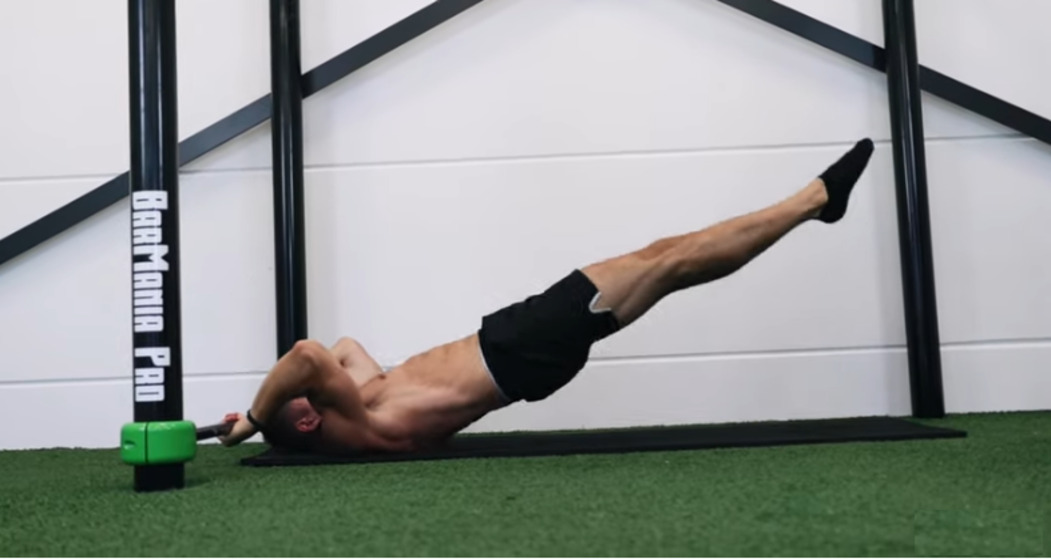
Ever wonder how this advanced bodyweight core exercise got its name? The dragon flag became famous in the movie Rocky IV, when Sylvester Stallone used it as part of his training. The name itself traces back further, to one of Bruce Lee’s nicknames, “Little Dragon.” Bruce Lee performed this exercise regularly, and it is widely credited as one of the movements most responsible for his famously defined abdominal muscles.
The dragon flag is the perfect solution for a core routine that has become too easy. It is also an exercise that demands real respect before you attempt it. Because the movement can potentially cause injury when performed with poor form, you should only attempt it after mastering a good range of basic core exercises. This is not a beginner movement, and treating it as one is the most common path to frustration or injury.
The exercise represents a genuine test of your entire core stability — what is sometimes called pillar strength, the ability of your trunk to remain rigid while the rest of your body moves through space. There is absolutely no point in attempting dragon flags if you do not have the necessary basic strength first. You need to walk before you can run, and the structured progression covered later in this guide exists specifically to get you there safely.
Exercise Snapshot
Muscles Worked in the Dragon Flag
Primary muscles
- Rectus abdominis — controls the entire raising and lowering movement, working to prevent the lower back from arching as the body’s weight is supported almost entirely through the abdominal wall
- Stabilizer muscles of the spine — work continuously throughout the hold to maintain a flat, neutral lower back position despite the substantial leverage working against that position
- Hip flexors — highly recruited throughout, working alongside the abdominals to maintain the locked hip extension required for the straight-line body position
Secondary muscles
- Gluteus maximus, gluteus minimus, and gluteus medius — all highly recruited to maintain hip extension and overall lower body rigidity throughout the movement
- Shoulder extensors — although the dragon flag predominantly challenges the core, some degree of shoulder extensor strength is also required to hold the body off the ground via the grip on the bench
Antagonists
The muscles that would allow the hips to bend or the lower back to arch — primarily the hip flexors working in an uncontrolled fashion and the erector spinae, if allowed to dominate — are the forces that the rectus abdominis and deep stabilizers actively resist throughout the entire range of motion.
The dragon flag predominantly challenges the core, but it is genuinely a full-body strength test. Maintaining the hold requires the gluteal muscles and hip flexors to keep the legs and hips locked in extension, the shoulder extensors to anchor the body to the bench, and the rectus abdominis and spinal stabilizers to prevent the lower back from arching under the combined weight of the legs and torso. This is precisely why the exercise is described as a test of pillar strength rather than simply an abdominal exercise.
How to Do a Dragon Flag: Step-by-Step Form Guide
Starting position
- Lie horizontal, face up, on a bench or on the ground
- Hold the underside of the bench with your arms to secure your shoulders and prevent your body from rolling forward; if performing this exercise on the floor, hold a vertical pole or low horizontal bar instead
- Maintain a firm grip throughout
Execution
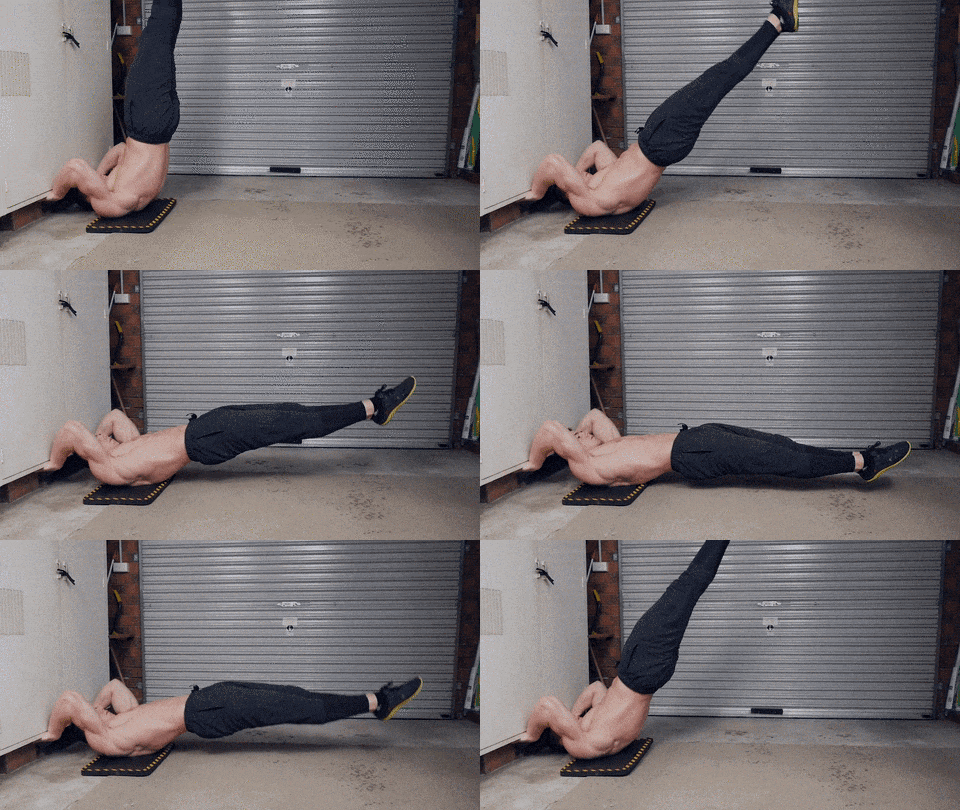
- Start by contracting your torso and driving your legs up, similar to the initiation of a reverse crunch or incline reverse crunch — the key difference is that here, your body must stay entirely stiff from shoulders to toes, avoiding any bend at the hips
- Pull the rest of your body — legs, hips, and lower back — up into the air until it is almost vertical, with only your hands and shoulder blades remaining on the bench
- Create a strong, straight line from the shoulder joint to the ankle joint
- From the top position, lower yourself down without allowing any part of your body to touch the ground except your upper back and shoulders
- Keep your knees and hips locked in the extended position throughout, performing the entire movement using the abdominals rather than the hip flexors as the primary driver
The key coaching cue: Maintain a posterior pelvic tilt to keep the lower back flat throughout the movement. This single technical detail is what separates a dragon flag from a movement that merely resembles one. If you notice your back arching, reduce the difficulty and build capacity before progressing — this is not a sign of failure; it is the correct response to an honest signal that the current variation exceeds your present strength.
3 Common Dragon Flag Mistakes (And How to Fix Them)
1. Hinging at the hips during the movement
Bending at the hips as you come back up takes the tension off the abs entirely, converting what should be a rigid, abdominally controlled movement into something closer to a leg raise, with the torso bending passively. The hips and knees must stay locked in extension throughout — any hinging defeats the purpose of the exercise.
2. Arching the back during the movement
This is a common compensation for a lack of anterior core strength, and it typically appears when someone rushes ahead to a difficulty level they are not yet ready for. The goal of this exercise is to keep the body completely straight without arching the lower back or bending the legs. Maintaining a posterior pelvic tilt throughout is the technical solution; regressing to an easier variation is the practical one when the arch cannot be controlled.
3. Gripping an unstable object
It is crucial to grip a stable, fixed object overhead. Using a dumbbell, barbell, or kettlebell as your anchor point is not a good idea — these objects can shift, roll, or fail to provide the secure base the exercise demands. Grip the underside of a sturdy bench, a fixed vertical pole, or a securely mounted low horizontal bar instead.
Benefits of the Dragon Flag
An unmatched test of anterior core strength
The dragon flag represents one of the most demanding bodyweight tests of pillar strength and core stability available, providing a training stimulus that few other exercises can match once basic core exercises no longer provide adequate challenge.
Trains the abs with intensity similar to the front lever, with less shoulder demand
The full dragon flag allows you to train your abs with similar intensity as the front lever — a notoriously demanding gymnastic strength skill — but with considerably less demand placed on the shoulders, making it a more accessible path to that level of core intensity for trainees without extensive gymnastic shoulder training.
A built-in solution for plateaued core training
For trainees whose core routine has become too easy, the dragon flag offers a clear, structured way to continue progressing without requiring any equipment beyond a bench or a fixed bar.
Develops genuine full-body rigidity
Beyond the abdominals, this exercise demands coordinated strength in the glutes, hip flexors, and shoulder extensors to maintain a single, rigid line, training the kind of total-body tension that is directly relevant to many advanced calisthenics and gymnastic movements.
Who Should Use This Exercise
- Advanced trainees and athletes who have already mastered foundational core exercises and need a more demanding progression
- Calisthenics practitioners building toward skills like the front lever, for which the dragon flag provides directly relevant strength
- Anyone whose current core routine has stopped providing adequate challenge
Who Should Be Cautious
- Anyone who has not mastered foundational core exercises — this exercise can potentially cause injury when performed with poor form; only advanced exercisers and athletes are genuine candidates for the full version
- People with lower back issues — the substantial demand on the spinal stabilizers to prevent arching makes this an inappropriate exercise for anyone with active lower back pain until cleared by a physiotherapist
- People with shoulder issues — while the core is the predominant demand, real shoulder extensor strength is required to anchor the body throughout the movement
How to Make It Easier or Harder
Easier
Before attempting any version of the dragon flag, develop foundational anterior core strength with these recommended exercises: basic forearm plank, ab wheel rollout, hollow body hold, and the reverse crunch. Once these movements are genuinely mastered, progress through the following variations in order:
- Tuck dragon flag (front lever position) — the closer your weight is distributed to your shoulders, the easier the exercise becomes; keep your knees and hips flexed while maintaining a straight back, performing the exercise through the full range of motion. The knees can stay closer to the chest for an easier version or further away for more difficulty. At first, your lower back will round, but aim to straighten it into a proper hollow body position as your strength progresses
- Single leg extended dragon flag — only one hip is flexed, making this slightly more challenging than the tuck version. With single-leg dragon flags, you should already be able to keep the lower back straight and the abs tight. If you cannot, move back to the tuck dragon flag until that control is established
- Straddle dragon flag — the wider you open your legs, the easier the exercise becomes. Try to bring your legs closer together with each session; slightly closing the space over time is the best way to bridge the gap from the straddle position to the full dragon flag
Harder
- Full dragon flag — performing the exercise with a straight lower back and both legs fully extended is the ultimate target of the entire progression
- Decline bench — using a decline bench increases the difficulty of the full dragon flag further
- Ankle weights on a flat bench — adding ankle weights while performing the exercise on a flat exercise bench increases the resistance throughout the movement
- Ankle weights on a decline bench — combining ankle weights with a decline bench set between 30 and 45 degrees represents one of the most challenging variations of this already advanced exercise
Dragon Flag vs. Hollow Body Hold
The hollow body hold is one of the foundational exercises recommended before attempting the dragon flag, and the two share a closely related body position, making this comparison particularly instructive for understanding the progression between them.
| Dragon Flag | Hollow Body Hold | |
|---|---|---|
| Movement type | Dynamic — raising and lowering | Static — isometric hold |
| Body position | Pivoting at the shoulders, body nearly vertical at the top | Lying on the back, slight curve, limbs extended |
| Equipment | Bench or fixed bar/pole | None |
| Range of motion | Full — from horizontal to near-vertical | None — held in one position |
| Difficulty | Advanced | Beginner – Intermediate |
| Role in progression | Advanced goal movement | Foundational prerequisite |
The practical takeaway: The hollow body hold trains the same fundamental posterior pelvic tilt and rigid-body principle that the dragon flag demands, but as a static hold rather than a dynamic movement through a large range of motion. Mastering the hollow-body hold first teaches body awareness and a core-bracing pattern that the dragon flag then applies dynamically. I have trainees build a strong, controlled hollow-body hold — lower back flat against the floor, no arching — before introducing any dragon-flag progression, since the static version makes the necessary technique far easier to learn and self-correct.
Exercise Variations
Tuck Dragon Flag (Front Lever Position)
The closer your weight is distributed to your shoulders, the easier this exercise becomes. Keep your knees and hips flexed while maintaining a straight back, performing the movement through the full range. The knees can be brought closer to the chest for an easier variation or positioned further away for additional difficulty. Expect your lower back to round at first — work toward straightening it into a proper hollow body position as your strength and control improve over time.
Single Leg Extended Dragon Flag
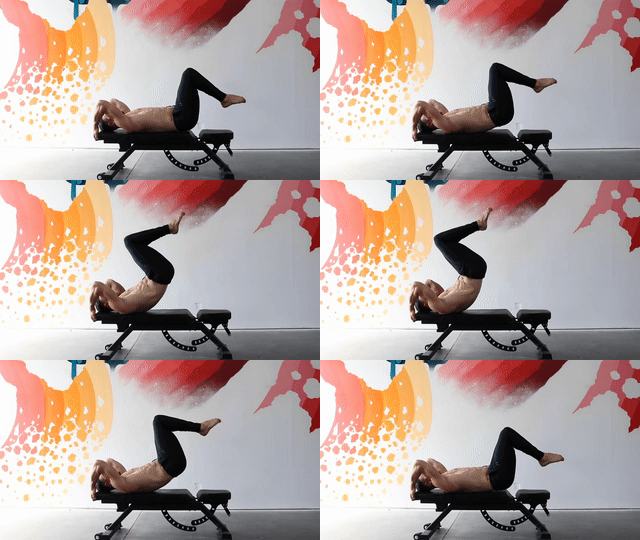
With only one hip flexed rather than both, this variation is slightly more challenging than the tuck dragon flag. You should already be able to maintain a straight lower back and tight abs in this version. If you cannot, that is a clear signal to return to the tuck dragon flag and continue building strength there before attempting this progression again.
Straddle Dragon Flag
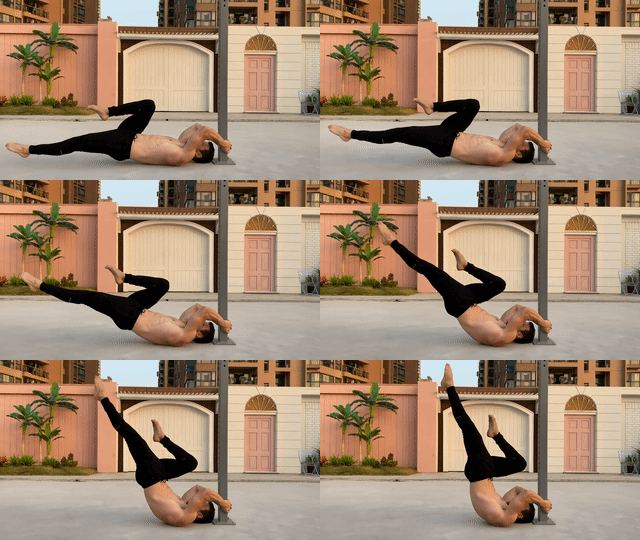
Opening the legs wider makes this exercise easier; bringing them closer together increases the difficulty. The recommended approach is to gradually close the gap between your legs across sessions, using the straddle position as a bridge between the more accessible variations and the full dragon flag.
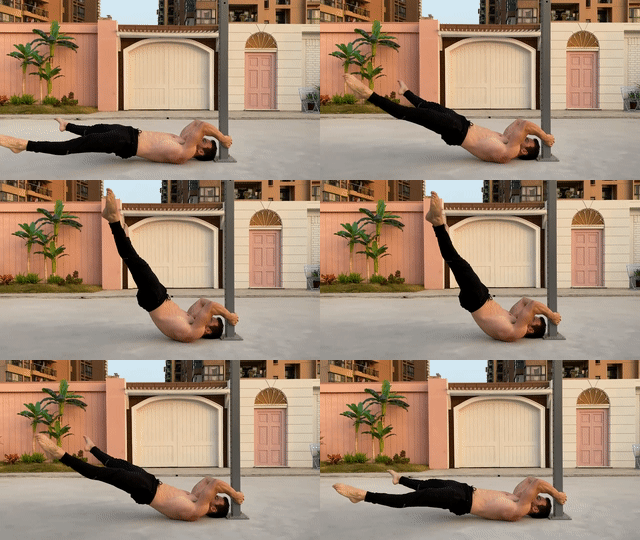
Full Dragon Flag
The ultimate goal of the entire progression is to perform the exercise with a straight lower back and both legs fully extended throughout the complete range of motion.
Replacement Exercises (Alternatives)
Finding a replacement that is genuinely more challenging than the dragon flag is difficult. These exercises target similar core stability and anti-extension function at a comparable or slightly lower difficulty level:
- Hollow Body Hold Position
- Ab Wheel Rollout
- Hanging Toes to Bar
- Hanging Windshield Wiper
- Plank With Opposite Arm and Leg Lift
- Basic Forearm Plank
- The Full Plank (Straight Arm Plank)
- Renegade Row
- Swiss-Ball Pike
How To Incorporate the Dragon Flag Into Your Workouts
- As the centerpiece of an advanced core session — given its difficulty, program this exercise early in a core session when the abs and hip flexors are completely fresh
- Only after foundational core strength is established — confirm genuine mastery of the forearm plank, ab wheel rollout, hollow body hold, and reverse crunch before introducing any dragon flag progression
- Rep range: 3–6 controlled reps at whatever progression level matches your current strength, prioritizing strict form over rep count at every stage
- Sets: 3 working sets
- Frequency: 2 times per week, given the substantial demand this exercise places on the entire anterior core and hip flexors
- Progression trigger: When 3 sets of 6 controlled reps at your current variation are performed with a flat lower back, locked hip and knee extension, and no arching becomes consistently achievable, progress to the next step in the tuck, single-leg, straddle, full dragon flag sequence
Conclusion
The dragon flag has earned its reputation and its connection to Bruce Lee’s famously defined core for good reason. This is one of the most difficult yet rewarding bodyweight core exercises available, and respecting the progression it demands is not optional caution — it is the entire point of how this exercise is meant to be trained.
Build your foundation first: the plank, the ab wheel rollout, the hollow body hold, the reverse crunch. Progress through the tuck, the single leg, and the straddle variations in order. Maintain that posterior pelvic tilt at every single stage. When you finally achieve a full dragon flag with a flat back and fully extended legs, you will have built a level of core strength that very few trainees ever reach — and you will have earned every bit of it.
For the complete progression that gets you here and beyond, see our guide to the best core exercises. You may also want our guides to upper ab, lower ab, and oblique exercises.
Frequently Asked Questions
How long does it typically take to progress from the tuck variation to the full dragon flag?
This varies considerably based on starting strength and training consistency, but a realistic timeline for most trainees working through the tuck, single leg, and straddle progressions is several months to a year or more of consistent practice. Some individuals with strong existing core strength and good body awareness may progress faster, while others may need considerably longer at each stage. Rushing this timeline is one of the most common causes of the back-arching compensation the exercise is known for.
Can the dragon flag be performed without a bench, using only the floor?
Yes, the exercise can be performed lying on the floor while gripping a fixed vertical pole or a low horizontal bar instead of holding the underside of a bench. The fundamental movement pattern and muscle recruitment remain the same; what matters most is that the overhead anchor point is genuinely stable and fixed, regardless of whether you are using a bench or an alternative grip point on the floor.
Is the dragon flag safe for someone with a history of lower back injury?
This exercise places substantial demand on the spinal stabilizers to prevent arching, which can be a genuine concern for anyone with a history of lower back injury, even if currently pain-free. Clearance from a physiotherapist familiar with your specific injury history is strongly recommended before attempting any dragon flag progression, including the easier tuck variation, given how much the lower back is challenged to remain flat under load throughout this movement.
Why can I do the tuck dragon flag but immediately lose form when I try the single leg version?
This is a normal and expected experience, since extending even one leg shifts a meaningful amount of additional weight further from your shoulders, increasing the lever arm and the demand on your abdominals considerably. If your back arches or your hips begin to bend as soon as you extend one leg, this is the exercise correctly signaling that you need more time and repetitions at the tuck level before that additional leverage can be controlled. Stay at the tuck variation longer rather than forcing the transition.
Does the dragon flag work the obliques as much as the rectus abdominis?
The rectus abdominis and the deep spinal stabilizers are the primary muscles challenged in a standard, symmetrical dragon flag, since the movement occurs entirely in the sagittal plane with both sides of the body moving together. The obliques play a secondary stabilizing role to prevent any unwanted rotation during the hold, but this exercise is not primarily an oblique-focused movement in the way that rotational exercises like the Russian twist or cable woodchopper are.
What should I do if I feel sharp pain rather than muscular fatigue during this exercise?
Sharp or pinching pain, as opposed to the expected burning sensation of muscular fatigue, is a signal to stop the exercise immediately rather than push through it. This kind of pain, particularly in the lower back, can indicate that the spine is bearing load it is not equipped to handle at your current strength level, often due to an arched lower back compensating for insufficient abdominal strength. Regress to an easier variation and consult a physiotherapist if the pain persists or recurs.
