
The clavicle, commonly known as the collarbone, plays a crucial role in our body’s anatomy, with functions beyond mere structural support. But what exactly is the clavicle? Deriving its name from the Latin word “clavicula,” meaning “little key,” this bone is a vital component of our skeletal system. In this article, we’ll discuss the anatomical details of the clavicle, including its location, appearance, and interactions with other bones.
Understanding the anatomy and function of significant bones, like the clavicle, is essential for achieving optimal results in fitness and bodybuilding. Knowing how your body works can help you tailor your training to be effective and injury-free.
Additionally, in this bodybuilder’s guide to the clavicle, we’ll address common injuries and conditions affecting the clavicle, especially in weightlifting, along with tips for keeping your clavicle healthy. By the end of this article, you’ll appreciate the importance of maintaining a healthy clavicle for your bodybuilding journey.
What is the Clavicle?
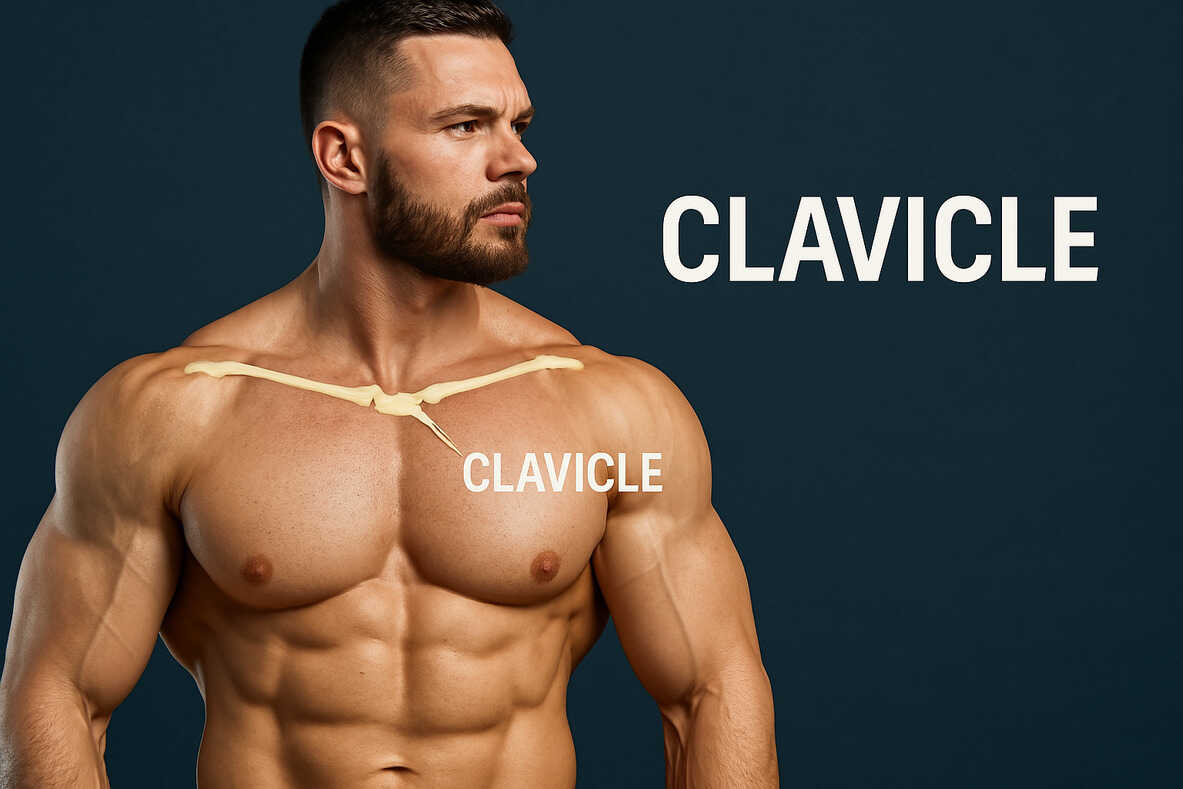
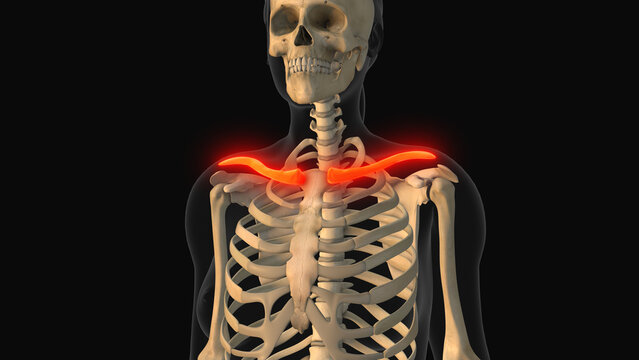
The clavicle, often called the collarbone, is a long, S-shaped bone. It’s located between your shoulder and chest. Picture a gentle curve stretching horizontally across the top of your ribcage. This bone connects your arm to your body. It’s about 6 inches (15 cm) long and stabilizes your shoulder. Its shape resembles a small key, so ‘clavicle’ comes from the Latin word for ‘little key’.
Brief Anatomy of the Clavicle
A. Location of the Clavicle
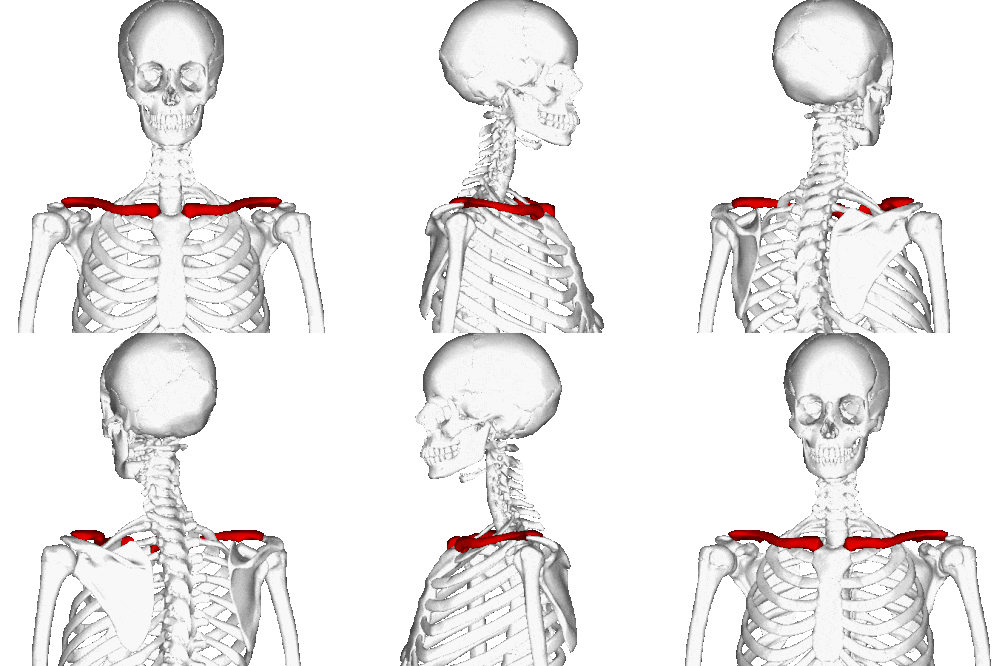
The clavicle sits at the top of your chest and runs from the sternum in the center to your shoulder. There is one clavicle on each side of your body. They rest horizontally, connecting your chest to your arms.
B. Appearance (Shape) of the Clavicle (Collar Bone)
The clavicle is naturally curved like an “S”. It has a gentle arc, resembling a small key. One end is round, fitting towards the sternum. The other end is flatter, connecting with the shoulder. These curves help with movement and strength.
C. Size of the Clavicle
When we talk about size, the clavicle is about 6 inches long, which is roughly 15 centimeters. It’s not the same for everyone, though. In men, it tends to be longer and larger than in women. This difference becomes clear between 18 and 25 years of age. So, the size can vary depending on gender and age.
D. Muscles Attached to the Clavicle
The clavicle is an essential anchor for muscles that help your shoulder and upper arm move and stay stable. These muscles are key players in supporting and moving your upper body. This makes the clavicle a key piece in how your shoulder works.
Key muscles originating from the clavicle include:
- Pectoralis Major: This large chest muscle has fibers that originate from the clavicle’s medial two-thirds, assisting in the flexion, adduction, and internal rotation of the humerus.
- Deltoid (Anterior Fibers): Originating from the lateral third of the clavicle, this muscle helps lift your arm forward (flexion) and contributes to shoulder abduction.
- Sternocleidomastoid: Attaching on the medial third of the clavicle, it plays a key role in rotating and flexing the head.
Muscles inserting into the clavicle include:
- Trapezius (Upper Fibers): This muscle inserts onto the lateral third of the clavicle and assists in moving, rotating, and stabilizing the scapula and shoulder.
- Subclavius: This is a small muscle located under the clavicle. It originates from the first rib and inserts into the clavicle’s undersurface, stabilizing it and protecting the vessels and nerves beneath.
E. Blood Supply to the Clavicle
The main artery supplying blood to the clavicle is the suprascapular artery. It travels along the shoulder and offers nutrients to the bone. This blood supply is essential for healing and maintaining the health of your clavicle.
F. Innervation
The clavicle receives signals from several nerves. These include the subclavian, lateral pectoral, and supraclavicular nerves. They help you feel sensations and pain in your shoulder area. They also assist in protecting vital structures beneath the clavicle.
G. Bony Landmarks and Articulations
The clavicle features several important bony landmarks, especially on its underside. These include the sternal facet, which connects to the sternum, and the costal tuberosity, a rough area that helps attach ligaments. There’s also the conoid tubercle, a small bump that provides an anchoring point for the conoid ligament, and the trapezoid line, which supports the trapezoid ligament.
When it comes to articulations, the clavicle forms two significant joints. The Acromioclavicular joint is where the clavicle meets the shoulder blade, allowing a range of arm movements. The Sternoclavicular joint connects the clavicle to the sternum at the base of the neck, which is crucial for shoulder movement. These joints work together like hinges, allowing you to move your shoulders and arms in many directions.
Functions of the Clavicle
1. Provides Structural Support
The clavicle acts as a support beam for your shoulder, preventing the inward collapse of this joint. Its presence ensures the shoulder sits correctly, allowing it to bear weight more efficiently.
2. Enhances Shoulder Mechanics
This bone is integral to proper shoulder motion, enabling a wide range of movements. It facilitates the smooth functioning of the entire upper body by ensuring optimal positioning and movement of the shoulder.
3. Transfers of Forces
The clavicle disperses forces exerted on the arms and shoulders across the skeleton. It acts as a conduit, channeling these forces to minimize injury risk and maintain stability.
4. Facilitates Arm Movement
The clavicle increases the arm’s range of motion by connecting the shoulder to the axial skeleton. This allows for greater flexibility and the ability to perform complex movements.
5. Protects Underlying Structures
Embedded in an intricate network, the clavicle also serves as a protective barrier for vital nerves and blood vessels. Its positioning guards these crucial elements from external shocks.
Interactions with other bones
The clavicle connects the shoulder blade (scapula) and the breastbone (sternum). Imagine it as a bridge that links your arm and shoulder to your main skeleton. This connection enables a wide range of motions and helps maintain the position of the shoulder. At one end, the clavicle connects to the sternum at the sternoclavicular joint. At the other end, it links to the scapula at the acromioclavicular joint. These interactions allow you to lift, push, and pull objects effectively, providing stability and flexibility.
Introduction to Clavicle Health
The clavicle is crucial for the body’s movement and support, but it is also prone to certain injuries and conditions. Understanding these can help you take preventive measures and seek timely treatment. Let’s delve into the most common issues affecting the clavicle.
I. Common Injuries and Conditions Affecting the Clavicle
Fractures
Clavicle fractures are one of the most common bone injuries. These usually occur due to falls or direct impacts during accidents or sports. The break typically happens in the middle of the bone. Did you know? Over 80% of clavicle fractures occur in the middle third of the bone.”
Osteolysis
Osteolysis is a condition where the end of the clavicle begins to deteriorate or erode. Repeated stress or trauma, common in weightlifting, often causes this condition.
Dislocations
The acromioclavicular joint, where the clavicle meets the shoulder blade, may become dislocated. This injury often results from a fall or a strong impact to the shoulder.
- Acromioclavicular (AC) joint separation: The ligaments connecting the clavicle to the scapula tear, leading to dislocation.
- Sternoclavicular joint dislocation: This less common injury involves the clavicle moving out of place near the sternum.
Arthritis
Arthritis can affect the joints of the clavicle, leading to pain and stiffness. Over time, this can result in a limited range of motion.
Congenital Clavicle Conditions
Some individuals are born with clavicle abnormalities, such as a shorter or strangely shaped bone. These conditions can affect movement and comfort.
II. Common Treatments for Clavicle Injuries
Non-Surgical Treatment
Many clavicle fractures can heal without surgery. Your doctor might recommend wearing a sling to keep your arm and shoulder steady. Resting the affected area is crucial; gradually returning to normal activities helps the bone heal.
Surgical Intervention
If the fracture is severe or misaligned, surgery might be necessary. This involves a procedure called open reduction internal fixation (ORIF), where the bone is put back in place and metal plates or screws are used to hold it together.
Physical Therapy
Physical therapy is often recommended after the initial treatment. This helps strengthen muscles, improve movement, and reduce pain. A physical therapist can guide you through exercises tailored to your recovery.
Medication
Pain relief is an essential part of treatment. Over-the-counter medications like ibuprofen can help manage discomfort and swelling. Follow your doctor’s advice on what to take and how often.
Trainer’s Perspective
As a fitness coach who’s spent over a decade in the gym environment, I’ve seen firsthand how overlooked the clavicle is—until something goes wrong. Most lifters are so focused on chest size or shoulder definition that they forget the clavicle plays a central role in both. I’ve worked with clients complaining about shoulder discomfort during pressing movements, only to realize that poor scapular control and clavicle instability were the hidden culprits.
In bodybuilding, where symmetry and posture are key, the clavicle determines more than just skeletal alignment—it influences how the upper body looks from the front and side. I’ve also seen how improper bench press technique can lead to chronic stress around the AC joint or even early-stage osteolysis, especially in advanced lifters who neglect warm-up sets and mobility drills.
I always tell my athletes that if they want to train like pros, they need to understand their bodies like pros. Knowing where their clavicle sits, what it connects to, and how it moves is not “just anatomy”—it’s a blueprint for safe and effective performance.
Exercises That Load the Clavicle the Most
While not a muscle, the clavicle bears a significant load during many upper-body movements, especially those involving the shoulder girdle. In bodybuilding and strength training, certain exercises directly stress the clavicle through muscular tension and joint positioning. Understanding which exercises load the clavicle the most can help you train smarter and reduce injury risk.
Top Exercises That Load the Clavicle:
- Barbell Bench Press (Flat and Incline) – The clavicle is heavily engaged due to the anterior deltoid and pectoralis major (clavicular head) involvement. Incline presses, in particular, increase clavicular tension.
- Overhead Press (Barbell or Dumbbell) – Pressing overhead involves the deltoid and upper traps interacting with the clavicle. Improper scapular movement or lack of core stability can overstress the clavicle.
- Front Raises and Shoulder Press Machines – These target the anterior deltoids, placing indirect but consistent strain on the clavicle.
- Dips (Especially Weighted Dips) – The shoulders are placed in a deep stretch position, stressing the AC joint and clavicle if performed with poor technique or excess load.
- High Pulls and Upright Rows – These lifts engage the upper traps and deltoids, activating clavicle-supporting structures.
- Snatch and Clean Movements (Olympic Lifts): If not executed properly, the catch phase of these explosive lifts can generate high-impact forces through the clavicle.
While these exercises are staples for mass and strength, managing volume, form, and load is essential to keep the clavicle safe and strong.
Tips to Modify Exercises That Load the Clavicle
Weightlifters with proper clavicle alignment and strength have a reduced risk of shoulder injuries.
- Incline Press: Use a moderate incline (30–45°) instead of high angles to reduce excessive clavicular stress.
- Overhead Press: Perform seated presses with back support to improve alignment and reduce unnecessary load on the shoulder girdle.
- Dips: Keep the torso slightly forward and avoid dropping too deep; stop when elbows reach 90°.
- Upright Rows: Use a wide grip and limit bar path to mid-chest level to reduce AC joint compression.
- Olympic Lifts: Ensure proper mobility and technique in the catch position; avoid excessive volume if clavicle discomfort arises.
- Front Raises: Use lighter weights and control tempo to avoid jerky movements that increase strain.
Common Training Mistakes That Stress the Clavicle
Lifters often overlook the clavicle until pain or dysfunction sets in. Most clavicle-related issues in training stem from preventable mistakes that gradually wear down the shoulder complex. By avoiding these errors, you can reduce stress on the clavicle and extend your lifting longevity.
Frequent Training Mistakes to Watch Out For:
- Excessive Volume or Load in Pressing Movements
Going too heavy, too often—especially in bench or incline pressing—can overwork the clavicular head of the pectoralis major and strain the AC joint. - Poor Scapular Control
Neglecting scapular mobility and stability drills leads to compensations in shoulder mechanics, forcing the clavicle to take on more stress than necessary. - Inadequate Warm-Up and Mobility Work
Jumping straight into heavy sets without preparing the shoulder complex increases the risk of microtrauma to the clavicle and surrounding ligaments. - Rounded Shoulders and Poor Posture During Lifting
This shifts stress toward the anterior shoulder and clavicle, especially during compound upper-body lifts. - Incorrect Dip and Overhead Press Form
Allowing the shoulders to internally rotate or the elbows to flare excessively places undue pressure on the AC joint and surrounding musculature. - Neglecting Pulling Movements
An imbalance between pressing and pulling can lead to anterior dominance, increasing stress on the clavicle and reducing shoulder joint stability.
A balanced program, good form, and attention to joint health are key in protecting the clavicle during intense training phases.
Tips for Keeping the Clavicle Healthy
Bodybuilders should prioritize proper form and technique during all exercises to prevent clavicle injuries and follow the other useful instructions below.
Strengthen Shoulder Muscles
Regular exercises strengthen the muscles around your clavicle. It helps provide better support and balance.
Practice Safe Lifting Techniques
Always lift objects using your legs, not your back. Protects your clavicle from strain and injury.
Gradually Increase the Intensity and Volume
Sudden increases in weight or repetitions can place excessive stress on the clavicle, so it’s essential to follow a progressive overload strategy that allows the body to adapt safely.
Wear Protective Gear
Use appropriate gear when playing contact sports or biking. It reduces the risk of clavicle injuries.
Manage Calcium Intake
Maintain a diet rich in calcium and vitamin D. This strengthens your bones, including the clavicle.
Stay Hydrated
Proper hydration supports overall bone health. It aids in maintaining the integrity of your clavicle.
Get Regular Check-ups
Routine medical check-ups can catch problems early. Helps you maintain clavicle health proactively.
Importance of the Clavicle in Sports & Bodybuilding
- Supports Shoulder Function: The clavicle is vital in bodybuilding because it offers robust support to the shoulder joint, allowing athletes to perform a wide range of motions safely and effectively.
- Facilitates Arm Movement: A healthy clavicle is crucial for smooth arm movement, essential in lifting weights and executing sports skills precisely.
- Enhances Balance and Posture: This bone helps maintain proper posture and balance during workout sessions, enabling better performance and reducing the risk of injury.
- Transfers Force Efficiently: The clavicle acts as a bridge, efficiently transferring the force from the arms to the torso, which is especially important during weightlifting and explosive movements.
- Protects Blood Vessels and Nerves: It safeguards vital blood vessels and nerves from potential damage during intense physical activities, ensuring continued performance and quick recovery.
- Injury Prevention: Maintaining a healthy clavicle helps prevent more serious injuries, such as fractures or dislocations, that could severely impact a bodybuilder’s training and competition routine.
Explore a clickable human skeleton and learn the position, role, and relationships of every major bone.
Explore Skeleton Tool →Conclusion: Bodybuilder’s Guide to the Clavicle
Understanding the clavicle’s role is vital, especially for weightlifters and bodybuilders. It’s important for shoulder mechanics, structural support, and protection. Focusing on clavicle health through good techniques, balanced nutrition, and regular check-ups can ensure it works well and lasts long. A healthy clavicle is key for strong and effective upper body movement.
Ever wondered how your collarbone affects your bench press or why shoulder pain creeps in after heavy lifting? Below, we tackle the most common questions lifters have about the clavicle — helping you train smarter, stay injury-free, and get the most out of your upper body workouts.
Why is the clavicle important for bodybuilders?
The clavicle, or collarbone, connects the arm to the torso, providing structural support and facilitating a wide range of shoulder movements essential for upper body exercises.
How does the clavicle contribute to upper body strength?
It serves as a critical attachment point for muscles like the deltoids and pectorals, enabling effective force transmission during pressing and lifting movements.
Can clavicle injuries affect bodybuilding performance?
Yes, injuries such as fractures or joint dislocations can impair shoulder mobility and strength, hindering performance and requiring adequate recovery time.
What exercises put stress on the clavicle?
Movements like bench presses, overhead presses, and dips can place significant stress on the clavicle, especially when performed with improper form or excessive weight.
How can bodybuilders prevent clavicle-related injuries?
Maintaining proper technique, incorporating shoulder mobility exercises, and avoiding overtraining can help prevent clavicle injuries and ensure long-term joint health.
Does clavicle length affect lifting mechanics?
Clavicle length can influence shoulder width and range of motion, potentially affecting leverage and technique during certain lifts, though individual variations are typically manageable with proper form.
Are there specific stretches to improve clavicle flexibility?
While the clavicle itself isn't flexible, stretching surrounding muscles like the chest and shoulders can enhance overall upper body mobility and reduce strain on the clavicle.
Can poor posture impact clavicle function?
Yes, slouched posture can alter clavicle positioning, leading to muscle imbalances and increased risk of injury during upper body workouts.
Is it common to experience clavicle pain after lifting?
Mild discomfort can occur due to muscle fatigue or strain, but persistent or sharp pain may indicate an underlying issue and should be evaluated by a healthcare professional.
