

Introduction
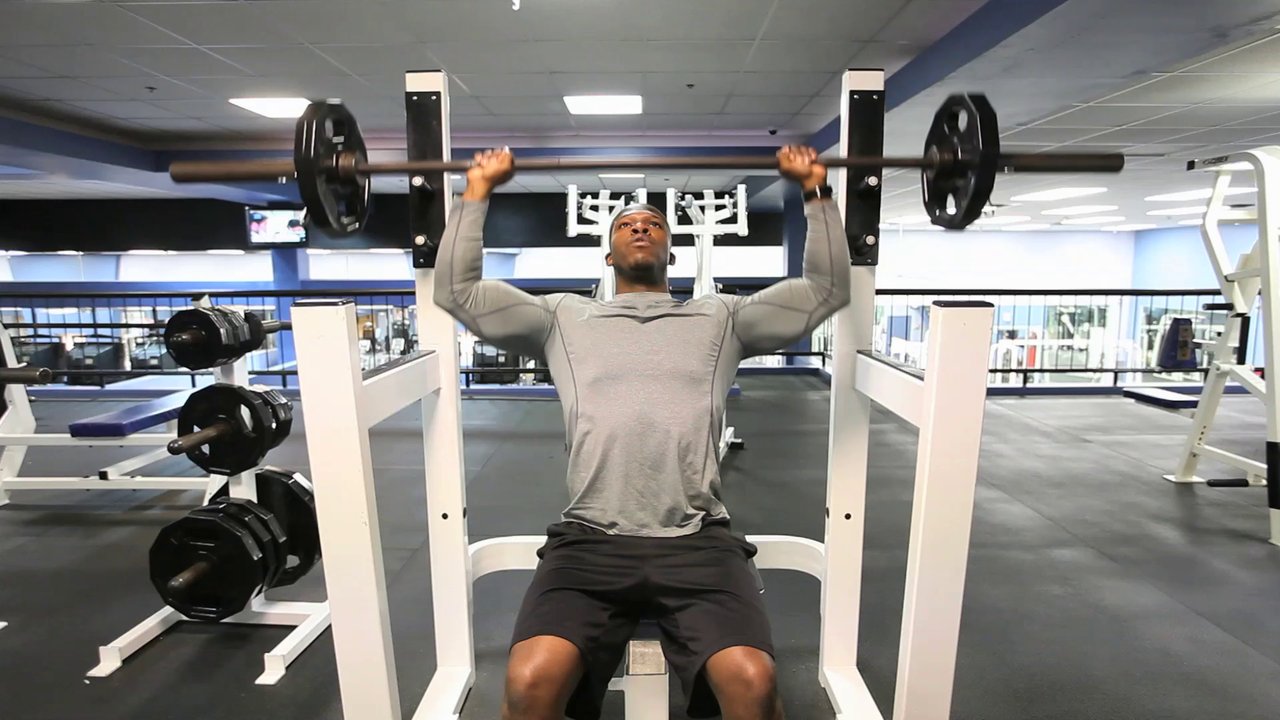
Well-developed shoulders are a key component of upper-body strength, size, and overall athletic performance. In my experience, if there’s one exercise that consistently delivers results when it comes to building powerful shoulders, it’s the barbell shoulder press, especially when performed in a seated position.
The barbell shoulder press, often referred to as the military press, is a classic compound movement that targets the anterior (front) and lateral (side) deltoids while also heavily engaging the triceps and upper stabilizers. Unlike dumbbells, the barbell allows you to handle heavier loads, making it one of the best exercises for developing pressing strength.
I often recommend the seated version to lifters who want more control and stability during the movement. By removing assistance from the lower body, the seated barbell shoulder press places greater emphasis on the shoulders, making it an excellent choice for both strength and hypertrophy.
Whether your goal is to build size, increase overhead pressing power, or develop a solid foundation of upper-body strength, this exercise remains one of the most important lifts you can include in your training program.
Other Names for the Barbell Shoulder Press
This exercise is widely recognized across different training systems and coaching styles, which is why you’ll often see it referred to by several different names. Understanding these variations can help you identify the movement regardless of how it’s labeled in different programs or resources.
- Seated barbell shoulder press
- Barbell shoulder press
- Seated barbell overhead press
- Barbell overhead press
- Seated overhead press
- Military press (commonly used, though often refers to the standing version)
- Seated military press
- Front barbell shoulder press
- Front military press
In practice, most of these names describe the same fundamental pressing movement. The key distinction is whether the exercise is performed seated or standing, as well as the equipment used.
Required Equipment
One advantage of the barbell shoulder press is that it uses simple, widely available equipment, making it accessible in almost any gym. However, because this exercise allows for heavier loading, having the right setup becomes especially important for both safety and performance.
- Barbell – allows you to lift heavier loads compared to dumbbells, making it ideal for strength development
- Weight plates – used to progressively increase resistance
- Upright bench with back support – helps maintain a stable torso and reduces excessive lower back involvement
- Rack (highly recommended) – makes it much easier and safer to unrack and re-rack the bar, especially with heavier weights
Optional (but useful):
- Weightlifting belt – provides additional core support when working with heavier loads
- Spotter – helpful for safety during heavier sets or when pushing close to failure
From my experience, the rack is one of the most underrated pieces of equipment here. Trying to lift a heavy barbell into position without it can compromise your setup before the set even begins, which directly affects both performance and safety.
How to Perform the Barbell Shoulder Press
Proper execution is what makes the seated barbell shoulder press such a powerful shoulder-building exercise. In my experience, this movement works best when the bar path is controlled, the torso stays stable, and the shoulders—not momentum—do the work.
Starting Position (Setup)
A solid setup is essential because the seated position removes lower-body support and places greater direct stress on the shoulders and triceps.
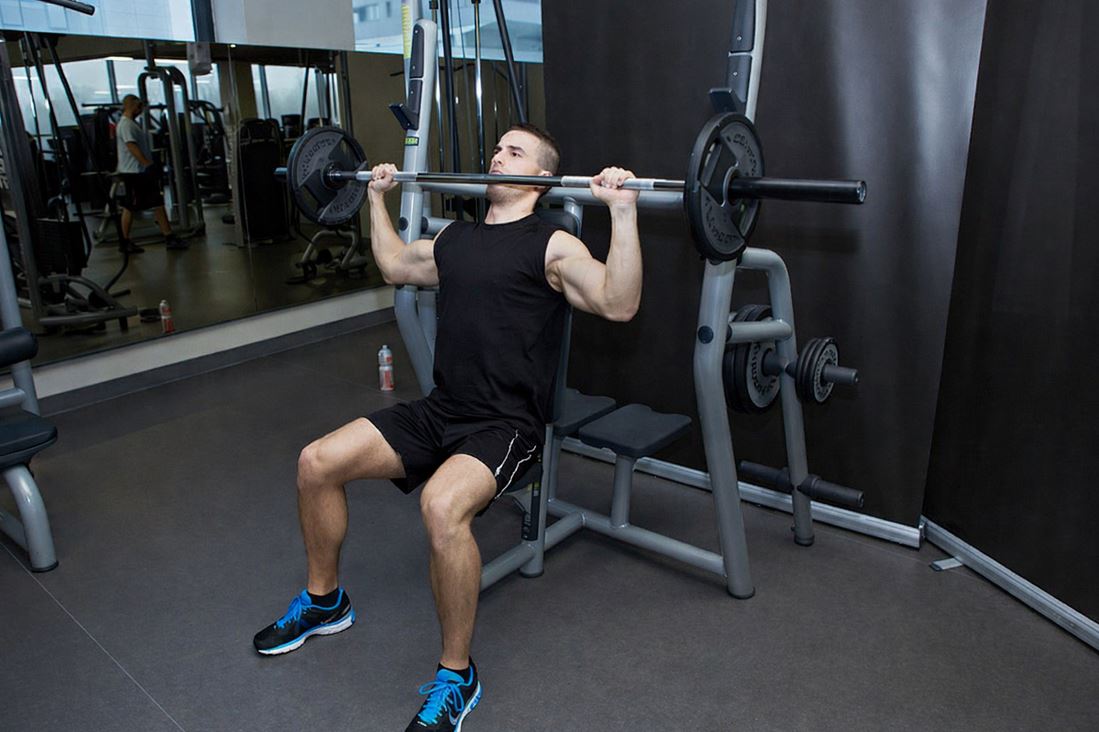
- Sit upright on a bench with your head, upper back, and glutes supported
- Place your feet flat on the floor to create a stable base
- Set the barbell in a rack at a height that allows you to unrack it safely
- Grip the bar with a pronated grip slightly wider than shoulder width
- Position the bar at about upper-chest or collarbone level
- Keep your elbows slightly in front of the bar, not flared excessively out to the sides
- Brace your core and maintain a neutral spine, allowing only a very slight natural arch in the lower back
Movement (Execution)
The goal is to press the barbell overhead in a strong, controlled path while keeping your shoulders under tension and your torso stable.
- Press the bar upward in a near-straight vertical path
- As the bar passes your face, move your head slightly back if needed to keep the path efficient
- Continue pressing until the bar is directly over your shoulders
- Stop just short of aggressively locking out the elbows at the top
- Lower the bar slowly and under control back to the upper chest or collarbone area
- Keep your wrists stacked over your elbows throughout the movement
- Maintain a steady torso position without excessive leaning or bouncing
From a coaching standpoint, one of the biggest mistakes I see is lifters turning this into a sloppy power movement. If the bar path is inconsistent or your torso starts shifting all over the bench, the weight is too heavy and the shoulders are no longer doing the job properly.
Video Demonstration & Proper Form Breakdown
Watching a proper demonstration is one of the best ways to understand how the barbell shoulder press should look in real time, especially regarding bar path, head positioning, and maintaining a stable torso throughout the lift.
Muscles Worked in the Barbell Shoulder Press
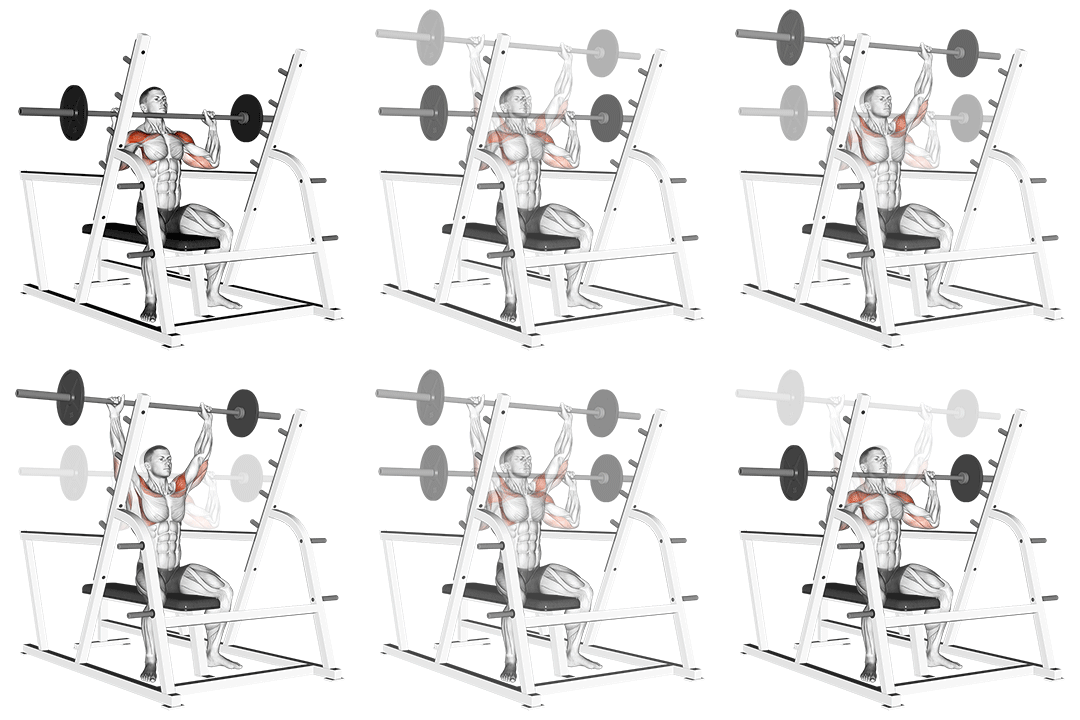
Understanding which muscles are involved in the barbell shoulder press will help you better control the movement and direct tension where it should be. In my experience, this is not just a shoulder exercise—it’s a coordinated upper-body lift involving multiple muscle groups.
- Primary muscles: anterior deltoids (front delts), lateral deltoids (side delts)
- Secondary muscles: triceps brachii, upper trapezius, serratus anterior
- Stabilizing muscles: core (abdominals, obliques), rotator cuff muscles, upper back stabilizers
- Antagonist muscles: latissimus dorsi, biceps brachii, posterior deltoids
Biomechanics of the Barbell Shoulder Press (Seated)
Understanding the biomechanics of the barbell shoulder press is essential if you want to press heavier weights safely while still keeping the emphasis on the shoulders. In my experience, this exercise is all about efficient force transfer through a stable torso and a consistent bar path.
At its core, the movement combines shoulder flexion/abduction with elbow extension, with the barbell moving in a mostly vertical path over the center of mass. Because both arms are fixed to the same bar, the movement is more stable than dumbbells, allowing for greater loading but less freedom of motion.
Key Biomechanical Actions
- Shoulder joint movement – primarily flexion with a slight abduction component, depending on elbow positioning
- Elbow joint movement – extension driven by the triceps
- Scapular movement – upward rotation and stabilization of the shoulder blades
- Core stabilization – prevents excessive spinal extension under load
Bar Path & Efficiency
One of the most important aspects of this lift is the bar path. A correct path ensures efficient force production and reduces unnecessary strain on the joints.
- The bar should travel in a near-vertical line over the shoulders
- The head moves slightly back to allow the bar to pass, then returns forward under the bar
- The bar finishes directly over the mid-foot/shoulder line, not in front of the body
Load Distribution
Because the barbell connects both arms, the body can handle heavier loads compared to dumbbells. However, this also means:
- Less ability to compensate for left-right imbalances
- Greater reliance on joint positioning and technique
- More stress on the shoulder and lower back if the form breaks down
From my coaching perspective, the biggest advantage of the barbell shoulder press is its load potential—but that only becomes a real benefit if your technique and positioning are dialed in. Otherwise, you’re just putting more stress on your joints instead of your muscles.
Technique Optimization Tips
Small technical details make a huge difference in how effective and safe the barbell shoulder press is. In my experience, most lifters don’t need more weight—they need better positioning, control, and bar path awareness.
- Keep the bar close to your face throughout the lift
A closer bar path improves leverage and reduces unnecessary stress on the shoulders. - Use a slight backward head movement, not a full lean
Move your head just enough to let the bar pass, then bring it back under the bar. - Keep your elbows slightly in front of the bar
This places your shoulders in a stronger and safer pressing position. - Maintain a stable torso with minimal arch
A slight natural arch is fine, but excessive leaning turns the movement into an incline press. - Control the eccentric (lowering phase)
Lower the bar slowly to maintain tension and reduce joint stress. - Grip the bar firmly and evenly
A strong, symmetrical grip improves stability and force production. - Stack your wrists over your elbows
This ensures efficient force transfer and reduces wrist strain. - Avoid bouncing the bar off your chest
The movement should be smooth and controlled, not explosive from the bottom.
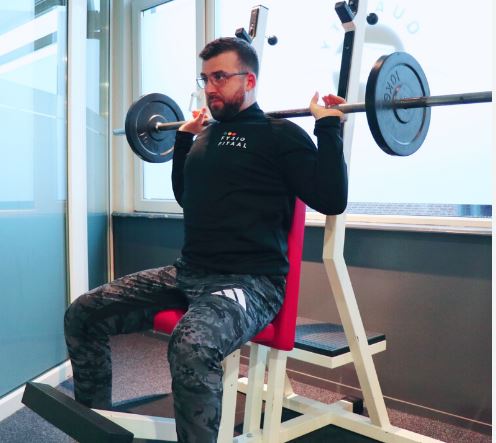
A common question I get is whether pressing the bar behind the head is more dangerous than pressing it in front of the body. In most cases, yes—it can be more stressful on the shoulder joint because it requires a greater combination of shoulder external rotation, abduction, and thoracic mobility. If a lifter does not have excellent mobility and control, the behind-the-neck version often places the shoulders in a more vulnerable position and can irritate the joints over time.
That does not automatically mean the exercise is “bad” for everyone, but in my coaching experience, the front barbell shoulder press is the safer and more practical choice for the vast majority of lifters. If the behind-the-neck version feels awkward, pinchy, or unstable, I would not force it—there are simply better options for building strong shoulders with less risk.
Technical Emphasis & Targeting Adjustments
Small adjustments in technique can significantly change how the barbell shoulder press loads the shoulders. In my experience, these tweaks are especially useful if you want to emphasize specific parts of the deltoids or make the movement more joint-friendly.
- Elbows slightly forward (scapular plane). Emphasizes the anterior deltoids and creates a safer, stronger pressing position.
- Elbows more flared out. Increases lateral deltoid involvement, increases shoulder stress, and requires better mobility.
- Narrower grip. Shifts more emphasis to the triceps and anterior delts while increasing the range of motion.
- Wider grip. Reduces range of motion slightly and may increase lateral delt contribution.
- Lowering to the upper chest vs the chin level. A deeper range (to the upper chest) increases the potential for stretch and hypertrophy if performed under control.
- Partial reps (top-half). Keeps constant tension on the deltoids and can be useful for hypertrophy-focused sets.
- Controlled tempo (slow eccentric). Improves muscle activation and reduces joint stress.
- Pause at the bottom position. Eliminates momentum and increases starting strength and stability.
Common Mistakes for the Barbell Shoulder Press (Seated)
Even though the barbell shoulder press is a fundamental exercise, I constantly see lifters making the same mistakes that limit shoulder activation and increase injury risk. Most of these issues come down to poor control, incorrect bar path, or trying to lift too heavy too soon.
- Using excessive weight. This leads to poor bar control, unstable pressing, and shifts tension away from the deltoids.
- Leaning too far back. Turning the movement into an incline chest press reduces shoulder involvement and increases lower back stress.
- Letting the bar drift forward. A forward bar path places unnecessary strain on the shoulders and reduces pressing efficiency.
- Flaring the elbows excessively. This puts the shoulders in a weaker and more vulnerable position.
- Bouncing the bar off the chest. Reduces control and increases the risk of injury.
- Dropping the bar too quickly. A fast eccentric phase reduces time under tension and increases joint stress.
- Locking out the elbows aggressively. Snapping into full lockout shifts tension away from the deltoids and stresses the joints.
- Poor wrist positioning. Bent wrists reduce force transfer and can lead to discomfort over time.
- Not bracing the core. A loose torso leads to instability and excessive spinal extension.
From what I’ve seen over the years, correcting just a few of these mistakes can dramatically improve both performance and shoulder activation without adding any extra weight to the bar.
Barbell Shoulder Press (Seated) Pros and Cons
Like most compound lifts, the barbell shoulder press offers powerful benefits for building strength and size, but it also comes with a few limitations. In my experience, understanding both sides helps you decide how to use this exercise effectively in your program.
Top Benefits
- High loading potential. The barbell allows you to lift heavier weights, making it excellent for building pressing strength.
- Strong compound stimulus. Engages multiple muscle groups, including shoulders, triceps, and stabilizers.
- Efficient for progressive overload. Adding weight to the bar is simple and measurable over time.
- Stable movement pattern. The fixed bar path makes it easier to control compared to dumbbells.
- Time-efficient exercise. Allows you to train both arms simultaneously with heavier loads.
Potential Downsides
- Less freedom of movement. The fixed bar path may not suit every shoulder structure.
- Higher joint stress for some lifters. It can place more strain on the shoulders and lower back if the technique is poor.
- Can mask strength imbalances. The stronger side can compensate for the weaker one.
- Requires proper setup. A rack is often necessary for safe execution, especially with heavier weights.
- Less mind-muscle connection for some. Some lifters find it harder to “feel” the delts compared to dumbbells.
From a coaching perspective, the barbell shoulder press is one of the best tools for building overhead pressing strength, but I almost always balance it with dumbbell work to improve joint comfort and muscle symmetry.
Barbell Shoulder Press Variations
Introducing variations of the barbell shoulder press is a great way to target the shoulders from different angles, manage joint stress, and add variety to your training. In my experience, even small changes in setup or execution can significantly change how the movement feels and which muscles are emphasized.
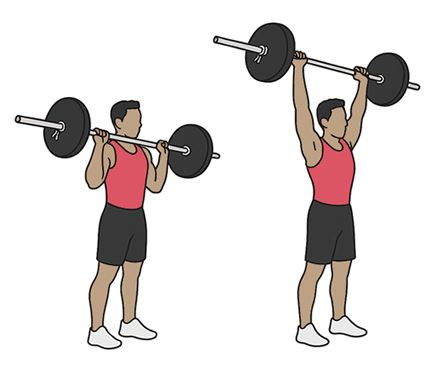
#1 Standing Barbell Shoulder Press
This variation is performed standing and requires full-body stability. The core and lower body help maintain balance, making the body more functional and suitable for overall strength development.
#2 Behind-the-Neck Barbell Press
In this variation, the bar is lowered behind the head rather than in front. It can increase lateral deltoid involvement, but it also requires excellent shoulder mobility and should be performed cautiously.
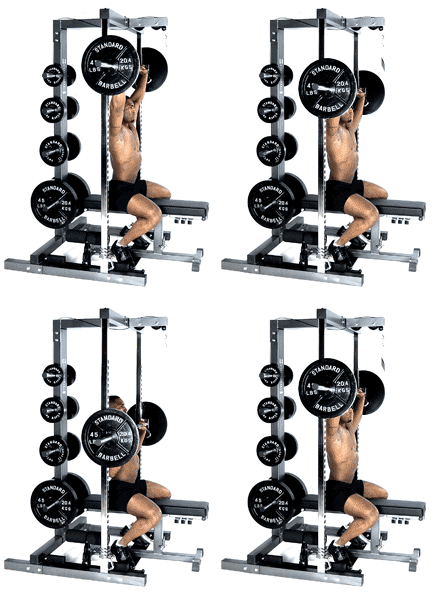
#3 Smith Machine Shoulder Press
Using a Smith machine provides a fixed bar path, which increases stability and can be useful for beginners or when training close to failure. However, it reduces the freedom of natural movement.
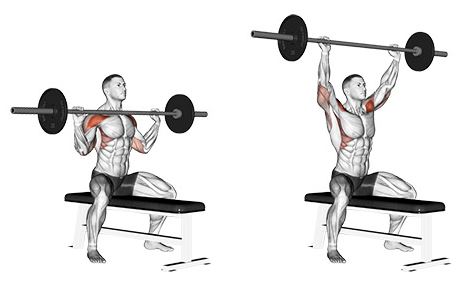
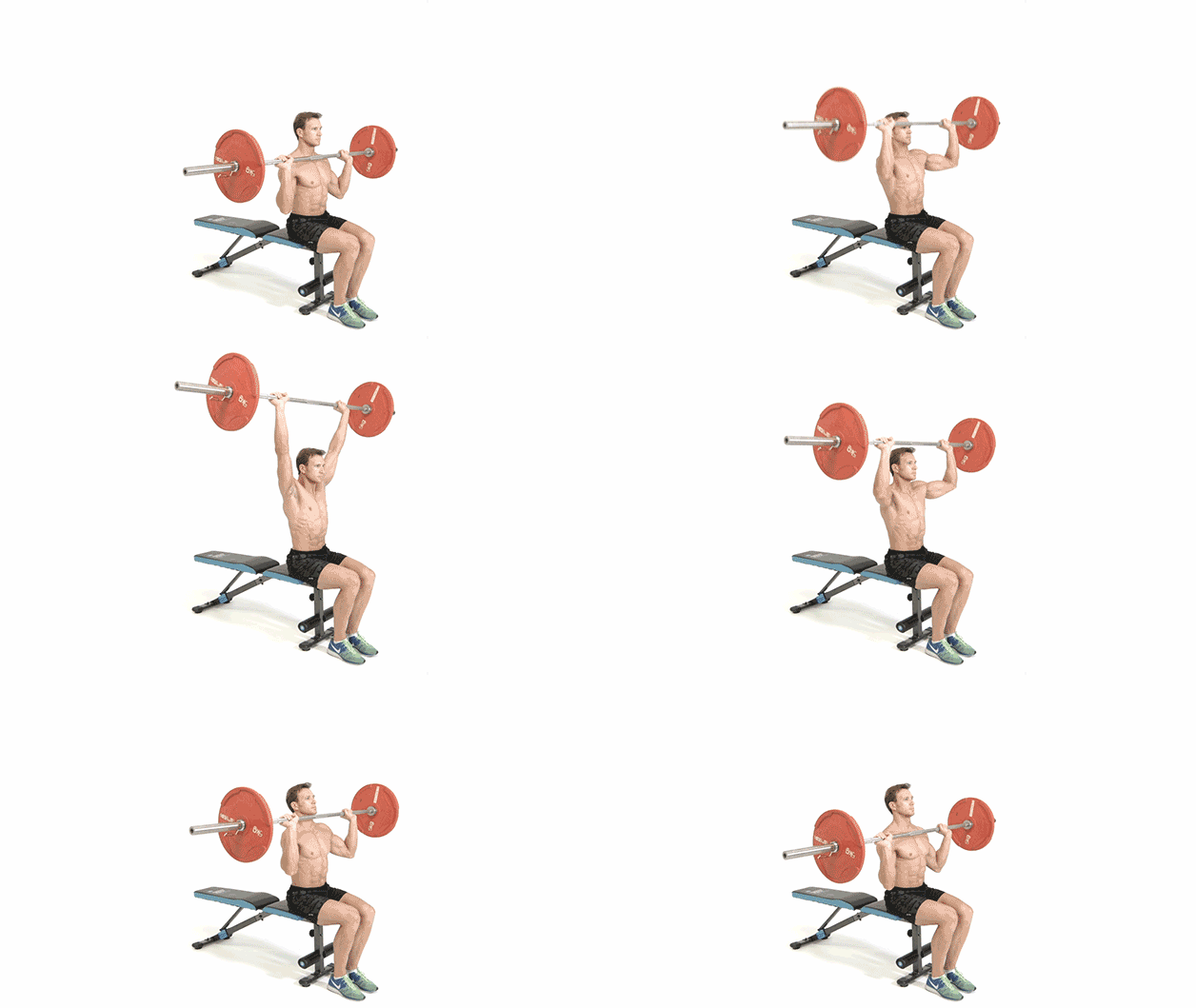
#4 Seated Barbell Shoulder Press (No Back Support)
Removing back support increases the demand on the core and stabilizers. This variation is more challenging but can help improve overall control and posture.
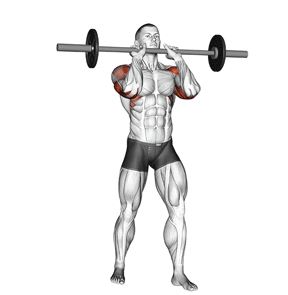
#5 Close-Grip Barbell Shoulder Press
A narrower grip shifts more emphasis to the triceps and anterior deltoids. It also increases the range of motion and can feel more comfortable for some lifters.
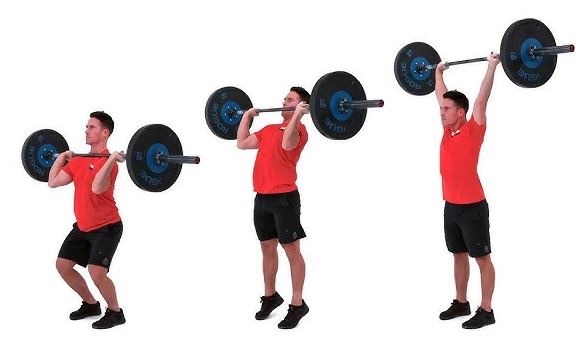
#6 Push Press
Although technically a different movement, the push press uses leg drive to help move heavier weights. It’s excellent for developing power but reduces shoulder isolation.
Replacement Exercises (Substitutes)
If the barbell shoulder press doesn’t fit your program or causes discomfort, there are several effective alternatives that can target the anterior deltoids while still allowing you to build strength and size. In our extensive front delt exercise database, you’ll find multiple options depending on your equipment and training goals.
- Seated dumbbell shoulder press
- Standing dumbbell shoulder press
- Machine shoulder press
- Smith machine shoulder press
- Arnold press
- Landmine shoulder press
- Plate-loaded shoulder press machine
- Z press
- Resistance band shoulder press
- Barbell front raises
- Dumbbell front raises
- Cable front raises
To get the most out of your shoulder training, explore our full list of the best front delt exercises, where you’ll find top movements, expert tips, and a balanced workout example.
Where This Exercise Fits in a Workout
The barbell shoulder press is one of the most effective compound movements you can build your upper-body training around. In my experience, how you position this exercise in your workout can significantly impact both performance and long-term progress.
- As a primary compound lift (start of the workout).
This is where the exercise delivers the most value. Perform it early while you’re fresh to maximize strength output and mechanical tension. - In a shoulder-focused workout.
It works best as your main movement, followed by lateral raises and rear delt exercises to complete shoulder development. - In push or upper-body days.
It fits naturally alongside chest and triceps exercises, contributing to overall pressing strength. - For strength-focused training phases.
The barbell version is especially effective for increasing overhead pressing power.
Sets and Reps Recommendation
The ideal set-and-rep scheme for the barbell shoulder press depends on whether your goal is strength, hypertrophy, or a combination of both. Because this exercise allows heavier loading, it responds particularly well to slightly lower rep ranges than many shoulder isolation movements.
- Strength emphasis: 4–5 sets of 3–5 repetitions
- Strength + hypertrophy blend: 3–4 sets of 5–8 repetitions
- Muscle hypertrophy: 3–4 sets of 8–10 repetitions
For most lifters, the 5–8 rep range is the sweet spot. It allows you to handle meaningful weight while still maintaining proper bar path, control, and shoulder positioning throughout the movement.
Barbell Shoulder Press vs. Dumbbell Shoulder Press
Both the barbell and dumbbell shoulder press are highly effective exercises for building shoulder strength and size, but they differ in mechanics, stability, and overall training effect. In my experience, choosing between them depends on your goal, experience level, and how your shoulders respond to each variation.
| Training Factor | Barbell Shoulder Press | Dumbbell Shoulder Press |
|---|---|---|
| Exercise Type | Compound (bilateral) | Compound (unilateral control) |
| Load Potential | High | Moderate |
| Stability Demand | Lower | Higher |
| Range of Motion | Slightly limited | Greater, more natural |
| Muscle Balance | Can mask imbalances | Improves left-right balance |
| Joint Stress | Can be higher for some | Generally lower |
| Grip Flexibility | Fixed | Multiple options |
| Best Use | Strength & progressive overload | Hypertrophy & joint-friendly training |
Conclusion: Both exercises have their place in a well-structured program. I typically recommend the barbell shoulder press for building strength and handling heavier loads, while the dumbbell shoulder press is ideal for improving muscle balance, joint comfort, and overall shoulder development. Ideally, most lifters should include both variations to get the best of both worlds.
Final Thoughts
The barbell shoulder press remains one of the most powerful exercises you can use to build strong, well-developed shoulders. In my experience, it’s one of those foundational lifts that delivers consistent results when performed with proper technique and programmed intelligently.
What makes this exercise stand out is its ability to handle heavy loads, making it ideal for developing overhead strength and overall upper-body power. At the same time, that same advantage can become a drawback if the technique is neglected, which is why control and positioning should always come first.
I always tell my clients that the goal is not just to move the bar from point A to point B, but to keep the tension on the deltoids throughout the entire movement. If you can do that while maintaining a stable torso and efficient bar path, this exercise will become a cornerstone of your shoulder training.
And just like with the dumbbell version, one important reminder—your front delts are already heavily involved in pressing movements like the bench press. So if your goal is complete shoulder development, make sure you balance your training by giving equal attention to the lateral and rear deltoids.
Is it better to perform the barbell shoulder press seated or standing?
Both versions are effective, but they serve different purposes. The seated version provides more stability and isolates the shoulders better, while the standing version engages the core and allows for more functional, full-body strength development.
Should the bar touch the chest during the barbell shoulder press?
Yes, in most cases the bar should be lowered to the upper chest or collarbone area. This ensures a full range of motion and better muscle activation, as long as you maintain control and proper shoulder positioning.
Is a wider grip better for shoulder development?
Not necessarily. A slightly wider-than-shoulder-width grip is usually optimal. Going too wide can reduce range of motion and increase stress on the shoulders without providing additional benefits.
Can beginners safely perform the barbell shoulder press?
Yes, but beginners should start with lighter weights and prioritize technique. Using a rack and possibly a spotter is highly recommended to ensure safe setup and execution.
Why do I feel the barbell shoulder press in my lower back?
This usually happens due to excessive arching and lack of core engagement. Strengthening your core and focusing on a stable torso position can significantly reduce lower back strain.
Is it okay to use momentum in the barbell shoulder press?
In a strict seated version, no. Momentum reduces shoulder activation and increases injury risk. If you want to use momentum, that becomes a different exercise—such as the push press.
How often should I include the barbell shoulder press in my routine?
Most lifters benefit from performing it 1–2 times per week. This provides enough stimulus for strength and growth while allowing adequate recovery.
What is the ideal tempo for the barbell shoulder press?
A controlled tempo works best. A typical recommendation is about 1–2 seconds on the press (up phase) and 2–3 seconds on the lowering phase to maximize control and muscle tension.
Can I replace the barbell shoulder press completely with machines?
You can, but it’s not ideal for most lifters. Machines reduce stability demands, which can limit overall strength development compared to free weights.
Why does the barbell shoulder press feel harder than the dumbbell version for some people?
This often comes down to mobility and joint structure. The fixed bar path can feel less natural for some lifters, especially if shoulder mobility is limited, making dumbbells feel smoother and more comfortable.
