Close Menu
Bodybuilding Wizard

    Subscribe to Updates

    Join our mailing list to receive the latest updates from our team.

    Facebook X (Twitter) Instagram
    Trending
    • Does Soy Lower Testosterone or Increase Estrogen in Men? What the Science Says
    • Does Training Legs Really Boost Testosterone? What the Science Says
    • Does Sauna Really Boost Growth Hormone 16x? Myth vs. Science
    • Does Power Posing Really Boost Testosterone? Myth, Science & the Retraction
    • Does Ashwagandha Really Boost Testosterone and Lower Cortisol? Myth vs. Science
    • Progesterone and Exercise: How It Affects Training, Metabolism & the Menstrual Cycle
    • Estrogen and Exercise: How Estradiol Affects Muscle, Fat, Bone Health & Performance
    • Thyroid Hormones and Metabolism: T3, T4, Muscle Growth & Fat Loss Explained
    RSS Facebook X (Twitter) LinkedIn YouTube Pinterest Instagram
    Bodybuilding Wizard
    Subscribe Login
    • Home
    • Tools
      • Interactive Muscle Anatomy
      • Interactive Human Skeleton
      • Bodybuilding & Fitness Calculators
      • Dietary & Nutrition Calculators
      • Body Measurement Calculators
      • Fitness Tests
      • Bodybuilding Glossary
      • DIY Projects
    • Training
      • Weight training basics
      • Advanced bodybuilding
      • Strength training for women
      • Workout programs
      • Home weight training programs
      • Cardio workout
      • Exercise equipment
      • Weight training accessories
      • Weight lifting injuries
      • Weight training for sports
    • Exercises
      • Chest exercises
        • Middle chest exercises
        • Upper chest exercises
        • Lower chest exercises
      • Back exercises
        • Middle back (latissimus dorsi)
        • Upper back (trapezius)
        • Lower back (erector spinae)
      • Arm exercises
        • Bicep exercises
        • Tricep exercises
        • Forearm exercises
        • Grip-strengthening exercises
      • Shoulder exercises
        • Front deltoid
        • Side deltoid
        • Rear deltoid
        • Rotator Cuff
        • Scapular & Shoulder Stability
        • Neck strengthening exercises
      • Leg and glute exercises
        • Quadricep exercises
        • Hamstring exercises
        • Calf exercises
        • Glute & Hip exercises
        • Shin exercises
      • Abdominal exercises
        • Upper abdominal exercises
        • Lower abdominal exercise
        • Oblique exercises
      • Core exercises
      • Kettlebell exercises
      • Foam rolling & Stretching
      • Explosive (dynamic) lifts
    • Motivation
      • Greatest physiques
      • Motivation techniques & tips
      • Events and competitions
      • Latest fitness news
      • Videos
        • Funny gym reels
        • Motivational videos
        • Funny workout videos
      • Pictures
      • Quotes
      • Funny Fitness
      • Transformations
    • Diet
      • Nutrition Fundamentals
      • Diet Types & Strategies
      • Foods & Superfoods for Athletes
      • Muscle Building & Performance Nutrition
      • Weight Loss & Fat Management
      • Food Psychology & Myths
      • Recipes & Meal Ideas
    • Supplements
      • Supplements Review
      • Muscle Building Supplements
      • Anabolic Steroids
      • Fat Burners & Weight Loss
      • Pre-Workout & Energy Boosters
      • Recovery & Sleep Aids
      • Cognitive & Nootropic Support
      • General Supplement Advice
      • Health Supplements
        • Joint & Bone Support
        • Gut Health & Digestion
        • Vitamins & Minerals
        • Superfoods & Greens
      • Steroid Alternatives
    • Anatomy
      • Upper-Body Muscles
      • Lower-Body Muscles
      • Bones & Skeletal Anatomy
      • Muscle Growth & Genetics
      • Joints, Tendons & Connective Tissue
      • Hormones & Endocrine System
      • Physiology & Body Systems
      • Body Composition & Fat
      • General Anatomy & Basics
    • Health
    Bodybuilding Wizard
    You are at:Home»Training»Weight lifting injuries»The Difference Between Good and Bad Pain While Strength Training
    good and bad pain while strength training

    The Difference Between Good and Bad Pain While Strength Training

    0
    By krunoslav on June 22, 2020 Weight lifting injuries
    Share
    Facebook Twitter Pinterest LinkedIn Email Tumblr WhatsApp Telegram

    Good Pain Versus Bad Pain While Strength Training

    It’s safe to say that nothing is more frustrating when you’re training hard than encountering an injury. Therefore you must ask yourself: Is my exercise causing good or bad pain? In this article you will learn the difference between “good pain” (training effort) and “bad pain” (injury) while strength training. This is crucial since the latter is a warning sign that should not be ignored.

    In exercise circles, there are two kinds of pain: good pain and had pain. Here’s how to tell the difference between good and bad pain while strength training.

    Good pain while strength training

    Good pain, believe it or not, does exist. Sometimes, exercise hurts. If you never lift anything heavier than a tube of Pringles potato chips and then start lifting dumbbells, naturally you’re going to feel some soreness. That type of pain is nothing to worry about.

    Therefore, good pain (a dull pain) is when muscles are sore; the soreness (delayed onset muscle soreness or DOMS) comes from lack of use in the places that were targeted during your last workout, and typically disappears within hours to a day or so. The muscle soreness will gradually decrease with rest, recovery and stretching. This is simply a side effect of the stress put on muscles when you exercise and is completely normal. It is very likely that you will experience muscle soreness when you begin a new exercise to which your body is unaccustomed, or if you have increased the intensity of your workouts.
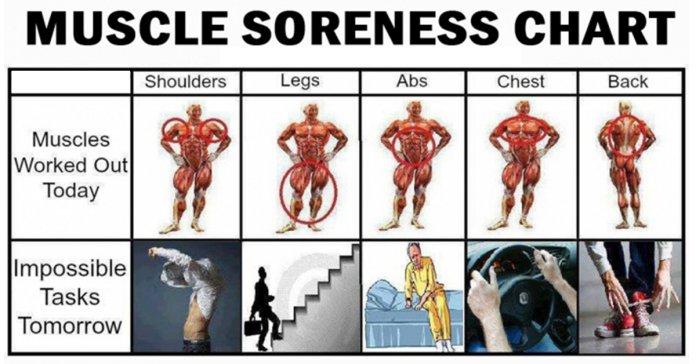
    delayed onset muscle soreness

    • Normal pain is achy, dull, and very general.
    • You feel it throughout an entire muscle or over a large area of your body.
    • Burning sensation you experience in your muscle while lifting weights (this ends immediately after you stop the activity).
    • Feeling of “fullness” in the muscles. This is not quite swelling, which implies a medical condition, but definitely a feeling of increased size, which is also visually noticeable. This is “the pump.” That swollen feeling happens when your muscles become engorged with blood. As blood pools in your muscles, plasma is drawn into the fibers, causing those fibers to expand and stretch like overfilled water balloons.

    However, if over the course of a few days your muscle soreness has gone away but you’re still experiencing pain or limited range of motion, you may have sustained an injury during your training. Or if you wake up the morning after a weight-lifting session and feel like your left arm has been shredded by a meat grinder, that’s a different story. This is considered “bad pain.”

    Bad pain while lifting weights

    Bad pain (sharp pain) is a sensation generating from the joints and doesn’t lessen in a few hours. Sprains, strains, and fractures fall in this category. In other words, your injury has damaged a muscle to the point that the muscle cannot properly function as it should.

    Regardless of the degree of your injuries, they should be taken very seriously and you should get treatment immediately.

    “Bad” pain can come in many forms, but here are the most common characteristics of this type of pain:

    • Bad pain tends to be sharp and specific.
    • Lasts longer than a week.
    • It usually hurts when you do certain movements, like bending your knee or lifting your arm overhead. But it also hurts when you’re still.
    • Pain associated with deformity or massive swelling.
    • No pain relief after several days of rest, ice or over-the-counter anti-inflammatory medication.
    • Pain in an area that was previously injured or where you’ve had surgery.
    • Feeling of a sudden tightening during an exercise means that you’ve probably pulled a muscle.
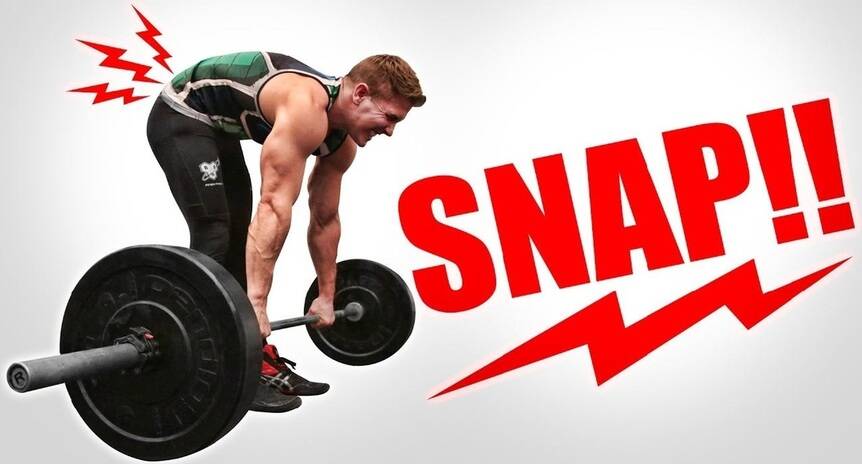
    Bad pain while lifting weights

    Why you should ignore the phrase “no pain no gain” or “work through the pain”?

    Oftentimes people believe the phrase “no pain no gain” or “work through the pain,” but unfortunately this has led many people to believe that unless they’re not experiencing some level of physical pain, then the workout SUCKS! In actuality, if you’re experiencing pain during your training, there’s a possibility that you may have injured yourself. If you’re injured, discontinue training, get checked out and take the necessary procedures to heal your injury so you can quickly return to training. It is far more sensible to take a couple of recovery weeks now than to risk further injury and be sidelined for months.

    Many people also hold the misconception that “more is better.” This statement is true when proper rest and recovery are included in the training plan. However, neglecting rest and recovery could have a detrimental effect on overall performance.

    Know when to push through any discomfort and know when to back off. Put your ego aside, take things slowly and be ready and able to perform the next workout. Don’t risk being sidelined for weeks with an easily avoided injury. Common problem areas include the wrists, shoulders and elbows.

    Listen to your body

    As simple as this may sound, a good rule of thumb is to listen to your body. Nine times out of ten, you’ll know if you’re fit enough to start an intensive training program. Take heed of any warning signals Mother Nature throws your way.

    Listening to your body basically comes down to being conscious of how ready your body and mind are for exercise. That info should inform you whether you should go full speed ahead as planned, slow way down, or totally phone out.

    Preventing injury

    To reduce the likelihood of experiencing a muscle injury, it’s important to perform a 5- to 10-minute warm up prior to the workout. This will prepare your muscles by raising your body temperature and allowing adequate blood flow to your muscles. At the completion of any workout, it’s important to spend 5 to 10 minutes stretching the muscles you worked. Post-workout is the best time to stretch because your muscles are still warm, which makes muscular flexibility easier to achieve. Stretching after a workout also eliminates lactic acid build-up in the muscles, which causes muscle soreness. Preventing weight-lifting injuries is not rocket science.

    Closing thoughts: good versus bad pain while strength training

    This main purpose of this article was to determine what is good pain and what is bad pain and how to listen to your body and tell the difference. As you can see there is a big difference between pain and soreness. Good pain can be the feeling of being “pumped” as your muscles fill with blood during exercise, or it can be the mild feeling of fatigue as the lactic acid burn sets in. Recognize these sensations and learn to thrive on them. Bad pain, on the other hand, is any sharp pain or spasm, or pain that moves quickly into the shoulders, arms or hands—these are definite warning signs. If it hurts, stop! Don’t push through the pain! Doing so can result in serious injury that will sideline you for a long time. This is essential exercise advice for everyone.

    Share. Facebook Twitter Pinterest LinkedIn Tumblr Email WhatsApp
    krunoslav
    • X (Twitter)

    Hey! My name is Kruno, and I'm the owner and author of Bodybuilding Wizard. I am a licensed fitness trainer with a Ph.D. in kinesiology. Throughout my career, I have dedicated myself to helping individuals achieve their health and fitness goals through personalized training programs. In addition to my academic qualifications, I have completed various specialized courses, including certifications in nutrition and strength training, which have further enhanced my ability to provide comprehensive fitness guidance. I started this website back in late 2014, and it has been my pet project ever since. My goal is to help you learn proper weight training and nutrition principles so that you can get strong and build the physique of your dreams!

    Related Posts

    Bone Bruise: Symptoms, Recovery Time, Treatment & When to Return to Exercise

    Why Am I Always Sore After Every Workout? 10 Reasons It Keeps Happening

    Why Your Hamstrings Cramp During Leg Curls: 10 Causes & Proven Fixes

    Leave A Reply Cancel Reply

    You must be logged in to post a comment.

    WE ARE SOCIAL
    • Facebook 3.6K
    • Twitter
    • YouTube 133
    • Instagram
    RECENT POSTS
    August 27, 2026

    Does Soy Lower Testosterone or Increase Estrogen in Men? What the Science Says

    August 26, 2026

    Does Training Legs Really Boost Testosterone? What the Science Says

    August 24, 2026

    Does Sauna Really Boost Growth Hormone 16x? Myth vs. Science

    August 24, 2026

    Does Power Posing Really Boost Testosterone? Myth, Science & the Retraction

    August 23, 2026

    Does Ashwagandha Really Boost Testosterone and Lower Cortisol? Myth vs. Science

    RECENT COMMENTS
    • Justin Dew on Designing your own home gym
    • krunoslav on Meet Your Muscles: How muscles are named?
    • Christina on Meet Your Muscles: How muscles are named?
    • igtropin on Stiff-Leg Deadlift: Proper Form, Muscles Worked & Hamstring Growth Guide
    • teragon labs on Barbell Back Squat: Proper Form, Benefits, Muscles Worked & Expert Tips
    LATEST GALLERIES

    Subscribe to Updates

    Join our mailing list to receive the latest updates from our team.

    ABOUT
    ABOUT

    We are a group of bodybuilding enthusiasts and this is our effort to have all the details about bodybuilding on a single website. We strive to educate and inform our visitors so that they can make the correct training, nutrition, and supplement decisions on their own. Bodybuilding Wizard will make your dream body your reality and take you to a whole new level!

    POPULAR POSTS
    April 2, 2014

    Lying Leg Curl: Complete Guide to Hamstring Isolation, Strength & Muscle Growth

    February 18, 2019

    Meet Your Muscles: How muscles are named?

    March 28, 2014

    Free weights: The main tool for building muscles

    BODYBUILDING WIZARD
    Bodybuilding Wizard Footer Logo
    Facebook X (Twitter) Instagram Pinterest YouTube
    • About
    • Authors
    • Editorial Policy
    • Write for us
    • Privacy
    • Contact
    • Terms of Use
    • Advertising
    • FAQ
    Copyright © 2014-2026 BodybuildingWizard. All rights reserved. Powered by WordPress. Made with love and lots of caffeine.

    Type above and press Enter to search. Press Esc to cancel.

    Sign In or Register

    Welcome Back!

    Login to your account below.

    Lost password?