


Introduction
A bone bruise may sound like a minor injury, but it can be surprisingly painful and slow to heal. Unlike a skin bruise, which affects only soft tissues, a bone bruise involves microscopic damage inside the bone itself. It often develops after a hard impact, a fall, or a sports injury and can limit your ability to train, walk, or even bear weight comfortably.
Many people assume that if an X-ray doesn’t show a fracture, the bone is completely normal. That’s not always true. A bone bruise can cause significant pain even when the bone hasn’t broken, and recovery often takes weeks or even months, depending on the severity of the injury.
This guide explains what a bone bruise is, what causes it, how doctors diagnose and treat it, how long recovery usually takes, and when it’s safe to return to exercise. You’ll also learn how a bone bruise differs from a fracture and what you can do to support a full recovery.
What Is a Bone Bruise?
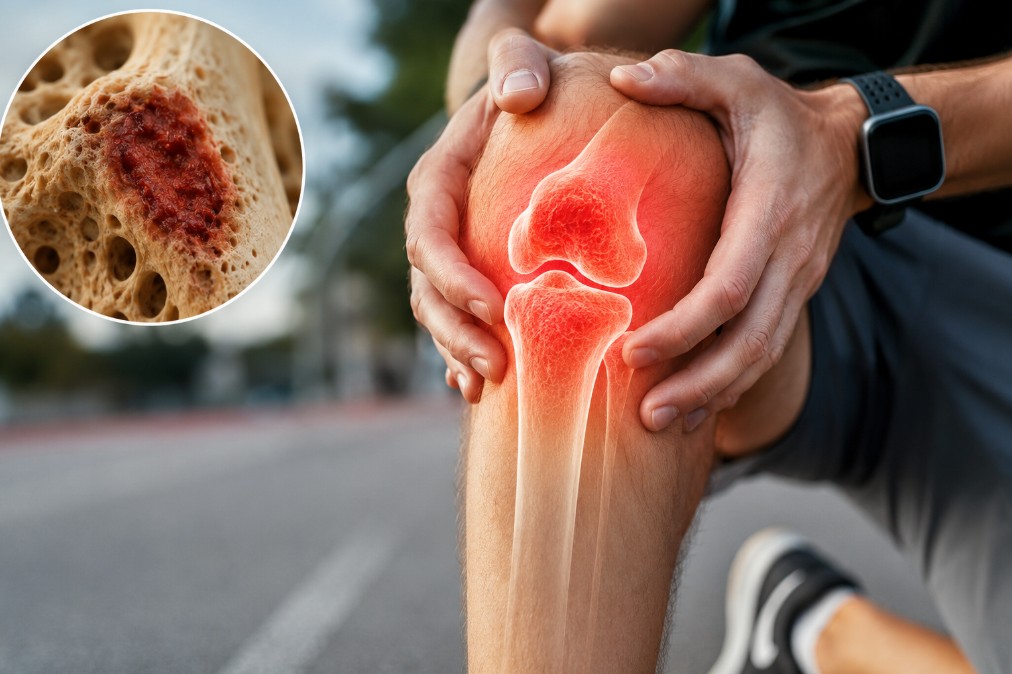
A bone bruise, also called a bone contusion, is a type of bone injury that falls somewhere between a normal bruise and a fracture. The bone doesn’t break completely, but the impact causes microscopic damage to the trabecular (spongy) bone and bleeding within the bone marrow.
Unlike a skin bruise, which affects soft tissues beneath the skin, a bone bruise develops inside the bone itself. Because bone contains nerves and a rich blood supply, this injury can cause deep, persistent pain that often lasts much longer than a typical muscle or skin bruise.
Bone bruises commonly occur after a direct blow, a fall, a twisting injury, or a forceful impact during sports. They frequently affect weight-bearing joints such as the knee, hip, ankle, and foot, but they can develop in almost any bone.
Although a bone bruise doesn’t involve a complete break in the bone, it shouldn’t be dismissed as a minor injury. Recovery often takes several weeks or even months, depending on the severity of the damage and the location of the injury.
Most bone bruises heal with conservative treatment, including temporary activity modification and a gradual return to normal loading. However, continuing to train through significant pain may delay healing and increase the risk of more serious bone injuries.
Bone Bruise vs Bone Fracture
A bone bruise and a bone fracture both result from damage to bone tissue, but they differ in severity. A bone bruise causes microscopic injury within the bone without creating a complete break. A fracture involves a partial or complete disruption of the bone’s structure.
Both injuries can cause pain, swelling, and difficulty using the affected limb. However, fractures usually produce more severe pain, greater instability, and often require longer periods of immobilization or even surgery. Bone bruises typically heal with conservative treatment, although recovery can still take several weeks or months.
One important difference is that bone bruises often don’t appear on standard X-rays. Many people continue to experience significant pain despite normal X-ray findings. In these cases, an MRI is usually the best imaging test because it can detect bone marrow edema and microscopic bone damage.
Although a bone bruise is generally less serious than a fracture, it shouldn’t be ignored. Continuing high-impact activities before the bone has healed may prolong recovery and, in some cases, increase the risk of a stress fracture or other complications.
| Feature | Bone Bruise | Bone Fracture |
|---|---|---|
| Bone Damage | Microscopic injury | Partial or complete break |
| Bone Stability | Preserved | May be reduced or lost |
| Pain | Moderate to severe | Usually severe |
| Swelling | Common | Common |
| Visible on X-ray | Usually no | Usually yes |
| Best Imaging Test | MRI | X-ray (MRI or CT if needed) |
| Treatment | Relative rest and gradual loading | Immobilization, casting, or surgery if required |
| Recovery Time | Weeks to months | Weeks to several months, depending on the fracture |
What Causes a Bone Bruise?

A bone bruise develops when a force is strong enough to damage the inside of a bone without causing a complete fracture. The impact compresses the trabecular bone, breaks tiny blood vessels, and leads to bleeding and swelling within the bone marrow.
Several injuries can cause a bone bruise, but they all have one thing in common: they expose the bone to forces greater than it can safely absorb.
The most common causes include:
- Falls. Landing directly on a joint, such as the knee, hip, or wrist, is one of the leading causes of bone bruises.
- Direct blows. Collisions during contact sports, accidents, or being struck by a hard object can compress the bone enough to cause microscopic damage.
- Twisting injuries. Sudden changes in direction can force bones together with enough pressure to produce a bone bruise. These injuries often affect the knee and ankle.
- Sports injuries. Football, basketball, rugby, skiing, martial arts, and other high-impact sports commonly cause bone bruises through falls, tackles, or awkward landings.
- Ligament injuries. Bone bruises frequently occur alongside ligament tears, especially ACL injuries. In fact, many people who tear the ACL also develop one or more bone bruises around the knee.
- Motor vehicle accidents. High-energy trauma can produce bone bruises even when no fracture is present.
Although anyone can develop a bone bruise, athletes and physically active people face a higher risk because they experience repeated impacts, rapid changes in direction, and greater forces during training and competition.
Common Symptoms of a Bone Bruise
The symptoms of a bone bruise vary depending on its location and severity. Some people experience mild discomfort, while others have pain that makes walking or exercising difficult. Unlike a skin bruise, the pain usually feels deep inside the bone rather than near the surface.
Common symptoms include:
- Deep, aching pain. The pain often becomes worse when you stand, walk, run, or place weight on the injured area.
- Swelling. The surrounding soft tissues may become swollen, especially after an acute injury.
- Tenderness. Pressing over the affected bone often causes pain.
- Stiffness. The nearby joint may feel stiff and difficult to move, particularly after resting.
- Reduced range of motion. Pain and swelling can limit normal joint movement.
- Pain during weight-bearing. Bone bruises in the knee, hip, ankle, or foot often make standing, walking, or climbing stairs uncomfortable.
- No visible bruise. Despite the name, many bone bruises don’t produce the blue or purple discoloration seen with skin bruises.
Symptoms usually improve gradually as the bone heals. However, pain may persist for several weeks or even months, particularly after more severe injuries. If pain continues to worsen, or if you cannot bear weight on the injured limb, seek medical evaluation to rule out a fracture or other serious injury.
How Is a Bone Bruise Diagnosed?
Diagnosing a bone bruise begins with a medical history and physical examination. Your healthcare provider will ask how the injury occurred, where the pain is located, and whether you’re able to bear weight or move the affected joint.
During the examination, the injured area is checked for tenderness, swelling, bruising, joint stability, and range of motion. However, a physical exam alone cannot confirm a bone bruise because its symptoms often resemble those of a fracture, ligament injury, or severe sprain.
X-rays
Standard X-rays are usually the first imaging test performed after an injury. While they are excellent for detecting fractures and dislocations, bone bruises typically don’t appear on X-rays because the damage occurs inside the bone rather than affecting its outer structure.
A normal X-ray doesn’t necessarily mean the bone is uninjured.
MRI
Magnetic resonance imaging (MRI) is considered the gold standard for diagnosing a bone bruise. It can detect bone marrow edema, microscopic trabecular damage, and associated injuries involving cartilage, ligaments, tendons, or other soft tissues.
MRI is especially useful when pain persists despite normal X-ray findings or when a more serious injury is suspected.
CT Scan
A CT scan is less sensitive than MRI for detecting bone bruises, but it may be recommended when doctors suspect a subtle fracture that isn’t visible on an X-ray.
Ultrasound
Ultrasound cannot diagnose a bone bruise because it doesn’t visualize the inside of bone. However, it may help identify associated soft tissue injuries or fluid around a joint.
In many cases, doctors diagnose a bone bruise only after ruling out fractures and confirming characteristic findings on an MRI.
Bone Bruise Treatment
Most bone bruises heal without surgery. The primary goals of treatment are to reduce pain, protect the injured bone while it heals, and gradually restore normal function. Although recovery can take time, following your healthcare provider’s recommendations can help prevent complications and support a safe return to activity.
Treatment typically includes the following:
Relative Rest
Avoid activities that increase pain or place excessive stress on the injured bone. This doesn’t always mean complete inactivity. Depending on the location and severity of the injury, low-impact activities may still be appropriate.
Ice Therapy
Applying an ice pack for 15–20 minutes at a time, several times a day during the first 48 hours, may help reduce pain and swelling. Always place a thin cloth between the ice pack and your skin to prevent cold injury.
Compression and Elevation
If swelling is present, compression bandages and elevating the injured limb above heart level may help reduce fluid accumulation, particularly after lower-limb injuries.
Pain Relief
Over-the-counter pain relievers, such as acetaminophen or nonsteroidal anti-inflammatory drugs (NSAIDs), may be recommended for short-term symptom relief. Always follow the dosing instructions and consult your healthcare provider if you have any medical conditions or concerns about these medications.
Activity Modification
Your healthcare provider may recommend temporarily avoiding running, jumping, heavy lifting, or contact sports until the bone has healed sufficiently. In some cases, crutches, a brace, or a walking boot may be used to reduce stress on the injured area.
Physical Therapy
Once pain begins to improve, physical therapy can help restore joint mobility, muscle strength, balance, and normal movement patterns. Rehabilitation also reduces the risk of reinjury when returning to sports or exercise.
Surgery
Surgery is rarely needed for a bone bruise alone. However, it may be necessary if the injury occurs alongside a severe fracture, ligament tear, cartilage injury, or another condition requiring surgical treatment.
With appropriate care, most bone bruises heal completely. Returning to full activity too soon, however, may delay recovery or increase the risk of further injury.
Bone Bruise Recovery Time

Recovery time depends on the severity of the bone bruise, its location, your age, overall health, and how well you protect the injured bone during healing. While some mild bone bruises improve within a few weeks, more severe injuries may take several months to heal completely.
In general:
| Severity | Typical Recovery Time |
|---|---|
| Mild | 2–6 weeks |
| Moderate | 6–12 weeks |
| Severe | 3–6 months or longer |
Bone bruises involving weight-bearing bones, such as the knee, hip, ankle, or foot, often require longer recovery because these areas are exposed to repeated mechanical loading during daily activities.
It’s important to remember that pain usually improves before the bone has fully healed. Feeling better doesn’t necessarily mean the injured bone is ready for high-impact exercise, running, jumping, or heavy lifting.
Several factors can influence healing time, including:
- Severity of the injury
- Location of the bone bruise
- Age
- Overall health
- Smoking
- Nutrition
- Following activity restrictions
- Associated injuries, such as ligament or cartilage damage
Returning to sport too early may delay recovery and increase the risk of further injury. Most healthcare providers recommend gradually increasing activity only after pain has significantly improved, and normal function has returned.
Although recovery may seem slow, most bone bruises heal completely with appropriate treatment and patience.
Can You Exercise With a Bone Bruise?
Whether you can exercise with a bone bruise depends on its location, severity, and your symptoms. In general, you should avoid activities that increase pain or place excessive stress on the injured bone until adequate healing has occurred.
Completely avoiding movement is rarely necessary. In many cases, low-impact activities can help maintain fitness while reducing stress on the injured area. Your healthcare provider or physical therapist can recommend appropriate exercises based on your injury.
Exercises That May Be Safe
Depending on the location of the bone bruise, you may be able to perform:
- Upper-body resistance training if the injury affects the lower limb
- Swimming or deep-water running
- Stationary cycling with minimal resistance
- Gentle range-of-motion exercises
- Flexibility and mobility exercises that don’t cause pain
Activities to Avoid
Until your symptoms have significantly improved, it’s generally best to avoid:
- Running
- Jumping
- Sprinting
- Heavy lower-body lifting
- Contact sports
- Plyometric exercises
- Any activity that causes sharp or increasing pain
Listen to Your Symptoms
Pain is one of the best indicators of whether an activity is appropriate. Mild discomfort during rehabilitation may be acceptable, but sharp pain or worsening symptoms usually indicate that the injured bone is being overloaded.
When symptoms have resolved, and strength, mobility, and function have returned, you can gradually resume normal training. Increase training volume and intensity progressively rather than returning immediately to your previous workload.
For competitive athletes or individuals recovering from severe bone bruises, returning to sport should ideally be guided by a healthcare professional to reduce the risk of reinjury.
Possible Complications of a Bone Bruise
Most bone bruises heal completely without causing long-term problems. However, recovery may be prolonged if the injury is severe, involves a weight-bearing joint, or isn’t given enough time to heal before returning to full activity.
Possible complications include:
- Persistent pain. Some people continue to experience discomfort for several months, especially after severe bone bruises.
- Delayed healing. Returning to high-impact activities too soon may slow the healing process and prolong symptoms.
- Reduced joint function. Pain and stiffness can temporarily limit strength, mobility, and normal movement patterns.
- Associated injuries. Bone bruises often occur together with ligament tears, cartilage injuries, or meniscus damage, particularly around the knee.
- Subchondral bone damage. In more severe cases, a bone bruise beneath the joint surface may contribute to cartilage degeneration and increase the risk of developing osteoarthritis over time.
Fortunately, these complications are uncommon. Most people make a full recovery by following their treatment plan, gradually returning to activity, and avoiding excessive stress on the injured bone during healing.
When to See a Doctor
Seek medical attention if you experience any of the following:
- Severe pain that doesn’t improve with rest.
- Inability to bear weight on the injured limb.
- Significant swelling or joint instability.
- Pain that persists for several weeks despite treatment.
- Numbness, tingling, or changes in skin color.
- Symptoms that worsen rather than gradually improve.
Early evaluation helps rule out fractures, ligament injuries, and other conditions that may require different treatment.
Can You Prevent a Bone Bruise?
Although not every bone bruise can be prevented, especially after unexpected accidents, you can reduce your risk by improving bone strength, joint stability, and movement quality.
Here are some practical strategies:
- Strengthen your muscles. Strong muscles help absorb impact forces and reduce stress placed directly on bones and joints.
- Improve balance and coordination. Balance training reduces the risk of falls and awkward landings, which commonly cause bone bruises.
- Progress gradually. Increase training intensity, volume, and impact gradually to allow your bones and connective tissues time to adapt.
- Wear appropriate protective equipment. Helmets, pads, braces, and proper footwear can reduce the severity of impacts during sports and recreational activities.
- Optimize bone health. Consume adequate calcium, vitamin D, and protein, and perform regular weight-bearing exercise to maintain strong bones throughout life.
- Use proper exercise technique. Good lifting mechanics and correct landing technique help distribute forces more evenly across the skeleton.
- Allow adequate recovery. Fatigue can impair coordination and increase the likelihood of falls, collisions, and other injuries.
While these strategies cannot eliminate the risk of injury, they can significantly reduce the likelihood of developing a bone bruise and many other musculoskeletal injuries.
Interesting Facts About Bone Bruises
- A bone bruise isn’t a “bruise” in the usual sense. It involves microscopic damage and bleeding inside the bone rather than beneath the skin.
- Bone bruises usually don’t appear on X-rays. Many people have normal X-ray results even though they have significant bone pain. An MRI is typically needed to confirm the diagnosis.
- They commonly occur with ACL tears. Research shows bone bruises are present in the large majority of acute ACL tears, with studies reporting a prevalence between roughly 78% and 100%.
- Pain can last much longer than expected. Even after swelling has improved, a bone bruise may continue to cause discomfort for several weeks or months.
- Bone bruises are common in athletes. They frequently occur in sports involving jumping, cutting, tackling, or high-speed collisions, such as football, basketball, rugby, and skiing.
- You can have a bone bruise without breaking a bone. The bone remains structurally intact, but microscopic damage occurs within the trabecular bone and bone marrow.
- Returning to sport too early can delay healing. Pain often improves before the bone has fully recovered, making gradual progression essential.
- Bones are living tissue. Like muscles and tendons, bones constantly repair themselves after injury through the natural process of bone remodeling.
