

Introduction
The side plank is the lateral counterpart to the forearm plank, and arguably the single best isometric exercise for building strong, functional obliques. Where the forearm plank trains the core to resist the lower back sagging into extension, the side plank trains an entirely different failure mode — the trunk collapsing laterally, hips dropping toward the floor under the pull of gravity from a side-lying position. That distinction matters because most trainees who plank regularly only ever train the front version, leaving an entire dimension of core stability undeveloped.
Like the front plank, the side plank is a true isometric exercise — the muscles generate force under load without changing length. The word itself reflects this: “iso” meaning same, “metric” meaning length. The obliques, the quadratus lumborum, and the deep core stabilizers are all working hard throughout the hold, but no joint is moving and no muscle is shortening or lengthening through a range of motion. The entire job is to resist a force that wants to create movement, not to create movement itself.
One thing worth saying plainly: the side plank is genuinely difficult, more so than most people expect before trying it properly. If your body starts shaking after a few seconds of holding the position, that is a completely normal sign of an inadequately conditioned lateral core encountering real demand for the first time — not a sign you are doing something wrong. The trembling fades as the muscles adapt with consistent practice.
Exercise Snapshot
Muscles Worked in the Side Plank
Primary muscles
- External and internal obliques — the obliques on the working side (the side closest to the floor) contract isometrically throughout the hold to prevent the hips from dropping; this exercise is widely considered one of the most effective for developing oblique strength and endurance
- Quadratus lumborum — this deep lower back muscle on the working side works continuously alongside the obliques to resist lateral spinal flexion; the side plank is one of the few common exercises that directly and significantly trains this often-neglected muscle
- Transverse abdominis — braces the spine and maintains intra-abdominal pressure throughout the hold, working in concert with the obliques to stabilize the trunk
Secondary muscles
- Erector spinae — assists with maintaining overall spinal stability throughout the hold
- Adductors — the inner thigh muscles of the stacked legs work to keep the legs pressed together and stable
- Gluteus medius and gluteus minimus — these hip stabilizers work to maintain proper hip alignment and prevent the pelvis from rotating forward or backward during the hold
Antagonists
The obliques and quadratus lumborum on the opposite (upper) side of the body are not actively resisting in the same way, but gravity pulling the hips toward the floor is the force that the working-side musculature continuously resists throughout the entire hold.
The side plank’s reputation as one of the best overall oblique exercises is well earned. Unlike dynamic oblique exercises that train rotation or lateral flexion through a range of motion, the side plank trains the obliques to do their stabilizing job under sustained load, which is closer to how the obliques function in many real-world and athletic contexts, where the priority is preventing unwanted lateral movement rather than actively creating it.
How to Do a Side Plank: Step-by-Step Form Guide
Starting position
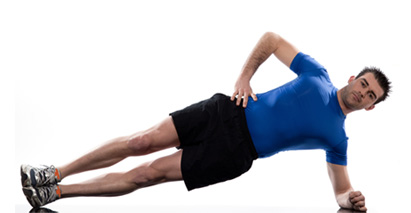
- Lie on your side on the ground, supporting yourself on one forearm with the elbow directly below the shoulder
- Stack the feet on top of each other, legs straight
- The forearm should point out in front of you on the mat, with the upper body raised off the floor
Execution
- Brace the core forcefully — contract the abs as though preparing to absorb a punch to the stomach
- Lift the hips up until the body forms one completely straight line from ankles to shoulders — focus on pushing the hips up toward the ceiling rather than letting the weight sink
- Place the free hand on the hip, or extend it toward the ceiling for an added chest stretch
- Keep the body straight from a top-down view as well — do not let the glutes stick out backward, or the chest push forward; the entire body should form a single straight plane
- Keep the head in line with the spine throughout — neither dropping nor craning
- Hold the position for the prescribed duration without letting the hips drop, then repeat on the other side
The key coaching cue: Push the hips toward the ceiling, don’t just hold them up. There is a meaningful difference between passively maintaining hip height and actively driving the hips upward against gravity. The latter is what creates the strong oblique and quadratus lumborum contraction that makes this exercise effective. If you find yourself merely “not sagging” rather than actively pushing up, you are getting less out of the hold than you should be.
5 Common Side Plank Mistakes (And How to Fix Them)
1. Letting the hips sink
This is the side plank equivalent of the front plank’s hip-sag problem, and it is just as common. When the hips drop toward the floor, the obliques and quadratus lumborum stop working at their intended intensity, and the shoulder ends up bearing more of the load than it should. Actively push the hips up and hold that elevated position — if the hips cannot stay up for the target duration, shorten the hold rather than letting form degrade.
2. Sticking the glutes out or pushing the chest forward
Viewed from above, the body should form a single straight line — not a position where the hips rotate backward, or the chest rotates forward out of that plane. This rotational drift reduces the effectiveness of the exercise and indicates the core is not fully controlling the trunk position in all directions, not just up and down.
3. Misaligning the elbow under the shoulder
The supporting elbow needs to be positioned directly beneath the shoulder, not out in front of it or behind it. Poor elbow positioning creates unnecessary shoulder strain and reduces the stability of the entire structure. Check this alignment before beginning each hold.
4. Dropping or craning the head
The head should stay in line with the spine throughout the entire hold. Letting the head drop toward the floor or craning the neck upward both create unnecessary cervical strain unrelated to the exercise’s purpose.
5. Holding the breath
As with any isometric core exercise, there is a tendency to hold the breath while bracing hard. This is unsustainable for longer holds and adds unnecessary cardiovascular strain. Breathe steadily throughout — the core brace comes from sustained muscular tension, not from breath-holding.
Benefits of the Side Plank
Among the most effective exercises for building oblique strength
The side plank is widely regarded as one of the best overall exercises for developing strong, functional obliques, because it trains them under sustained isometric load rather than through a brief dynamic range of motion.
Directly trains the quadratus lumborum
A few common exercises directly and significantly engage the quadratus lumborum, a deep lower back muscle that plays an important role in lateral spinal stability and is frequently implicated in certain types of lower back pain. The side plank is one of the most accessible ways to train this often-neglected muscle.
Trains anti-lateral flexion — a function most exercises miss
Most core training addresses either flexion (crunches), rotation (twists), or anti-extension (front planks). Very few exercises directly train anti-lateral flexion — the capacity to resist the trunk collapsing sideways. The side plank fills that gap directly.
Low equipment requirement, high accessibility
No equipment is needed beyond floor space, making the side plank one of the most accessible isometric core exercises for home training at any experience level.
Builds hip stabilizer strength alongside core strength
The gluteus medius and gluteus minimus work throughout the hold to maintain hip alignment, so the side plank provides a secondary training benefit for hip stability, contributing to better movement mechanics in squatting, lunging, and single-leg activities.
Who Should Use This Exercise
- Beginners building foundational core stability — the side plank, like the front plank, scales easily to very short holds while technique is established
- Anyone with weak or underdeveloped obliques — given its reputation as one of the most effective oblique exercises available, it belongs in nearly every core program
- Athletes in sports requiring lateral stability — virtually all sports benefit from a trunk that resists unwanted lateral collapse under load
- People addressing lower back issues related to the quadratus lumborum — under appropriate guidance, this exercise can be a valuable component of addressing certain types of lower back dysfunction
Who Should Be Cautious
- People with shoulder impingement or wrist issues — the sustained weight bearing through one forearm and shoulder can aggravate certain conditions; propping up on the hand instead of the elbow, or using the bent-knee regression, can reduce this demand
- People with hip issues — the stacked-leg position and the hip stabilization demand can be uncomfortable for certain hip pathologies
- Anyone with significant left-right strength asymmetry — if one side is dramatically weaker than the other, address that imbalance directly by performing additional sets or longer holds on the weaker side, rather than only matching the stronger side’s duration
How to Make It Easier or Harder
Easier
- Bent knees — bending the knees rather than keeping the legs straight significantly reduces the lever arm and the overall difficulty; an appropriate starting point for beginners or anyone returning to training
- Shorter holds with more repetitions — breaking the hold into shorter segments with brief rests, similar to the front plank progression, allows beginners to accumulate productive time under tension without form breaking down
Harder
- Weighted side plank — balancing additional weight on the hip increases the resistance against which the obliques and quadratus lumborum must work
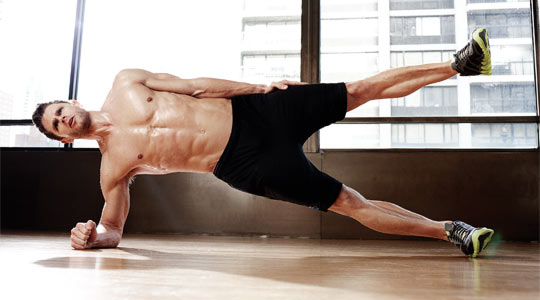
- Side plank with leg lift — raising the top leg, leading with the heel and keeping the knee straight, adds a significant hip stabilization and balance challenge on top of the standard hold; performing this regularly strengthens the entire core, hips, and shoulder stabilizing muscles
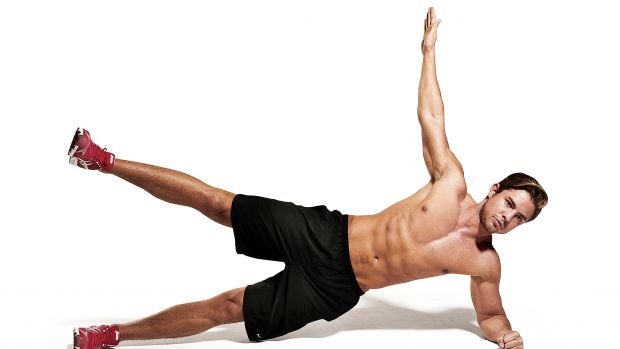
- Side plank with leg and arm lift — combining the leg lift with raising the top arm toward the ceiling adds both a balance challenge and a chest stretch
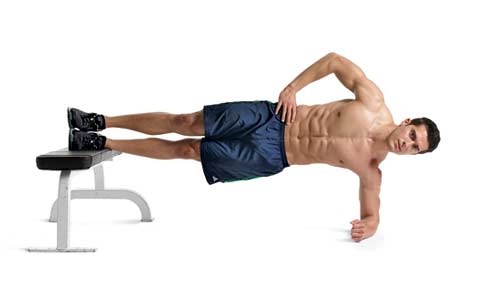
- Feet elevated — placing the feet on a bench or stability ball increases the demand on the entire lateral chain and the balance requirement
Side Plank vs. Forearm Plank
Both are foundational isometric core holds, but they train the core to resist two distinct types of movement failure.
| Side Plank | Forearm Plank | |
|---|---|---|
| Body position | Side-lying | Prone — face down |
| Function trained | Anti-lateral flexion | Anti-extension |
| Primary target | Obliques, quadratus lumborum | Rectus abdominis, transverse abdominis |
| Resists | Lateral spinal flexion (hips dropping toward the floor) | Lumbar extension (hips sagging) |
| Base of support | One forearm + feet (or knee) | Two forearms + two feet |
| Difficulty | Beginner – Intermediate | Beginner |
| Best for | Lateral core stability, oblique endurance | Overall core stability, lower back health |
The practical takeaway: The side plank and the forearm plank are not competing exercises — together they cover both major directions of core stabilization failure. The forearm plank builds resistance to the lower back sagging into extension; the side plank builds resistance to the trunk collapsing laterally. Neither replaces the other. I program them together as a pairing, training both sides of the side plank along with the standard forearm hold, for complete anti-movement core coverage in the same session.
Exercise Variations
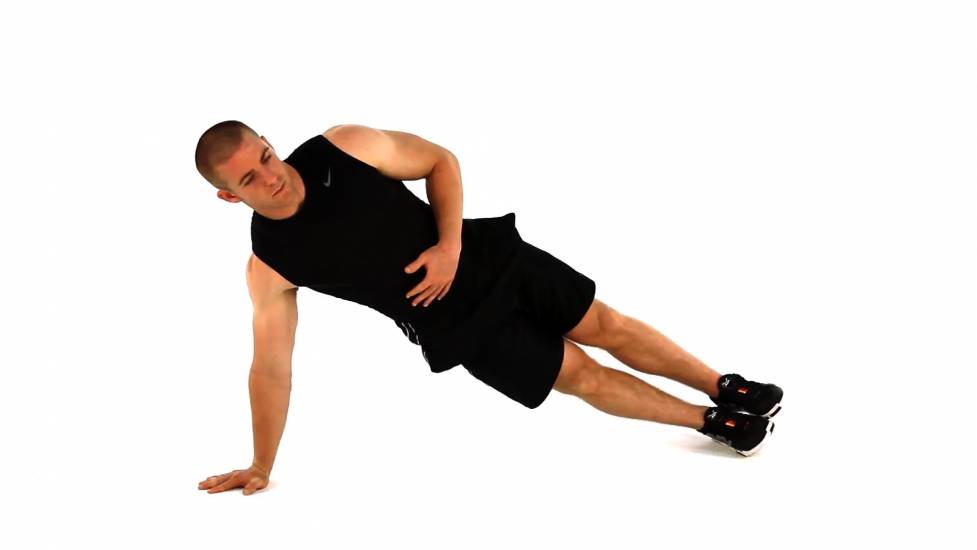
Side Plank on Hand
Rather than supporting the body on the forearm, prop the body up on the hand with the arm straight, similar to a sideways version of the full plank. This adds variety and shifts some demand to the wrist and shoulder stabilizers compared to the elbow-supported version.
Side Plank With Leg Lift
Lift the top leg, leading with the heel and keeping the knee straight, while maintaining the standard side plank hold. Performing this variation regularly strengthens the entire core, hips, and shoulder-stabilizing muscles beyond what a static hold alone provides.
Side Plank With Leg and Arm Lift
Combine the leg lift with raising the top arm directly toward the ceiling. This adds an additional balance and coordination challenge while also providing a stretch through the chest — a more advanced and more complete variation of the standard side plank.
Side Plank With Feet on Bench
Elevate the feet onto a bench while performing the standard side plank. The elevation changes the body angle and increases the demand on the entire lateral core chain compared to the floor version.
Side Plank With Feet on Swiss Ball
Elevate the feet onto a stability ball rather than a bench. The instability of the ball surface adds a continuous balance challenge on top of the elevated-feet demand, making this one of the more advanced side plank variations available.

Replacement Exercises (Alternatives)
If the side plank is not the right fit for your current training level or situation, these exercises target similar anti-lateral flexion and oblique stabilization function:
- Forearm Plank
- The Full Plank (Straight Arm Plank)
- Plank With Opposite Arm and Leg Lift
- Dumbbell Side Bend
- Lateral Crunch
- Cable Pallof Press
- Suitcase Carry
- Roman Chair Side Bend
- Hollow Body Hold Position
- Bird Dog
- Kneeling Plank
For a complete oblique and core training program, see our guide to 33 core exercises. See our guides to upper ab, lower ab, and oblique exercises to round out your program.
How To Incorporate the Side Plank Into Your Workouts
- Paired directly with the forearm plank — program both in the same core session for complete anti-extension and anti-lateral flexion coverage
- As a foundational core exercise for any program — appropriate for nearly any training level, scaled by hold duration and variation
- Duration: 20–45 seconds per side for most trainees, building toward longer holds as the bent-knee regression or shorter broken sets allow technique to be established first
- Sets: 3 sets per side
- Frequency: 3–4 times per week, or daily at shorter durations for beginners building baseline endurance
- Progression trigger: When 3 sets of 45 seconds per side with hips actively pushed up, and no rotational drift becomes consistently easy, progress to the leg lift variation, add weight, or elevate the feet rather than simply extending the hold duration further
Conclusion
The side plank deserves a permanent place in any serious core program, not as a supplementary exercise to the front plank, but as an equal partner that addresses a completely different stabilization demand. The obliques and the quadratus lumborum rarely get trained this directly and this effectively by any other common exercise.
Push the hips up — do not just prevent them from dropping. Keep the body in one straight plane from every angle. Breathe steadily throughout. If your body shakes the first few times you hold this position correctly, that is your lateral core encountering real demand for the first time, and it is exactly the response that precedes genuine strength development.
Too easy on one side and shaky on the other? That’s normal, and there’s a clear next step either way. See exactly how the side plank ranks against the other 14 variations — and which one to try next — in our complete plank variations guide.
Frequently Asked Questions
Is it normal for one side to be much weaker than the other in a side plank?
Yes, mild to moderate asymmetry is common, especially in people who play one-sided sports like golf, tennis, or baseball, or who have postural habits that favor one side. A noticeable but not dramatic difference in hold time between sides is not unusual. If the difference is severe — for instance, one side can hold for a full minute while the other fails in 10 seconds — it is worth addressing directly by giving the weaker side extra sets or slightly longer target durations until the two sides become more balanced.
Can the side plank help with lower back pain?
For certain types of lower back discomfort related to weak lateral stabilizers, particularly the quadratus lumborum, building strength through the side plank can be a helpful component of a broader approach. However, lower back pain has many possible causes, and the side plank is not a universal solution. Anyone with persistent or significant lower back pain should be evaluated by a physiotherapist or physician to identify the underlying cause before assuming a specific exercise will resolve it.
Should beginners start with the side plank on the knee or the foot?
Starting with the bent-knee version, where the lower knee is on the floor instead of the feet stacked and extended, is the more appropriate entry point for most beginners. This reduces the lever arm substantially and allows the technique — straight body line, hips pushed up, head aligned with the spine — to be learned before adding the additional difficulty of the fully extended position.
Does the side plank help reduce love handles?
The side plank strengthens the oblique muscles beneath the love handle area but does not directly burn the fat that sits over them. Spot reduction is not how fat loss works — the body reduces fat based on overall caloric balance, not based on which muscles are being exercised. Strong, well-developed obliques from side plank training will look more defined once overall body fat is sufficiently low, but the exercise itself will not eliminate fat in that specific area.
Why do my wrist or shoulder hurt more than my obliques during this exercise?
This usually indicates either improper elbow alignment beneath the shoulder or an underlying shoulder or wrist sensitivity that the sustained weight-bearing position is aggravating. First check that the supporting elbow is directly under the shoulder, not in front of or behind it. If the discomfort persists with correct alignment, consider performing the variation with the hand and a straight arm instead of the forearm, which changes the load distribution, or address the underlying joint issue before continuing with this exercise.
How does the side plank compare to standing oblique exercises like the side bend?
They train the same muscles through fundamentally different mechanisms. The side plank is a static, isometric hold that trains the obliques to resist lateral collapse under sustained load. The dumbbell side bend is a dynamic, loaded exercise that moves the spine through an active range of lateral flexion and extension. Both are valuable, and they are not interchangeable — a complete oblique program benefits from including both an isometric anti-lateral-flexion exercise like the side plank and a dynamic loaded lateral flexion exercise like the side bend.
