

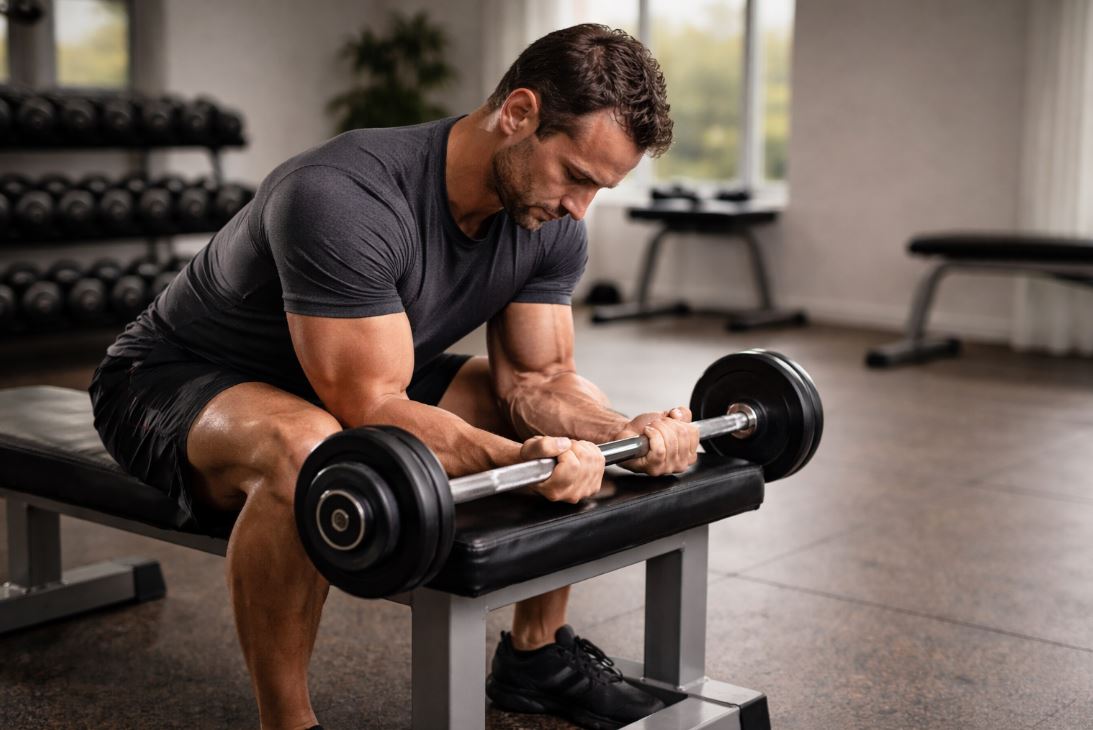
The seated barbell wrist curl is one of the most effective exercises for directly targeting the forearm flexor muscles. By stabilizing the forearms against the thighs or a bench, this variation allows for strict execution and minimizes the involvement of other muscle groups.
Unlike the standing version, the seated position provides greater control and isolation, making it ideal for building forearm size, improving grip strength, and enhancing wrist stability. Because of this, it is often considered the go-to exercise for focused forearm development.
Other Names for the Seated Barbell Wrist Curl
The seated barbell wrist curl is known by several alternative names depending on context, equipment used, or slight variations in execution. Understanding these names can help you recognize the exercise across different programs and resources.
- Seated wrist curl
- Barbell wrist curl (seated)
- Wrist flexion exercise (seated)
- Forearm wrist curl
- Seated forearm curl
- Barbell wrist flexion exercise
- Seated palm-up wrist curl
Required Equipment
The seated barbell wrist curl is a simple exercise that requires minimal equipment, making it accessible in most gym settings or even at home with basic tools.
- Barbell — The primary resistance used for the exercise; a straight barbell is most commonly used
- Weight plates — To adjust the load according to your strength level
- Flat bench (optional but recommended) — Provides better forearm support and stability
- Thigh support (alternative) — Forearms can rest on your thighs if a bench is not available
Using proper support (bench or thighs) is key, as it helps stabilize the forearms and isolate the wrist flexor muscles more effectively.
How to Perform the Seated Barbell Wrist Curl
Proper execution of the seated barbell wrist curl relies on strict forearm stabilization and controlled wrist movement, allowing you to fully isolate the forearm flexor muscles.
Starting Position (Setup)
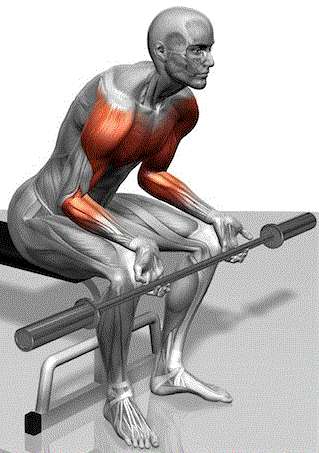
Sit on a flat bench and position your forearms on your thighs (or on a bench), with your wrists hanging just over the edge. Hold a barbell with a supinated (underhand) grip, hands about shoulder-width apart or slightly narrower.
Bend slightly forward at the hips to secure your forearms in place, ensuring they remain fully supported throughout the movement. Begin with your wrists extended, allowing the barbell to roll down into your fingers using an open or relaxed grip.

Movement (Execution)
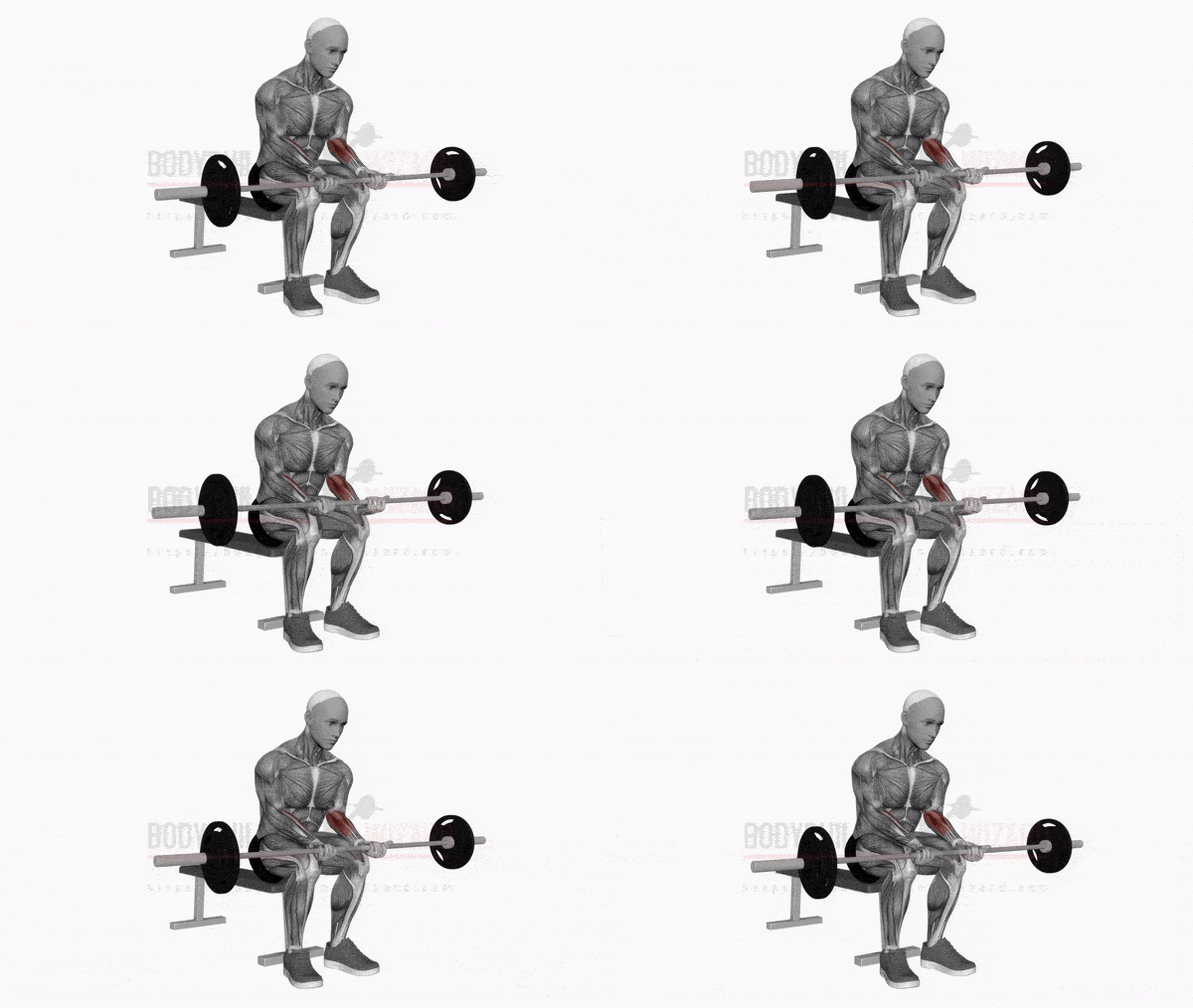
Keeping your forearms completely stationary, flex your wrists to curl the bar upward through a short range of motion. Focus on lifting the weight using only your wrists, not your arms or shoulders.
At the top of the movement, when your wrists are fully flexed, pause briefly and squeeze your forearm muscles. Then slowly lower the bar back down, allowing your wrists to fully extend again and the bar to roll toward your fingertips before repeating the next repetition.
Video Demonstration
Watching a proper demonstration can help you better understand the range of motion, wrist positioning, and tempo required for the seated barbell wrist curl. Pay close attention to how the forearms remain fully supported and how the movement occurs strictly at the wrists.
When selecting a video, focus on these key elements:
- The forearms stay in constant contact with the thighs or the bench
- The barbell is allowed to roll into the fingers at the bottom
- The movement is performed with a slow and controlled tempo
- There is a clear pause and squeeze at the top of each repetition
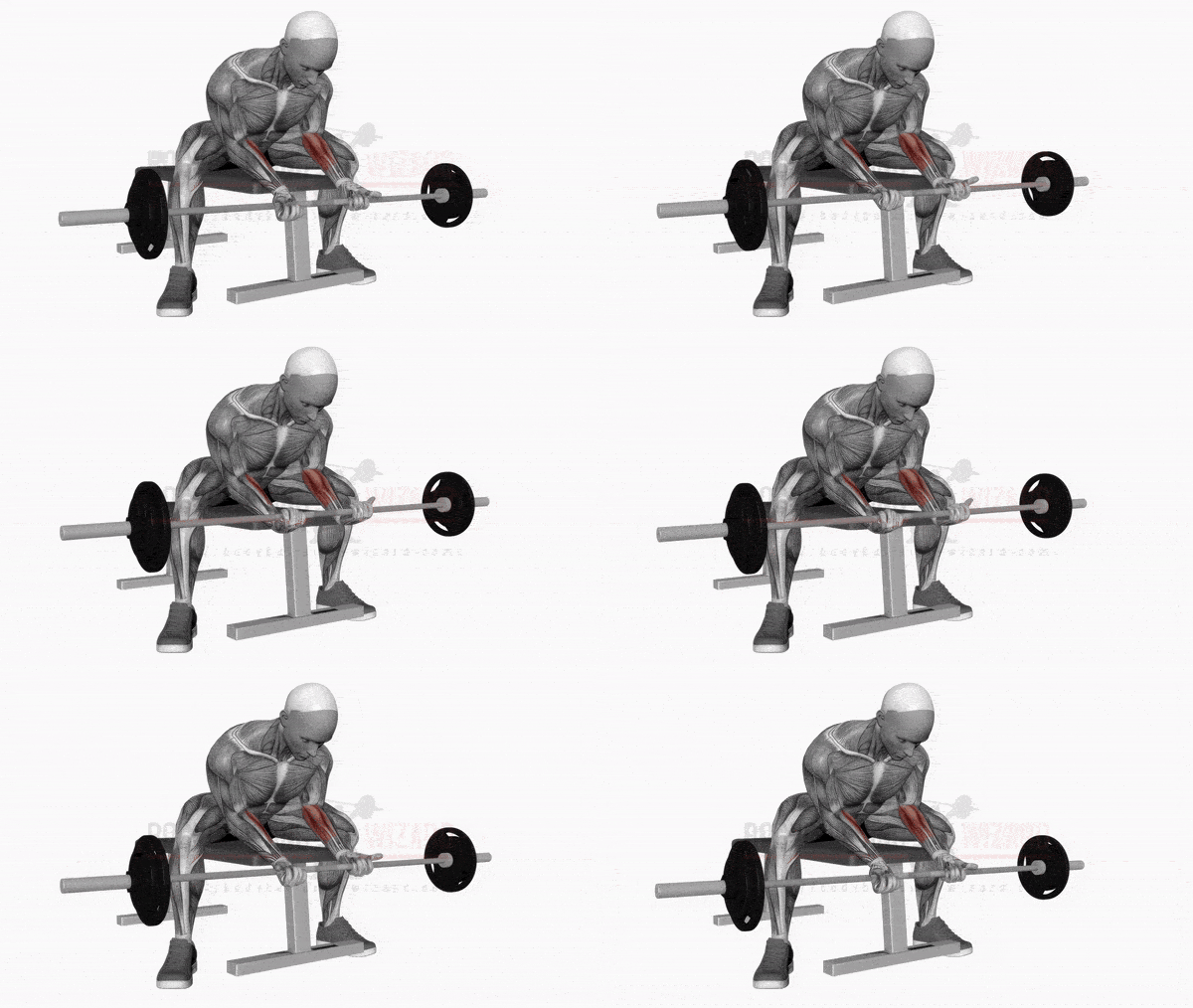

Muscles Worked in the Seated Barbell Wrist Curl
The seated barbell wrist curl primarily targets the forearm flexor muscles, which are responsible for wrist flexion and play a key role in grip strength. Because the forearms are supported in this variation, the movement provides excellent isolation of these muscles.
- Primary muscles: Flexor carpi radialis, flexor carpi ulnaris, palmaris longus
- Secondary muscles: Flexor digitorum superficialis, flexor digitorum profundus, flexor pollicis longus
- Stabilizing muscles: Brachioradialis, intrinsic hand muscles
- Antagonist muscles: Extensor carpi radialis, extensor carpi ulnaris, extensor digitorum
Biomechanics of the Seated Barbell Wrist Curl
The seated barbell wrist curl is a single-joint isolation exercise that involves movement exclusively at the wrist joint, making it highly effective for targeting the forearm flexor muscles.
Because the forearms are fully supported against the thighs or a bench, the exercise minimizes involvement from other muscle groups and allows for strict wrist flexion as the primary joint action. This setup reduces momentum and increases the mechanical demand on the target muscles.
Key biomechanical characteristics include:
- Primary joint action: Wrist flexion
- Joint involved: Wrist joint
- Primary movers: Forearm flexor muscles
- Stabilization role: Minimal, due to external support of the forearms
- Resistance type: Gravity-based free-weight resistance
An important biomechanical feature of this exercise is the enhanced stretch under load at the bottom position, especially when the bar is allowed to roll into the fingers. This increases activation of both the wrist flexors and finger flexors, contributing to improved grip strength.
Technique Optimization Tips
Small technical refinements can significantly improve the effectiveness of the seated barbell wrist curl by increasing muscle tension, control, and isolation.
- Keep your forearms fully supported. Maintain constant contact with your thighs or the bench to eliminate unnecessary movement
- Allow the bar to roll into your fingers. This increases the stretch on the forearm flexors and enhances muscle activation
- Use a slow and controlled tempo. Avoid rushing the movement to keep continuous tension on the muscles
- Focus on full wrist flexion. Curl the bar as high as possible using only your wrists for maximum contraction
- Avoid excessive weight. Too much load reduces the range of motion and shifts tension away from the target muscles
- Maintain a stable torso position. Do not lean or use body momentum to assist the lift
- Consider a thumbless grip. This can increase the range of motion and improve forearm engagement for some lifters
Use the following checklist to ensure you are performing the seated barbell wrist curl with proper technique and maximizing forearm activation.
- ✔ Sit on a bench with your forearms fully supported on your thighs or a bench
- ✔ Use a supinated (underhand) grip with the barbell
- ✔ Keep your forearms stationary throughout the movement
- ✔ Allow the barbell to roll slightly into your fingers at the bottom for a deeper stretch
- ✔ Curl the bar upward using only your wrists
- ✔ Squeeze the forearm muscles briefly at the top of the movement
- ✔ Lower the bar slowly and under control
- ✔ Use moderate weight to maintain strict wrist movement
- ✔ Avoid lifting your forearms, elbows, or torso during the exercise
Technical Emphasis & Targeting Adjustments
Small changes in setup and execution can significantly influence how effectively the seated barbell wrist curl targets the forearm muscles. Because this variation is already highly stable, it allows for very precise adjustments.
Forearm Angle Adjustment
The angle of your forearms relative to the floor changes the resistance curve of the exercise. When your forearms are parallel to the ground, the resistance is greatest at the bottom. If your elbows are slightly higher than your wrists, the resistance increases toward the top, enhancing peak contraction.
Grip Variation (Thumb Position)
Using a thumbless (false) grip can increase the range of motion by allowing the bar to roll further into the fingers. This enhances stretch and activation of the forearm flexors, especially during the bottom phase.
Range of Motion Emphasis
Maximizing the stretch at the bottom by letting the bar roll into the fingertips, followed by full wrist flexion at the top, ensures complete muscle activation across the entire movement.
Tempo Control for Isolation
A slower tempo reduces momentum and keeps constant tension on the forearms. This is especially important in a seated variation, where strict execution allows for maximum isolation and hypertrophy stimulus.
Even though the seated barbell wrist curl is a highly controlled exercise, several common mistakes can reduce its effectiveness or place unnecessary stress on the wrists.
- ❌ Lifting the forearms off the thighs or bench instead of keeping them fully supported
- ❌ Using excessive weight, which limits range of motion and control
- ❌ Performing partial repetitions without full wrist extension and flexion
- ❌ Not allowing the bar to roll into the fingers, reducing stretch and muscle activation
- ❌ Using momentum or fast repetitions instead of controlled wrist movement
- ❌ Poor wrist positioning, leading to unnecessary joint stress
- ❌ Leaning or shifting the torso instead of maintaining a stable seated position
Seated Barbell Wrist Curl Pros and Cons
Like most isolation exercises, the seated barbell wrist curl offers clear advantages for targeted forearm development, but it also comes with a few limitations. Understanding both sides helps you use the exercise more effectively in your training plan.
Benefits
#1 Maximum isolation of the forearm flexors
Because the forearms are supported, this variation minimizes involvement from other muscles. This allows for highly focused activation of the wrist flexors.
#2 Better control and technique consistency
The seated setup provides stability, making it easier to maintain strict form and controlled repetitions. This is especially beneficial for beginners learning proper execution.
#3 Improved mind-muscle connection
With reduced need for stabilization, you can focus entirely on contracting the forearm muscles. This often leads to better muscle engagement and hypertrophy.
#4 Reduced risk of cheating the movement
Since the arms are fixed in position, it is much harder to use momentum or other muscle groups. This makes the exercise more efficient and safer for the wrists.
Drawbacks
#1 Limited functional carryover
Because the movement is highly isolated, it may not translate directly to compound lifts as more dynamic grip-based exercises.
#2 Restricted range of motion compared to some variations
Depending on the setup, the range of motion may feel slightly limited, especially if the bar cannot roll freely into the fingers.
#3 Less grip challenge than standing variations
Since stability is provided externally, grip demand is lower than in standing wrist curls, which may reduce overall grip-strength development.
#4 Can become repetitive or monotonous
Due to its small movement pattern and isolation nature, some lifters may find the exercise less engaging compared to compound or more dynamic forearm exercises.
One thing I consistently notice in the gym is how often lifters completely overlook direct forearm training. It’s surprising, especially considering how critical forearms are for grip strength—a limiting factor in many of the most important compound lifts.
In exercises like the deadlift, barbell row, pull-ups, or even heavy curls, it’s rarely the back or arms that fail first—it’s the grip. If your hands can’t hold the weight, it doesn’t matter how strong the rest of your body is. In many cases, lifters could handle significantly heavier loads if their forearms were stronger.
That’s why I see forearm training not as optional, but as a performance multiplier. Stronger forearms improve lifting efficiency, enhance control of the bar, reduce reliance on straps, and contribute to a more balanced, complete physique. If you’re serious about strength, ignoring your forearms is simply leaving progress on the table.
Seated Barbell Wrist Curl Variations
There are several effective variations of the seated barbell wrist curl that can slightly alter the angle, improve comfort, or enhance muscle activation. Including different variations can help provide more complete forearm development and prevent training plateaus.
Standard Seated Barbell Wrist Curl (Forearms on Thighs)
This is the most common version, where the forearms rest directly on the thighs while seated on a bench. It provides a stable base and allows for strict execution, making it ideal for beginners and for focused forearm isolation.

Seated Wrist Curl on Bench (Kneeling Variation)
In this variation, you kneel in front of a flat bench and rest your forearms across it. This setup can offer better alignment and comfort for some lifters, especially when trying to maintain a consistent wrist path.

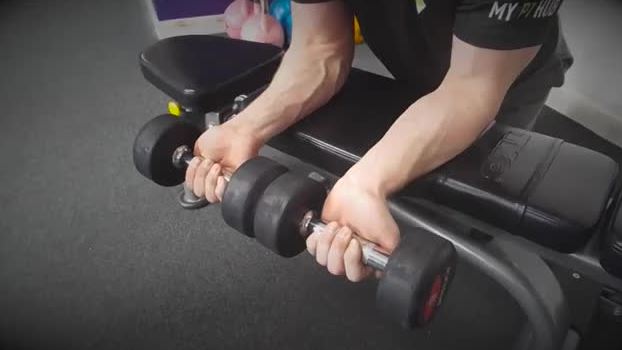
Preacher Bench Wrist Curl
This variation is performed using the incline pad of a preacher bench. The angled support changes the resistance profile slightly and often increases the peak contraction at the top of the movement, making it excellent for maximizing forearm activation.

Seated Dumbbell Wrist Curl
Using dumbbells instead of a barbell allows each wrist to move independently. This can help correct strength imbalances and may feel more natural for lifters with limited wrist mobility.
Reverse Seated Wrist Curl (Wrist Extension)
Although it targets the opposite muscle group, this variation focuses on the forearm extensors. It is commonly paired with wrist curls to ensure balanced forearm development and improved wrist health.

Replacement Exercises (Substitutes)
If the seated barbell wrist curl doesn’t suit your setup, comfort, or training goals, there are several effective alternatives that can target the forearms and improve grip strength. Many of these exercises provide similar benefits while offering different mechanics or levels of stability.
You can also explore additional options in our comprehensive forearm exercise database, where you’ll find a wide range of movements for building stronger, more muscular forearms.
Reverse Barbell Wrist Curl
This variation targets the forearm extensors, helping to balance development and reduce the risk of overuse injuries from excessive flexor training.
Wrist Roller
The wrist roller is excellent for developing grip endurance and overall forearm strength. It keeps constant tension on the muscles through a dynamic rolling motion.
Hammer Curl
While not a direct wrist flexion exercise, the hammer curl heavily engages the brachioradialis, making it a strong compound alternative for overall forearm development.
Where This Exercise Fits in a Workout
The seated barbell wrist curl is best used as an accessory isolation exercise to directly target the forearm flexors. Because it requires minimal energy and involves a small muscle group, it is most effective when placed toward the end of a workout.
In most programs, forearm training complements larger compound movements that already involve grip and pulling strength.
After Upper-Body or Arm Workouts
The most common placement is at the end of an upper-body, pull, or arm session. By this point, the forearms have already been indirectly activated through exercises like rows, pull-ups, and curls, making wrist curls an ideal finishing movement.
After Back or Pull Training
Back workouts rely heavily on grip strength. Adding seated wrist curls after exercises such as deadlifts, barbell rows, or lat pulldowns further fatigues the forearm flexors and reinforces grip endurance.
During Dedicated Forearm Training
If you include a specific forearm session, the seated barbell wrist curl is often one of the primary isolation exercises. It can be paired with movements such as reverse wrist curls, wrist rollers, and hammer curls to achieve complete development.
Typical Programming
A practical setup for most lifters includes:
- 2–4 sets
- 12–20 repetitions
- Controlled tempo with full range of motion
Higher repetition ranges are generally recommended because the forearms respond well to time-under-tension and endurance-focused training.
Seated Barbell Wrist Curl vs. Standing Barbell Wrist Curl
Both variations effectively target the forearm flexor muscles, but they differ in stability, isolation, and overall grip demands. Choosing between them depends on your goal—strict isolation or more functional grip involvement.
| Feature | Seated Barbell Wrist Curl | Standing Barbell Wrist Curl |
|---|---|---|
| Body Position | Seated with forearms supported on thighs or a bench | Standing with arms extended in front of the body |
| Stability | High stability due to forearm support | Lower stability, requires more control |
| Forearm Isolation | Excellent isolation of wrist flexors | Slightly less isolation |
| Grip Demand | Moderate | Higher due to lack of support |
| Range of Motion | Easier to control full ROM | Can be harder to maintain full ROM |
| Beginner Friendliness | Very beginner-friendly | Moderate |
| Technique Strictness | Easier to maintain strict form | Easier to cheat with momentum |
Conclusion: The seated barbell wrist curl is the better choice for strict isolation and controlled forearm training, making it ideal for beginners and hypertrophy-focused workouts. The standing version adds more grip and demands greater stabilization, which can be beneficial for functional strength. For best results, both variations can be used together to provide a more complete forearm training stimulus.
Final Thoughts on the Seated Barbell Wrist Curl
The seated barbell wrist curl is one of the most effective exercises for isolating and developing the forearm flexor muscles. Its stable setup allows for strict execution, making it an excellent choice for both beginners and experienced lifters looking to improve forearm size and control.
While it may not be the most dynamic movement, its value lies in precision and consistency. By focusing on proper technique, full range of motion, and controlled tempo, you can significantly enhance forearm activation and long-term progress.
Incorporating this exercise into your routine—especially alongside movements that target the forearm extensors—can lead to stronger grip, improved wrist stability, and more balanced arm development.
Ultimately, the seated barbell wrist curl is a simple but highly effective tool that should not be overlooked if your goal is to build strong, well-developed forearms.
- ✔ The seated barbell wrist curl is an isolation exercise that directly targets the forearm flexor muscles
- ✔ Supporting the forearms on the thighs or a bench provides better stability and stricter muscle isolation
- ✔ Allowing the bar to roll into the fingers increases range of motion and forearm activation
- ✔ The exercise helps improve grip strength, wrist stability, and forearm hypertrophy
- ✔ Moderate weight and a slow, controlled tempo are more effective than heavy, momentum-based repetitions
- ✔ For balanced forearm development, seated wrist curls should ideally be paired with reverse wrist curls or other extensor-focused exercises
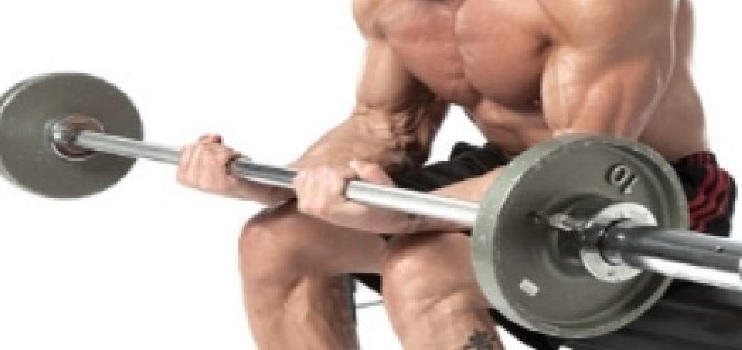
Can seated wrist curls help improve performance in sports?
Yes, stronger forearms can enhance performance in sports that require grip endurance and wrist control, such as tennis, climbing, and combat sports.
Is it better to train forearms with heavy weight or higher reps?
Forearms generally respond better to higher reps and longer time under tension, rather than very heavy loads.
Can you do wrist curls every day?
You can train forearms frequently, but daily training may lead to overuse or tendon irritation. Most lifters benefit from 2–4 sessions per week.
Do wrist curls increase vein visibility in the forearms?
Yes, consistent forearm training can improve muscle density and vascularity, especially when combined with low body fat levels.
Should you use lifting straps if you train forearms?
If your goal is forearm development, you should limit strap usage, as straps reduce grip demand and forearm activation.
Can seated wrist curls help with wrist pain?
They may help strengthen the muscles around the joint, but if pain is present, it’s important to address the underlying issue first and use proper load progression.
Are machines better than free weights for forearm training?
Free weights are generally more effective because they require active grip stabilization, which better develops functional strength.
How long does it take to see forearm growth?
Forearms tend to grow slowly, but with consistent training, noticeable improvements can appear in 4–8 weeks, depending on genetics and training quality.
Do bigger forearms automatically mean a stronger grip?
Not always. While there is a strong correlation, grip strength also depends on neural efficiency and specific grip training.
Is stretching important after forearm training?
Yes, stretching helps maintain wrist mobility and tendon health, which is important given the repetitive nature of forearm exercises.
