


Weak shin muscles are one of the most overlooked problems in strength training and sports performance. Most lifters spend years training their calves while completely ignoring the muscles on the front of the lower leg — especially the tibialis anterior. Over time, this imbalance may contribute to poor ankle stability, shin discomfort, reduced running efficiency, and even recurring shin splints.
As a coach working with runners, recreational athletes, and gym-goers, I’ve noticed that many people only start paying attention to the tibialis anterior once pain appears. The good news is that strengthening these muscles does not require complicated equipment or heavy weights. In fact, a simple resistance band is often more than enough.
The resistance-band tibialis raise (resistance-band dorsiflexion) is one of the safest and most accessible exercises for strengthening the front of the lower leg. It is beginner-friendly, joint-friendly, and easy to perform almost anywhere.
What Is the Resistance Band Tibialis Raise?
The resistance band tibialis raise is an isolation exercise that targets the tibialis anterior — the primary muscle responsible for ankle dorsiflexion. In simple terms, dorsiflexion means pulling your toes upward toward your shin.
This movement plays a major role in:
- Walking mechanics
- Running efficiency
- Jumping and landing control
- Ankle stability
- Shock absorption during movement
During the exercise, the resistance band creates tension while you pull your foot upward against resistance. Although the movement looks simple, the tibialis anterior can fatigue surprisingly quickly when trained properly.
Unlike many lower-body exercises that primarily target the calves or quadriceps, this movement directly strengthens the anterior lower leg.
Benefits of Resistance Band Tibialis Raises
Improved Tibialis Anterior Strength
The most obvious benefit is stronger shin muscles. This may help improve lower-leg balance and reduce muscular weaknesses that often develop from excessive calf-dominant training.
Better Ankle Stability
A stronger tibialis anterior contributes to improved ankle control during walking, sprinting, jumping, and direction changes. This is especially useful for athletes in sports that require rapid footwork.
May Help Reduce Shin Splint Risk
Although shin splints can have multiple causes, weak tibialis anterior muscles are commonly associated with excessive stress on the shin. Strengthening these muscles may improve force absorption during repetitive activities such as running.
Excellent for Runners and Athletes
Runners often perform thousands of repetitive foot strikes during training sessions. Improving tibialis anterior endurance may help support better movement efficiency and lower-leg resilience.
Minimal Joint Stress
Unlike some loaded lower-body exercises, resistance band tibialis raises place relatively little stress on the knees, hips, and spine. This makes them useful for beginners, older individuals, or people returning from injury.
How to Perform the Resistance Band Tibialis Raise Properly
One of the advantages of this exercise is its simplicity. However, proper setup and movement control still matter if you want to fully activate the tibialis anterior.
Step 1 — Secure the Resistance Band
Attach a resistance band securely to a sturdy object such as:
- Bench
- Rack
- Heavy machine
- Table leg
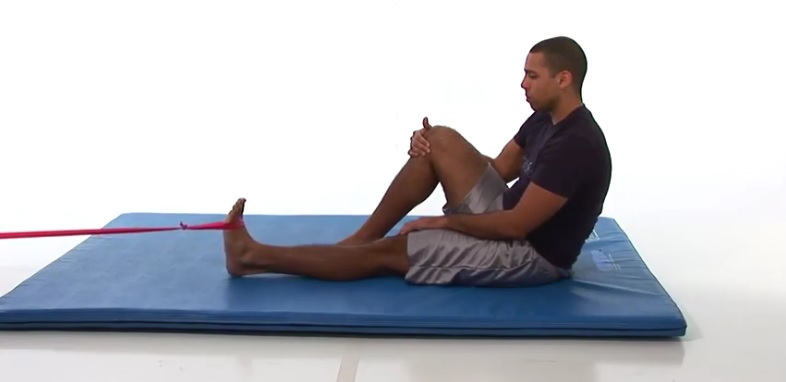
Sit on the floor or on a bench facing the anchor point. Loop the band around the upper part of your foot.
Move far enough away from the anchor point to create constant tension in the band.
Step 2 — Start With Your Foot Pointed Forward
Begin with your ankle in a plantar-flexed position. This simply means your toes are pointed slightly forward, away from your shin.
Keep:
- Your heel stable
- Your knee relatively still
- Your upper body relaxed

Step 3 — Pull Your Toes Toward Your Shin
Slowly pull your foot upward by flexing at the ankle.
Focus on moving the ankle itself rather than curling the toes aggressively.
At the top position:
- Pause briefly
- Squeeze the tibialis anterior
- Maintain control
As a coach, I often notice that people try to perform the exercise too quickly. The tibialis anterior usually responds better to slower, more controlled repetitions.
Step 4 — Lower the Foot Slowly
Do not allow the resistance band to yank your foot back down.
Instead:
- Lower slowly
- Maintain tension
- Control the eccentric phase
This portion of the movement is often where the greatest training effect occurs.
Common Mistakes
Even though this exercise is beginner-friendly, several mistakes can reduce its effectiveness.
Using Momentum
Rapidly swinging the foot removes tension from the tibialis anterior and turns the exercise into a sloppy movement pattern.
Use controlled repetitions instead.
Moving the Entire Leg
The movement should occur mainly at the ankle joint. Excessive knee movement often reduces tibialis anterior activation.
Using Too Much Resistance
Many people assume heavier resistance is automatically better. In reality, the tibialis anterior is a relatively small muscle that often responds well to moderate resistance and higher reps.
Rushing the Eccentric Phase
Lowering the foot too quickly decreases muscular tension.
Control the lowering phase for better muscle activation.
Curling the Toes Excessively
The goal is ankle dorsiflexion, not aggressive toe curling. Focus on pulling the entire foot upward.
Coach’s Tips for Better Tibialis Activation
Over the years, I’ve found several small adjustments that dramatically improve how people feel about this exercise.
Think About Pulling Through the Ankle
Instead of thinking about the toes, focus mentally on lifting from the ankle joint itself.
This usually improves muscle engagement immediately.
Use Slower Repetitions
The tibialis anterior responds extremely well to controlled tempo work.
A good rhythm is:
- 1 second up
- 1 second squeeze
- 2–3 seconds down
Don’t Chase Heavy Resistance
This is not an ego exercise.
Most people get far better results using:
- Moderate resistance
- Strict technique
- Longer time under tension
Train the Tibialis After Calves
I personally like programming tibialis work near the end of a lower-body workout or directly after calf training. This often helps create better lower-leg balance.
Muscles Worked
Primary Muscle Worked
Secondary Muscles Involved
- Extensor hallucis longus
- Extensor digitorum longus
- Ankle stabilizers
The tibialis anterior remains the dominant muscle throughout the movement.
Replacement Exercises (Substitutes)
- Tib Bar Raise
- Standing Tibialis Raise
- Cable Tibialis Raise
- Heel Walk Exercise
- Weight Plate Toe Raise
- Single-Leg Wall Tibialis Raise
- Wall Tibialis Raise
- Seated Dumbbell Tibialis Raise
- DARD Tibialis Raise
If you want a complete overview of the best tibialis anterior exercises for shin strength, ankle stability, and lower-leg endurance, be sure to explore our full guide to the best shin exercises.
Best Rep Range & Programming
The tibialis anterior generally responds well to moderate- to high-repetition ranges.
Recommended Rep Ranges
- Beginners: 12–15 reps
- Muscle endurance: 15–25 reps
- Rehabilitation/prehab: 15–20 reps
Recommended Sets
- 2–4 sets per session
Training Frequency
- 2–4 times weekly
Because the muscle is relatively small and recovers quickly, it can usually tolerate slightly higher training frequency than larger muscle groups.
Resistance Band Tibialis Raise Variations
Bent-Knee Tibialis Raise
Perform the exercise with the knee bent slightly more than usual. Some individuals find this position more comfortable for ankle movement. However, unlike anchored resistance band variations, this seated version changes the resistance profile because the band assists the upward dorsiflexion movement. As a result, the exercise feels easier while lifting the foot toward the shin and more challenging during the lowering phase. For that reason, this variation places greater emphasis on controlled eccentric tension than on constant resistance throughout the movement.
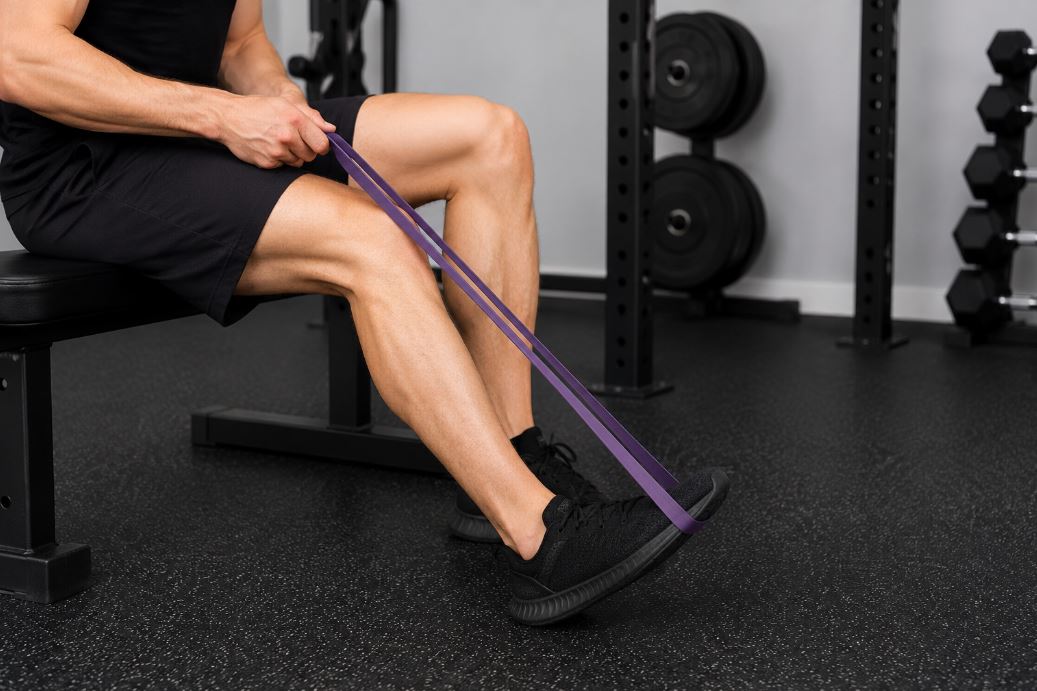
Floor-Seated Resistance Band Tibialis Raise
Sit on the floor with both knees extended. Loop the band around one foot, then grasp the ends. Press your other (nonworking) foot down onto the band to stabilize the band (a). Lift the foot of the working ankle toward your head against the resistance of the band (b). Slowly return to the starting position.

Single-Leg Resistance Band Tibialis Raise
Train one side at a time to improve muscular balance and focus on unilateral control.
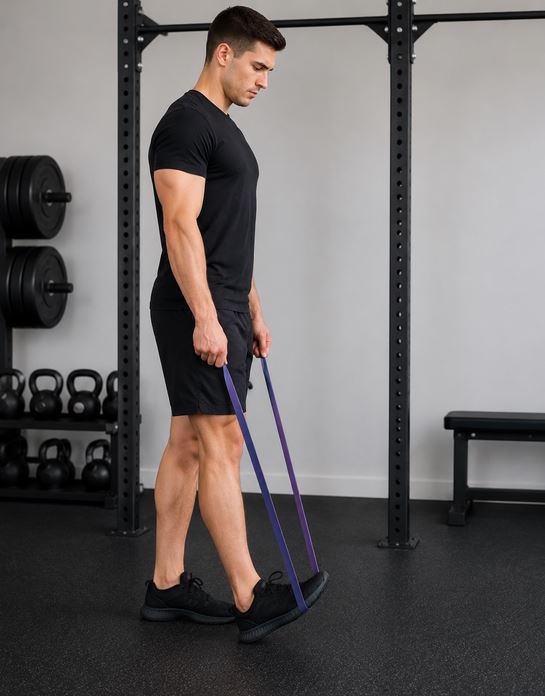
Standing Tibialis Raise With Band
Advanced trainees may perform the exercise standing for additional balance and stabilization demands. Unlike the seated-anchored variation, this standing version significantly changes the resistance curve. Because the resistance band assists upward dorsiflexion, the exercise is easier during the lifting phase and more challenging during the lowering phase. For this reason, this variation functions more like an eccentric-focused tibialis anterior exercise than a traditional resistance-band tibialis raise.
Who Should Do This Exercise?
The resistance-band tibialis raise can benefit many populations.
Runners
Repetitive foot strikes place constant stress on the lower legs. Strengthening the tibialis anterior may help improve lower-leg durability.
Athletes
Sports involving sprinting, jumping, and rapid direction changes rely heavily on ankle stability and foot control.
People Prone to Shin Splints
Although no exercise guarantees injury prevention, stronger shin muscles may help improve lower-leg resilience.
Beginners
The exercise is easy to learn and requires minimal equipment.
Lifters Who Neglect Lower-Leg Training
Many gym-goers focus only on calves, ignoring the front of the lower leg. Adding direct tibialis work may help improve overall lower-leg development and muscular balance.
Final Thoughts
The resistance-band tibialis raise is a simple yet highly effective exercise for strengthening the muscles at the front of the lower leg. Although it will never be as popular as squats or calf raises, it can play an important role in improving ankle stability, muscular balance, and lower-leg resilience.
As a coach, I strongly believe that smaller supportive muscles often deserve more attention than they receive. The tibialis anterior is a perfect example. Just a few controlled sets, performed several times per week, can make a noticeable difference in lower-leg strength and movement quality over time.
Consistency matters far more than heavy resistance here. Focus on controlled movement, proper tension, and quality repetitions.
Frequently Asked Questions
What does the tibialis anterior muscle do?
The tibialis anterior is the main muscle responsible for ankle dorsiflexion, which means pulling your toes upward toward your shin. It also helps control foot placement during walking, running, and jumping.
Can resistance band tibialis raises help with shin splints?
They may help by strengthening the muscles around the shin and improving lower-leg resilience. However, shin splints can have several causes, so this exercise should be part of a broader approach that includes recovery, load management, and proper footwear.
How often should I train the tibialis anterior?
Most people can train the tibialis anterior 2–4 times per week. Start with 2–3 sets of controlled repetitions and increase gradually as your lower legs adapt.
Should I do tibialis raises before or after calf training?
For most lifters, tibialis raises work best after calf training or near the end of a lower-body workout. This keeps your main strength work fresh while still addressing lower-leg balance.
Is the resistance band tibialis raise good for runners?
Yes. Runners can benefit from stronger shin muscles because the tibialis anterior helps control foot strike, ankle position, and lower-leg fatigue during repetitive running mechanics.
What resistance band should beginners use?
Beginners should use a light or moderate resistance band that allows smooth, full-range ankle movement. If the band is too heavy, you will likely compensate with momentum or excessive knee movement.
Why do my shins burn during tibialis raises?
A burning sensation is common because the tibialis anterior is often undertrained. If the burn feels muscular and controlled, that is usually normal. Sharp pain, however, is a sign to stop and reassess your technique.
Can I train the tibialis anterior without equipment?
Yes. Bodyweight tibialis raises, heel walks, and wall tibialis raises can all strengthen the front of the lower leg without resistance bands or gym equipment.
