


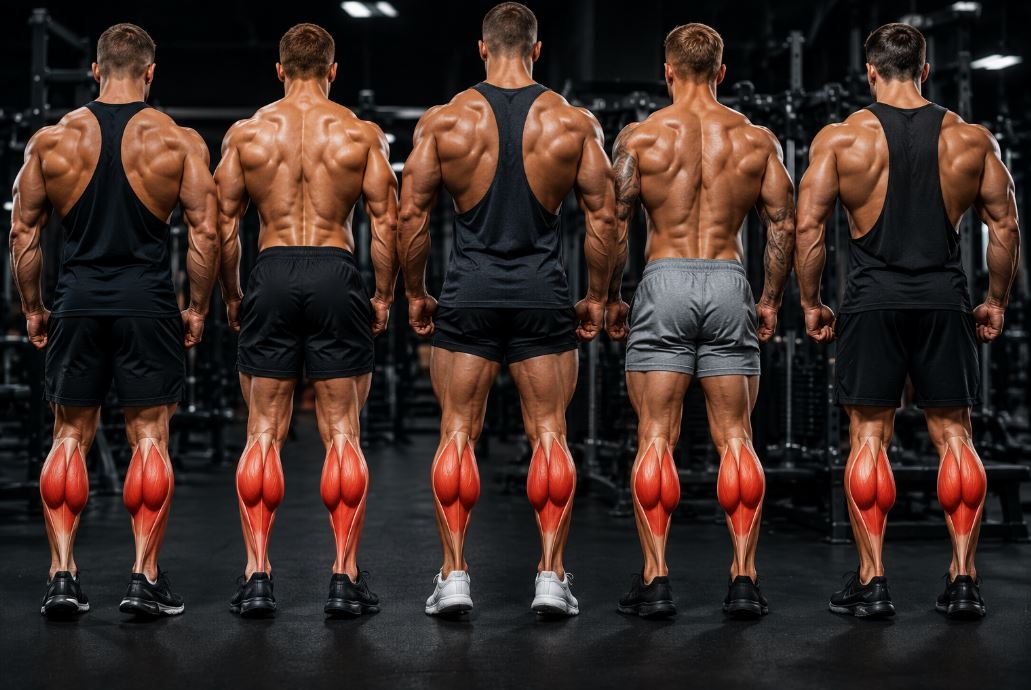
Few muscle groups earn the reputation the calves have among lifters — notoriously stubborn, frustratingly slow to grow, and often the last body part to respond to training. Part of the problem is that most people train “the calves” as if they were a single muscle, when they’re actually a small team of muscles with distinct roles, fiber types, and training requirements. Understanding the complete anatomy of the calf muscles is the foundation for training this group with real precision, rather than hoping that harder work alone will eventually pay off.
Quick Answer
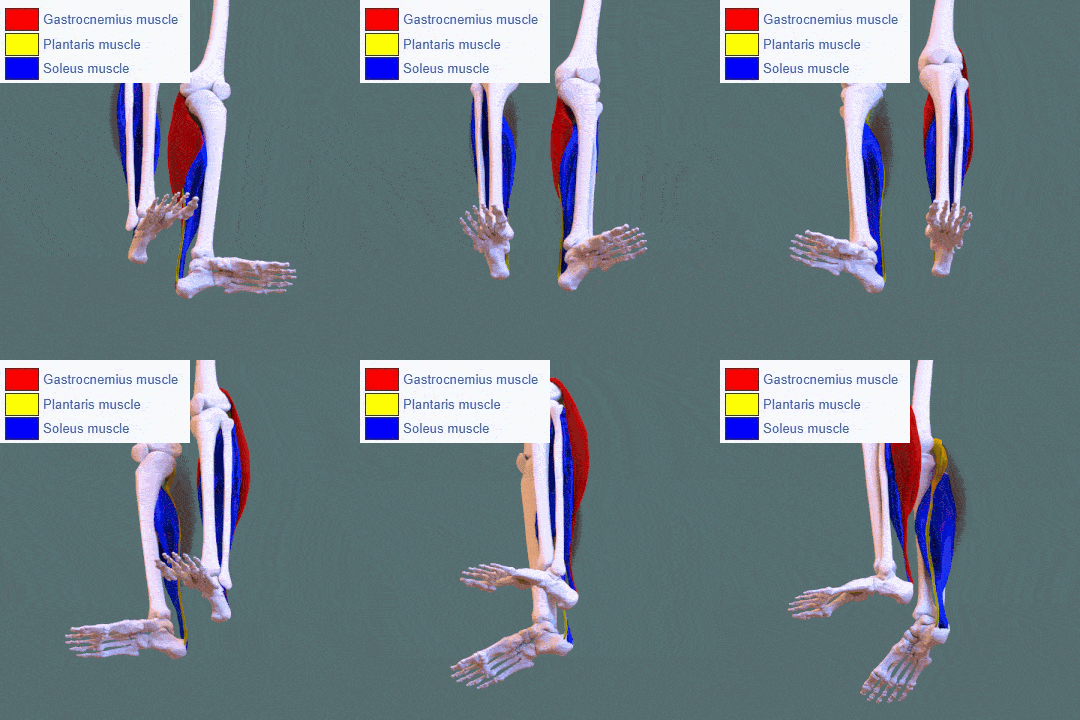
The calf muscles are a group of muscles on the back of the lower leg, primarily made up of the gastrocnemius and soleus, which together form the “triceps surae.” The gastrocnemius is the large, superficial muscle responsible for the calf’s visible shape and crosses both the knee and ankle joints, while the soleus lies deeper, crosses only the ankle, and is built for postural endurance rather than explosive power. Both muscles share a single insertion point at the Achilles tendon and work together as the primary plantar flexors of the ankle.
| Muscle group | Posterior compartment muscles of the lower leg |
|---|---|
| Primary functions | Ankle plantar flexion, postural stabilization |
| Members | Gastrocnemius, soleus (plus the smaller, often absent plantaris) |
| Innervation | Tibial nerve |
| Common exercises | Standing calf raise, seated calf raise, leg press calf raise |
| Main bodybuilding role | Lower-leg shape, power, and postural endurance |
Overview
The calf sits on the back of the lower leg, overlying the tibia and fibula, and it plays a central role in nearly every standing, walking, and running movement a person performs. Despite being treated as a single unit by most lifters, a proper understanding of the anatomy of the calf muscles reveals a small team of distinct muscles working together, each with a genuinely different structural role and training response.
This distinction matters enormously in practice. The calves are widely considered one of the most stubborn muscle groups to develop, and much of that reputation stems from lifters training only one of the two major calf muscles while neglecting the other entirely. A genuine understanding of the anatomy of the calf muscles — not just “the calf” as a vague, singular unit — is what separates lifters who train this group with real intention from those who simply hope that more sets will eventually produce results. To see how these muscles fit into the rest of your muscular system, check out our interactive muscle anatomy tool.
Anatomy & Location: The Anatomy of Calf Muscles Explained
According to StatPearls’ anatomical reference on the calf, the calf denotes the entire posterior compartment of the lower leg, which is further divided into a superficial layer and a deep layer. The superficial layer — the one most relevant to bodybuilding and general training — contains the gastrocnemius, soleus, and the smaller, frequently absent plantaris muscle.

The Muscles of the Calf
| Muscle | Joints Crossed | Fiber Type | Primary Role |
|---|---|---|---|
| Gastrocnemius | Knee and ankle | Predominantly fast-twitch | Visible calf shape, explosive plantar flexion |
| Soleus | Ankle only | Predominantly slow-twitch | Postural endurance, venous return |
| Plantaris | Knee and ankle | Minimal muscle belly, mostly tendon | Vestigial; contributes minimally to plantar flexion |
The gastrocnemius is the large, superficial muscle most people picture when they think of “the calf” — it forms the visible diamond-shaped bulge and is the muscle responsible for a developed calf’s peak and shape.

Beneath it lies the soleus, a broad, flat muscle that contributes significantly to overall calf thickness but plays a functionally different role, built more for sustained postural work than explosive power.

According to Kenhub’s reference on the leg muscles, the posterior compartment is organized into a superficial layer (gastrocnemius, soleus, and plantaris) and a deep layer of smaller stabilizing muscles, with the entire compartment primarily responsible for plantar flexion of the foot. The plantaris is a small, largely vestigial muscle present in roughly 90% of people, contributing only minimally to plantar flexion — most lifters will never need to think about it directly, though it’s occasionally relevant in specific calf strain injuries.
Together, the gastrocnemius and soleus share a single tendon insertion, the Achilles (calcaneal) tendon, which attaches to the calcaneus, or heel bone. Because they converge onto this shared tendon, the two muscles are collectively known as the “triceps surae” — a name that reflects their combined, three-headed structure (two gastrocnemius heads plus the soleus) despite being genuinely separate muscles with different functions.
For a broader explanation of anatomical terms like origin, insertion, and innervation, see our guide on muscle anatomy basics.
Function
The calf muscles’ primary collective function is ankle plantar flexion — pointing the foot downward, the motion behind standing on your toes, pushing off the ground while walking or running, and jumping. Because the gastrocnemius crosses both the knee and ankle while the soleus crosses only the ankle, the two muscles contribute differently depending on knee position: the gastrocnemius is more dominant with the knee straight, while the soleus remains consistently active regardless of knee angle. Beyond plantar flexion, the calf muscles play a significant postural role, continuously making small adjustments to control forward sway during standing, and the soleus specifically plays an additional role in pumping venous blood back toward the heart.
Common Exercises
Because the gastrocnemius and soleus respond differently to knee position, a complete calf training approach benefits from both straight-knee and bent-knee exercise variations rather than relying on just one.


Knee position alone determines which muscle you’re emphasizing: any calf raise performed with the knees bent to roughly 90 degrees shifts emphasis onto the soleus, while any variation performed with the legs straight (or only slightly bent) shifts emphasis onto the gastrocnemius. Fiber type composition also has practical implications for loading. Since the soleus is predominantly composed of slow-twitch fibers, it tends to respond better to higher rep ranges (roughly 20-25 reps) with lighter loads. The gastrocnemius, by contrast, is generally more fast-twitch dominant, meaning it typically responds well to lower rep ranges (roughly 8-12 reps) with heavier loading.
| Exercise | Primary Calf Muscle Emphasized |
|---|---|
| Smith machine standing calf raise | Gastrocnemius |
| Standing barbell calf raise | Gastrocnemius |
| Leg press calf raise | Gastrocnemius |
| Seated calf raise | Soleus |
| Seated barbell calf raise | Soleus |
| Donkey calf raise | Gastrocnemius |
For a complete breakdown of exercise selection and programming, see our guides: Best Exercises for the Calf Muscles and Killer Calves: The Essential Guide to Calf Training.
Bodybuilder’s Take
“Why are my calves so much harder to grow than every other muscle group?” This is one of the most common training frustrations, and it’s rarely a single-cause problem. Genetics plays a real, well-documented role in calf development, influencing everything from muscle fiber composition to tendon insertion length — see our detailed breakdown, The Role of Genetics in the Development of Calf Muscles, for more. That said, genetics is rarely the whole story; inconsistent training, limited range of motion, and neglecting one of the two major calf muscles are all common, fixable contributors. For a full breakdown of specific training mistakes, see Why Your Calves Aren’t Growing.
“Does the Achilles tendon actually make calf training less effective?” There’s some truth to this. The Achilles tendon behaves somewhat like an elastic band, storing and returning energy during the lowering and lifting phases of a calf raise, which can reduce how much of the work is actually being done by the muscle itself rather than passive tendon recoil. Pausing briefly at both the bottom (fully stretched) and top (fully contracted) positions of each rep helps counteract this effect and keep more tension on the muscle itself.
“Do I really need separate exercises for the gastrocnemius and soleus?” Genuinely, yes, for complete development. Because the gastrocnemius crosses the knee and the soleus doesn’t, straight-knee and bent-knee exercises meaningfully shift emphasis between the two muscles. Training only one knee position consistently under-develops the other muscle, regardless of how much total calf volume is being performed.
“How often should I train my calves for growth?” Because the calf muscles are frequently active throughout everyday walking and standing, many lifters find they tolerate — and often benefit from — more frequent direct training than other muscle groups, sometimes two to three times per week. Combining higher-frequency training with genuine attention to full range of motion and both knee positions tends to produce better results than infrequent, half-hearted sessions.
Common beginner mistakes:
- Training calves with only one knee position (usually only standing, straight-knee variations), leaving the soleus significantly undertrained
- Using momentum and partial range of motion, which reduces tension on the muscle and shifts more of the work onto the elastic Achilles tendon
- Blaming genetics entirely for slow calf progress while overlooking fixable training inconsistencies
Common Conditions
This section is educational and should not replace professional medical advice.
The calf muscles are a common site of both acute strains and chronic overuse issues, given how much load they handle during walking, running, and jumping. Achilles tendinopathy, involving chronic irritation of the shared tendon, is common with age and with sudden increases in running or jumping volume. Acute strains, including the well-documented “tennis leg” injury affecting the gastrocnemius specifically, typically occur during sudden, forceful movements combining knee extension with ankle dorsiflexion. The soleus, given its role in venous return, is also relevant to circulatory health — reduced activity from prolonged immobility is a recognized contributing factor to the risk of blood clots in the legs. Persistent calf pain, sudden sharp pain during activity, or swelling and warmth in the lower leg should be evaluated by a healthcare professional rather than trained through.
Common Myths
A clear understanding of the anatomy of the calf muscles dispels most persistent training myths surrounding this notoriously stubborn muscle group.
Myth: The calves are just one muscle. The calf is made up of at least two functionally distinct muscles — the gastrocnemius and soleus — with a third, largely vestigial muscle (the plantaris) present in most people.
Myth: If your calves aren’t growing, it’s purely genetic, and there’s nothing you can do. While genetics meaningfully influences calf development, inconsistent training, limited range of motion, and neglecting one of the two major calf muscles are common, fixable contributors to slow progress.
Myth: Standing calf raises are all you need for complete calf development. Standing, straight-knee exercises primarily target the gastrocnemius. Complete development requires bent-knee exercises, such as the seated calf raise, to adequately train the soleus as well.
Complete your anatomy knowledge with the muscles of the chest, shoulders, back, arms, core, and neck.
Explore Upper Body MusclesKey Takeaways
- The calf is made up of at least two functionally distinct muscles: the gastrocnemius and soleus.
- The gastrocnemius crosses the knee and ankle; the soleus crosses only the ankle — a key training distinction.
- Complete calf development requires both straight-knee and bent-knee exercise variations.
- Genetics meaningfully influences calf development, but inconsistent training is often a bigger, fixable factor.
- The Achilles tendon’s elastic recoil can reduce training effectiveness unless reps are paused at both ends of the range.
Frequently Asked Questions
What muscles make up the calf?
The calf is primarily made up of the gastrocnemius and soleus, collectively known as the triceps surae, along with a smaller, often vestigial muscle called the plantaris.
What is the difference between the gastrocnemius and soleus?
The gastrocnemius crosses both the knee and ankle and is predominantly fast-twitch, while the soleus crosses only the ankle and is predominantly slow-twitch, built more for postural endurance.
Why are the calves so hard to grow?
This is a combination of genetics, which meaningfully influences calf development, and common training issues like relying on only one knee position or using limited range of motion.
Do I need different exercises for each calf muscle?
Yes. Straight-knee exercises like the standing calf raise emphasize the gastrocnemius, while bent-knee exercises like the seated calf raise emphasize the soleus.
What is the main function of the calf muscles?
Their main job is ankle plantar flexion, pointing the foot downward, which is essential for walking, running, jumping, and maintaining standing posture.
Sources & References
Every claim in this guide is grounded in anatomical references and published research. Explore the primary sources below.
