



Introduction
The barbell floor press is essentially a barbell bench press without the bench. Instead of lying on a bench, you lie on your back on the floor, usually inside a power rack with the hooks set low, and press the bar up from a position where your upper arms rest on the floor.
That simple change has two important effects. First, the floor stops your elbows before the bar reaches your chest, shortening the range of motion and removing the bottom part of the press. Second, lying flat on the floor eliminates leg drive and the lower back arch, so your upper body has to do all the work.
Because of these characteristics, powerlifters use the floor press to build lockout strength, while many lifters rely on it as a shoulder-friendly pressing option. It is also a practical choice for home gyms with a power rack but no bench, making it one of the most versatile bench press variations.
The barbell floor press is a pressing exercise performed lying on the floor instead of a bench, usually inside a power rack. The bar is lowered until the upper arms rest on the floor, paused briefly, and pressed back up. Because the floor stops the movement before the bar reaches the chest, the exercise trains the pectoralis major, triceps brachii, and anterior deltoids through a shortened range of motion, with no leg drive and minimal stress on the shoulders.
Other Names for Barbell Floor Press
The exercise goes by a few different names, depending on the training community.
- Floor press
- Barbell floor bench press
- Floor bench press
- Rack floor press
- Paused floor press
Required Equipment
The floor press requires very little equipment, but a rack with adjustable hooks and safety arms makes it much safer and easier to set up.
- Olympic barbell and weight plates
- Power rack or squat rack with adjustable J-hooks and safety arms
- Optional exercise mat for extra comfort under the back and elbows
How to Perform Barbell Floor Press
Setting up the floor press can feel strange at first, especially if you are used to the bench press, so take your time.
Starting Position
Adjust the rack before loading the bar, so the hooks and safety arms are at the correct height for your arm length.
- Set the J-hooks so the bar sits just below arm’s length when you lie on the floor
- Lie on your back with your eyes directly under the bar
- Bend your knees to about 90 degrees with your feet flat, or keep your legs straight
- Grip the bar with a pronated (overhand) grip, shoulder width or slightly wider
- Squeeze your shoulder blades together as if gripping the floor with them
- Unrack the bar and position it over your lower chest with your arms locked and wrists straight

Execution (Action Phase)
Lower the bar along the same path you would use in a regular bench press, and let the floor, not momentum, end each rep.
- Take a breath and brace your core (see our guide on breathing technique)
- Lower the bar under control toward your lower chest
- Keep your elbows at about 45 degrees from your torso
- Let your upper arms settle gently on the floor and pause for about one second
- Exhale and press the bar back up to the starting position
- Keep the bar moving in a straight line above your lower chest
Never bounce your elbows off the floor. Hitting the floor too hard can injure the elbows and wrists and removes the dead-stop benefit of the exercise.
Video Demonstration
Watching the floor press helps you understand how the upper arms should settle on the floor before each press.
In the video below, notice how the lifter keeps the shoulder blades squeezed together, lowers the bar with control, and pauses briefly with the triceps resting on the floor. The press starts from a complete stop, with the elbows staying at roughly 45 degrees throughout the movement.

The first time a client sees the floor press, the reaction is almost always the same: “Did someone steal the bench?” The second reaction comes a few seconds later, when they realize the J-hooks are still set at bench height and they are lying on the floor, reaching for a bar that is a good 30 centimeters out of reach, like someone trying to grab a jar from the top shelf while lying down.
Once the setup is sorted, my main coaching point is the pause. Let your triceps settle on the floor the way you would set down a full cup of coffee, not the way you would drop a bag of groceries. That brief, quiet pause is where the exercise does its job: it removes all momentum and forces you to press from a true dead stop.
Quick Form Checklist
Run through these cues before every set to make sure your setup and technique are correct.
- J-hooks and safety arms at the right height
- Shoulder blades squeezed together
- Elbows at about 45 degrees
- Upper arms settle on the floor, no bouncing
- Bar stays over the lower chest
Technical Emphasis & Targeting Adjustments
Small adjustments to grip width, leg position, and tempo can change the focus of the barbell floor press.
- Closer grip → more triceps emphasis. Narrowing your grip to about shoulder width increases triceps demand and further improves lockout strength. See our comparison of wide-grip vs close-grip bench press for more details.
- Straight legs → less lower-body involvement. Fully extending the legs removes any leg drive and flattens the lower back. Research on the bench press shows that pressing without leg support increases muscle activation in the upper body and core at the same relative load.
- Longer pause → more dead-stop strength. Extending the pause on the floor to 2–3 seconds removes any remaining elastic energy. This makes each rep harder and builds strength from a complete stop.
- Explosive concentric → more pressing power. Pressing light loads (about 50–60% of your maximum) as fast as possible turns the floor press into a speed exercise. Learn more about controlling lifting tempo for different goals.
- Elbows at 45 degrees → healthier shoulders. Think of forming an arrow with your arms and torso, not a T. This position keeps the load on the chest and triceps while protecting the shoulder joint.
Common Mistakes
The floor press is simpler than the bench press, but it has its own mistakes. Several of them overlap with the most common bench press mistakes.
- Bouncing the elbows off the floor. Using the floor as a springboard removes the dead-stop benefit and can injure the elbows. Let your upper arms settle gently and pause before every press.
- Flaring the elbows. Letting the elbows drift out to 90 degrees increases shoulder stress and is a common reason lifters feel their shoulders instead of their chest. Keep them at about 45 degrees from your torso.
- Letting the bar drift. Pressing the bar toward your face or feet creates an inefficient bar path and makes the lift harder. Keep the bar moving in a straight line above your lower chest.
- Losing upper back tightness. Because the floor feels stable, many lifters relax their shoulder blades. Keep them squeezed together throughout the set for a solid pressing base.
- Setting the hooks too high. Hooks set at bench height force you to reach for the bar, which ruins your setup before the first rep. Adjust them so you can unrack the bar with your arms almost fully extended.
Unlike the bench press, you cannot simply “roll” a failed floor press off your body, and dropping the bar to the sides is not an option when you are lying on the floor. Before your first set, lie down in position, lower the empty bar until your upper arms touch the floor, and set the rack’s safety arms 2–3 cm below that point.
During normal reps, the bar never touches the safety arms. If a rep fails, you simply lower the bar onto them and slide out from underneath. This small setup step turns the floor press into one of the safest heavy pressing exercises you can do alone.
Mechanical Considerations
The floor press combines the same joint actions as the bench press: shoulder horizontal adduction and elbow extension, which you can read more about in our guide to anatomical movements. The key difference is the shortened range of motion: the floor stops the upper arms at roughly 90 degrees of elbow flexion, removing the bottom portion of the lift where the chest is most stretched. Research shows that shortening the bench press range of motion allows heavier loads and changes where the sticking region occurs, which is why the floor press is so effective for overloading the upper half of the press.
Shortened-range pressing can also transfer to the full lift, as one study found that partial-range bench press training improved full-range bench press strength similarly to full-range training. For muscle growth, however, the picture is less clear. A systematic review found that full range of motion benefits lower-body hypertrophy, while evidence for upper-body muscles remains limited. The floor press is therefore best used as a strength accessory rather than your main chest builder. As a compound exercise, it trains the chest, triceps, and front delts together.
Muscles Worked in Barbell Floor Press
Like every pressing exercise, the floor press relies on a team of prime movers, synergists, stabilizers, and antagonists, as explained in our guide to agonist and antagonist muscles.
MAIN MUSCLES
SECONDARY MUSCLES
STABILIZERS
ANTAGONISTS
Barbell Floor Press Pros and Cons
The floor press is a valuable tool in the right context, but it cannot fully replace the bench press.
Advantages
- Shoulder-friendly. The floor limits how far the upper arms travel, reducing stress on the front of the shoulder. Many lifters can press pain-free on the floor when the bench press bothers them.
- Builds lockout strength. The shortened range lets you load the top half of the press heavier. This makes it an excellent accessory for improving the bench press lockout.
- Removes leg drive and arch. Without help from the legs and lower back, the upper body has to do all the work. This makes the floor press a pure test of upper-body pressing strength.
- Minimal equipment. You only need a barbell and a rack; no bench is required. It is a practical option for home gyms.
Potential Drawbacks
- Shorter range of motion. The chest never reaches full stretch. This limits the exercise’s potential as a primary chest builder.
- Requires a rack for safety. Unracking and re-racking the bar at floor level is difficult without adjustable hooks. Heavy sets without safety arms or a spotter are risky.
- Less transfer to competition bench press. Without leg drive, arch, and the bottom portion of the lift, the floor press does not fully replicate the bench press.
- Awkward setup. Getting into position and finding a comfortable foot placement can feel strange at first. Most lifters need a few sessions to get used to it.
Safety Considerations
The shoulder is one of the most frequently injured areas in resistance training, and a review found that up to 36% of documented training injuries occur at the shoulder complex, often linked to unfavorable end-range positions. The floor press avoids the deepest of these positions, but a few precautions still apply.
- History of shoulder pain. The floor press is often well tolerated, but never ignore pain. Stop if you feel pinching or sharp pain, and learn more about shoulder joint anatomy.
- Elbow and triceps tendon irritation. Bouncing off the floor and heavy lockout work can irritate the elbow and triceps tendons. Pause gently on every rep and watch for signs of triceps tendonitis.
- Wrist discomfort. Letting the bar roll back into the fingers bends the wrists under heavy load and can aggravate wrist injuries. Keep the bar in the heel of your palm with straight wrists.
- Failed reps. You cannot roll the bar down your body or dump it to the sides when lying on the floor. Always use safety arms or a spotter for heavy sets, and follow general weight training safety tips.
Barbell Floor Press Variations
Dumbbell floor press
Difficulty: Easier than the standard version

Using dumbbells instead of a barbell allows each arm to move independently and lets you use a neutral grip. It is easier to set up without a rack, which makes it the best floor press option for home training. Dumbbells also work well for higher-rep sets.
Close-grip floor press
Difficulty: Similar to the standard version

Placing the hands about shoulder-width apart shifts more of the workload onto the triceps. Powerlifters use this variation to strengthen the lockout, and bodybuilders use it to build triceps size. Keep the elbows tucked close to the body throughout the movement.
Kettlebell floor press
Difficulty: Similar to the standard version

Pressing kettlebells from the floor places the load behind the wrists, which challenges wrist and shoulder stability. You can perform it with one or two kettlebells, and it’s a popular option in kettlebell-based training programs.
Thick-bar floor press
Difficulty: Harder than the standard version
Using a thick (fat) bar or grip attachments increases the surface area in your hands. This spreads pressure more evenly across the palms, which many lifters find easier on the wrists. It also adds a grip strength challenge to the exercise.
Speed floor press
Difficulty: Similar to the standard version
Performed with about 50–60% of your maximum, this variation focuses on pressing the bar as fast as possible after each pause. It develops pressing power and is a common part of powerlifting programs. Keep the lowering phase controlled to protect the elbows.
Replacement Exercises (Substitutes) for the Barbell Floor Press
If you want to vary your pressing or don’t have access to a rack, these exercises train the pectoralis major, triceps, and anterior deltoids in a similar way. You can find more options in our list of the most effective middle chest exercises.
- Flat barbell bench press. The full-range version of the same movement allows leg drive and a greater chest stretch. It remains the foundation of most chest and pressing programs.

- Close-grip barbell bench press. The close-grip bench press emphasizes the triceps and lockout strength through a full range of motion. It is an excellent alternative for building pressing strength.

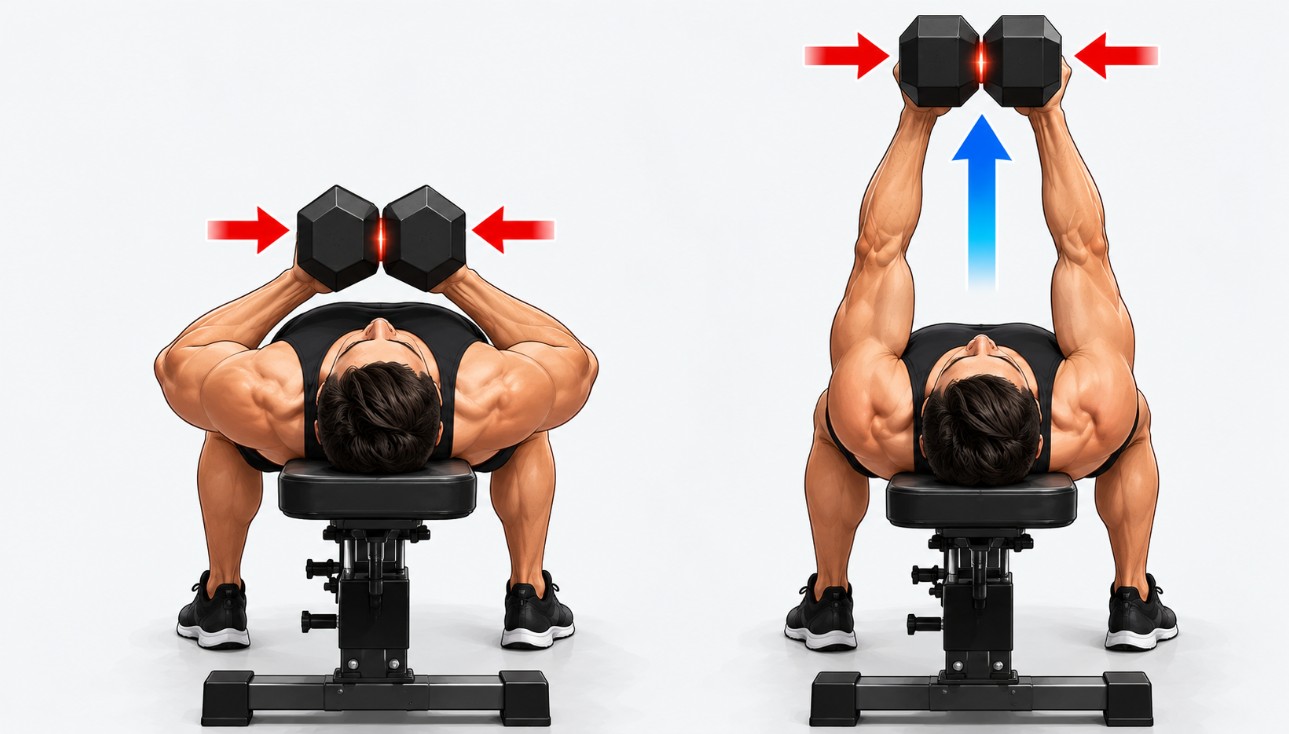
- Dumbbell squeeze press. The dumbbell squeeze press uses a narrow neutral grip and tucked elbows, making it another shoulder-friendly option. You can also perform it on the floor.
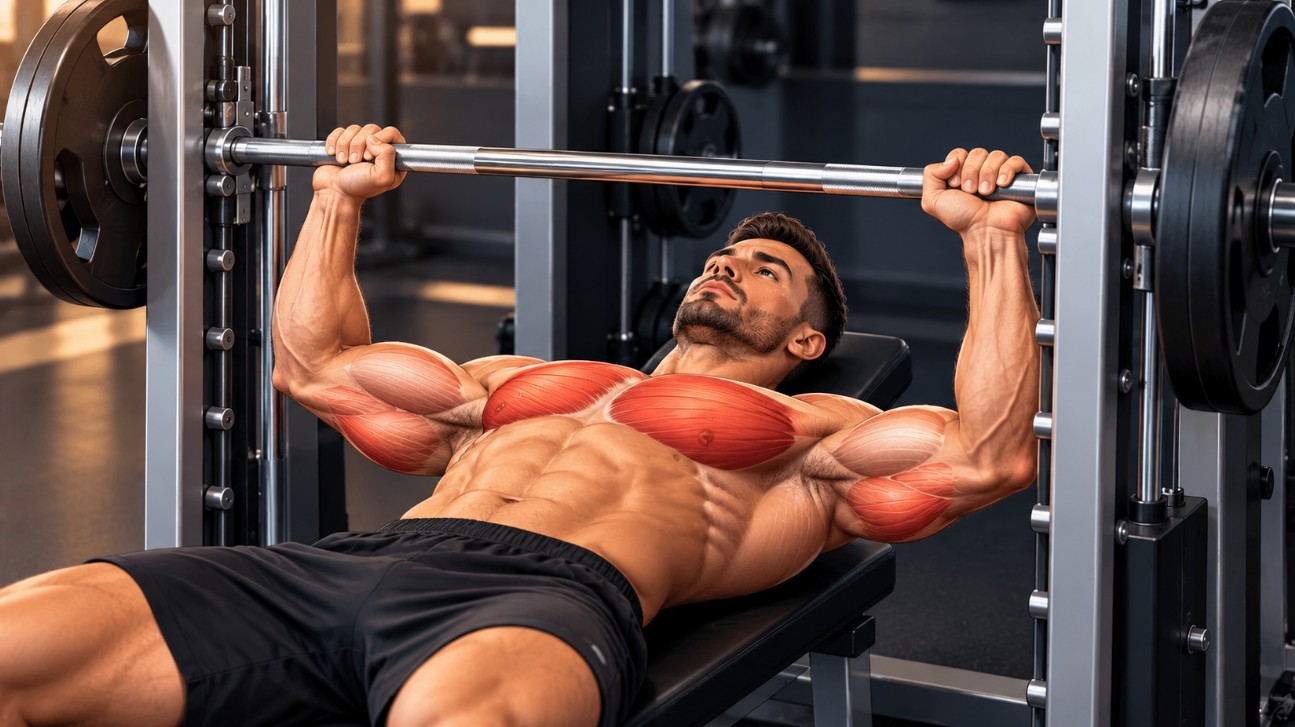
- Smith machine bench press. The Smith machine bench press allows you to train heavy without a spotter, thanks to its hooks and safety stops. You can also set the safety stops to limit the range of motion.
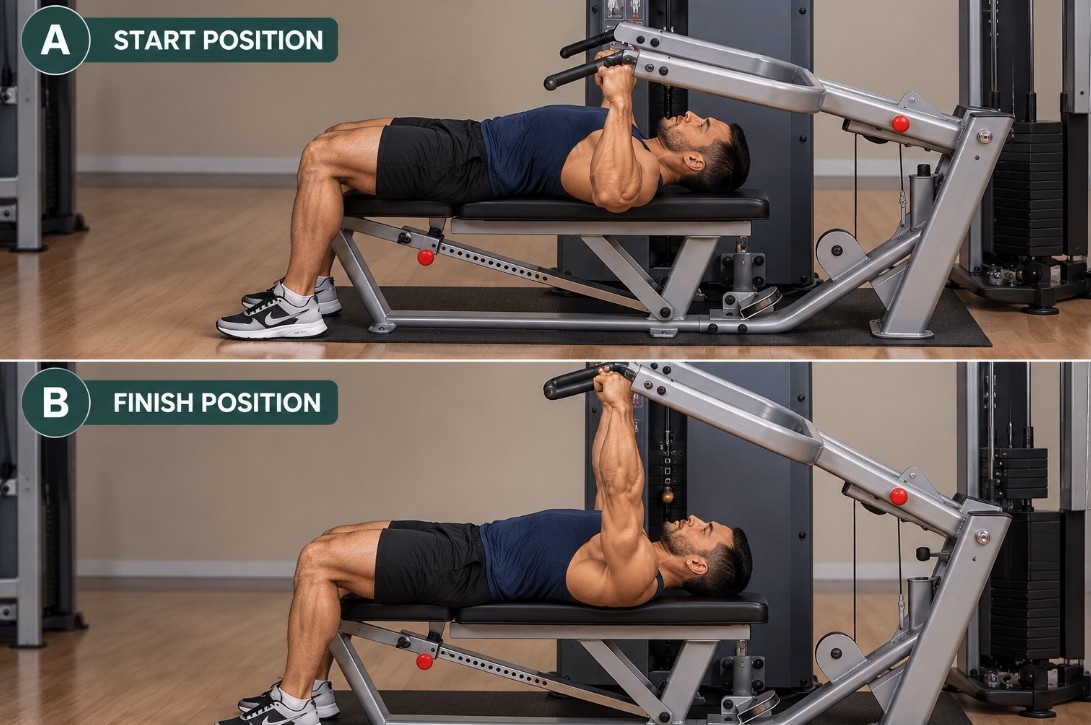
- Machine bench press. The machine bench press provides a guided path and allows you to train close to failure safely. It is a good option for high-effort pressing work.
- Flat bench dumbbell press. The dumbbell bench press allows a deeper stretch and independent arm movement. It complements the shortened range of the floor press.

How to Program the Barbell Floor Press
How you program the floor press depends on whether you use it for strength, muscle growth, or pressing power.
Show full programming guideHide programming guide ▾
| Goal | Sets | Reps | Rest | Tempo |
|---|---|---|---|---|
| Strength | 4–5 | 3–6 | 2–3 min | Controlled lowering, 1 s pause on the floor |
| Hypertrophy | 3–4 | 6–10 | 90–120 s | 2–3 s lowering, brief pause |
| Speed (dynamic effort) | 6–8 | 2–3 | 45–60 s | Explosive press at ~50–60% 1RM |
Muscle growth can occur across a wide range of repetitions when sets are taken close to failure, so treat these numbers as guidelines rather than strict rules. Adjust your rest periods between sets based on how recovered you feel.
- As an accessory lift on bench press day to strengthen the lockout
- As a temporary replacement for the bench press when the shoulders need a break
- As a main press in home gyms with a power rack but no bench
- As speed work for powerlifters and athletes developing pressing power
Apply progressive overload by adding small plates (1.25–2.5 kg per side) once you complete all sets and reps with a controlled pause. Track your floor press separately from your bench press, and use a 1RM calculator to estimate your working loads without testing true maximums.
Barbell Floor Press vs Barbell Bench Press (Comparison Table)

| Criteria | Barbell Floor Press | Barbell Bench Press |
|---|---|---|
| Range of Motion | Shortened | Full |
| Bottom Chest Stretch | Limited | Greater |
| Deep Shoulder Extension | Limited by floor | Greater |
| Leg Drive | Greatly reduced | Can be substantial |
| Stability | Floor-supported | Bench-supported |
| Primary Muscles | Chest, triceps, anterior delts | Chest, triceps, anterior delts |
| Lockout Training | Strong application | Trains full press |
| Chest Hypertrophy | Useful secondary option | Better suited to full-ROM chest training |
| Powerlifting Specificity | Accessory exercise | Competition lift |
| Equipment | Barbell + rack | Barbell + rack + bench |
The barbell bench press remains the better choice for overall chest development and maximal pressing strength. Its full range of motion loads the chest in the stretched position, and it is the lift used in powerlifting competitions.
The floor press, however, is an excellent accessory for building lockout strength and a shoulder-friendly alternative when the bench press causes discomfort. Most lifters get the best results by using the bench press as their main lift and the floor press as a supporting exercise.
Final Thoughts
The barbell floor press is a simple but effective variation of the bench press that removes leg drive, shortens the range of motion, and places the focus on the upper half of the press. It is a proven tool for building lockout strength and a smart option for lifters who need to take stress off their shoulders.
While it cannot replace the full-range bench press for chest growth, it fits perfectly into most training programs as an accessory lift. Set up the rack properly, pause on every rep, and use safety arms, and the floor press will become a valuable part of your pressing routine.
Frequently Asked Questions
What is the barbell floor press?
The barbell floor press is a bench press performed lying on the floor, usually inside a power rack. The floor stops the upper arms before the bar reaches the chest, which shortens the range of motion and removes leg drive from the lift.
What is the difference between the floor press and the bench press?
The floor press has a shorter range of motion, no leg drive, and no arch, because you lie on the floor instead of a bench. The bench press allows a full range of motion and a greater stretch on the chest, making it the better choice for overall chest development.
What muscles does the barbell floor press work?
The floor press works the pectoralis major, triceps brachii, and anterior deltoids. Because the bottom portion of the movement is removed, the upper half of the press, where the triceps contribute heavily, becomes the main focus.
Is the floor press good for building chest muscle?
It can contribute to chest growth, but it is not ideal as your main chest builder, since it removes the stretched position at the bottom. It works best as an accessory to full-range pressing exercises.
Is the floor press safe for the shoulders?
For most lifters, yes. The floor limits how far the upper arms travel, which reduces stress on the front of the shoulder. This is why many lifters use the floor press when returning from shoulder discomfort.
Should my legs be straight or bent during the floor press?
Both are acceptable. Bent knees with feet flat are more comfortable for most lifters, while straight legs remove any remaining leg drive and further flatten the lower back.
Can I do the floor press without a rack?
It is possible with a partner handing you the bar, but it is not recommended for heavy loads. Without a rack or safety arms, the dumbbell floor press is a much safer option.
Can you lift more on the floor press than on the bench press?
It depends on the lifter. The shorter range of motion allows heavier loads, but the lack of leg drive and arch works in the opposite direction. Many lifters end up with similar numbers on both exercises.
Should I pause on the floor during each rep?
Yes. Let your upper arms settle on the floor for about one second before pressing. Bouncing off the floor removes the main benefit of the exercise and can injure the elbows.
How often should I do the floor press?
Most lifters do well with the floor press once a week as an accessory lift. It can also replace the bench press for a few weeks when the shoulders need a break from full-range pressing.
