
Introduction
The human spine is a marvel of natural engineering, providing support, flexibility, and protection for the body’s central nervous system. This article discusses the intricate details of spine anatomy and function, exploring the components and segments that contribute to its remarkable capabilities. We will examine the physical attributes of the spine, including its location, shape, and structure, and investigate the muscles attached to it, its blood supply, and innervation. Furthermore, we aim to provide insight into the various parts of the spine, including the vertebrae, facet joints, intervertebral disks, and nerves, as well as the distinct segments that range from the cervical spine to the coccyx.
Understanding the spine is crucial for athletes, bodybuilders, and fitness enthusiasts. A healthy spine is fundamental not just for everyday activities but also for achieving optimal performance and preventing injuries in sports and bodybuilding. The spine interacts with other bones, and its condition can significantly influence the effectiveness of physical training and overall athletic capability. Recognizing common spinal injuries, particularly those related to weightlifting, and learning preventive and treatment measures are vital aspects for anyone involved in physical conditioning.
This article will not only introduce you to the anatomy of the spine but also provide practical advice on maintaining spine health, discuss common conditions, and offer proven tips for keeping it healthy. By equipping yourself with the knowledge presented here, you’ll be better prepared to protect and enhance your body’s core structural element.
What is the Spine?
The spine is a column of bones that runs from your neck to your lower back. It’s made up of small bones called vertebrae, stacked on top of each other, which create a supporting structure for your body. Like a central pillar, the spine helps you stay upright, allows you to move, and protects the spinal cord inside it, which connects your brain to the rest of your body.
Brief Anatomy of the Spine
Understanding its basic anatomy provides insight into its function and importance in human physiology.
A. Location of the Spine
The spine runs down the middle of your back. It starts at the base of the skull and ends at the tailbone. It travels from the neck through the chest and down to the lower back. This vital column is central to your body.
B. Appearance of the Spine
The spine looks like an S when viewed from the side. It has gentle curves. The neck curves slightly forward. The upper back curves outward. The lower back curves inward. This unique shape helps with balance and movement.
C. Size of the Spine
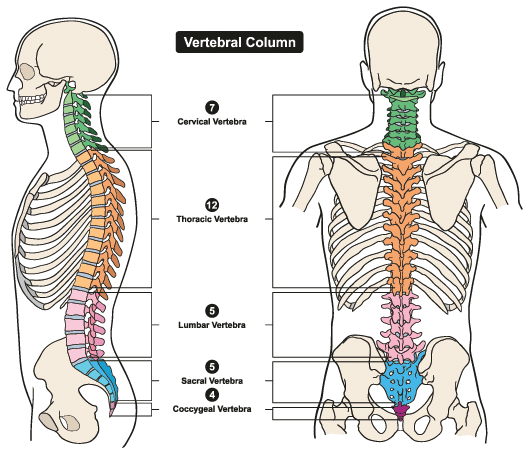
The length of the spine varies among individuals. Generally, it ranges from about 24 to 28 inches in adults. The size can also vary due to factors such as age, sex, and genetics. It consists of 24 vertebrae in the adult human body. The lumbar vertebrae are the largest. The cervical and thoracic regions are smaller in comparison.
D. Parts of the Spine
- Vertebrae: The individual bones making up the spine. They provide structure and protect the spinal cord.
- Facet Joints: Located between and behind the vertebrae. They enable and control the movement of the spine.
- Intervertebral Disks: Cushion-like pads between each vertebra. Act as shock absorbers and permit flexibility.
- Spinal Cord and Nerves: A bundle of nerves running through the spine. Transmit signals between the brain and the body.
- Soft Tissues: Include muscles, ligaments, and tendons. Support and stabilize the spine.
E. Muscles Attached to the Spine
The spine is a significant site for the origin and insertion of many muscles.
- Erector Spinae: Provides extension and helps maintain the curvature of the spine. It’s made up of the iliocostalis, longissimus, and spinalis muscles.
- Multifidus: Stabilizes vertebrae during movement. It supports posture and balance.
- Serratus Posterior: Assists in moving and stabilizing the thoracic region. It aids in respiratory movements.
- Latissimus Dorsi: A large muscle that extends, adducts, and rotates the arm. It supports the movement of the lower spine.
- Trapezius: Stabilizes and moves the scapula and shoulders. It also helps in extending the neck.
- Rhomboids: Retract the scapula towards the spine. It aids chest expansion by stabilizing the shoulder blade.

F. Segments of the Spine
1. Cervical Spine (Neck)
Located at the top, the cervical spine consists of seven vertebrae. These vertebrae are labeled C1 to C7. The cervical region supports the head and allows it to move in a wide range.
2. Thoracic Spine (Middle Back)
The thoracic spine consists of twelve vertebrae, named T1 to T12. It’s located in the middle of the spine and supports the rib cage. This section helps protect vital organs in the chest.
3. Lumbar Spine (Lower Back)
The lumbar spine typically has five vertebrae, labeled L1 to L5. It’s found in the lower back. This segment bears much of the body’s weight and is crucial for mobility.
4. Sacrum
The sacrum consists of five fused vertebrae. It connects the spine to the pelvis. This triangular bone provides stability and supports weight transfer from the spine to the lower limbs.
5. Coccyx (Tailbone)
The coccyx, or tailbone, is at the very end of the spine. It is made up of four fused vertebrae. Although it is a small part of the spine, it plays a crucial role in maintaining proper posture and distributing weight while sitting.
G. Blood Supply to the Spine
The blood supply to the spine is crucial for its health and functionality. The spine is nourished by a complex network of blood vessels that deliver essential nutrients and oxygen to its bones and soft tissues. This network includes the segmental arteries, which branch off from larger arteries running alongside the spinal column. These segmental arteries further divide into smaller branches, ensuring adequate circulation.
Here’s a simplified view of the blood supply to the spine:
- Segmental arteries: These are the primary arteries responsible for delivering blood to the spinal column.
- Anterior spinal artery: Supplies the front portion of the spinal cord.
- Posterior spinal arteries: Supply the posterior or back portion of the spinal cord.
- Radicular arteries: Crucial for nourishing the spinal nerve roots.
Proper blood circulation is fundamental in maintaining spinal health and supporting overall bodily function.
H. Innervation
The innervation of the spine is provided by spinal nerves, which are extensions of the peripheral nervous system. Originating from the spinal cord, each pair of spinal nerves emerges from an intervertebral foramen and provides sensory and motor functions. The complex network of these nerves ensures effective communication between the brain and the body, allowing for smooth movement and sensation. Specific nerves supply particular areas, like the nerves in the lumbar region, which focus on the lower extremities.
Functions of the Spine
Protection of the Spinal Cord
Your spine encases the spinal cord, acting as a protective shield. This is crucial to prevent injuries to this vital nerve pathway.
Support and Stability
The spine provides essential support for your body. It helps maintain balance whether you are sitting, standing, or moving.
Enabling Movement
Thanks to your spine, you can bend, twist, and stretch. It allows for the flexibility needed in everyday activities.
Maintaining Upright Posture
Keeping you upright is another vital job of your spine. It ensures proper posture and helps you stand tall.
Weight Bearing
Your spine bears much of your body’s weight. It supports you when lifting, standing, and performing daily tasks.
Interactions with other bones
The spine plays a central role in your body. It connects and interacts with many other bones. For instance, it supports your head, allowing you to move it freely. At its base, the spine links to the pelvis. This connection is crucial for transferring the weight of your upper body to your lower limbs. Your ribs attach to the thoracic vertebrae in the middle back section of the spine. This attachment lends stability and helps form the rib cage, which protects vital organs, such as the heart and lungs.
In your shoulders and arms, the spine helps anchor muscles, facilitating movement and strength. Each segment of the spine works with the hip bones, allowing for rotation and flexibility. Through these connections, the spine ensures that your body can stand tall, move, and function effectively.
Introduction to Spine Health
The spine, while resilient, is susceptible to a range of injuries and conditions that can affect its function and cause discomfort. Understanding some of the most common spinal issues can help you identify symptoms early and seek appropriate care. Let’s look at some of the frequent challenges.
I. Common Injuries and Conditions Affecting the Spine
- Herniated Disc: Occurs when the soft center of a spinal disc pushes through a crack in the more rigid exterior casing, causing pain and potentially affecting nerves.
- Spinal Stenosis: The narrowing of spaces within the spine, which can put pressure on the nerves traveling through the spine, leading to pain and numbness.
- Degenerative Disc Disease: A condition that results from wear and tear on a spinal disc, leading to pain, instability, and other complications.
- Scoliosis: A sideways curvature of the spine that occurs most often during the growth spurt just before puberty.
- Osteoporosis: A condition characterized by the weakening of bones, making them fragile and more likely to break, particularly affecting the spine.
- Fractures: Spinal fractures can result from trauma or conditions like osteoporosis and can lead to severe pain and spinal instability.
- Sprains and Strains: Injuries to the ligaments (sprains) or muscles (strains) that support the spine, often due to overuse or sudden movements.
II. Common Treatments for Spine Injuries
- Physical Therapy: A structured program of exercises and treatments designed to improve strength, flexibility, and function while reducing pain and preventing further injury.
- Medications: Over-the-counter pain relievers and anti-inflammatory drugs can provide relief; in some cases, prescription medications such as muscle relaxants or more potent pain relievers may be necessary.
- Chiropractic Care: Manual adjustments and manipulation by a professional can improve spinal alignment and relieve pressure on nerves.
- Epidural Steroid Injections: These can be used to reduce inflammation and pain around nerve roots.
- Surgery: In severe cases, surgical intervention like laminectomy, discectomy, or spinal fusion may be required to relieve pressure on the spinal cord or nerves and stabilize the spine.
- Rest and Activity Modifications: Taking temporary rest followed by a gradual return to activity can help with recovery, while avoiding movements that could exacerbate the injury.
- Supportive Devices: Using braces or support belts can help stabilize the spine and reduce strain during the healing process.
- Alternative Therapies: Techniques like acupuncture, massage, or yoga can complement conventional treatments to alleviate pain and enhance recovery.
Tips for Keeping the Spine Healthy
Maintain Good Posture
Keep your head aligned with your shoulders, and avoid slouching. Good posture helps in reducing strain on the spine.
Exercise Regularly
Stay active with exercises that strengthen your core, back, and neck muscles. This improves spinal support and flexibility.
Lift Properly
Bend your knees and use your legs, not your back, to lift heavy objects. Proper lifting techniques protect your spine from injury.
Stay Hydrated
Drink plenty of water to keep the spinal discs hydrated. This enhances their shock-absorbing ability.
Eat a Balanced Diet
Consume foods rich in calcium and vitamin D to support bone health. A balanced diet supports the spine’s overall health.
Mind Your Sleep Position
Sleep on your back or side with a supportive mattress and pillow. These positions maintain the spine’s natural curves.
Avoid Prolonged Sitting
Take regular breaks to stand or walk around if you sit for long periods. This reduces stress on the spine and promotes circulation.
Quit Smoking
Smoking can deteriorate the health of your spinal discs. Quitting improves overall bone and spine health.
Maintain a Healthy Weight
Maintain a healthy weight to reduce stress on your spine. A healthy weight supports spine health.
Importance of the Spine in Sports and Bodybuilding
The spine plays a pivotal role in ensuring optimal performance in both sports and bodybuilding. As the central column of the body, it provides the structural support necessary to perform various physical activities effectively. For athletes, a healthy spine is crucial for achieving strength, speed, agility, and flexibility. It acts as a shock absorber during high-impact sports, helping to mitigate the risk of injuries by evenly distributing stress throughout the body.
Bodybuilders significantly benefit from a strong and stable spine as it enables the proper alignment and execution of various exercises. The integrity of the spine directly affects the body’s ability to generate force and maintain balance during compound movements, such as squats and deadlifts. A robust spine also supports core stability, which is essential for lifting heavy weights safely and efficiently.
Moreover, maintaining spinal health can enhance an athlete’s endurance and recovery times. A well-aligned spine ensures that nerves function optimally, facilitating better communication between the brain and muscles. This neural efficiency can lead to improved coordination and quicker reflexes, both of which are invaluable in competitive sports.
In bodybuilding, spinal health is not only about performance but also aesthetics. A well-aligned spine contributes to proper posture, which enhances muscle definition and symmetry, key components judged in bodybuilding competitions. It also helps in preventing injuries that could impede continuous training and progress.
Overall, prioritizing spine health is an investment that pays dividends in athletic prowess and longevity in sports and bodybuilding. Engaging in a regular exercise regimen that focuses on strengthening back and core muscles, using proper lifting techniques, and maintaining a healthy lifestyle is an essential strategy to safeguard your spine’s well-being.
✅ Trainer’s Perspective
Why spinal health is a non-negotiable in my coaching practice
As a fitness and bodybuilding coach, I’ve seen firsthand how crucial spinal health is—not just for performance, but for longevity in training. One of the most common mistakes I see in both beginners and experienced lifters is neglecting the spine in their training programs. They focus heavily on building big chest and arms, yet forget the foundational role the spine plays in virtually every compound lift.
I’ve worked with clients who had recurring lower back pain due to weak spinal stabilizers, poor posture, or lack of mobility in the thoracic region. In almost every case, the root cause wasn’t a lack of effort—it was a lack of awareness. Once we incorporated targeted mobility drills, core activation, and proper spinal alignment during squats, deadlifts, and overhead presses, the difference was night and day—not just in how they felt, but also in their progress and consistency.
The spine isn’t just an anatomical structure; it’s the pillar of strength, control, and power, in bodybuilding, where symmetry and posture matter, a healthy spine influences not only performance but also stage presence. Trust me—poor posture ruins physiques faster than any missed workout.
That’s why I emphasize spinal education with every client, because you can’t build a strong body on a weak foundation.
🏋️♂️ Bodybuilding Exercises That Put the Most Strain on Your Spine
Certain bodybuilding exercises can place significant stress on your spine, especially when performed with improper form or excessive load. These exercises, while essential for building strength and muscle mass, can lead to spinal injuries if not approached with caution.
1. Deadlifts
One of the most effective exercises for overall strength, deadlifts target the posterior chain but can be tough on the spine. The risk comes from poor lifting technique, especially when the lower back is rounded, which can lead to potential disc injuries. It’s crucial to engage the core, maintain a neutral spine, and avoid lifting weights that are too heavy for your current capacity.
2. Squats
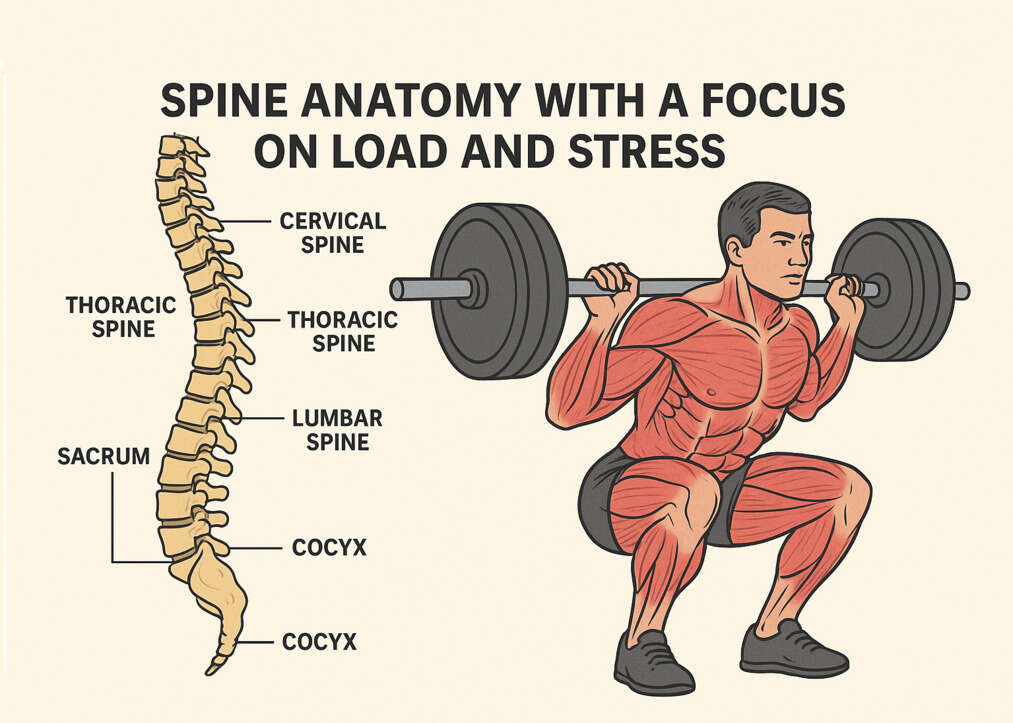
While squats are a staple in any bodybuilding routine for building leg and core strength, they also place a substantial load on the spine, primarily when performed with heavy weights. The axial load placed on the spine can be taxing on the lower back, particularly when there’s excessive forward lean or when the depth of the squat is compromised.
3. Overhead Press (Military Press)
The overhead press can lead to spinal compression if performed incorrectly. Lifting heavy weights overhead can put stress on the cervical and thoracic spine, especially if the lifter arches their back excessively to compensate for weak shoulder or core strength. Keeping the spine stable and avoiding excessive extension is key to preventing injury.
4. Barbell Rows
Although barbell rows are excellent for building upper back strength, they also place a significant load on the lower back. Poor form, such as rounding the back or pulling with too much weight, can lead to strain on the spinal discs, especially the lumbar region. Proper technique, a strong core, and controlled movement are necessary to reduce the risk.
5. Bent-Over Lateral Raises
While a great exercise for shoulder development, bent-over lateral raises can create spinal stress, particularly on the lower back. Bending over at the waist to perform this movement places the spine in a vulnerable position, and if the lower back isn’t stabilized, it can lead to discomfort or injury.
To minimize the risk of spinal injuries while performing these exercises, it’s essential to focus on maintaining proper form, incorporating core strengthening exercises, and gradually increasing the load. Never sacrifice form for weight, and always listen to your body.
Conclusion about the role of the spine in strength training
In conclusion, understanding the anatomy and function of your spine is crucial for maintaining overall health and well-being. Whether you’re an athlete, a weightlifter, or someone simply aiming to improve your daily life, caring for your spine is essential. By strengthening the nearby muscles, practicing good posture, and making spine-healthy lifestyle choices, you can help protect this vital structure. Remember, a healthy spine supports not only your movement but also your ability to lead an active and fulfilling life. Prioritize your spinal health, and you’ll likely experience improved physical performance and a reduced risk of injuries. Embrace these practices, and your spine will thank you in more ways than one.
💬 Coach’s Corner: Spine Health & Strength Training FAQs
Your spine is the pillar of every strong lift — from deadlifts to overhead presses. But are you giving it the attention it deserves? Here are the most common questions lifters ask about spinal health, function, and injury prevention — plus the answers you need to keep your back strong, stable, and ready for action.
How does spine anatomy affect performance in bodybuilding?
Understanding the spine's structure helps bodybuilders optimize posture, avoid injuries, and improve performance during lifts that load the axial skeleton—like squats and deadlifts.
What spinal areas are most at risk during heavy lifting?
The lumbar spine (lower back) is particularly vulnerable due to its role in stabilizing and transmitting force. Poor technique or insufficient core strength can easily lead to disc injuries or muscle strains in this region.
Why is spinal alignment important for bodybuilders?
Proper spinal alignment ensures even distribution of mechanical stress during lifting. Misalignment can cause compensatory movements, leading to muscular imbalances, pain, or chronic injury.
Can bodybuilding cause spine damage?
When done with poor technique, overtraining, or ignoring rest and recovery, bodybuilding can contribute to issues like herniated discs, facet joint irritation, and postural imbalances. However, correct form and spinal awareness greatly reduce risk.
What exercises are best for strengthening the spine in bodybuilding?
Deadlifts
Romanian deadlifts
Barbell good mornings
Back extensions
Plank variations
These help reinforce the spinal erectors and deep core muscles, which are essential for spinal stability.
How does posture impact bodybuilding results?
Poor posture, often due to tight hip flexors or weak spinal stabilizers, can limit range of motion and cause joint stress. Correcting posture enhances muscle engagement and lifting efficiency.
Is lower back pain common among athletes and bodybuilders?
Yes, it’s one of the most common complaints. Often caused by poor technique, excessive loading, or weak core support. Learning spinal anatomy can help athletes understand how to protect this region.
How does core training protect the spine during workouts?
The core acts like a natural weightlifting belt, stabilizing the spine during dynamic movements. Strengthening the transverse abdominis, obliques, and lower back helps prevent spinal collapse under heavy loads.
Can flexibility training reduce spinal injuries in bodybuilding?
Absolutely. Regular mobility work for the hips, hamstrings, and thoracic spine improves range of motion, allowing for safer, more efficient lifting mechanics and less spinal strain.
Should bodybuilders learn basic spine anatomy?
Definitely. A foundational understanding of spinal curves, discs, and supporting musculature empowers athletes to train smarter, prevent injury, and make informed decisions about exercise selection and technique.
