


Introduction
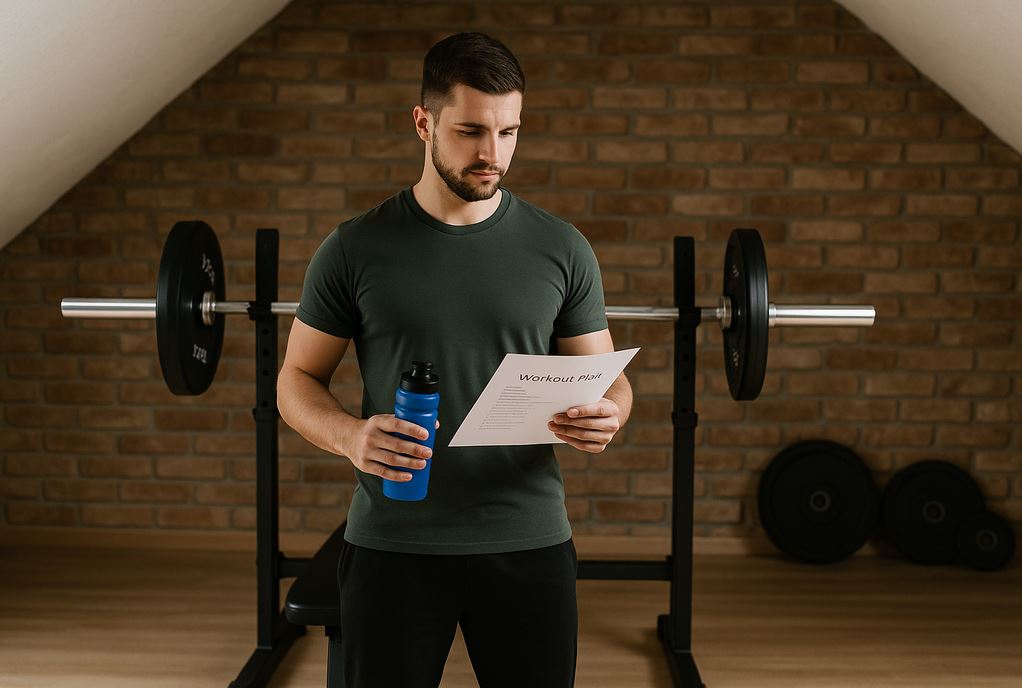
As a certified fitness coach, I’ve worked with countless beginners over the years, and one thing has always stood out — simplicity and structure lead to results. That’s precisely what this Barbell-Only Full Body Workout for Beginners delivers.
This program is ideal for anyone who wants to build lean muscle, get stronger, and train efficiently from the comfort of their own home — using just a barbell and an adjustable bench.
You don’t need fancy machines or an overcrowded gym to get results (at least not at the very beginning of your fitness journey). What you do need is consistency, proper technique, and an innovative progression model — all of which you’ll find in this plan.
💡 Equipment required
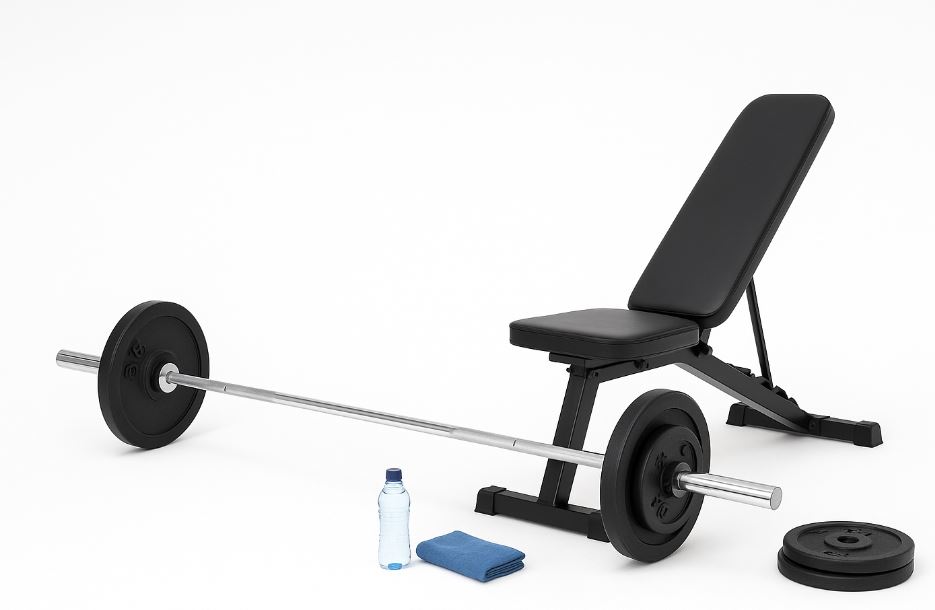
To follow this program correctly, you’ll need:
- A standard or Olympic barbell
- A set of weight plates for progression
- A multifunctional adjustable bench (flat, incline, decline)
- A safe training space at home
This program is built around compound lifts and time-tested movements that hit every major muscle group — three times per week. You’ll train your whole body on Monday, Wednesday, and Friday, leaving plenty of time for recovery and growth in between.
Let’s take a closer look at the structure and parameters of this training plan.
About the Program
Before diving into the workouts, it’s essential to understand the program’s core structure. The table below outlines all the key parameters that define the Barbell-Only Full Body Workout for Beginners — from equipment needs to training frequency and progression strategy.
| Parameter | Details |
|---|---|
| Training Type | Full Body Training System |
| Level | Beginners |
| Frequency | 3 Times per Week (Monday, Wednesday, Friday) |
| Program Duration | 4 Weeks |
| Workout Duration | Approximately 60–75 Minutes |
| Primary Goal | Muscle Gain (Hypertrophy) |
| Training Location | Home |
| Required Equipment | Barbell with weight plates, adjustable bench (flat, incline, decline) |
| Exercise Selection | Primarily compound lifts with some isolation work |
| Progression Model | Weekly Progressive Overload via weight, reps, or reduced rest |
| Fatigue Management | Moderate Intensity (RPE 7), with alternating rest days |
| Beginner-Friendly | Focus on controlled execution, mobility, and full-body balance |
| Adaptable Setup | Easily modified for standard or Olympic barbells |
| Rest Between Sets | 60–90 seconds for compound lifts, 45–60 seconds for isolation exercises |
| Warm-Up Included | Yes – Dynamic warm-up before each session |
| Cool Down | Optional static stretching post-workout |
Understanding RPE (Rate of Perceived Exertion)
In this Barbell-Only Full Body Workout for Beginners, you’ll frequently see the term RPE, which stands for Rate of Perceived Exertion. It’s a scale used to measure how hard a set feels, based on your perception of effort.
We use RPE as a simple yet powerful tool to guide intensity without needing complex data or heart rate monitors. It helps you train smart, avoid overtraining, and progress consistently.
For beginners, most sets in this program are performed at RPE 7, which means stopping 2–3 reps short of failure — intense enough to stimulate muscle growth, but safe enough to maintain form and prevent injury.
Here’s a quick guide:
| RPE | Effort Level | Reps in Reserve (RIR) | Description |
|---|---|---|---|
| 6 | Moderate | 4+ | Light effort, good for warm-up sets |
| 7 | Challenging | 3 | Controlled effort, ideal for muscle building |
| 8 | Hard | 2 | Very tough, getting close to failure |
| 9 | Very Hard | 1 | Maximal effort with one rep left |
| 10 | Maximum Effort (Failure) | 0 | All-out, no reps left in the tank |
Weekly Training Schedule
Consistency is key to progress. This Barbell-Only Full Body Workout for Beginners follows a simple yet powerful 3-day-per-week structure. You’ll train on Monday, Wednesday, and Friday, allowing optimal recovery and muscle growth throughout the week.
| Day | Session |
|---|---|
| Monday | Full Body Workout (Day 1) |
| Tuesday | Rest or Light Activity |
| Wednesday | Full Body Workout (Day 2) |
| Thursday | Rest or Light Activity |
| Friday | Full Body Workout (Day 3) |
| Saturday | Rest |
| Sunday | Rest |
Week 1 – Foundation Phase
During the first week, our primary goal is to establish proper form, build a solid mind-muscle connection, and set a consistent training rhythm. We focus on mastering the basics while keeping intensity at RPE 7 to ensure you train effectively—not excessively.
Each session targets your entire body with barbell-based movements that develop strength, coordination, and muscular balance.
Day 1 – Monday (Week 1)
- Barbell Back Squat – 4 sets | 10–12 reps | RPE 7
🔹 Muscles worked: Quads, glutes, hamstrings, core - Barbell Bench Press – 3 sets | 10–12 reps | RPE 7
🔹 Muscles worked: Chest, triceps, anterior deltoids - Barbell Bent-Over Row – 3 sets | 10–12 reps | RPE 7
🔹 Muscles worked: Lats, rhomboids, rear delts, biceps - Barbell Romanian Deadlift – 3 sets | 12 reps | RPE 7
🔹 Muscles worked: Hamstrings, glutes, lower back - Standing Barbell Overhead Press – 3 sets | 10–12 reps | RPE 7
🔹 Muscles worked: Shoulders, triceps, upper chest - Barbell Biceps Curl – 2 sets | 12–14 reps | RPE 7
🔹 Muscles worked: Biceps - Barbell Skull Crushers (Lying Triceps Extension) – 2 sets | 12–14 reps | RPE 7
🔹 Muscles worked: Triceps - Hanging Knee Raises or Barbell Rollouts – 3 sets | 15–20 reps | RPE 7
🔹 Muscles worked: Core, lower abs, hip flexors
Day 2 – Wednesday (Week 1)
- Barbell Front Squat – 4 sets | 10–12 reps | RPE 7
🔹 Muscles worked: Quads, glutes, core - Incline Barbell Bench Press – 3 sets | 10–12 reps | RPE 7
🔹 Muscles worked: Upper chest, triceps, anterior deltoids - Barbell Pendlay Row – 3 sets | 10–12 reps | RPE 7
🔹 Muscles worked: Lats, mid-back, posterior deltoids, biceps - Barbell Hip Thrust – 3 sets | 12–14 reps | RPE 7
🔹 Muscles worked: Glutes, hamstrings, core - Seated Barbell Shoulder Press (Bench Support) – 3 sets | 10–12 reps | RPE 7
🔹 Muscles worked: Deltoids, triceps - Close-Grip Barbell Curl – 2 sets | 12–14 reps | RPE 7
🔹 Muscles worked: Biceps, brachialis - Barbell Overhead Triceps Extension (Seated) – 2 sets | 12–14 reps | RPE 7
🔹 Muscles worked: Triceps (long head) - Barbell Russian Twists (with plate or bar) – 3 sets | 30 reps (15 per side) | RPE 7
🔹 Muscles worked: Obliques, core
Day 3 – Friday (Week 1)
- Barbell Zercher Squat – 4 sets | 10–12 reps | RPE 7
🔹 Muscles worked: Quads, glutes, core, upper back - Flat Close-Grip Barbell Press – 3 sets | 10–12 reps | RPE 7
🔹 Muscles worked: Chest (inner), triceps, front delts - Barbell Yates Row (Underhand Grip) – 3 sets | 10–12 reps | RPE 7
🔹 Muscles worked: Lats, biceps, lower traps - Barbell Good Morning – 3 sets | 12 reps | RPE 7
🔹 Muscles worked: Hamstrings, glutes, spinal erectors - Barbell Push Press – 3 sets | 10–12 reps | RPE 7
🔹 Muscles worked: Shoulders, triceps, upper chest, core - Barbell Reverse Curl – 2 sets | 12–14 reps | RPE 7
🔹 Muscles worked: Biceps, brachialis, forearms - Barbell Close-Grip Floor Press – 2 sets | 12–14 reps | RPE 7
🔹 Muscles worked: Triceps, chest - Weighted Plank (Barbell on Back or Plate) – 3 sets | 60 seconds | RPE 7
🔹 Muscles worked: Core, stabilizers, shoulders
Week 2 – Building Control & Confidence
In Week 2 of the Barbell-Only Full Body Workout for Beginners, the exercise selection remains largely the same — and that’s intentional.
As a trainer, I always emphasize the importance of movement repetition and technical refinement. You’ll be lifting the same patterns, but this week the focus shifts slightly toward tightening up your form, increasing bar control, and laying the groundwork for future overload.
You’ll aim to either:
- Add a bit more weight to your lifts
- Increase the number of reps (while staying within the rep ranges)
- Or reduce your rest periods slightly
The goal isn’t radical change — it’s subtle, consistent progression. That’s what delivers results.
Day 1 – Monday (Week 2)
- Barbell Back Squat – 4 sets | 10–12 reps | RPE 7
🔹 Muscles worked: Quads, glutes, hamstrings, core - Barbell Bench Press – 3 sets | 10–12 reps | RPE 7
🔹 Muscles worked: Chest, triceps, anterior deltoids - Barbell Bent-Over Row – 3 sets | 10–12 reps | RPE 7
🔹 Muscles worked: Lats, rhomboids, rear delts, biceps - Barbell Romanian Deadlift – 3 sets | 12 reps | RPE 7
🔹 Muscles worked: Hamstrings, glutes, lower back - Standing Barbell Overhead Press – 3 sets | 10–12 reps | RPE 7
🔹 Muscles worked: Shoulders, triceps, upper chest - Barbell Biceps Curl – 2 sets | 12–14 reps | RPE 7
🔹 Muscles worked: Biceps - Barbell Skull Crushers (Lying Triceps Extension) – 2 sets | 12–14 reps | RPE 7
🔹 Muscles worked: Triceps - Hanging Knee Raises or Barbell Rollouts – 3 sets | 15–20 reps | RPE 7
🔹 Muscles worked: Core, lower abs, hip flexors
Day 2 – Wednesday (Week 2)
- Barbell Front Squat – 4 sets | 10–12 reps | RPE 7
🔹 Muscles worked: Quads, glutes, core - Incline Barbell Bench Press – 3 sets | 10–12 reps | RPE 7
🔹 Muscles worked: Upper chest, triceps, anterior deltoids - Barbell Pendlay Row – 3 sets | 10–12 reps | RPE 7
🔹 Muscles worked: Lats, mid-back, posterior deltoids, biceps - Barbell Hip Thrust – 3 sets | 12–14 reps | RPE 7
🔹 Muscles worked: Glutes, hamstrings, core - Seated Barbell Shoulder Press (Bench Support) – 3 sets | 10–12 reps | RPE 7
🔹 Muscles worked: Deltoids, triceps - Close-Grip Barbell Curl – 2 sets | 12–14 reps | RPE 7
🔹 Muscles worked: Biceps, brachialis - Barbell Overhead Triceps Extension (Seated) – 2 sets | 12–14 reps | RPE 7
🔹 Muscles worked: Triceps (long head) - Barbell Russian Twists (with plate or bar) – 3 sets | 30 reps (15 per side) | RPE 7
🔹 Muscles worked: Obliques, core
Day 3 – Friday (Week 2)
- Barbell Zercher Squat – 4 sets | 10–12 reps | RPE 7
🔹 Muscles worked: Quads, glutes, core, upper back - Flat Close-Grip Barbell Press – 3 sets | 10–12 reps | RPE 7
🔹 Muscles worked: Chest (inner), triceps, front delts - Barbell Yates Row (Underhand Grip) – 3 sets | 10–12 reps | RPE 7
🔹 Muscles worked: Lats, biceps, lower traps - Barbell Good Morning – 3 sets | 12 reps | RPE 7
🔹 Muscles worked: Hamstrings, glutes, spinal erectors - Barbell Push Press – 3 sets | 10–12 reps | RPE 7
🔹 Muscles worked: Shoulders, triceps, upper chest, core - Barbell Reverse Curl – 2 sets | 12–14 reps | RPE 7
🔹 Muscles worked: Biceps, brachialis, forearms - Barbell Close-Grip Floor Press – 2 sets | 12–14 reps | RPE 7
🔹 Muscles worked: Triceps, chest - Weighted Plank (Barbell on Back or Plate) – 3 sets | 60 seconds | RPE 7
🔹 Muscles worked: Core, stabilizers, shoulders
Week 3 – Controlled Intensity & Strength Focus
Welcome to Week 3 of the Barbell-Only Full Body Workout for Beginners. By now, you’ve developed a solid foundation in technique and training rhythm. This week, we begin to gently increase intensity — not by drastically changing exercises, but by emphasizing bar control, tighter rest intervals, and slightly heavier loads where possible.
As a coach, I often remind beginners that progression isn’t always about adding big plates. Progress can mean cleaner reps, better posture, or shaving 15 seconds off rest time while maintaining form. Stick to RPE 7, but don’t be afraid to push closer to that upper end of intensity.
You’ve earned it.
Day 1 – Monday (Week 3)
- Barbell Back Squat – 4 sets | 10–12 reps | RPE 7
🔹 Muscles worked: Quads, glutes, hamstrings, core - Barbell Bench Press – 3 sets | 10–12 reps | RPE 7
🔹 Muscles worked: Chest, triceps, anterior deltoids - Barbell Bent-Over Row – 3 sets | 10–12 reps | RPE 7
🔹 Muscles worked: Lats, rhomboids, rear delts, biceps - Barbell Romanian Deadlift – 3 sets | 12 reps | RPE 7
🔹 Muscles worked: Hamstrings, glutes, lower back - Standing Barbell Overhead Press – 3 sets | 10–12 reps | RPE 7
🔹 Muscles worked: Shoulders, triceps, upper chest - Barbell Biceps Curl – 2 sets | 12–14 reps | RPE 7
🔹 Muscles worked: Biceps - Barbell Skull Crushers (Lying Triceps Extension) – 2 sets | 12–14 reps | RPE 7
🔹 Muscles worked: Triceps - Hanging Knee Raises or Barbell Rollouts – 3 sets | 15–20 reps | RPE 7
🔹 Muscles worked: Core, lower abs, hip flexors
Day 2 – Wednesday (Week 3)
- Barbell Front Squat – 4 sets | 10–12 reps | RPE 7
🔹 Muscles worked: Quads, glutes, core - Incline Barbell Bench Press – 3 sets | 10–12 reps | RPE 7
🔹 Muscles worked: Upper chest, triceps, anterior deltoids - Barbell Pendlay Row – 3 sets | 10–12 reps | RPE 7
🔹 Muscles worked: Lats, mid-back, posterior deltoids, biceps - Barbell Hip Thrust – 3 sets | 12–14 reps | RPE 7
🔹 Muscles worked: Glutes, hamstrings, core - Seated Barbell Shoulder Press (Bench Support) – 3 sets | 10–12 reps | RPE 7
🔹 Muscles worked: Deltoids, triceps - Close-Grip Barbell Curl – 2 sets | 12–14 reps | RPE 7
🔹 Muscles worked: Biceps, brachialis - Barbell Overhead Triceps Extension (Seated) – 2 sets | 12–14 reps | RPE 7
🔹 Muscles worked: Triceps (long head) - Barbell Russian Twists (with plate or bar) – 3 sets | 30 reps (15 per side) | RPE 7
🔹 Muscles worked: Obliques, core
Day 3 – Friday (Week 3)
- Barbell Zercher Squat – 4 sets | 10–12 reps | RPE 7
🔹 Muscles worked: Quads, glutes, core, upper back - Flat Close-Grip Barbell Press – 3 sets | 10–12 reps | RPE 7
🔹 Muscles worked: Chest (inner), triceps, front delts - Barbell Yates Row (Underhand Grip) – 3 sets | 10–12 reps | RPE 7
🔹 Muscles worked: Lats, biceps, lower traps - Barbell Good Morning – 3 sets | 12 reps | RPE 7
🔹 Muscles worked: Hamstrings, glutes, spinal erectors - Barbell Push Press – 3 sets | 10–12 reps | RPE 7
🔹 Muscles worked: Shoulders, triceps, upper chest, core - Barbell Reverse Curl – 2 sets | 12–14 reps | RPE 7
🔹 Muscles worked: Biceps, brachialis, forearms - Barbell Close-Grip Floor Press – 2 sets | 12–14 reps | RPE 7
🔹 Muscles worked: Triceps, chest - Weighted Plank (Barbell on Back or Plate) – 3 sets | 60 seconds | RPE 7
🔹 Muscles worked: Core, stabilizers, shoulders
Week 4 – Final Push Before Progression
You’ve made it to the final week of the Barbell-Only Full Body Workout for Beginners, and that deserves respect. Week 4 is your opportunity to put everything together — form, focus, and consistency.
This week, I encourage you to train with intent: keep the same RPE 7 target, but challenge yourself to lift slightly heavier, push for one extra rep, or minimize rest just a bit more.
Think of this week as your final “prep phase” before advancing to more intermediate routines. Your movement patterns are now refined, your bar control is better, and your base strength has improved.
Let’s finish strong.
Day 1 – Monday (Week 4)
- Barbell Back Squat – 4 sets | 10–12 reps | RPE 7
🔹 Muscles worked: Quads, glutes, hamstrings, core - Barbell Bench Press – 3 sets | 10–12 reps | RPE 7
🔹 Muscles worked: Chest, triceps, anterior deltoids - Barbell Bent-Over Row – 3 sets | 10–12 reps | RPE 7
🔹 Muscles worked: Lats, rhomboids, rear delts, biceps - Barbell Romanian Deadlift – 3 sets | 12 reps | RPE 7
🔹 Muscles worked: Hamstrings, glutes, lower back - Standing Barbell Overhead Press – 3 sets | 10–12 reps | RPE 7
🔹 Muscles worked: Shoulders, triceps, upper chest - Barbell Biceps Curl – 2 sets | 12–14 reps | RPE 7
🔹 Muscles worked: Biceps - Barbell Skull Crushers (Lying Triceps Extension) – 2 sets | 12–14 reps | RPE 7
🔹 Muscles worked: Triceps - Hanging Knee Raises or Barbell Rollouts – 3 sets | 15–20 reps | RPE 7
🔹 Muscles worked: Core, lower abs, hip flexors
Day 2 – Wednesday (Week 4)
- Barbell Front Squat – 4 sets | 10–12 reps | RPE 7
🔹 Muscles worked: Quads, glutes, core - Incline Barbell Bench Press – 3 sets | 10–12 reps | RPE 7
🔹 Muscles worked: Upper chest, triceps, anterior deltoids - Barbell Pendlay Row – 3 sets | 10–12 reps | RPE 7
🔹 Muscles worked: Lats, mid-back, posterior deltoids, biceps - Barbell Hip Thrust – 3 sets | 12–14 reps | RPE 7
🔹 Muscles worked: Glutes, hamstrings, core - Seated Barbell Shoulder Press (Bench Support) – 3 sets | 10–12 reps | RPE 7
🔹 Muscles worked: Deltoids, triceps - Close-Grip Barbell Curl – 2 sets | 12–14 reps | RPE 7
🔹 Muscles worked: Biceps, brachialis - Barbell Overhead Triceps Extension (Seated) – 2 sets | 12–14 reps | RPE 7
🔹 Muscles worked: Triceps (long head) - Barbell Russian Twists (with plate or bar) – 3 sets | 30 reps (15 per side) | RPE 7
🔹 Muscles worked: Obliques, core
Day 3 – Friday (Week 4)
- Barbell Zercher Squat – 4 sets | 10–12 reps | RPE 7
🔹 Muscles worked: Quads, glutes, core, upper back - Flat Close-Grip Barbell Press – 3 sets | 10–12 reps | RPE 7
🔹 Muscles worked: Chest (inner), triceps, front delts - Barbell Yates Row (Underhand Grip) – 3 sets | 10–12 reps | RPE 7
🔹 Muscles worked: Lats, biceps, lower traps - Barbell Good Morning – 3 sets | 12 reps | RPE 7
🔹 Muscles worked: Hamstrings, glutes, spinal erectors - Barbell Push Press – 3 sets | 10–12 reps | RPE 7
🔹 Muscles worked: Shoulders, triceps, upper chest, core - Barbell Reverse Curl – 2 sets | 12–14 reps | RPE 7
🔹 Muscles worked: Biceps, brachialis, forearms - Barbell Close-Grip Floor Press – 2 sets | 12–14 reps | RPE 7
🔹 Muscles worked: Triceps, chest - Weighted Plank (Barbell on Back or Plate) – 3 sets | 60 seconds | RPE 7
🔹 Muscles worked: Core, stabilizers, shoulders
Download the Barbell-Only Full Body Workout Program (PDF) here.
Why This Program Works: Key Advantages of Barbell-Only Full Body Training for Beginners
- Total Body Activation with Every Session: Full-body training ensures all major muscle groups are stimulated multiple times per week, accelerating both muscular development and coordination.
- Time-Efficient Yet Highly Effective: With just three weekly sessions, you get the maximum return on your time investment — perfect for busy beginners.
- Builds Foundational Strength: Barbell movements like squats, presses, and rows are fundamental patterns that create strength you’ll use for life — both in and out of the gym.
- Enhances Neuromuscular Control: By repeating key barbell lifts weekly, beginners quickly improve mind-muscle connection and bar path precision.
- Progressive Overload Made Easy: Barbells allow you to incrementally increase load in small weight jumps — ideal for structured strength and hypertrophy progression.
- Minimal Equipment, Maximum Return: A barbell, plates, and an adjustable bench give you access to dozens of effective variations — no need for a full gym setup.
- Promotes Joint Stability and Core Strength: Lifting free weights forces your stabilizer muscles and core to engage throughout each rep, helping prevent injury and improve body control.
- RPE-Based Regulation Ensures Safe Intensity: Using RPE keeps training intensity in check, helping you train hard without overtraining or burnout.
Potential Drawbacks of a Barbell-Only Full Body Program for Beginners
- Requires Some Initial Equipment Investment: To fully benefit from this program, you need a barbell, weight plates, and an adjustable bench, which may not be affordable or accessible to everyone.
- Learning Curve for Proper Technique: Barbell exercises demand precise form. Beginners may need extra guidance (videos or coaching) to execute lifts safely and effectively.
- Limited Isolation Work: While compound lifts dominate the program for efficiency, some smaller muscles (e.g., rear delts, calves) may not get targeted as directly as in split routines.
- Risk of Imbalances If Technique Lapses: Performing compound barbell movements with poor form over time can lead to strength imbalances or overuse injuries.
- May Not Suit Those with Mobility Restrictions: Exercises such as squats or overhead presses may challenge individuals with joint limitations or postural issues unless modifications are made.
- Progress Tracking Can Be Overlooked: Without structured logging or coaching, some beginners may forget to apply progressive overload consistently.
What to Do After Completing This Program
Finishing the Barbell-Only Full Body Workout for Beginners is a significant achievement — but it’s only the beginning of your long-term transformation. Here are several paths you can take to continue progressing:
- Repeat the Program with Slight Adjustments: You can go through the same 4-week cycle again, but aim to lift heavier, reduce rest times, or refine your form further. Minor tweaks keep your body adapting.
- Transition to Our Dumbbell-Only Full Body Program: If you’re training at home and want a change of pace, our Dumbbell-Only Full Body Workout for Beginners offers a flexible alternative that uses only dumbbells and a bench.
- Join the Gym and Try Our Gym-Based Full Body Program: Ready to explore more machines and cables? The Beginner Full Body Training Program for Maximum Muscle Gains, which we created for gym-goers, is an ideal next step.
- Move Toward an Upper/Lower or Push/Pull Split: Once you’re comfortable with full-body routines, shifting to a 4-day split (e.g., upper/lower) can allow for greater volume and specificity.
- Focus on Weak Points: Use your progress to identify areas that need more work. Add accessory work for lagging muscles or mobility drills for tight areas.
- Hire a Coach or Use Tracking Tools: At this stage, personalized coaching or detailed tracking apps can maximize your progress and help fine-tune your form, fatigue management, and load selection.
- Stay Consistent and Keep Learning: The most important factor is consistency. Whether you’re lifting barbells, dumbbells, or using machines — stay committed and continue to educate yourself.
To see how this routine connects with other beginner programs, visit our beginner workout library .
Conclusion: A Smart Start with Lasting Results
As a fitness coach, I’ve guided many beginners through their first weeks of training — and I can confidently say that a Barbell-Only Full Body Workout for Beginners is one of the most efficient and empowering ways to start your journey.
With just a barbell, some plates, and a bench, you’ve activated every major muscle group, developed foundational strength, and built a consistent training habit. You’ve also learned how to apply RPE, how to structure your week, and how to train with purpose.
Now, you’re no longer just starting out — you’ve built momentum.
Stay consistent, stay curious, and keep challenging yourself. Whether you continue with more advanced barbell work, switch to dumbbells, or hit the gym, your strength story is just beginning.
Keep lifting smart. Keep lifting strong.
Can I build muscle with only a barbell at home?
Absolutely. With proper programming, progressive overload, and consistency, a barbell and plates are all you need to stimulate muscle hypertrophy effectively.
Is this barbell-only full body workout suitable for women?
Yes, this program is gender-neutral. It builds foundational strength and lean muscle mass, making it equally effective for women and men.
How much weight should a beginner start with on barbell lifts?
Start with a light weight that allows you to complete all reps with good form at RPE 6–7. The goal is technical mastery before adding heavy load.
What type of barbell should I use for home workouts?
A standard 7ft Olympic barbell (20kg) is ideal, but shorter barbells (5ft or 6ft) can also work for limited spaces. Choose one with rotating sleeves for smooth lifting.
Do I need bumper plates or metal plates for this program?
Either works. Bumper plates are safer for flooring and ideal for beginners practicing deadlifts. Metal plates are more compact if space is limited.
How do I apply progressive overload with a barbell at home?
Increase load in small increments (e.g., 2.5–5 kg), add reps or sets, reduce rest time, or increase tempo for greater time under tension.
What if I miss a workout day — should I skip or adjust?
Never skip an entire week. Shift the missed session to the next available day and continue as planned. Consistency is more important than perfection.
Can I combine this barbell program with cardio?
Yes. Low-impact cardio (e.g., walking, cycling) on rest days supports recovery. Avoid intense cardio sessions right before heavy barbell training.
Is barbell training better than machines for beginners?
Barbells train balance, core activation, and stabilizer engagement — all of which machines often neglect. They’re ideal for developing real-world strength.
What’s the difference between this and a gym-based full body program?
This plan uses minimal equipment and focuses on barbell lifts. A gym-based routine might include cables, machines, and more isolation work, but both follow the same training principles.
