
Introduction
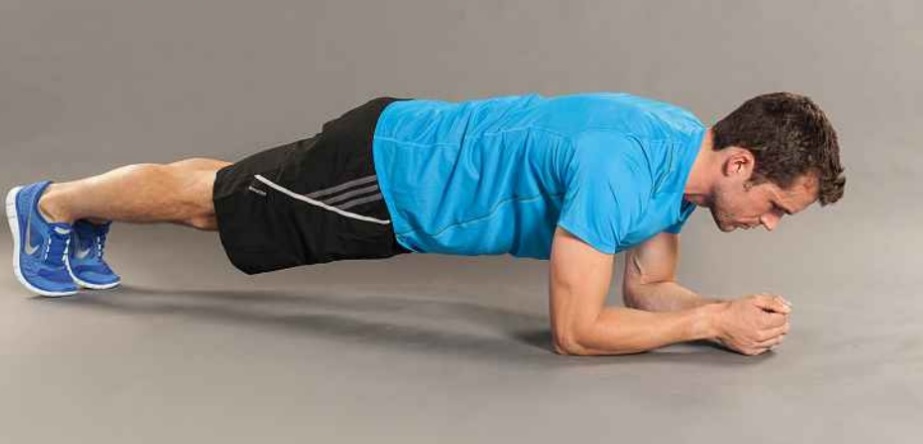
The forearm plank is the foundational anti-extension exercise in core training — and one of the most frequently performed, yet its technique quietly undermines its entire purpose. The exercise looks deceptively simple: hold a straight line from the shoulders to the ankles, supported by the forearms and toes. What that simplicity hides is that the plank is not a passive position to endure but an active full-body contraction that trains the core’s ability to resist movement — specifically, to resist the lower back from sagging into extension under the load of gravity pulling the hips toward the floor.
That distinction matters because it is the entire point of the exercise. The plank trains anti-extension core stability — the capacity to keep the spine rigid and neutral while a force tries to bend it. This is fundamentally different from crunches, which train the rectus abdominis through active spinal flexion. The plank trains the same muscles to do the opposite job: prevent flexion or extension from happening at all. That stabilization capacity is directly relevant to lower back health and to performance in virtually every athletic and daily movement that requires a rigid trunk while force is applied through the limbs.
I want to address one thing directly before going further: holding a plank for a long time is not the same as holding it well. A poorly held two-minute plank — hips sagging, head drooping, glutes relaxed — produces far less core stimulus than a perfectly rigid 30-second plank performed with every relevant muscle actively contracted. Time under tension matters less than tension quality in this exercise, more so than in almost any other core movement.
Exercise Snapshot
Muscles Worked in the Forearm Plank
Primary muscles
- Rectus abdominis — contracts isometrically throughout the hold to resist lumbar extension; this is the same muscle trained dynamically by crunches, but here it works statically to prevent movement rather than create it
- Transverse abdominis — the deep core stabilizer that braces the spine and maintains intra-abdominal pressure; the plank is one of the most direct ways to train this muscle, since its primary job is exactly what the plank demands
- External and internal obliques — work isometrically to prevent any lateral sagging or rotation of the trunk, keeping the hips and shoulders square throughout the hold
Secondary muscles
- Glutes — contract throughout to maintain hip extension and prevent the pelvis from tilting anteriorly, which is one of the most common compensations when the core fatigues
- Quadriceps — maintain knee extension throughout the hold
- Shoulder stabilizers (deltoids, serratus anterior) — stabilize the shoulder girdle against the body weight transmitted through the forearms
- Erector spinae — works alongside the anterior core to maintain a neutral, rather than flexed or extended, spinal position
Antagonists
In a true isometric exercise, there is no antagonist in the traditional dynamic sense — but the muscles that would cause lumbar extension (hip flexors pulling the pelvis forward, gravity acting on an unsupported midsection) are the forces the core musculature is actively resisting throughout the hold.
The plank is sometimes described as working “all core muscles fully,” which is accurate but worth being specific about. It is not that each muscle works maximally; rather, nearly every muscle that touches the trunk and hips is recruited simultaneously at low-to-moderate intensity to maintain the rigid line. That comprehensive, simultaneous recruitment is what makes the plank such an efficient core exercise for the time invested.
How to Do a Forearm Plank: Step-by-Step Form Guide
Starting position
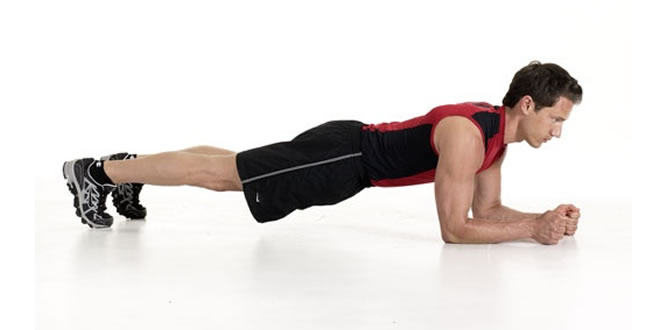
- Begin in a push-up position, then lower onto the forearms — elbows bent at approximately 90 degrees, directly beneath the shoulders
- Extend the legs back so the body forms a straight line from shoulders to ankles, weight supported on the forearms and the balls of the feet
- Position the feet hip-width apart for a stable base, or together for a more demanding version
Execution
- Brace the core firmly — contract the abs as though preparing to absorb a punch to the stomach
- Squeeze the glutes to lock the hips in a neutral position
- Maintain a straight line from head to heels — imagine a broomstick laid along the back that would touch the head, the upper back, and the glutes simultaneously with no gap
- Keep the neck neutral, eyes looking at the floor a short distance ahead — not craning up, not dropping the chin to the chest
- Breathe deeply and continuously throughout the hold — do not hold the breath, which increases intra-abdominal pressure unevenly and is unsustainable for longer holds
- Hold for the prescribed time — 30 seconds is a common target, though the right duration depends on current ability
The key coaching cue: Active rigidity, not passive sagging. The plank is not a position you rest in — it is a position you actively hold together through constant, simultaneous contraction of the abs, glutes, and shoulder stabilizers. If you can feel yourself relaxing into the position rather than actively bracing against it, the exercise has stopped providing meaningful stimulus.
5 Common Forearm Plank Mistakes (And How to Fix Them)
1. Letting the hips sag
This is the single most common plank error and the one that defeats the exercise’s primary purpose. When the hips drop toward the floor, the lumbar spine moves into extension — precisely the movement the plank is supposed to train you to resist. The cause is almost always insufficient glute and ab engagement, combined with holding the position longer than current core endurance allows. Squeeze the glutes, brace the abs, and if the hips cannot stay level for the target duration, shorten the hold rather than letting form break down.
2. Raising the hips too high
The opposite error — piking the hips upward into a position resembling the top of a push-up — removes tension from the abdominal muscles and shifts the work toward the shoulders. The body should form one continuous straight line, not a triangle. Check the position against a mirror or have a training partner verify that the hips are level with the shoulders and ankles.
3. Letting the head drop or craning the neck up
Both extremes create unnecessary cervical strain and indicate that the core, rather than the neck, is no longer doing the primary work. Keep the neck in a neutral position — an extension of the straight line from the spine — with the gaze directed at the floor a comfortable distance ahead.
4. Holding the breath
Many trainees instinctively hold their breath while bracing the core, treating the plank like a moment of effort rather than a sustained hold. This is unsustainable for more than a few seconds and increases unnecessary cardiovascular strain. Breathe deeply and continuously — the core brace should be maintained through the abdominal wall’s muscular tension, not through breath-holding.
5. Chasing duration over quality
A two-minute plank held with sagging hips and a relaxed core provides less benefit than a properly braced 30-second hold. If you cannot maintain perfect form for the full target duration, break the hold into shorter segments — 5 to 10 seconds with brief rest — and build up to a continuous 30 seconds with correct technique before chasing longer single holds.
Benefits of the Forearm Plank
Builds anti-extension core stability
The plank trains the specific capacity to resist lumbar extension under load — a function that is directly relevant to lower back health and to performance in any sport or daily activity that requires a stable trunk while force passes through the limbs.
Trains the entire core simultaneously
Unlike isolated exercises that target one muscle group, the plank recruits the rectus abdominis, obliques, transverse abdominis, glutes, and shoulder stabilizers all at once. That comprehensive recruitment makes it an efficient exercise for building baseline core endurance across the entire trunk.
Low spinal loading
Because the spine remains in a neutral, static position throughout, the plank places minimal shear or compressive stress on the lumbar discs compared to dynamic flexion-based ab exercises. This makes it one of the safer core exercises for trainees with certain types of lower back sensitivity.
Scalable across every training level
The plank progresses cleanly from short, broken holds for complete beginners through to advanced single-limb and unstable-surface variations for experienced trainees — all using the same fundamental position and the same coaching cues.
Builds visible six-pack definition alongside strength
Stability exercises like the plank are highly effective at developing the superficial abdominal muscles that contribute to visible six-pack definition, working alongside dynamic ab exercises rather than replacing them.
Who Should Use This Exercise
- Complete beginners — the plank is one of the most accessible entry points into core training, scalable down to very short holds while technique is established
- Anyone building baseline core endurance before progressing to more dynamic core exercises
- Athletes in any sport requiring a stable trunk under load — virtually all sports qualify
- People recovering from certain lower back issues — under appropriate guidance, the plank’s low spinal loading makes it one of the more accessible core exercises during a return to training
Who Should Be Cautious
- People with shoulder impingement or wrist issues — sustained weight bearing through the forearms and shoulders can aggravate certain shoulder conditions; the kneeling plank variation reduces this demand
- People with diagnosed lumbar disc pathology — while generally lower risk than dynamic flexion exercises, anyone with active back pain should get clearance from a physiotherapist before holding sustained positions under load
- Pregnant individuals in later trimesters — the prone position becomes impractical and is generally not recommended; alternative core exercises in supported positions are more appropriate
How to Make It Easier or Harder
Easier
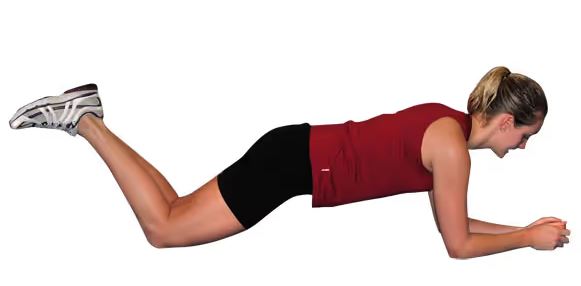
- Knee plank — performing the hold with knees on the floor rather than full leg extension significantly reduces the lever arm and the core demand; an appropriate starting point for complete beginners
- Broken sets — holding for 5 to 10 seconds, resting 5 seconds, and repeating until 30 total seconds of quality hold time is accumulated; far more productive than one long set with broken form
- Wider stance — placing the feet wider than hip-width increases the base of support and makes balance easier, allowing more focus on core bracing
Harder
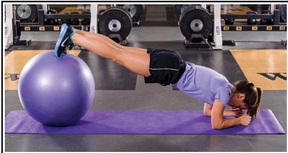
- Feet elevated plank — placing the feet on a stability ball, bench, or other raised platform increases the demand on the upper core and shoulder stabilizers; progression typically moves from knees on the ball, to ankles on the ball, to balls of the feet and toes on the ball as difficulty increases
- Narrow stance — bringing the feet together reduces the base of support and increases the stability demand on the obliques
- Plank with arm extension — extending one arm forward while maintaining the hold removes a point of support and significantly increases the anti-rotation demand
- Plank with opposite arm and leg lift — extending one arm and the opposite leg simultaneously creates the most demanding anti-rotation and anti-extension challenge in the plank family
Forearm Plank vs. Side Plank
Both exercises are isometric core holds performed without equipment, but they train the core to resist different types of movement entirely.
| Forearm Plank | Side Plank | |
|---|---|---|
| Body position | Prone — face down | Side-lying |
| Function trained | Anti-extension | Anti-lateral flexion |
| Primary target | Rectus abdominis, transverse abdominis | Obliques, quadratus lumborum |
| Resists | Lumbar extension (hips sagging) | Lateral spinal flexion (hips dropping toward the floor) |
| Base of support | Two forearms + two feet | One forearm + feet (or knee) |
| Difficulty | Beginner | Beginner – Intermediate |
| Best for | Overall core stability, lower back health | Lateral core stability, oblique endurance |
The practical takeaway: The forearm plank and the side plank are not competing exercises — they train the core to resist two different types of failure. The forearm plank builds the capacity to resist the lower back sagging into extension; the side plank builds the capacity to resist the trunk collapsing laterally. A complete core program needs both. I program the forearm plank and the side plank together as a pairing — front and side coverage of the core’s anti-movement function in the same session.
Exercise Variations
Feet Elevated Forearm Plank
Place the feet on a stability ball or another moderately unstable raised platform while holding the standard forearm plank position. The instability and elevation increase the demand on the entire core and shoulder girdle. A natural progression sequence on a stability ball moves from knees on the ball, to ankles on the ball, to the balls of the feet and toes on the ball as the most advanced version — each step increasing the lever arm and the balance challenge.
45-Degree Plank
Performed at an inclined angle — hands or forearms elevated on a bench or bar rather than on the floor — this variation reduces the percentage of body weight supported and is a useful regression for trainees who cannot yet hold a full floor plank with correct form.
Kneeling Plank
The same forearm position with the knees on the floor rather than full leg extension. This significantly reduces the core demand by shortening the lever arm and is the appropriate starting point for complete beginners or anyone returning to training after a break.
Extended Plank
Performed with the forearms extended further forward than the standard position — elbows ahead of the shoulders rather than directly beneath them. This increases the lever arm and the demand on the entire anterior core and shoulder stabilizers, making it a meaningful progression for trainees who have mastered the standard hold.
Wide-Stance Plank with Diagonal Arm Lift
From a wide-stance plank, lift one arm and reach it diagonally across the body. This adds a dynamic anti-rotation challenge to the static hold and serves as a useful intermediate step before progressing to the full plank with opposite-arm and opposite-leg lifts.
Swiss-Ball Plank
Performed with the forearms resting on a stability ball rather than the floor. The instability of the ball surface places continuous demands on balance and core stabilization, in addition to the standard plank requirements.
Replacement Exercises (Alternatives)
If the forearm plank is not the right fit for your current training level or situation, these exercises target the same anti-extension core function:
- Full Plank (Straight-Arm Plank)
- Side Plank
- Plank With Arm Extension
- Plank With Opposite Arm and Leg Lift
- Hollow Body Hold Position
- Dead Bug
- Bird Dog
- Superman & Prone Cobra
- Reverse Plank
- Stability Ball Hand-to-Feet Pass
- Kneeling Plank
For a complete picture of core training, see our guide to the best core exercises organized by function. You may also want our guides to upper ab, lower ab, and oblique exercises.
How To Incorporate the Forearm Plank Into Your Workouts
- As a foundational core exercise — appropriate at the beginning of a core session as both a warm-up and a primary stability exercise, or at the end as a finisher; the plank’s isometric nature makes it flexible in placement
- Paired with dynamic ab exercises — superset with a rotational or flexion-based exercise for complete coverage of both dynamic and isometric core training in the same session
- As a daily mobility-adjacent practice — because the demand is moderate and the spinal loading is low, short daily planks are reasonable in a way that loaded daily ab training is not
- Duration: 20–45 seconds per set for most trainees; quality of the hold matters more than chasing longer durations
- Sets: 3–4 sets
- Frequency: 3–4 times per week, or more frequently at shorter durations for beginners building baseline endurance
- Progression trigger: When 4 sets of 45 seconds with perfect form — level hips, braced abs, neutral neck — become consistently easy, progress to a more demanding variation rather than simply holding longer; feet elevated, narrow stance, or arm and leg lift variations all provide a more productive next step than an extended hold with declining form quality
Conclusion
The forearm plank rewards attention to detail in a way that few exercises do. The difference between a productive plank and a wasted one is not visible from across the gym — it is the difference between hips that are actively held level through glute and ab contraction and hips that are passively sagging a few centimeters lower than they should be.
Brace the core as though absorbing a punch. Squeeze the glutes. Keep the line straight from head to heels. Breathe. Those four things, sustained consistently for even a short duration, will produce more genuine core stability development than a much longer hold performed with declining form.
If you have been chasing a personal record for plank duration, shift the goal. Chase quality instead. The core development will follow.
Once you can hold a forearm plank with strict form for a full minute, simply holding it longer isn’t the next step. See where this exercise sits in the bigger picture, and which variation to try next, in our complete plank variations ranking, from beginner to elite.
Frequently Asked Questions
How long should a beginner be able to hold a plank?
There is no universal benchmark, but a reasonable early target is accumulating 30 total seconds of well-formed plank, whether in one continuous hold or broken into shorter segments. What matters more than the number is whether the hold is achieved with level hips and a braced core. A 20-second plank with perfect form is a better marker of progress than a 60-second plank with sagging hips.
Is it bad to do planks every day?
For most healthy trainees, no — the moderate intensity and low spinal loading of the plank make daily practice reasonable in a way that daily heavy ab training is not. That said, daily training is not necessary for progress either; 3 to 4 sessions per week is sufficient for most people to see continued improvement. If daily planking is something you enjoy and recover well from, there is little downside, but skipping a day will not meaningfully slow your progress.
Why does my lower back hurt during a plank?
Lower back discomfort during a plank almost always indicates that the hips have sagged into an extended position, shifting load from the core onto the lumbar spine. Check hip position in a mirror or with a partner, actively squeeze the glutes, and reduce the hold duration if needed until the position can be maintained without lumbar strain. If pain persists even with corrected form, stop the exercise and consult a physiotherapist, since a plank should not be inherently painful when performed correctly.
Do planks burn belly fat?
No single exercise burns fat from a specific area of the body. Planks build muscular strength and endurance in the core, which contributes to a firmer, more defined midsection once overall body fat is sufficiently low, but they do not directly reduce abdominal fat. Visible ab definition is primarily a function of overall body fat percentage, which is driven by total caloric balance rather than any specific exercise.
Can planks replace crunches in a core routine?
Not entirely — they train different qualities. Planks build isometric anti-extension stability, while crunches build dynamic spinal flexion strength through the rectus abdominis. Both qualities are useful, and a well-rounded core program typically includes both isometric holds like the plank and dynamic movements like crunches or reverse crunches rather than relying exclusively on one category.
Should I look down or look forward during a plank?
Look down, with the gaze directed at the floor a short distance ahead of the hands. This keeps the neck in a neutral position as a natural extension of the spine. Looking forward or upward tends to extend the cervical spine unnecessarily and can create neck strain over the duration of the hold.
What is a normal amount of shaking during a plank?
Mild trembling in the abdominal or shoulder muscles toward the end of a hold is a normal sign of muscular fatigue and is not a cause for concern. Significant shaking that compromises the position — causing the hips to drop or the body to lose its straight line — is a signal that the hold has exceeded current capacity and should be ended, rather than pushed through with breaking form.
