


Introduction
The prone cobra is a close relative of the Superman exercise, which we covered in detail in its own dedicated guide. Both exercises share the same fundamental movement pattern — lying face down and lifting the chest, arms, and legs off the floor through hip and spinal extension. The difference between them comes down to arm position, and that difference changes the feel and the emphasis of the exercise more than you might expect from such a small adjustment.
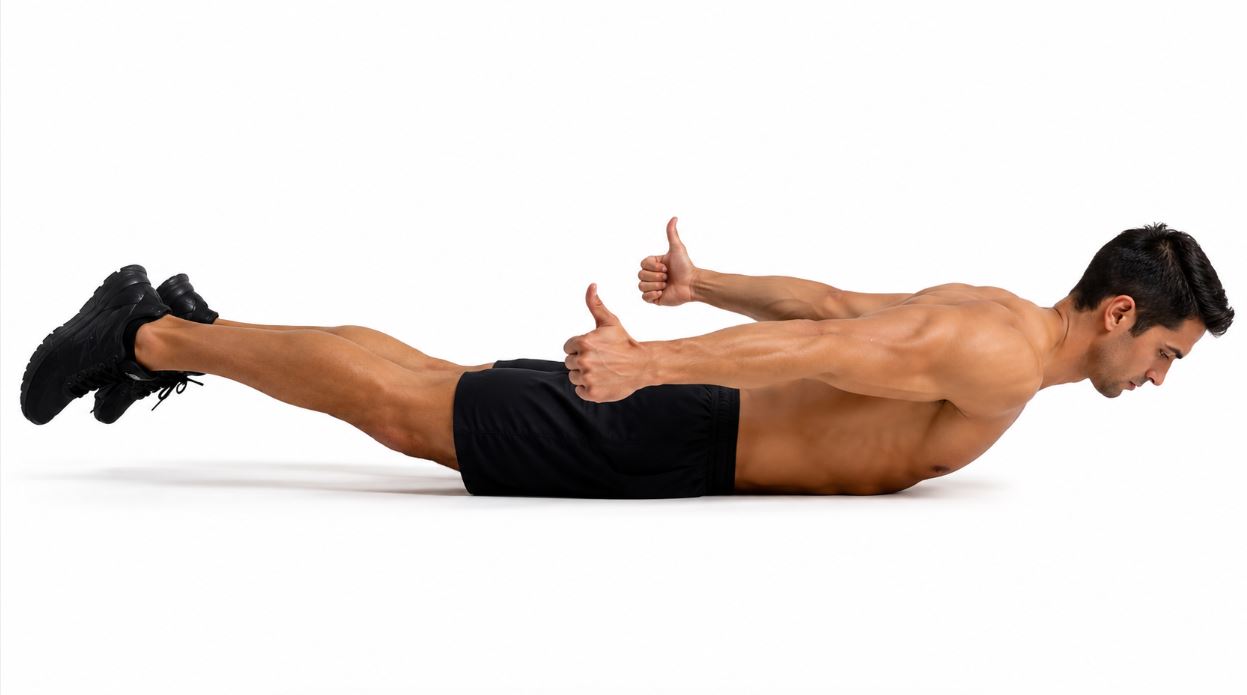
Where the superman extends the arms forward overhead, the prone cobra keeps the arms down at the sides, with a deliberate external rotation that turns the thumbs up toward the ceiling at the top of the movement. That rotation actively engages the muscles between the shoulder blades and the external rotators of the shoulder in a way the overhead arm position does not, making the prone cobra a particularly effective exercise for addressing the rounded-shoulder, forward-head posture that affects so many people who spend long hours at a desk.
The action itself is the same dynamic-contraction-into-static-hold pattern as the superman: a deliberate lift into the extended position, followed by a sustained isometric hold that demands continuous contraction of the glutes, lower back, and, with the arm rotation, the upper back and shoulders as well. The prone cobra both strengthens and stretches the core, addressing the posterior chain and upper back simultaneously in a single bodyweight movement.
Exercise Snapshot
Muscles Worked in the Prone Cobra Exercise
Primary muscles
- Glutes (gluteus maximus) — contract to drive hip extension, just as in the superman, providing the foundation for lifting the legs and lower torso off the floor
- Erector spinae — extend the spine to lift the head and chest off the floor
- Rhomboids and middle trapezius — actively retract the shoulder blades as the arms rotate and lift, a demand that is considerably more pronounced in the prone cobra than in the superman’s overhead arm position
- Rear deltoids and infraspinatus/teres minor (external rotators) — work to produce the thumbs-up rotation of the arms, directly training the muscles responsible for shoulder external rotation and posture correction
Secondary muscles
- Hamstrings — assist the glutes with hip extension and contribute to lifting the legs
- Transverse abdominis — provides trunk stabilization throughout the hold
Antagonists
The rectus abdominis, hip flexors, and the internal rotators and protractors of the shoulder (pectoralis, anterior deltoids) lengthen under control throughout the hold, providing the counterbalancing tension against the extension and external rotation being produced.
The arm rotation is the detail that makes the prone cobra mechanically distinct from the superman, and it deserves attention. Actively rotating the arms so the thumbs point toward the ceiling, rather than simply holding them passively at the sides, recruits the external rotator cuff muscles and the muscles between the shoulder blades considerably more than a passive arm position would. This is precisely the muscle group that tends to be weak and underactive in people with a forward-rounded posture from extensive sitting and desk work, which is why the prone cobra has a reputation for postural correction beyond its general posterior chain benefits.
How to Do a Prone Cobra Exercise: Step-by-Step Form Guide
Starting position
- Lie face down on the floor with the legs straight
- Arms positioned next to the sides, palms down
Execution
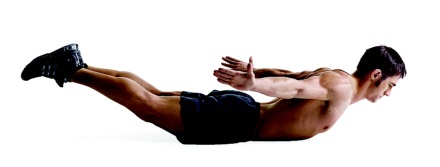
- Contract the glutes and the muscles of the lower back
- Raise the head, chest, arms, and legs off the floor simultaneously
- As you lift, simultaneously rotate the arms so the thumbs point toward the ceiling — this rotation should happen actively as part of the lift, not as an afterthought once the top position is reached
- Hold the top position, maintaining the glute contraction, the spinal extension, and the externally rotated arm position together
- Lower the body back to the starting position under control
The key coaching cue: The arm rotation is not incidental — actively drive the thumbs toward the ceiling as you lift, squeezing the shoulder blades together as you do. If the arms lift without that rotation, the exercise loses the upper-back and shoulder emphasis that distinguishes it from the superman. Think of pulling the shoulder blades down and together while rotating the arms, rather than just raising the arms passively.
5 Common Prone Cobra Mistakes (And How to Fix Them)
1. Forgetting to rotate the arms
This is the error that most reduces the prone cobra to a less effective version of Superman. If the arms lift without the deliberate thumbs-up rotation, the rhomboids, middle trapezius, and external rotators are not adequately engaged, and the exercise loses much of what distinguishes it. Make the rotation an active, deliberate part of the lift, not a passive end position.
2. Hyperextending the spine instead of the hips
As with the superman, relying primarily on lower back arching rather than glute-driven hip extension places excessive stress on the lumbar spine. Lead the lift with a forceful glute contraction, allowing the spinal extension to follow as a secondary, more moderate contribution.
3. Holding the breath during the hold
The tendency to hold the breath while contracting hard applies here just as it does in any sustained isometric hold. Breathe steadily throughout and try to keep tension localized to the muscles actually doing the work — the glutes, lower back, and upper back — rather than gripping unnecessarily elsewhere.
4. Shrugging the shoulders toward the ears
As the arms lift and rotate, the shoulders tend to elevate toward the ears rather than remain depressed. This indicates that the upper trapezius is compensating for insufficient engagement of the rhomboids and middle trapezius. Keep the shoulders pulled down and back throughout, even as the arms rise.
5. Lifting too high
Just as with the superman, reaching for maximum height through excessive lumbar extension is counterproductive. A moderate, controlled lift that allows the glutes, spinal erectors, and upper back muscles to all contribute proportionally is more valuable than an exaggerated range achieved through compensation.
Benefits of the Prone Cobra Exercise
Trains the posterior chain and upper back simultaneously
The prone cobra combines the same hip and spinal extension training as the superman with a meaningfully greater demand on the scapular retractors and shoulder external rotators, making it a more comprehensive single exercise for trainees seeking both benefits.
Directly addresses rounded-shoulder posture
The active external rotation and scapular retraction required by this exercise directly strengthen the muscles that are typically weak in people with desk-related forward-shoulder posture, making the prone cobra a genuinely useful corrective exercise for that common postural pattern.
Strengthens and stretches the core together
Like Superman, the prone cobra both strengthens the posterior chain through active contraction and stretches the anterior structures — the abdominals and hip flexors — through the extended position, providing a dual benefit in a single movement.
No equipment required
A simple bodyweight exercise requiring only floor space, accessible for home training at any experience level, and appropriate to the exercise’s demands.
Who Should Use This Exercise
- Anyone with a rounded-shoulder or forward-head posture from extensive sitting or desk work — this is one of the more direct corrective exercises available for that specific postural pattern
- Beginners and intermediate trainees building balanced core and upper back strength
- Trainees already using the Superman who want to add upper back and shoulder emphasis to their posterior chain training
- People recovering from or preventing shoulder impingement issues related to weak external rotators — under appropriate guidance, this exercise can support that goal
Who Should Be Cautious
- People with active lower back pain or lumbar disc issues — the hyperextended position carries the same considerations as the superman; physiotherapy clearance is recommended before attempting this exercise with existing back issues
- People with acute shoulder injuries — while the prone cobra is often used as a corrective exercise for weak external rotators, an acute injury should be assessed and cleared by a professional before adding any new shoulder-loading exercise
- Pregnant individuals — the prone position becomes impractical in later pregnancy
How to Make It Easier or Harder
Easier
- Shorter hold durations — starting with brief holds and building gradually, following the same progressive approach as the superman
- Reduced range of motion — a more moderate lift, while the necessary strength and coordination, particularly in the upper back and shoulder rotators, develop
Harder
- Extended hold duration — progressively building hold time as the posterior chain and upper back adapt
- Light resistance — small weights held in the hands during the hold can add resistance to the arm rotation component for advanced trainees
- Arm-Leg Extension variation — performing a contralateral version increases the anti-rotation and balance demand significantly compared to the bilateral prone cobra
Prone Cobra vs. Superman
Both exercises train the same fundamental prone extension pattern, but the arm position changes and the secondary muscles most engaged vary.
| Prone Cobra | Superman | |
|---|---|---|
| Arm position | At the sides, externally rotated | Extended overhead |
| Upper back emphasis | High — rhomboids, middle trapezius | Lower — shoulders mainly |
| Shoulder external rotation | Actively trained | Minimal |
| Postural correction value | High — directly addresses rounded shoulders | Moderate |
| Posterior chain emphasis | Equal to Superman | Equal to prone cobra |
| Difficulty | Beginner – Intermediate | Beginner – Intermediate |
| Best for | Posture correction + posterior chain | Pure posterior chain extension |
The practical takeaway: The prone cobra and the superman train the same glutes, hamstrings, and spinal erectors through the same fundamental extension pattern, but the prone cobra’s arm rotation adds a meaningful upper back and shoulder external rotation demand that the superman does not provide. For trainees specifically dealing with rounded-shoulder posture from desk work, the prone cobra is the more targeted choice. For trainees who simply want straightforward posterior chain extension training without added upper-back emphasis, either exercise works, and alternating between the two across sessions provides good variety.
Exercise Variations
Superman
The superman uses the identical core extension pattern as the prone cobra, but extends the arms forward overhead rather than keeping them at the sides with external rotation. This shifts the emphasis away from the rhomboids and external rotators, placing more uniform demand across the shoulders and posterior chain. We cover Superman in detail, including a technique breakdown and programming guidance, in its dedicated guide.
Arm-Leg Extension
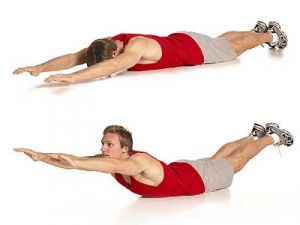
A contralateral variation performed lying flat on the ground with one arm bent, elbow on the ground, palm down, hand positioned under the chin. The other arm extends fully, thumb pointing toward the ceiling. From this position, simultaneously lift the extended arm, the torso, and the opposite leg, so the arm and leg rise to form an arc with the torso. This variation trains the same posterior extension pattern as the prone cobra and superman, but with a contralateral limb pairing that adds an anti-rotation stability demand on top of the extension work, while the single extended arm with the thumb pointing upward echoes the external rotation emphasis of the prone cobra itself.

Replacement Exercises (Alternatives)
If the prone cobra is not the right fit, these exercises develop similar posterior chain and postural function:
- Superman
- Bird Dog
- Reverse Plank
- Chinese Reverse Plank
- Dead Bug
- Forearm Plank
- The Full Plank (Straight Arm Plank)
- Side Plank
How To Incorporate the Prone Cobra Into Your Workouts
- As a posture-focused posterior chain exercise — particularly valuable for desk workers and anyone with rounded-shoulder posture- programmed several times per week as a corrective measure
- Alternating with the Superman — programming both exercises across different sessions provides variety while addressing slightly different emphases within the same fundamental movement pattern
- Duration: Build progressively from short holds toward longer durations, following the same progression principles as the superman
- Sets: 3 sets
- Frequency: 3–4 times per week, particularly useful as a frequent corrective exercise given its low intensity and postural benefits
- Progression trigger: When the current hold duration with strict glute-driven extension, full arm rotation, and depressed shoulders becomes consistently easy — extend the duration, add light resistance, or progress to the arm-leg extension variation
Conclusion
The prone cobra takes the same posterior chain extension pattern as the superman and adds a deliberate, active arm rotation that meaningfully shifts emphasis toward the upper back and shoulder external rotators. That small adjustment has outsized practical value for the enormous number of people whose posture has been shaped by years of sitting at a desk with rounded shoulders.
Drive the lift with the glutes, not the lower back. Make the thumbs-up rotation an active part of the movement, not an afterthought. Keep the shoulders pulled down and back throughout. Done this way, the prone cobra delivers posterior chain strength and meaningful postural correction in a single bodyweight exercise that costs nothing but floor space and consistent practice.
Want to round out your core program with both anterior and posterior training? Check out our guide to 33 core exercises. See our guides to upper ab, lower ab, and oblique exercises to round out your training.
Frequently Asked Questions
How long does it take to see postural improvement from the prone cobra?
Postural change is gradual and depends on consistency, the severity of the existing postural pattern, and how much of the rest of your day still reinforces rounded shoulders, such as prolonged desk sitting. Some people notice their shoulders feeling more naturally pulled back within a few weeks of consistent practice, but meaningful, lasting postural change typically takes several months of regular training combined with attention to posture throughout the day, not just during the exercise itself.
Can the prone cobra be done as a desk break exercise?
The full floor version requires lying down, which is not practical as a quick desk break. However, a standing version can be approximated by clasping the hands behind the back, pulling the shoulder blades together, and rotating the arms in a similar thumbs-back motion, which trains a related pattern without needing to get on the floor. This standing approximation does not replicate the full hip and spinal extension of the floor version, but it can serve as a brief postural reset during a workday.
Is the prone cobra enough on its own to fix rounded shoulders?
Unlikely on its own. Rounded shoulder posture typically develops from a combination of weak upper back muscles, tight chest muscles, and prolonged habitual positioning, particularly from sitting. The prone cobra addresses the weak upper back component directly, but a complete approach usually also includes chest and anterior shoulder stretching, ergonomic adjustments to reduce prolonged forward postures, and general postural awareness throughout the day. Treating the prone cobra as one component of a broader approach is more realistic than expecting it to resolve the issue in isolation.
Why do my hands tingle or go numb during this exercise?
Tingling or numbness in the hands during the prone cobra can occur if the shoulder or neck position is compressing nerves, often related to excessive shrugging of the shoulders toward the ears or an awkward neck position. Check that the shoulders are depressed and pulled back rather than elevated, and that the neck remains in a neutral position. If tingling or numbness persists despite correcting these positions, stop the exercise and consult a physiotherapist, since this can indicate an underlying nerve or vascular issue unrelated to technique.
Should I do the prone cobra before or after weight training?
Given its low intensity and corrective focus, the prone cobra works well either as part of a warm-up to activate the upper back and posterior chain before training, or as a finisher at the end of a session when fatigue from the main lifts is less likely to compromise its already moderate technical demands. Using it as a warm-up activation drill before pulling exercises like rows or pull-ups is a particularly common and sensible application, since it primes the same muscles those lifts rely on.
