



Introduction
The rotary torso machine is one of the most consistently misused pieces of equipment in any commercial gym. Walk in on any given day, and you will find someone loading the weight stack with more than they can control and rotating the torso back and forth at a pace that makes the obliques irrelevant. That approach produces nothing useful and puts the lumbar spine under rotational stress it was not designed to handle.
When done correctly, it is a genuinely effective oblique exercise — one of the few machine-based options that allow precise, measurable progressive overload of the obliques through a guided rotational arc. You will find this machine in seated or kneeling configurations depending on your gym. Both train the obliques as primary movers of torso rotation with the lower body fixed.
One thing I want to address directly before anything else: weight selection. Heavy weight on the rotary torso machine almost always means cheating — the hips rock, the lumbar spine rotates instead of the thoracic spine, and the obliques stop being the limiting factor. Light to moderate weight, full controlled range of motion, and a genuine pause at the end range produces far better oblique stimulus than any amount of ego loading on this machine.
Exercise Snapshot
Muscles Worked in the Rotary Torso Machine
Primary muscles
- External obliques — on the side toward which the torso rotates, the external obliques work concentrically to drive the rotation; on the opposite side they work eccentrically to control the return
- Internal obliques — work alongside the external obliques; the internal oblique on one side and the external oblique on the opposite side work together to produce each rotational direction
Secondary muscles
- Rectus abdominis — stabilizes the anterior trunk throughout the rotation and assists with maintaining the upright posture against the resistance
- Transverse abdominis — braces the spine and maintains intra-abdominal pressure throughout the movement
- Erector spinae — assists with maintaining the upright or slightly forward-leaning trunk position against the rotational load
Antagonists
The obliques on the opposite side of the body lengthen under control during rotation and contract to drive the return and the opposite-direction rotation.
An important mechanical distinction: the rotary torso machine rotates the upper body toward a fixed lower body — the same direction as the Russian twist and the broomstick twist. The standing machine twist works in the opposite direction, rotating the lower body while the upper body stays fixed. Both train the obliques but in different rotational contexts. Programming both provides complete oblique rotational training that neither exercise alone delivers.
How to Do a Rotary Torso Machine: Step-by-Step Form Guide
Starting position — Seated version
- Adjust the seat height so that the hips and knees are at approximately 90-degree angles
- Adjust the back pad so that your head is directly under the machine’s axis of rotation — this alignment is critical for the exercise to work correctly
- Select the appropriate resistance — start conservatively; the obliques are not a large muscle group and do not require heavy loading to be effectively stimulated
- Adjust the starting position so the weight stack is slightly elevated from the bottom — this ensures there is tension on the obliques from the very beginning of each rep
- Sit in an upright posture with chest up, back flat, and abdominal muscles engaged
- Grasp the handles firmly
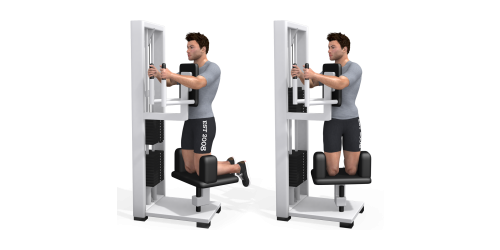
Starting position — Kneeling version
- Kneel on the seat facing the chest pad
- Lean the chest forward onto the front pad
- Grasp both machine handles positioned at shoulder height
- Core braced, neutral spine, before beginning

Execution
- Rotate the torso to one side in a slow, controlled motion — for the seated version, rotate the hips and torso; for the kneeling version, rotate the torso while the chest stays in contact with the pad
- Continue rotating until the torso is facing the direction opposite the starting position — typically 45 to 90 degrees depending on machine design and individual range of motion
- Pause for one second at the end range and feel the obliques contracted — do not overextend or round the back at the end range
- Slowly return to the starting position under control — do not let the weight stack rest on the bottom between reps; keep the obliques under tension throughout
- Repeat on the same side for the prescribed reps, then adjust the machine and repeat on the opposite side — or follow the machine’s design for alternating directions
The key coaching cue: Concentrate on maintaining a neutral spine throughout the exercise — do not allow the pelvis to tilt forward or backward during the rotation. Pelvic tilt changes the mechanical context of rotation and typically indicates that the lumbar spine is compensating for a limited range of thoracic rotation. Neutral pelvis, neutral spine, rotation from the thoracic region.
5 Common Rotary Torso Machine Mistakes (And How to Fix Them)
1. Using too much weight
I said this in the introduction, and I will say it again here because it is that important: a heavy weight on this machine almost always means compromised technique. The obliques are a rotational stabilization and movement muscle — they respond to controlled, moderate-load training with full range of motion, not to maximal loading. If the weight is heavy enough that you are rocking your hips, jerking your torso, or shortening your range to complete the rotation, it is too heavy. Drop it by 30 to 40 percent and rebuild with strict technique.
2. Allowing the pelvis to tilt during the rotation
An anterior or posterior pelvic tilt during the rotary torso machine movement is a compensation for insufficient thoracic rotation range or for excessive loading. When the pelvis tilts, the lumbar spine is absorbing some of the rotational demand that should be going through the thoracic spine and obliques. Sit tall, brace the core, keep the hips level, and rotate only as far as the thoracic spine and obliques can drive without pelvic movement.
3. Letting the weight stack touch down between reps
This is a subtle but significant mistake. When the weight touches down between reps, the tension on the obliques is released momentarily — and the next rep begins with a small jerk rather than a smooth initiation from the contracted position. Keep the weight slightly elevated throughout the set, maintaining constant tension on the obliques from the first rep to the last.
4. Incorrect seat height and back pad alignment
The machine is designed to rotate around a specific axis, and the seat height and back pad position are what align the trainee’s thoracic spine with that axis. If the seat is too high or too low, the rotational mechanics are off, and the exercise will feel awkward and potentially uncomfortable. Take the extra minute to adjust the machine properly before loading the weight — it makes a significant difference in both the feel and the effectiveness of the exercise.
5. Rushing through reps
Fast reps on the rotary torso machine produce momentum-driven rotation that bypasses the obliques. The resistance stack moves, the obliques barely contract, and the lumbar structures absorb the end-range forces. Two to three seconds per direction, with a deliberate pause at the end range, is the appropriate tempo. That pace forces the obliques to generate and control every degree of rotation.
Benefits of the Rotary Torso Machine
Measurable progressive overload for the obliques
The cable resistance stack provides precise, incrementally adjustable resistance, making progressive overload of the obliques straightforward. Adding one plate when the current weight is consistently controlled, rebuilding the rep range, and continuing — the same progression logic that applies to any other resistance exercise. That predictability makes the rotary torso machine one of the most reliable tools for oblique hypertrophy in a commercial gym.
Guided range of motion for beginners
The machine constrains movement to a specific rotational arc, thereby removing the technical complexity of free-standing rotational exercises. A beginner can learn the oblique rotation pattern on the machine and develop the body awareness needed for more complex free-standing variations without the balance and coordination barriers those exercises present.
Lower back support option
The seated configuration with a back pad provides lumbar support during the rotation — a meaningful advantage for trainees with lower back sensitivity who cannot comfortably perform standing or floor-based rotational exercises. The machine delivers a rotational oblique stimulus, while the back pad provides spinal support.
Effective for both sides independently
Working each side of the obliques independently — completing all reps to the left before switching to the right — makes it easy to identify and address left-right asymmetries in oblique rotational strength. That bilateral assessment is harder to achieve with exercises that alternate sides within the same set.
Who Should Use This Exercise
- Beginner and intermediate trainees who want a machine-guided introduction to loaded oblique rotation before progressing to cable or free-standing variations
- Trainees focused on oblique hypertrophy who want precise progressive overload on the obliques with measurable load increments
- People with lower back sensitivity who need a supported rotational oblique exercise — the back pad provides meaningful lumbar support compared to unsupported standing or seated alternatives
- Athletes in rotational sports — golfers, tennis players, baseball players, martial artists, and swimmers — who need direct oblique rotational strength development alongside sport-specific training
Who Should Be Cautious
- People with lumbar disc issues — even with machine support, loaded trunk rotation can aggravate certain lumbar pathologies; get physiotherapy clearance before programming this exercise
- People with thoracic spine conditions — thoracic spondylosis or other structural conditions may limit the appropriate range of rotation; work within a comfortable range and seek medical guidance if pain occurs
- Anyone tempted to load heavily — the rotary torso machine is frequently overloaded; if you find yourself instinctively reaching for more weight than your technique can support, this machine may reinforce rather than correct that habit
How to Make It Easier or Harder
Easier
- Lighter resistance — the most direct regression; reduce the weight to a level that allows the full range of motion with zero pelvic tilt and a genuine oblique contraction on every rep
- Reduced range of motion — rotating through a smaller arc reduces the demand and allows technique to be established before the full range is attempted
Harder
- Heavier resistance with maintained technique — the most direct progression; add one plate increment when 4 sets of 15 controlled reps are consistently achievable
- Extended pause at end range — holding the peak contraction for two to three seconds dramatically increases time under tension without adding any weight
- Slower eccentric — taking three to four seconds on the return phase increases the eccentric oblique demand significantly
Rotary Torso Machine vs. Standing Machine Twist
Both are machine-based oblique rotation exercises, but the movement direction, the resistance profile, and the appropriate training context differ significantly.
| Rotary Torso Machine | Standing Machine Twist | |
|---|---|---|
| What rotates | Upper body — torso toward fixed hips | Lower body — hips toward fixed upper body |
| Resistance | Weighted stack — meaningful load | Platform weight — minimal |
| Progressive overload | Yes — precise stack increments | No — minimal resistance |
| Position | Seated or kneeling | Standing |
| Lumbar support | Yes — back pad available | No |
| Best for | Oblique strength and hypertrophy | Activation, warm-up, lower-body rotation |
| Difficulty | Beginner – Intermediate | Beginner |
The practical takeaway: These two machines train the obliques in opposite rotational directions and with completely different loading profiles. The rotary torso machine is the better tool for oblique strength and hypertrophy — it provides meaningful resistance and precise progressive overload. The standing machine twist is the better activation and warm-up tool — with minimal resistance and a lower-body rotation pattern. I program both: the standing machine twist at the beginning of a session as a warm-up and the rotary torso machine later in the session for direct oblique training. Together, they provide complete rotational oblique coverage that neither machine alone can deliver.
Exercise Variations
Standing Machine Twist
The standing machine twist is performed on a rotating platform rather than a fixed seat — and the movement direction is reversed. In the standing machine twist, the lower body rotates on the platform while the upper body stays fixed by the handles. That lower-body-rotation pattern trains the obliques in a different mechanical context than the rotary torso machine and has direct carryover to athletic movements where the hips drive rotation while the torso stabilizes. Best used as a warm-up or activation tool rather than a primary oblique strength exercise.

Seated Rotary Torso Machine
The seated configuration is the most common version of rotary torso training and differs from the general rotary torso machine primarily in setup specifics — the chest pad height adjustment, the thigh pad contact, and the foot platform position all work together to fix both the upper and lower body simultaneously. The seated version typically offers cleaner isolation of the obliques due to dual fixation and is the configuration most trainees will encounter in a commercial gym setting.

Replacement Exercises (Alternatives)
If the rotary torso machine is unavailable or not the right fit, these exercises target the same primary muscle group:
- Standing Cable Oblique Crunch
- Twisting Cable Crunch
- Russian Twist – Oblique Trunk Rotation
- Broomstick Twist
- Landmine 180s
- Hip Crossover
- Bicycle Crunch
- Dumbbell Side Bend
- Decline Twisting Sit-Up
- Cross-Over Crunch
- Heel Touches
- Lateral Crunch
- Hanging Windshield Wiper
- Roman Chair Side Bend
- Side Jackknife: Double Leg Double Side Jackknife
- Hanging Oblique Knee Raise (Hanging Oblique Crunch)
For a complete oblique training program, see our guide to the best exercises for the oblique muscles. Complete your training with our guides to upper ab, lower ab, and core exercises.
How To Incorporate the Rotary Torso Machine Into Your Workouts
- As a primary oblique exercise — the resistance and progressive overload capability make it appropriate as the main loaded oblique movement in a core session, performed when the obliques are fresh
- After compound upper body or lower body work — the rotary torso machine can follow heavy compound movements without the technical demands that make cable oblique exercises more placement-sensitive
- Paired with a lateral flexion exercise — superset with a lateral crunch or dumbbell side bend for complete oblique coverage — rotation and lateral flexion trained back to back
- Rep range: 12–20 reps per side — the obliques respond well to moderate rep ranges with full range of motion; going below 10 reps with heavy weight tends to compromise technique significantly on this machine
- Sets: 3–4 working sets per side
- Frequency: 2–3 times per week alongside other core training
- Tempo: Two to three seconds rotating, one to two second pause at peak contraction, two to three seconds returning — never rush the return; that is where half the stimulus lives
- Progression trigger: When 4 sets of 15 controlled reps with neutral spine, no pelvic tilt, and a genuine pause at end range become consistently easy — add one plate and rebuild from 10 to 12 reps
Conclusion
The rotary torso machine is a better oblique exercise than its reputation suggests — primarily because that reputation has been shaped by people using it incorrectly. The overloaded, momentum-driven, pelvis-rocking version of this exercise that most gym-goers perform is genuinely ineffective. The controlled, moderate-weight, pause-at-end-range version is a legitimate and measurable tool for oblique training.
The distinction between these two versions comes down to one thing: whether the obliques are actually working or whether the machine is just moving under momentum while the obliques watch. If you can feel the obliques contracting on every rep, controlling every degree of rotation, and resisting the return — you are using the machine correctly. If the weight is moving faster than you are consciously driving it, you are not.
Reduce the weight, slow down, pause at the end range, and keep the spine neutral. Do that consistently and the rotary torso machine will deliver oblique development that its casual users never experience.
Reviewed by a Women’s Strength Specialist: The training recommendations and educational content presented in this article were reviewed by Kelley V., MPH, MS, CSCS, ACE Health Coach , whose expertise includes women’s strength training, hormonal health, and long-term athletic development.
